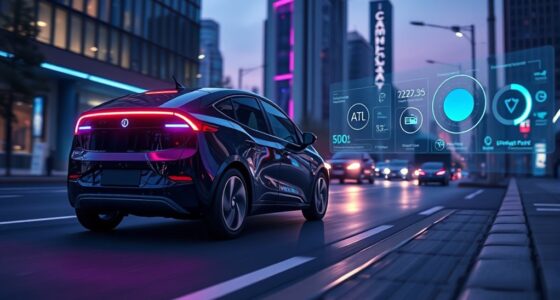
Battery recycling breakthroughs mean you’ll benefit from cleaner, more sustainable EVs in the future. These advances make it easier and cheaper to recover materials from old batteries, reducing reliance on raw resources and lowering environmental impact. As a result, your EV will have an even smaller carbon footprint, and the industry will be more resilient and innovative. Keep exploring this topic to see how these innovations may shape your next electric vehicle experience.
Key Takeaways
- Advanced recycling techniques improve material recovery, reducing reliance on virgin resources and lowering environmental impact for future EVs.
- Breakthroughs enable cost-effective, eco-friendly recycling, making EV batteries more sustainable throughout their lifecycle.
- Enhanced reuse of battery components supports a circular economy, extending battery lifespan and reducing waste.
- Recycling innovations help meet future raw material demand, stabilizing supply chains and decreasing environmental disruptions.
- These advancements ensure safer, more sustainable EV ownership by minimizing pollution and resource depletion.

Recent advances in battery recycling are transforming how we handle electronic waste and resource consumption. As a future electric vehicle (EV) owner, you’ll benefit from these breakthroughs by contributing to a more sustainable and efficient industry. One of the most exciting developments is the rise of second life applications for EV batteries. Instead of disposing of used batteries after they lose their capacity for vehicle use, companies now find innovative ways to repurpose them in other settings. These batteries can power stationary energy storage systems, support renewable energy grids, or even serve as backup power sources for homes and businesses. This not only extends the lifespan of batteries but considerably reduces the demand for raw materials needed to produce new ones, making the entire supply chain more sustainable.
By giving old EV batteries a second life, manufacturers can lessen the strain on mining operations for critical resources like lithium, cobalt, and nickel. This shift is crucial for supply chain sustainability because it helps balance demand and supply, preventing resource depletion and lowering environmental impact. As an EV owner, you might not directly handle these processes, but the benefits are clear: fewer environmental disruptions, reduced extraction costs, and a more resilient supply chain that can better meet the growing demand for electric vehicles. This circular approach to battery use means your vehicle’s battery isn’t just a one-time investment; it’s part of a broader ecosystem that maximizes its utility over time.
Further, advancements in recycling techniques now enable more efficient extraction of valuable materials from used batteries. This means that when a battery finally reaches the end of its second life, it can be broken down with minimal waste, and its components can be reused in manufacturing new batteries or other electronic devices. This closed-loop process reduces reliance on virgin materials and minimizes environmental pollution, ensuring that resource extraction becomes less invasive and more responsible. Innovations in recycling technology are making these processes more cost-effective and environmentally friendly. This translates into a future where EVs are not only cleaner to operate but also more sustainable throughout their entire lifecycle.

Jackery Solar Generator 1000 v2 with 200W Solar Panel,1070Wh Portable Power Station LiFePO4 Battery,1500W AC/100W USB-C Output, 1Hr Fast Charge for Outdoor,Off-Grid Living,RV,Emergency
Powerful yet Compact: Boasting a 1,500W AC output and a 3,000W surge peak, the Solar Generator 1000 V2...
As an affiliate, we earn on qualifying purchases.
Frequently Asked Questions
How Will Recycling Advancements Affect Electric Vehicle Prices Long-Term?
Recycling advancements will lower long-term EV prices by reducing costs and ensuring supply stability. As recycling becomes more efficient, you’ll see cheaper batteries because fewer raw materials are needed, which helps cut overall costs. This progress also means a steadier supply of materials, preventing shortages that can drive prices up. So, future EV owners like you will benefit from more affordable vehicles and a reliable supply chain, making EV adoption more accessible.
Are Recycled Battery Materials as Reliable as New Ones?
Are recycled battery materials as reliable as new ones? Absolutely. Advances in recycling technology now guarantee high material purity, which directly boosts battery performance. You’ll find that recycled components meet strict quality standards, making them nearly as dependable as brand-new materials. So, when you choose an EV with recycled batteries, you’re getting a product that’s designed for long-lasting performance without sacrificing safety or efficiency.
What Environmental Benefits Do New Recycling Methods Provide?
New recycling methods offer significant environmental benefits by reducing toxic waste and promoting urban mining. You help cut down harmful disposal by reclaiming valuable materials from old batteries, which prevents toxic waste from contaminating soil and water. Urban mining makes use of existing resources, decreasing the need for new mining activities that damage ecosystems. As a result, these innovative recycling techniques support a cleaner, greener future for everyone.
How Soon Will These Breakthroughs Impact Current EV Models?
Aren’t you eager to see how soon these breakthroughs will change your current EV? The good news is, advancements in recycling infrastructure and battery lifespan are already making an impact. Within the next few years, you’ll likely notice longer-lasting batteries and more efficient recycling methods integrated into existing models. As technology progresses, your EV’s sustainability and lifespan will improve, making now a great time to contemplate upgrades or new investments.
Will Recycling Technologies Create New Job Opportunities in the Industry?
Yes, recycling technologies will create new job opportunities as the industry expands. You’ll see job growth in areas like battery dismantling, recycling facility operations, and research and development. As demand for sustainable practices increases, companies will need skilled workers to develop and implement these innovations. This industry expansion offers promising careers for those interested in green technology, ensuring more employment opportunities while supporting the growth of electric vehicles.

EF ECOFLOW Portable Power Station DELTA 2, 1024Wh LiFePO4 (LFP) Battery, 1800W AC/100W USB-C Output, Solar Generator(Solar Panel Optional) for Home Backup Power, Camping & RVs
7 X Faster Charging. 0-80% in just 50 mins and 0-100% in 80 mins with AC input. That's...
As an affiliate, we earn on qualifying purchases.
Conclusion
As an future EV owner, these recycling breakthroughs are like uncovering a secret garden—you’ll reap the benefits of cleaner energy and fewer worries about supply. Imagine your car’s battery as a treasure chest, now being opened to reveal endless resources rather than waste. With innovations boosting recycling rates to over 90%, you’re stepping into a greener, more sustainable future where your ride helps protect the planet, one recycled battery at a time.

Portable Solar Generator, 300W Portable Power Station with Foldable 60W Solar Panel,110V Pure Sine Wave 280Wh Battery Power Pack with USB DC AC Outlet for Camping Smart Devices RV Van Outdoor-Orange
Portable Generator with 60W Solar Panel Included: with a big battery pack, ZeroKor 300W power stations Generator are...
As an affiliate, we earn on qualifying purchases.

Jackery Portable Power Station Explorer 300, 292Wh Backup LiFePO4 Battery, Solar Generator for Outdoors Camping Travel Hunting Blackout (Solar Panel Optional)
Ultra-Lightweight: At only 7.5 lbs, the Explorer 300 delivers a robust 292Wh capacity while remaining 17% lighter than...
As an affiliate, we earn on qualifying purchases.