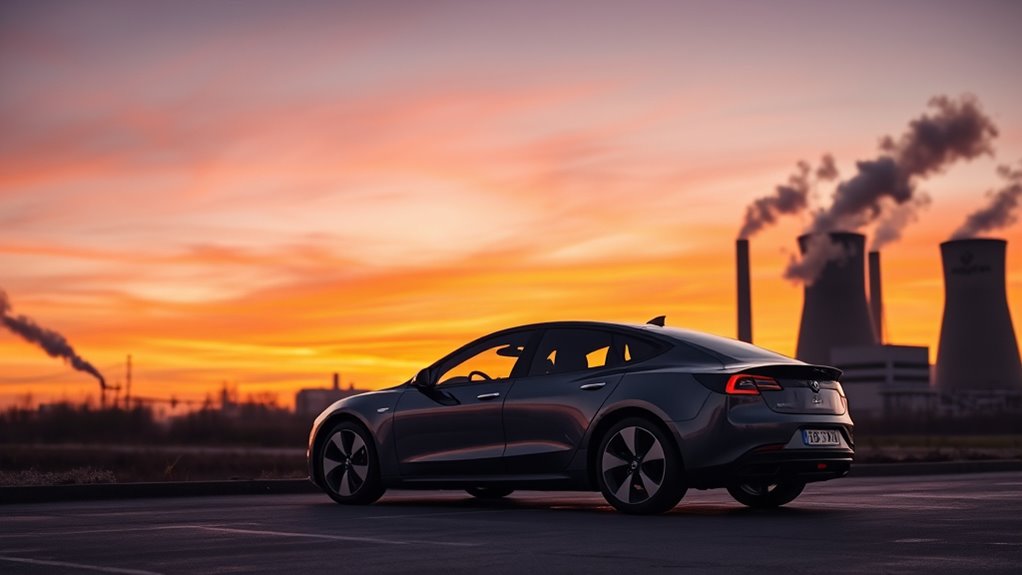

Electric cars cut local air pollution by eliminating tailpipe emissions like nitrogen oxides and particulates, improving urban air quality. However, their overall pollution reduction depends on how the electricity powering them is generated. If it’s from coal, the environmental benefits are reduced; if mainly renewable, they’re much greater. Understanding how power sources impact emissions helps you see the full picture. Keep exploring to discover how infrastructure and energy choices shape EVs’ true environmental impact.

Get backup power and energy gear delivered free with Prime
- Fast, free delivery on millions of items
- Prime Video, Amazon Music and more included
- Member-only deals all year
Key Takeaways
- Electric cars emit no tailpipe pollutants like nitrogen oxides or particulate matter, reducing local urban air pollution.
- The environmental benefit depends on the electricity source; renewable energy enhances pollution reduction compared to coal-based power.
- Power plant emissions can offset some benefits if electricity generation relies heavily on fossil fuels.
- Using cleaner energy for electricity generation maximizes the pollution reduction potential of electric vehicles.
- Widespread EV adoption combined with renewable energy and efficient recycling further improves overall air quality.
Have you ever wondered if switching to electric cars can truly improve air quality? It’s a common question, especially as more cities push for cleaner transportation options. One key factor is how electric cars impact pollution compared to traditional gasoline-powered vehicles. Unlike gas engines, electric vehicles (EVs) produce no tailpipe emissions, meaning they don’t release pollutants like nitrogen oxides or particulate matter directly into the air. This shift can substantially reduce local air pollution, especially in urban areas where traffic congestion is high. However, to fully understand their environmental benefits, you need to consider the entire energy cycle, including how electricity is generated and the infrastructure supporting EV use.
Charging infrastructure plays an essential role in this transition. When charging stations are widespread and accessible, more people will adopt electric cars, leading to a larger reduction in tailpipe emissions. But the cleanliness of these benefits depends on where the electricity comes from. If power plants rely heavily on coal or other fossil fuels, the overall reduction in air pollution may be less pronounced. Conversely, if the grid is powered mainly by renewable energy sources, electric cars become even greener. As the demand for EVs grows, the focus on developing a robust charging infrastructure becomes necessary, ensuring that charging is convenient, fast, and widely available. This encourages more drivers to switch, accelerating the decline of traditional polluting vehicles.
Another aspect that influences the sustainability of electric cars is battery recycling. Manufacturing batteries involves mining raw materials like lithium, cobalt, and nickel, which can have substantial environmental and social impacts. Proper battery recycling helps mitigate these issues by reclaiming valuable materials, reducing the need for new mining, and decreasing waste. Recycling batteries also prevents harmful chemicals from leaching into the environment, aligning with the goal of reducing overall pollution. Additionally, advances in battery recycling technology are making the process more efficient and environmentally friendly. As the number of EVs on the road increases, establishing efficient battery recycling processes becomes essential to making electric vehicles a genuinely sustainable solution.
Products Worth Considering

DEWALT 20V MAX 1/4-Inch Impact Driver Kit with Battery and Charger (DCF787D1)

Chemical Guys 16-Piece Arsenal Builder Car Wash Kit with Foam Cannon & Bucket

NOCO Boost GBX45 12V Lithium Jump Starter, 1,250A
As an affiliate, we earn on qualifying purchases.
Frequently Asked Questions
How Do Electric Cars Impact Overall Carbon Footprint?
Electric cars lower your overall carbon footprint by producing zero tailpipe emissions, but their impact depends on charging infrastructure and battery recycling efforts. When you charge EVs with renewable energy, it markedly reduces emissions. Proper battery recycling prevents environmental harm and conserves resources. As the charging network expands and recycling improves, your electric vehicle’s carbon footprint becomes even smaller, making it a cleaner, more sustainable transportation choice.
Are Electric Cars Truly Zero-Emission Vehicles?
Electric cars aren’t truly zero-emission vehicles because their production and operation still produce some pollution. You need to take into account factors like battery recycling, which helps reduce environmental impact, and noise pollution, which electric cars minimize compared to traditional vehicles. While they greatly lower emissions during use, the manufacturing process and electricity source affect their overall emissions. Still, they’re a cleaner alternative that helps reduce your carbon footprint.
How Does Electricity Source Influence EV Pollution Levels?
You should know that the electricity source substantially impacts EV pollution levels. When power comes from renewable energy, like wind or solar, your electric car produces minimal emissions. However, if your electricity relies on fossil fuels, such as coal or natural gas, it results in higher pollution. By choosing cleaner energy sources, you help reduce overall emissions, making your EV a greener option and improving air quality.
What Are the Long-Term Environmental Benefits of EVS?
You’ll see long-term benefits from electric vehicles as they help reduce urban noise and promote battery recycling efforts. Electric cars operate more quietly, cutting noise pollution in cities, while recycling batteries minimizes environmental harm from waste. Over time, widespread EV adoption leads to cleaner air, less reliance on fossil fuels, and a healthier environment, making urban areas more livable for everyone.
Do Electric Cars Produce Any Local Air Pollutants?
You might think electric cars produce no local pollutants, but during battery manufacturing, emissions can occur. However, once on the road, EVs produce zero tailpipe emissions, markedly reducing roadside air pollution. This means fewer local pollutants like nitrogen oxides and particulate matter, improving air quality in your community. While manufacturing has environmental impacts, the long-term benefits of cleaner air outweigh these initial effects, making EVs a healthier choice for everyone.
Conclusion
As you consider switching to an electric car, remember that it’s not just about avoiding tailpipe emissions. Coincidentally, the cleaner energy powering your ride can make a bigger difference than you might think. When your electricity comes from greener sources, your car’s overall pollution drops considerably. So, as you make your choice, realize that the real impact lies in what powers your car—sometimes, it’s the hidden connection that makes all the difference.