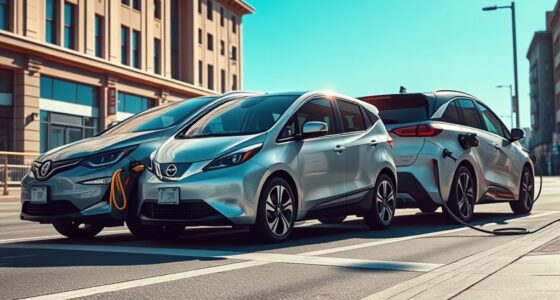
Gas stations are transforming as electric vehicles become more popular. Many are adding fast chargers and redesigning to serve both fuel and EV needs. They’re evolving into multi-purpose hubs with amenities like cafes and shops, making waiting more comfortable. While traditional pumps may decline over time, stations are future-proofing with renewable energy and advanced infrastructure. If you stay aware of these changes, you’ll see how the landscape is shifting toward a versatile, sustainable transportation center.
Listen free for 30 days with Audible
Thousands of audiobooks and originals — cancel anytime.
As an affiliate, we earn on qualifying purchases.
Key Takeaways
- Gas stations are increasingly integrating electric vehicle charging, transforming into multi-purpose hubs rather than becoming obsolete.
- Industry investments focus on upgrading infrastructure with fast chargers and amenities to attract EV owners.
- Many stations are redesigning layouts and adding amenities to enhance customer experience amid shifting transportation trends.
- The industry is proactively future-proofing by retrofitting existing stations and incorporating renewable energy sources.
- The evolution towards hybrid fueling centers indicates gas stations will adapt rather than become entirely obsolete.

Have you ever wondered how gas stations are adapting to the rise of electric vehicles? As EVs become more popular, traditional fuel stations are facing a significant shift. Instead of relying solely on gasoline pumps, many are exploring electric conversion to stay relevant. This process involves transforming existing fuel stations into multi-purpose hubs that cater to both gas-powered and electric vehicles. You’ll notice many stations now installing fast chargers, which are essential for attracting EV owners who want quick, convenient charging options. This progression isn’t just about adding a few chargers; it requires a thorough fuel station redesign to accommodate new infrastructure, safety standards, and customer needs. Stations are rethinking their layouts, dedicating space for charging stations that can handle multiple vehicles simultaneously, and ensuring that power supplies are robust enough to meet increased demand.
In this redesign process, stations aim to create a seamless experience for drivers, making charging as easy as fueling up with gas. The electric conversion often involves upgrading electrical systems, installing high-capacity chargers, and implementing advanced payment and user interface systems. These updates help stations stay competitive and attract a broader customer base. Some fuel station owners are also expanding their amenities—adding cafes, lounges, and retail shops—to make the wait more comfortable. The goal is to transform from a simple refueling point into a versatile transportation hub. This shift also helps stations future-proof their investments, knowing that EV adoption will continue to grow. Additionally, many stations are exploring renewable energy integration to enhance sustainability and reduce their carbon footprint.
The progression isn’t happening overnight, but the trend is clear: gas stations are evolving. Many are investing in infrastructure that supports electric conversion, which might include retrofitting existing pumps or building entirely new charging centers. This evolution signifies a broader industry recognition that the future of mobility is electric. As you drive by, you’ll likely see more stations with sleek, modern chargers replacing traditional pumps. These stations are also increasingly integrated with renewable energy sources, making the entire process more sustainable. So, instead of becoming obsolete, gas stations are reinventing themselves to meet the changing needs of drivers. They’re transforming into hybrid fueling centers—supporting both gasoline and electric vehicles—ensuring their relevance well into the future.
Frequently Asked Questions
How Long Will Gas Stations Remain Operational Worldwide?
Gas stations will likely remain operational worldwide for the next 10-20 years, but future fuel trends are shifting rapidly. You’ll see many stations modernize to include EV charging, offering more sustainable options. As electric vehicles become more popular, traditional fuel stations adapt by expanding their services and infrastructure. This station modernization guarantees they stay relevant, but their prominence may decline as electric mobility dominates the transportation landscape.
What Are the Economic Impacts on Gas Station Employees?
You might face job insecurity as gas stations shift, with some positions becoming obsolete or reduced. Wages could decline due to automation and fewer service roles, impacting your income. However, new opportunities may arise in electric vehicle charging stations or maintenance for alternative fuel systems. Staying adaptable and gaining new skills can help protect your job security and improve your prospects in the evolving fuel station industry.
Will Traditional Fuel Stations Diversify Their Services?
Yes, traditional fuel stations are likely to diversify their services to stay competitive. You might see them expanding into convenience stores, adding car charging stations, or offering maintenance services. This service diversification helps boost revenue streams and attracts more customers. By adapting to changing demands, gas stations can remain relevant and profitable, even as electric vehicles reshape the landscape of fuel consumption.
How Will EV Charging Infrastructure EVolve in Rural Areas?
In rural areas, EV charging infrastructure will expand gradually as demand grows. You’ll see more rural charging stations through government incentives and private investments, making long trips easier. Infrastructure expansion focuses on installing fast chargers along highways and in small communities, ensuring you can recharge conveniently. This evolution aims to bridge the gap in rural charging, providing reliable access and encouraging wider EV adoption outside urban centers.
Are There Environmental Concerns With Expanding EV Charging Stations?
Expanding EV charging stations is like planting seeds for a greener future, but environmental concerns do exist. You should consider the impact on renewable sources and grid capacity, as increased demand could strain existing infrastructure. Ensuring chargers run on renewable energy and upgrading grid capacity helps minimize ecological harm, making EV expansion more sustainable. Thoughtful planning can turn potential issues into opportunities for a cleaner, more efficient energy future.
Conclusion
As you witness the rise of electric vehicles, gas stations may soon become relics of a bygone era, much like the pharaohs’ chariots. While the traditional fuel station might fade into history, it’s clear that change is inevitable. Embrace this shift, for the landscape of transportation is shifting faster than you can say “horseless carriage.” The future belongs to innovation, and you’re right at the crossroads of this electrifying revolution.
Flea & tick season Picks
flea and tick prevention
As an affiliate, we earn on qualifying purchases.