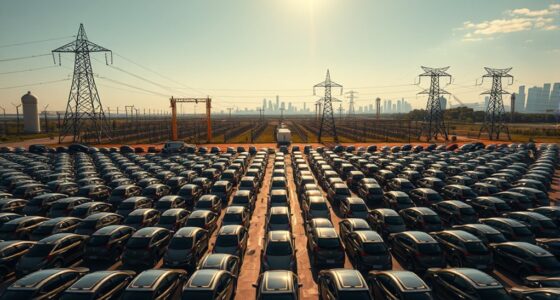
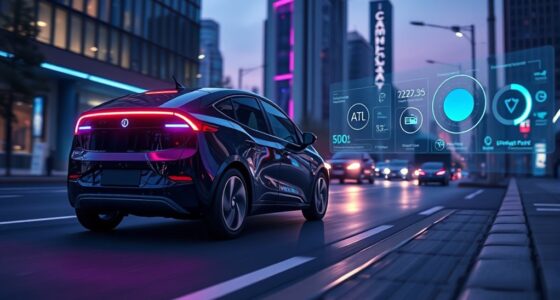
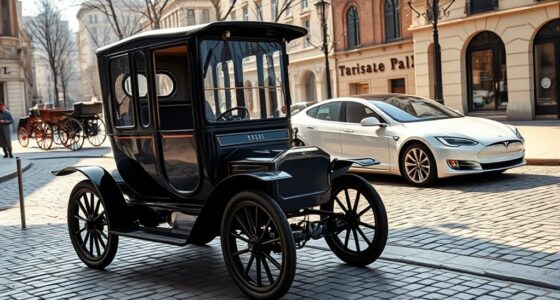
Electric vehicles are winning the clean car race because their technology is advancing rapidly, providing longer ranges, faster charging, and greater practicality for everyday use. As charging stations expand and home options improve, you’ll find EV ownership more convenient and less anxiety-inducing. Meanwhile, hydrogen cars face limited fueling infrastructure and higher costs, making them less practical currently. To understand the full picture of why EVs are leading, consider the latest innovations shaping the future of clean transportation.
Listen free for 30 days with Audible
Thousands of audiobooks and originals — cancel anytime.
As an affiliate, we earn on qualifying purchases.
Key Takeaways
- Expanding charging infrastructure and faster home charging make EVs more convenient than hydrogen cars.
- Battery technology advancements provide longer ranges and quicker recharging, reducing range anxiety.
- EVs have a more established, cost-effective supply chain and broader consumer adoption.
- Hydrogen infrastructure is limited and costly, hindering widespread practical use outside major cities.
- Electric vehicles produce zero emissions during operation, aligning better with current environmental goals.

As the push for cleaner transportation intensifies, you might wonder whether electric or hydrogen cars are the better choice. The answer largely depends on how each technology stacks up in terms of battery technology and fueling infrastructure. Electric vehicles (EVs) have gained significant ground, thanks to advancements in battery technology that have made them more efficient, affordable, and reliable. Modern batteries now offer longer ranges, faster charging times, and improved durability, which means you can drive further without frequent stops or concerns about battery life. This progress has helped to alleviate one of the biggest barriers to EV adoption — range anxiety — and has made electric cars a practical option for everyday use. On the other hand, hydrogen cars rely on fuel cells that generate electricity from hydrogen gas, offering quick refueling times similar to traditional gasoline vehicles. However, their success hinges on the availability of fueling infrastructure, which remains limited compared to electric charging stations. Building out a thorough network of hydrogen refueling stations is expensive and logistically challenging, especially because hydrogen needs specialized storage and handling. As a result, hydrogen vehicles are less convenient for most consumers, especially those living outside of major urban centers.
The current landscape heavily favors electric cars because the battery technology continues to improve rapidly, and the charging infrastructure is expanding steadily. Major automakers are investing billions into developing better batteries and deploying more charging stations, making EVs more accessible and appealing. Charging an electric car at home or at public stations is becoming increasingly convenient, and innovations like fast chargers can top off batteries in 30 minutes or less, matching the time it takes to fill a tank of gas. Additionally, the charging infrastructure for electric vehicles is growing, making long-distance travel more feasible. Conversely, hydrogen cars are still fighting an uphill battle. While they produce zero emissions during operation, the process of producing hydrogen itself can be carbon-intensive unless renewable energy sources are used. Plus, the limited fueling stations restrict their practicality to specific regions, mainly in places with heavy government support and investment. This infrastructure gap makes hydrogen cars less appealing for the average driver, who needs a reliable, widespread network of fueling options.
As an affiliate, we earn on qualifying purchases.
Frequently Asked Questions
How Do Electric and Hydrogen Cars Compare in Total Lifecycle Emissions?
You’ll find that electric cars generally have lower total lifecycle emissions than hydrogen vehicles, especially when considering battery recycling and energy source impacts. EVs benefit from cleaner energy grids and more efficient manufacturing, reducing emissions over time. Hydrogen cars often rely on fossil fuels for hydrogen production, increasing their lifecycle footprint. Your choice depends on energy sources and recycling efforts, but EVs currently lead in minimizing overall emissions.
What Are the Long-Term Maintenance Costs for Each Vehicle Type?
You’ll likely spend less on long-term maintenance with electric vehicles because they have fewer moving parts, but keep in mind battery degradation can impact costs over time. Hydrogen cars may require more maintenance due to complex fuel cell systems, and refueling station expansion remains limited, affecting convenience. Overall, EVs tend to be more cost-effective long-term, especially as charging infrastructure continues to grow.
How Scalable Is Hydrogen Fuel Infrastructure Globally?
Hydrogen fuel infrastructure’s scalability depends on hydrogen storage technology and infrastructure investment. You see, as more countries invest in hydrogen stations, improve storage methods, and develop pipelines, the global network grows larger and more reliable. While some regions are further along, others face challenges like high costs and limited resources. Overall, with increased infrastructure investment and technological advances, hydrogen fueling stations could become more widespread and accessible worldwide.
What Are the Safety Differences Between Electric and Hydrogen Vehicles?
You’ll find electric vehicles safer overall because of battery safety measures, which include robust thermal management and containment systems. Hydrogen vehicles, however, require advanced leak detection sensors to prevent dangerous leaks, as hydrogen is highly flammable. While both types have safety protocols, electric cars generally pose fewer risks related to flammability, making them a safer choice for everyday use.
How Do Charging and Refueling Times Impact User Convenience?
You might think refueling hydrogen cars is faster, but recent studies show charging speed for electric vehicles is improving rapidly, making them more convenient daily. While refueling hydrogen offers quick refueling, the widespread charging infrastructure and faster charging stations enhance user convenience for EV owners. This progress reduces downtime, making electric cars increasingly practical, and diminishes the inconvenience associated with longer charging times. Ultimately, charging speed and refueling convenience shape your experience on the road.
As an affiliate, we earn on qualifying purchases.
Conclusion
As the race for clean cars heats up, electric vehicles shine like a bright lighthouse guiding us through stormy seas, while hydrogen cars remain flickering shadows on the horizon. With faster charging, widespread infrastructure, and a clearer path to sustainability, EVs are steering us toward a greener future. So, buckle up and embrace the electric revolution—it’s the clear road ahead, lighting the way to a cleaner, brighter world.
As an affiliate, we earn on qualifying purchases.
As an affiliate, we earn on qualifying purchases.
NFL season / tailgating Picks
team gear
As an affiliate, we earn on qualifying purchases.