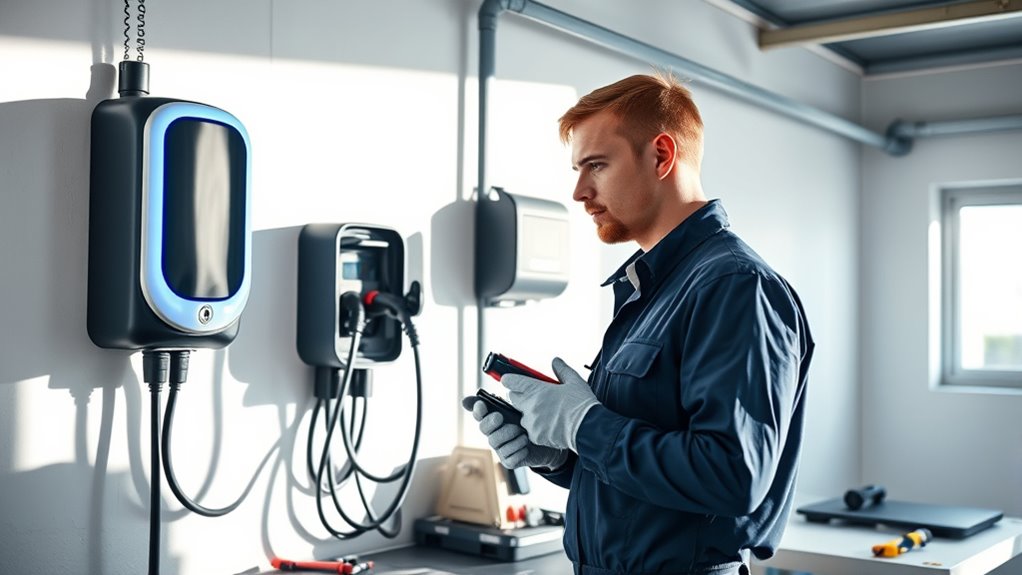

When choosing an electrician for your EV charger installation, ask about their detailed, upfront cost estimates, including labor, materials, and permits, to avoid surprises. Find out if they’re licensed and experienced, especially with smart technology integration. Compare multiple quotes to ensure fair pricing and clear services. Also, confirm their familiarity with your home’s electrical setup and energy systems. Keep these questions in mind, and you’ll be better prepared to select the right professional for the job.
Key Takeaways
- Ask for a detailed, written quote covering labor, materials, permits, and potential home upgrades.
- Confirm the electrician’s licensing, certifications, and insurance to ensure safety and compliance.
- Inquire about their experience with EV charger installations and familiarity with smart technology integration.
- Discuss the proximity of the electrical panel and how it may affect wiring complexity and overall costs.
- Obtain multiple quotes to compare pricing, scope of work, and ensure transparency before choosing a professional.
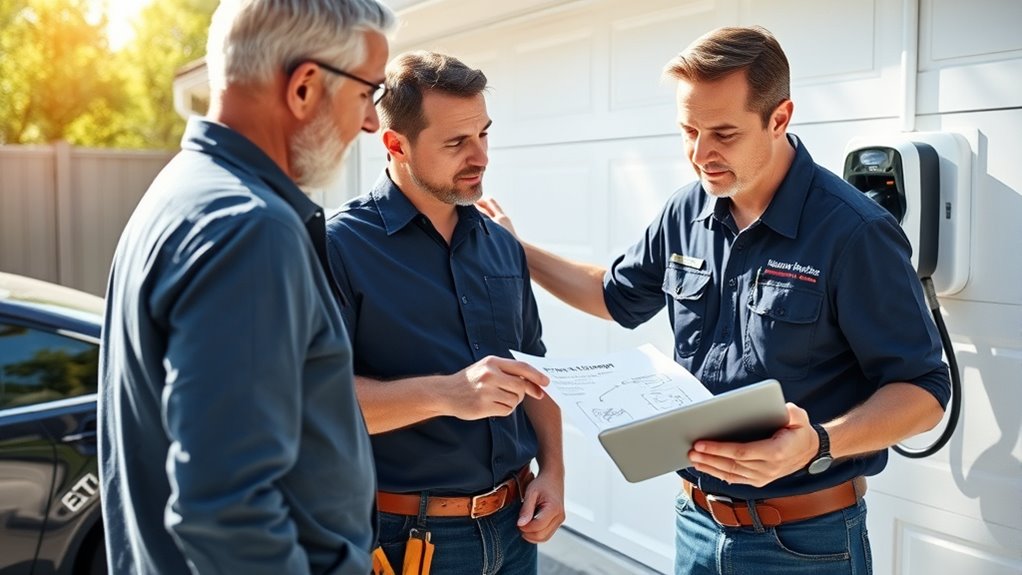
Installing an electric vehicle (EV) charger at your home is a significant upgrade, but choosing the right electrician is vital to guarantee a safe and efficient setup. One of the first questions you should ask is about cost estimates. A reputable electrician will provide a clear, detailed quote that breaks down the expenses involved, including labor, materials, and any additional permits. Keep in mind that the final cost can vary based on factors like the charger’s power level, the distance from your electrical panel, and whether your home requires any upgrades to handle the new circuit. Avoid electricians who are hesitant to give you upfront estimates or who provide vague figures, as this could lead to unexpected expenses later on. Comparing quotes from multiple professionals helps make certain you get a fair price and understand what’s included in each estimate. Additionally, considering the electrician’s familiarity with European cloud innovation can be beneficial if your project involves integrating smart grid technologies or energy-efficient systems.
Licensing requirements are another critical aspect to consider. Not all electricians are qualified to perform electrical work for EV chargers, so you need someone who meets your state’s licensing standards. Ask to see proof of their licensing and verify that it’s current and appropriate for the scope of work. An electrician who is properly licensed has undergone specific training, adheres to safety codes, and is insured, reducing your risk of problems down the line. Never assume that a general handyman or unlicensed contractor can handle this specialized installation safely; EV charger setups involve electrical complexities that need certified expertise. Also, inquire whether they are familiar with local electrical codes and regulations, as compliance is vital for safety and future inspections.

EVIQO Level 2 EV Charger, 40 Amp 240V, J1772 for Non-Tesla EVs, 25ft Cable, WiFi (2.4GHz) Smart App, Weatherproof Indoor/Outdoor (IP66, NEMA 4), UL & ETL Certified, NEMA 14-50 Plug-in, 9.6kW
PLUG-IN, NO ELECTRICIAN: EVIQO Level 2 EV charger with a max output of 40A on a dedicated 50A…
As an affiliate, we earn on qualifying purchases.
As an affiliate, we earn on qualifying purchases.
Frequently Asked Questions
How Much Does EV Charger Installation Typically Cost?
The cost of EV charger installation typically ranges from $300 to $1,200, depending on factors like the charger type and your home’s electrical setup. You should compare installation fees and do a cost comparison between different electricians to find the best deal. Keep in mind that more complex installations or high-voltage setups may increase costs, so ask your electrician for a detailed estimate before proceeding.
What Permits Are Required for Installing an EV Charger?
You’ll need to check permit requirements before installing your EV charger, as most local jurisdictions demand permits to make certain safety and compliance with electrical codes. Your electrician should handle obtaining these permits, which verify that the installation meets all electrical codes and safety standards. Failing to secure the proper permits can lead to fines or issues when selling your home, so always confirm permit requirements with your local building department before starting work.
How Long Does the Installation Process Usually Take?
Think of your EV charger installation as a well-choreographed dance that unfolds smoothly. Usually, it takes about a day or two, depending on your home’s wiring and project scheduling. The installation timeline can be quick or slightly longer if complications arise. By coordinating with your electrician, you guarantee each step aligns perfectly, turning the project into a seamless performance that gets your EV ready to hit the road sooner.
Can Existing Wiring Support a New EV Charger?
You can find out if your existing wiring supports a new EV charger by checking its wiring capacity and evaluating your electrical panel. Your electrician will evaluate whether the current wiring can handle the added load or if upgrades are necessary. It is crucial to make certain your electrical panel has enough capacity to avoid overloads. Don’t forget to ask about potential upgrades during the consultation to keep your installation safe and efficient.
What Warranty or After-Sales Support Do You Provide?
You want to know what warranty coverage and after-sales service your electrician offers, and rightly so—it’s the backbone of peace of mind. A reputable electrician provides clear warranty terms, covering parts and labor, and excellent after-sales support to troubleshoot issues. Think of it as having a safety net; it guarantees you’re protected long after installation, so you can charge your EV confidently without a worry in the world.
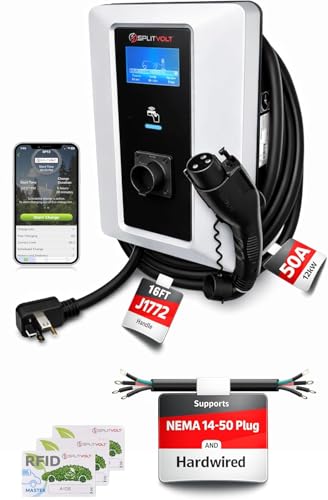
Splitvolt Level 2 Smart EV Charging Station – Connected, Adjustable 12kW, Display, Scheduling, RFID, NEMA 14-50, J1772, OCPP Compatible, Outdoor Rated, 16ft
PLUG AND PLAY AND HARDWIRE ALL IN ONE – Plug directly into a household 220v – 240V NEMA…
As an affiliate, we earn on qualifying purchases.
As an affiliate, we earn on qualifying purchases.
Conclusion
Choosing the right electrician is like finding the guiding star on your journey—trustworthy, bright, and leading you safely home. Ask the right questions, and let their expertise light the way. With each detail clarified, you’re building a strong foundation for your EV charger, a symbol of progress and connection. When you choose wisely, you’re not just installing a charger—you’re fueling your future, powered by confidence and a clear path forward.

16A Portable Level 1&2 EV Charger-ETL Certified,110V-240V Car Charger with 25FT Charging Cable, NEMA 6-20 Plug & NEMA 5-15 Adapter EV Charging Station, Backup EV Chargers for All SAE EVSE J1772 Cars
✅【Fast and Efficient Charging】 The eTimxon level 2 EV charger is equipped with NEMA 6-20 Plug, supports 240V,…
As an affiliate, we earn on qualifying purchases.
As an affiliate, we earn on qualifying purchases.

ChargePoint HomeFlex Level 2 EV Charger J1772 – Fast Smart Battery Power Charging at Home for Electric Automobile Vehicles
Charge With Confidence: ChargePoint builds reliable, flexible EV charging stations for home, business, and fleets. Get 24/7 support…
As an affiliate, we earn on qualifying purchases.
As an affiliate, we earn on qualifying purchases.