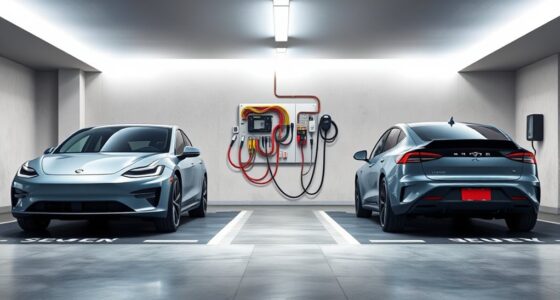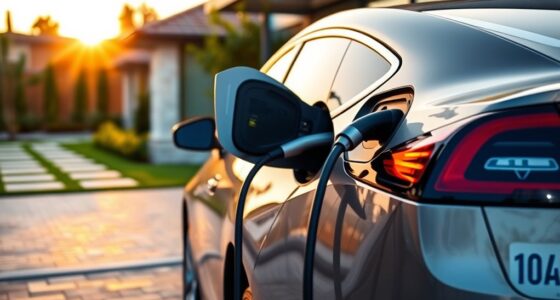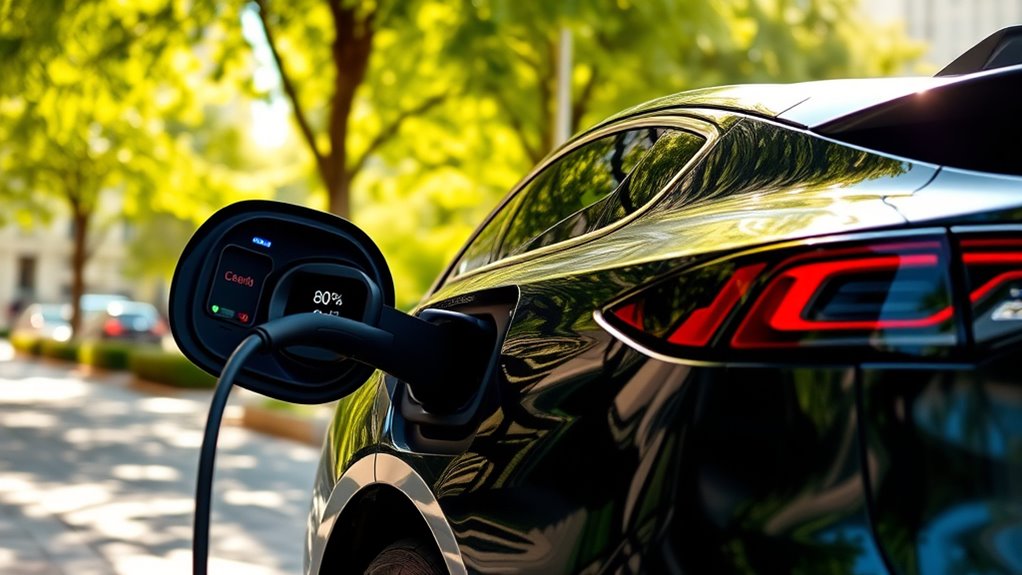

Charging your EV to 80% instead of 100% daily helps extend battery life and reduces wear over time. Limiting the charge decreases stress on battery components, maintaining performance and reliability. Fast charging to 100% can generate more heat, accelerating degradation. For most daily needs, 80% offers enough range while protecting your battery’s health. Keep exploring to discover more tips for maximizing your EV’s longevity and efficiency.
Key Takeaways
- Charging to 80% reduces battery stress and slows degradation, promoting longer battery life compared to charging to 100%.
- Limiting to 80% ensures reliable performance and less chemical strain, supporting consistent EV efficiency over time.
- Partial charges up to 80% are faster and generate less heat, making daily charging more efficient and less harmful.
- Charging to 100% increases range temporarily but accelerates battery wear, so reserve full charges for specific needs.
- Regular 80% charging aligns with manufacturer recommendations, maximizing battery longevity and overall EV reliability.

When it comes to charging your electric vehicle, choosing between an 80% and a 100% charge limit can considerably impact your battery’s longevity and overall performance. If you frequently charge your EV to full capacity, you might notice faster battery wear over time, which can reduce its lifespan. Conversely, limiting your charge to 80% helps preserve battery health, ensuring it remains reliable and efficient longer. This is because batteries undergo less stress when they aren’t charged to their maximum capacity. Charging speed also plays a role here; charging from 0 to 80% generally takes less time than going all the way to 100%, especially with fast chargers. When you stop at 80%, you can often take advantage of quicker charging cycles, which is convenient if you’re on a tight schedule.
However, if you need the maximum range on a daily basis, charging to 100% might seem tempting. While it does give you more miles, it can accelerate battery degradation, especially if you keep doing it regularly. The chemical processes inside the battery become more strained when charged to full capacity, which impacts the battery’s overall health in the long run. For daily driving, sticking to an 80% limit strikes a good balance — it extends your battery’s lifespan while still providing sufficient range for most needs. Many EV manufacturers recommend this practice, emphasizing that frequent partial charges are better for battery longevity than regular full charges.
Charging to 100% regularly can speed up battery degradation, so an 80% limit is ideal for long-term battery health.
Charging speed is also influenced by the charge limit you choose. Fast chargers deliver high power, rapidly filling your battery, but this process can generate more heat and stress, especially if the battery is already close to full capacity. Charging to 80% usually allows for faster charging times because the battery’s chemistry handles partial charges more efficiently. Charging to 100%, particularly with rapid chargers, can slow down the process as the battery approaches full capacity, triggering built-in safety measures to prevent overheating.
Additionally, top-tier projectors utilize advanced thermal management systems to maintain optimal performance during extended use, which can be a useful consideration for EV battery health as well. In essence, if you prioritize battery longevity and want your EV to stay healthy over many years, it’s best to restrict your daily charge to around 80%. This approach reduces strain on the battery, optimizes charging speed, and helps you avoid unnecessary wear. If range is more important for your daily routine, you might occasionally charge to 100%, but doing so regularly can lead to faster battery deterioration. Balancing your charging habits according to your needs and understanding the impacts on battery health will ensure your EV remains dependable for the long haul.
Frequently Asked Questions
How Does Charging Limit Affect EV Battery Lifespan?
Charging limit considerably impacts your EV battery lifespan. If you regularly set a high charging limit, like 100%, it accelerates battery degradation over time. Conversely, keeping it around 80% reduces stress and prolongs battery health. Your charging habits matter; avoiding frequent full charges helps maintain ideal performance. By managing your charging limit wisely, you protect your battery from unnecessary wear, ensuring it stays healthy and lasts longer.
Can Charging to 80% Improve Overall Vehicle Performance?
Did you know that charging to 80% can extend your EV battery’s lifespan by up to 20%? Yes, it improves battery efficiency and helps maintain consistent charging habits. By avoiding full charges, you reduce stress on the battery, which can lead to better overall vehicle performance over time. So, charging to 80% not only safeguards your battery but also ensures more reliable and consistent daily driving.
Are There Specific EV Models Better Suited for 80% Charging?
Some EV models are better suited for 80% charging because their battery management systems optimize longevity and performance with this limit. If you want to extend battery life, adopt consistent charging habits that avoid frequent full charges. Check your vehicle’s specifications; many newer EVs, like Tesla and Nissan Leaf, are designed for efficient 80% charging, helping you maintain ideal battery health and performance over time.
Does Frequent Charging to 100% Impact Battery Health?
Imagine your EV battery as a delicate garden that needs careful tending. Charging to 100% frequently accelerates battery degradation, like overwatering plants, which weakens their roots over time. Your charging habits matter—regularly hitting full capacity can shorten your battery’s lifespan. To keep it healthy, aim for shorter, consistent charges and avoid always topping off to 100%. This way, you safeguard your battery’s vitality and ensure longer-lasting performance.
What Are the Cost Implications of Daily 80% Versus 100% Charging?
Charging your EV to 80% instead of 100% can lead to significant cost savings over time by reducing battery degradation, which means fewer replacements and lower maintenance costs. Additionally, it can lessen your reliance on frequent charging stations, easing strain on the charging infrastructure and potentially lowering energy costs. By optimizing your daily charging habits, you maximize battery life, save money, and support a more sustainable charging network.
Conclusion
Choosing between 80% and 100% charging limits depends on your daily needs. If you want to extend your battery’s lifespan, sticking to 80% is wise. But if you need maximum range, 100% works fine—just don’t make it a habit. Remember, “A little caution saves a lot of trouble.” By balancing your charging habits, you’ll keep your EV healthy and ready for the road ahead. Make smart choices today for a smoother drive tomorrow.