
If you’re looking for the best Mac Pro models for 3D rendering and simulation in 2025, I recommend considering the latest Mac mini with the M4 Pro, the MacBook Pro with M5, and the MacBook Pro with M4 Max. These machines offer powerful CPUs, high-performance GPUs, and ample memory, making them ideal for demanding workflows. Want to find out which options fit your needs best? Keep going to discover more about each one.
Key Takeaways
- The Mac mini with M4 Pro offers a compact, high-performance option for demanding 3D rendering and simulation tasks.
- The MacBook Pro with M5 provides portability while maintaining powerful CPU and GPU capabilities for intensive workflows.
- The MacBook Pro with M4 Max excels in complex rendering, featuring a 14-core CPU and 32-core GPU for professional-grade performance.
- For maximum power, the Mac Pro with high-core CPUs, large GPU cores, and extensive RAM is ideal for large-scale 3D projects.
- Connectivity options like Thunderbolt 4, multiple displays, and expanded storage are crucial for efficient 3D rendering and simulation setups.
Apple 2024 Mac mini Desktop Computer with M4 Pro Chip
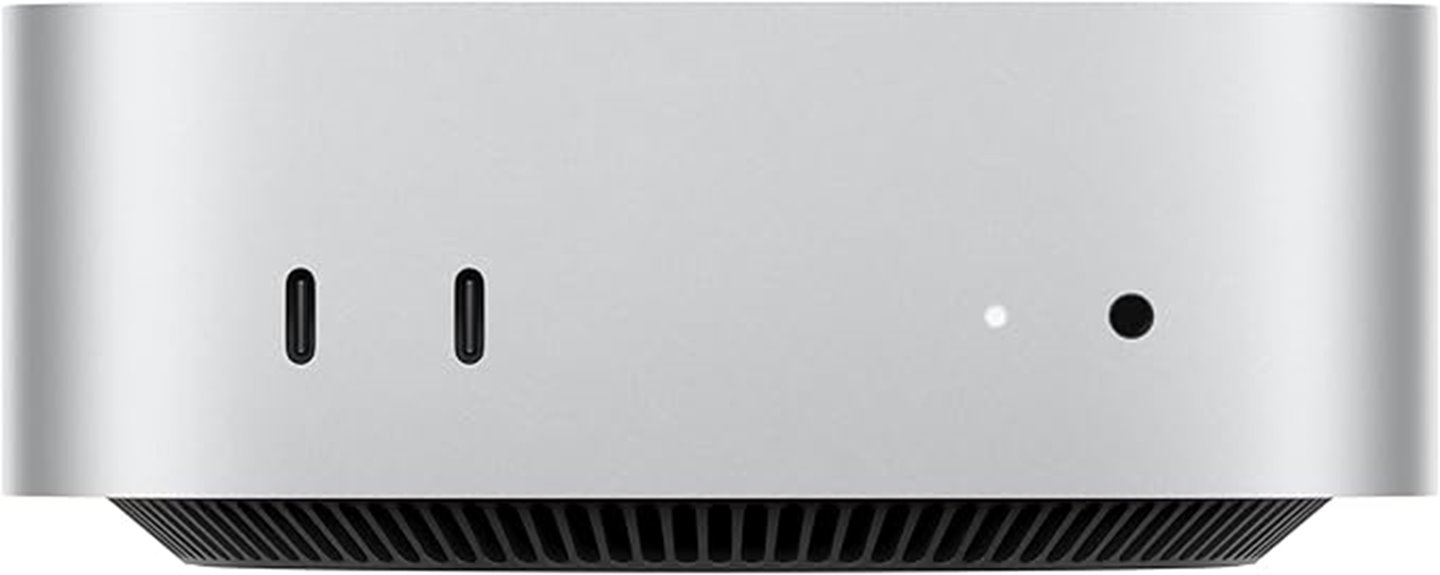
If you need a compact yet powerful computer for 3D rendering and simulation, the Apple 2024 Mac mini with the M4 Pro chip is an excellent choice. Its small five-by-five-inch design fits easily into any workspace, while its performance rivals larger machines. The M4 Pro chip, with a 12-core CPU and 16-core GPU, delivers the speed needed for demanding tasks. With 24GB of unified memory and a fast 512GB SSD, it handles complex scenes and large files smoothly. Connectivity options like Thunderbolt, HDMI, and USB-C make it versatile. Plus, seamless integration with the Apple ecosystem enhances productivity during intensive projects.
Best For: users seeking a compact, high-performance computer for demanding tasks like 3D rendering, simulation, and large file management.
Pros:
- Small, space-saving design that fits easily into any workspace
- Powerful M4 Pro chip with a 12-core CPU and 16-core GPU for demanding applications
- Seamless integration with the Apple ecosystem and macOS optimization
Cons:
- Limited upgradeability due to its compact chassis
- No dedicated graphics card option, relying solely on the integrated GPU
- May be more expensive than comparable Windows-based mini PCs with similar specs
Apple 2025 MacBook Pro Laptop with M5 Chip
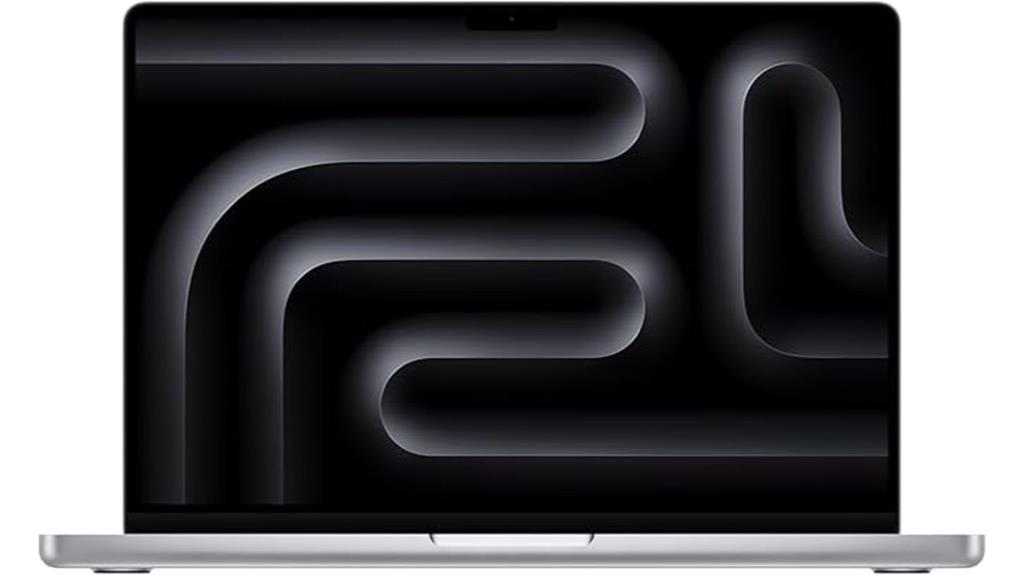
The Apple 2025 MacBook Pro with M5 chip stands out as an excellent choice for professionals engaged in 3D rendering and simulation, thanks to its powerful 10-core CPU and GPU. With 16GB of unified memory and a 1TB SSD, it handles multitasking and large files seamlessly. The 14.2-inch Liquid Retina XDR display offers stunning visuals with high brightness and contrast, perfect for detailed work. Its advanced camera, spatial audio, and Dolby Atmos support enhance multimedia tasks. Built for portability, it integrates smoothly with the Apple ecosystem and supports multiple external displays, making it ideal for demanding creative workflows on the go.
Best For: professionals engaged in 3D rendering, simulation, and demanding creative workflows who need powerful performance and seamless ecosystem integration.
Pros:
- Exceptional processing power with 10-core CPU and GPU for demanding tasks
- Stunning 14.2-inch Liquid Retina XDR display with high brightness and contrast
- Seamless compatibility with the Apple ecosystem and support for multiple external displays
Cons:
- Premium price point may be a barrier for some users
- Limited to macOS, which may not suit all software preferences
- Heavier than ultraportable laptops, potentially affecting portability for some users
Apple 2024 MacBook Pro Laptop with M4 Max, 14‑core CPU, 32‑core GPU
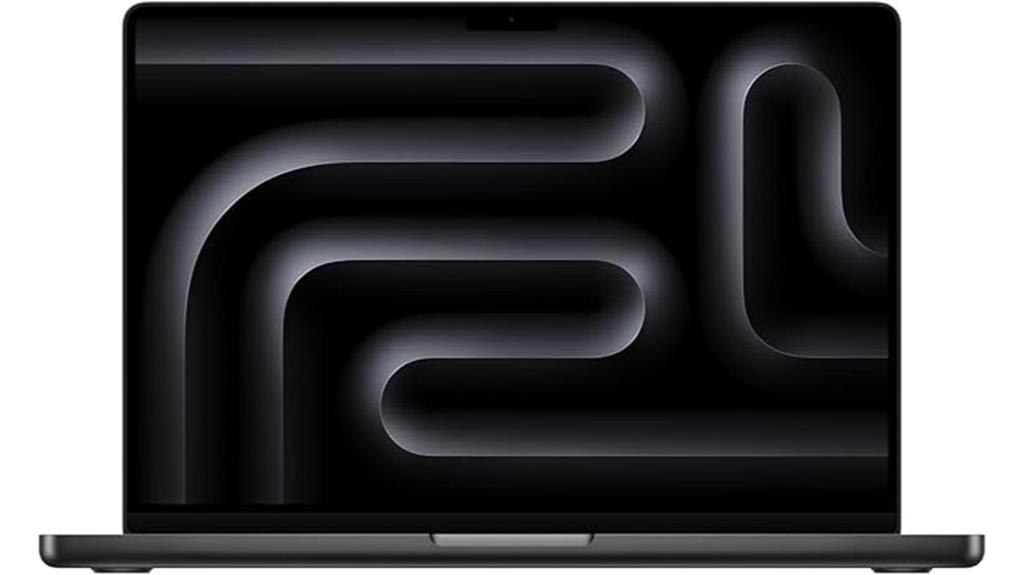
Professionals tackling complex 3D rendering and simulation will find the Apple 2024 MacBook Pro with M4 Max a standout choice, thanks to its powerful 14-core CPU and 32-core GPU. This combination delivers exceptional performance, efficiently handling demanding workflows like detailed rendering and intense simulations. The Liquid Retina XDR display enhances visual clarity with up to 1600 nits brightness and deep blacks, perfect for creative work. With 36GB of unified memory and 1TB SSD, multitasking and data access are seamless. Its sleek Space Black design, robust connectivity options, and battery longevity make it a versatile, high-performance tool for professionals in 3D modeling and rendering.
Best For: professionals in 3D rendering, simulation, and creative workflows seeking powerful performance and vibrant visuals in a sleek design.
Pros:
- Exceptional processing power with M4 Max chip, 14-core CPU, and 32-core GPU for demanding tasks
- Stunning Liquid Retina XDR display with high brightness and contrast for vibrant visuals
- Robust connectivity options including Thunderbolt 5, HDMI, SDXC slot, and support for multiple external displays
Cons:
- High price point may be prohibitive for some users
- Limited to macOS, which may not suit all software or user preferences
- Hefty and potentially less portable due to its high-performance components and build
Factors to Consider When Choosing a Mac Pro for 3D and Simulation
When selecting a Mac Pro for 3D rendering and simulation, I focus on key factors like processing power, GPU performance, and memory options. It’s important to guarantee the system can handle your software and projects smoothly, with enough connectivity for peripherals. By considering these points, you can choose a model that meets both your current needs and future upgrades.
Processing Power Needs
Choosing the right Mac Pro for 3D rendering and simulation hinges on understanding its processing power requirements. For complex modeling and detailed simulations, a high-core-count CPU, like a 14-core or higher, is essential to handle intensive tasks efficiently. GPU performance also plays a pivotal role in reducing rendering times and enabling real-time visualization, so opting for a multi-core GPU with 32 or more cores is ideal. Additionally, large-scale simulations benefit from ample RAM—36GB or more—to support smooth multitasking and large data sets. Fast SSD storage, such as 1TB or larger, helps minimize load times and accelerates data access during demanding workflows. Ensuring your Mac Pro can run software optimized for multi-core CPUs and GPUs guarantees faster processing and more accurate results.
GPU Performance Capabilities
A high-performance GPU with a large core count, such as 32 cores, is essential for faster rendering and handling complex shading tasks in 3D modeling and simulations. It directly affects how smoothly you can navigate scenes and how quickly final renders are produced. GPU memory capacity also plays a critical role, as it determines your ability to work with large textures, detailed models, and high-resolution outputs without lag. Additionally, support for multiple external displays and high resolutions requires a GPU with sufficient bandwidth and compatibility. Advanced architectures, like those supporting real-time ray tracing, enhance visual realism and realism in simulations. Ultimately, GPU performance impacts both real-time viewport interactions and overall rendering times, making it a key factor when selecting a Mac Pro for demanding 3D workflows.
Memory and Storage Options
High GPU performance in a Mac Pro is crucial, but it’s just one piece of the puzzle. Memory and storage options are equally important for smooth 3D rendering and complex simulations. I recommend at least 24GB of RAM to handle large models and multitasking without lag. Upgrading to more memory prevents bottlenecks during intensive tasks. Storage-wise, a 1TB SSD or larger ensures quick access to hefty project files, reducing waiting times. NVMe SSDs are a game-changer, offering faster load times that boost workflow efficiency. Balancing ample RAM with high-capacity, speedy storage means your Mac Pro can keep up with demanding software and multitasking needs. Don’t overlook these factors—they’re essential for optimizing performance and maintaining a seamless creative process.
Compatibility With Software
Ensuring your Mac Pro is compatible with your 3D rendering and simulation software is essential for smooth performance. First, check that the GPU has enough power, like a high-core GPU, to handle demanding tasks efficiently. Make certain the Mac Pro supports the latest macOS versions compatible with your applications. Verify that its hardware specs meet or surpass the recommended system requirements for your software suite. Additionally, confirm the availability of necessary ports and expandability options for peripherals used in your workflow. Memory capacity is also critical—aim for 32GB or more to manage large datasets and complex simulations without bottlenecks. By carefully evaluating these factors, you ensure your Mac Pro will run your software seamlessly, minimizing compatibility issues and maximizing productivity.
Connectivity and Expansion
To get the most out of your Mac Pro for 3D rendering and simulation, you need to pay close attention to its connectivity and expansion options. Make certain it has multiple Thunderbolt 4 or 5 ports for high-speed data transfer and connecting various external devices. Check for sufficient USB-C and HDMI ports to seamlessly attach peripherals, displays, and external storage. Consider expansion slots like PCIe for adding specialized hardware such as high-performance GPUs or extra storage controllers. An SDXC card slot is also valuable for quick media transfers from cameras. Additionally, verify that the Mac Pro supports multiple monitors—ideally two to four—so you can expand your workspace and boost efficiency. These features are vital for a smooth, flexible, and powerful 3D rendering setup.
Portability vs. Desktop
Choosing between portability and a desktop setup depends on your specific workflow needs for 3D rendering and simulation. Portable Macs like the MacBook Pro provide flexibility, letting you work anywhere and collaborate on the go. However, they typically have limited upgrade options and may struggle with thermal performance during intensive tasks. Desktop Macs, such as the Mac mini or Mac Pro, offer more powerful configurations and better cooling, essential for demanding rendering projects. They create a stable, dedicated workspace with higher performance potential, ideal if your work is stationary. On the other hand, if you frequently work remotely or in the field, a portable Mac is a better choice. Ultimately, consider your processing needs, thermal management, and how important mobility is to your workflow.
Ecosystem Integration Benefits
Ecosystem integration plays a crucial role in maximizing the efficiency of a Mac Pro for 3D rendering and simulation. It allows seamless data transfer and synchronization between my Mac Pro and other Apple devices, streamlining my workflow. Features like iPhone Mirroring and message sharing let me quickly communicate and share media without leaving my workspace. Continuity and Handoff capabilities enable me to start a project on my iPad and pick up right where I left off on the Mac Pro, reducing downtime. Integration with iCloud ensures my files are backed up securely and accessible across devices, making collaboration easier. Plus, the compatibility with macOS, iOS, and iPadOS apps means I can use native tools across platforms, enhancing my creative and simulation processes without interruption.
Price and Budget Considerations
When selecting a Mac Pro for 3D rendering and simulation, budget considerations are vital because high-performance models with advanced chips like the M4 Max can cost several thousand dollars or more. This impacts your overall budget planning, especially since top-tier configurations can exceed ten thousand dollars. Budget constraints might limit access to the most powerful options, so prioritizing features like GPU performance or storage is essential. Investing in a more expensive Mac Pro with enhanced hardware can boost efficiency and reduce future upgrade needs, influencing long-term costs. However, entry-level models often don’t meet the demanding requirements of 3D tasks. Comparing the price-to-performance ratio ensures your investment aligns with the project’s scope and hardware capabilities, helping you make an informed decision.
Frequently Asked Questions
How Does Thermal Management Affect Performance During Prolonged Rendering Sessions?
Thermal management plays a vital role in maintaining performance during long rendering sessions. When a system effectively dissipates heat, it prevents overheating, which can cause the CPU and GPU to throttle down, slowing down your work. I’ve seen that well-designed cooling solutions keep temps stable, allowing me to render complex scenes without interruption. Good thermal management ensures consistent performance and extends the lifespan of my hardware.
Are There Specific Mac Pro Configurations Optimized for Real-Time Simulation?
Imagine you’re deep into a complex simulation, and your Mac Pro handles it like a champ. I recommend configurations with the latest M-series Ultra chips, high RAM, and robust GPU options. These setups create a powerhouse for real-time simulation, blending raw speed with smooth multitasking. With the right specs, your Mac becomes a finely tuned engine, turning intricate virtual worlds into reality without breaking a sweat.
What Is the Upgradeability of the Mac Pro for Future 3D Software Needs?
The Mac Pro is quite upgradeable, which I love for future 3D software needs. You can easily upgrade the RAM, storage, and even the graphics card over time, keeping it current with evolving software demands. This flexibility means I don’t have to buy a new machine every few years. It’s designed to grow with my projects, making it a smart investment for long-term 3D rendering and simulation work.
How Do External GPU Options Impact Mac Pro Rendering Capabilities?
External GPU options substantially boost my Mac Pro’s rendering capabilities. They allow me to add powerful graphics processing beyond the built-in hardware, speeding up complex 3D renders and simulations. With Thunderbolt 3 or 4 connections, I can easily connect external GPUs, which makes my workflow more flexible and efficient. This setup is especially useful when I need extra GPU power for demanding projects without sacrificing my Mac Pro’s sleek design.
What Are the Best Storage Solutions for Large 3D Project Files on Mac Pro?
For large 3D project files, I recommend using fast external SSDs, ideally Thunderbolt 3 or 4, for quick data access and transfer speeds. I also keep a RAID array for extra redundancy and capacity. Internal storage should be high-performance NVMe SSDs for smooth workflows. Combining fast external storage with ample internal space guarantees I can work efficiently without bottlenecks.
Conclusion
Choosing the right Mac Pro for 3D rendering and simulation is like assembling a powerful orchestra—you need the perfect instruments working in harmony. The models I’ve highlighted are your virtuosos, ready to turn your creative visions into reality with precision and speed. Trust me, investing in the right machine is like planting a seed that will grow into a towering tree of innovation, supporting your projects for years to come.