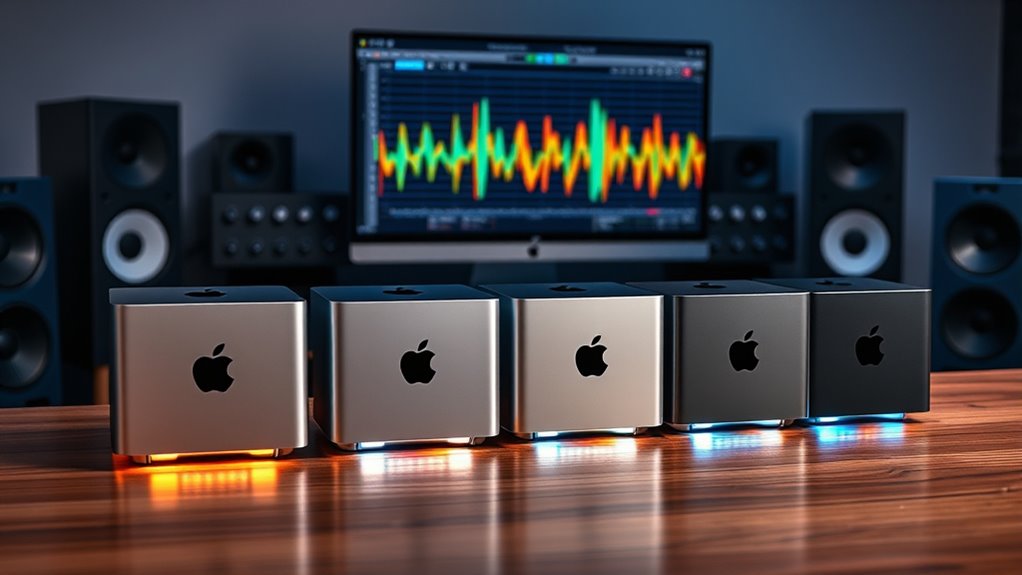

Choosing the right Mac Mini for a home studio workstation depends on your specific needs, whether you’re recording, mixing, or producing. The Apple 2026 Mac Studio with M5 Max stands out for its powerhouse performance, ideal for demanding audio projects. For more budget-conscious setups, the Apple 2024 Mac mini with M4 Chip offers solid performance at a lower price, while the Mac mini with M5 Pro chip balances processing power with versatility. The main tradeoffs involve balancing processing capacity, expandability, and cost. Continue reading for a detailed breakdown of each option and which will suit your studio best.

Get backup power and energy gear delivered free — and shop member deals
- Fast, free delivery on millions of items
- Access to Prime Big Deal Days deals on October 6–7
- Prime Video, Amazon Music and more included
Complete the kit

Key Takeaways
- High-end models with M6 chips deliver exceptional performance but come at a premium price, suitable for professional studios.
- The M4 and M4 Pro Mac minis provide a compelling balance of power and affordability for most home studio users.
- More RAM and SSD storage significantly improve workflow efficiency, especially for large audio projects.
- Choosing between Mac Studio and Mac mini models depends on your need for expandability versus compactness.
- Budget models like the M1 Mac mini remain viable for entry-level setups, but future-proofing favors newer chips.
| Apple 2026 Mac Studio Desktop Computer with M5 Max Chip |  | Best Overall for High-End Creative and AI Workflows | Chip: M5 Max | Memory: Up to 128GB | Memory Bandwidth: 614GB/s | VIEW ON AMAZON | See Our Full Breakdown |
| Apple 2024 Mac mini Desktop Computer with M4 Chip, 16GB RAM, 512GB SSD, Gigabit Ethernet |  | Best Compact for Versatile Everyday and Professional Use | Processor: M4 chip with 10-core CPU and 10-core GPU | Memory: 16GB Unified Memory | Storage: 512GB SSD | VIEW ON AMAZON | See Our Full Breakdown |
| Apple 2026 Mac mini Desktop Computer with M5 Pro chip |  | Best for Advanced Creators and AI-Driven Workflows | Chip: Apple M5 Pro | Wireless chip: Apple N1 | Memory bandwidth: 307GB/s | VIEW ON AMAZON | See Our Full Breakdown |
| Apple 2024 Mac mini Desktop Computer with M4 Pro Chip, 24GB Memory, 512GB SSD, and AppleCare+ |  | Best for Professional and Personal Use with Extended Support | Processor: M4 Pro chip with 12-core CPU and 16-core GPU | Memory: 24GB Unified Memory | Storage: 512GB SSD | VIEW ON AMAZON | See Our Full Breakdown |
| Apple 2022 Mac Studio with M1 Max Chip, 10-Core CPU, 32GB RAM, 512GB SSD (Renewed) |  | Best for Budget-Conscious Power Users Looking for Renewed Excellence | VIEW ON AMAZON | See Our Full Breakdown | |||
| Apple 2026 Mac mini Desktop Computer with M6 Chip |  | Best for Cutting-Edge AI Performance and Compact Space-Saving Design | Chip: Apple M6 | Memory: Up to 32GB unified memory | Neural Engine: Dual 16-core | VIEW ON AMAZON | See Our Full Breakdown |
| Apple 2020 Mac Mini with Apple M1 Chip, 8GB RAM, 256GB SSD – Silver (Renewed) |  | Best for Budget-Conscious Creators Needing Solid Performance | Processor: Apple M1 | CPU: 8-core | GPU: 8-core | VIEW ON AMAZON | See Our Full Breakdown |
| Apple 2026 Mac mini Desktop Computer with M6 Chip | | Best for High-End AI and Versatile Connectivity in a Tiny Frame | Chip: Apple M6 | Memory: Up to 32GB unified | Neural Engine: Dual 16-core | VIEW ON AMAZON | See Our Full Breakdown |
| Apple 2026 Mac mini Desktop Computer with M6 Chip | | Best for Ultimate AI Power and Seamless Ecosystem Integration | Chip: Apple M6 | Memory: Up to 32GB unified | Neural Engine: Dual 16-core | VIEW ON AMAZON | See Our Full Breakdown |
| Apple 2024 Mac mini Desktop Computer with M4 Pro Chip (12-Core CPU, 16-Core GPU), 24GB Unified Memory, 512GB SSD, Gigabit Ethernet | | Best for Power Users Seeking High Performance and Storage in a Compact Design | Chip: Apple M4 Pro | CPU: 12-core | GPU: 16-core | VIEW ON AMAZON | See Our Full Breakdown |
| mac mini for home studio workstation | Ports | Chip | Memory | Storage |
|---|---|---|---|---|
| Apple 2026 Mac Studio Desktop | 4 Thunderbolt 5, 2 USB-C, 2 USB-A, HDMI, SDXC, headphone | M5 Max | Up to 128GB | Up to 2x faster storage |
| Apple 2024 Mac mini Desktop Co | Thunderbolt, HDMI, Gigabit Ethernet, USB-C, headphone | — | 16GB Unified Memory | 512GB SSD |
| Apple 2026 Mac mini Desktop Co | 3x Thunderbolt 5, HDMI, 2.5Gb Ethernet, USB-C, headphone | Apple M5 Pro | — | — |
| Apple 2024 Mac mini Desktop Co | Thunderbolt, HDMI, Gigabit Ethernet, front USB-C, headphone | — | 24GB Unified Memory | 512GB SSD |
| Apple 2022 Mac Studio with M1 | — | — | — | — |
| Apple 2026 Mac mini Desktop Co | 3x Thunderbolt 4, HDMI, 2.5Gb Ethernet, 2x USB-C (front), Headphone jack | Apple M6 | Up to 32GB unified memory | — |
| Apple 2020 Mac Mini with Apple | — | — | — | 256GB SSD |
| Apple 2026 Mac mini Desktop Co | 3x Thunderbolt 4, HDMI, 2.5Gb Ethernet, front USB-C | Apple M6 | Up to 32GB unified | — |
| Apple 2026 Mac mini Desktop Co | 3x Thunderbolt 4, HDMI, 2.5Gb Ethernet | Apple M6 | Up to 32GB unified | — |
| Apple 2024 Mac mini Desktop Co | — | Apple M4 Pro | — | 512GB SSD |
More Details on Our Top Picks
Apple 2026 Mac Studio Desktop Computer with M5 Max Chip
The Mac Studio with M5 Max stands out for its unparalleled performance, especially suited for demanding creative and AI tasks that can challenge even the most powerful machines like the Mac mini with M5 Pro. Unlike the compact Mac mini, the Mac Studio offers up to 128GB of memory and a thermal system designed for intensive workloads, making it a clear choice for professionals needing raw power. Its extensive port selection supports multiple high-resolution displays and fast data transfer, yet its high price and limited upgradeability make it less appealing for budget-conscious users. This model is ideal for those whose work demands maximum processing capability in a desktop form factor.
Pros:- Exceptional performance with the M5 Max chip for demanding workloads
- Supports multiple external displays and high-speed connections
- Compact, quiet, and suitable for desk placement
- Advanced thermal management for sustained intensive tasks
Cons:- High price point limits accessibility for some users
- Limited upgradeability due to integrated components
Best for: Professionals who require maximum performance for creative applications, AI workflows, and multi-display setups
Not ideal for: Home users with casual needs or limited budgets, as the high cost may outweigh its benefits for non-professional tasks
- Chip:M5 Max
- Memory:Up to 128GB
- Memory Bandwidth:614GB/s
- Storage:Up to 2x faster storage
- Ports:4 Thunderbolt 5, 2 USB-C, 2 USB-A, HDMI, SDXC, headphone
- Wireless:Wi-Fi 7, Bluetooth 6
- Dimensions:7.7-inch square
Our verdict“This pick is best suited for professionals needing top-tier power and extensive connectivity, despite its premium price.”
Apple 2024 Mac mini Desktop Computer with M4 Chip, 16GB RAM, 512GB SSD, Gigabit Ethernet
The Mac mini with M4 offers a compelling balance of performance and size, making it ideal for users who need a capable desktop without taking up much space. Its 16GB of unified memory and 512GB SSD provide speedy operation for most professional tasks and everyday workflows, and its multiple ports offer flexible connectivity. Compared to the Mac mini with M5 Pro, it lacks the same high-end AI and creative processing power but still supports a smooth user experience. Its limited storage options and absence of a dedicated GPU mean it’s less suited for graphics-intensive work or large data projects, but its lower price relative to higher-end models makes it attractive for budget-conscious buyers.
Pros:- Compact size fits easily in tight spaces
- Powerful M4 chip ensures fast, fluid performance
- Multiple ports for versatile connectivity
- Excellent for everyday and professional productivity
Cons:- Limited storage beyond 512GB SSD
- No dedicated GPU for graphics-heavy tasks
- Higher price for what is essentially a mid-range machine
Best for: Small workspace users needing reliable performance for productivity, light creative work, and seamless Apple ecosystem integration
Not ideal for: Power users or those working with large datasets, high-end AI, or gaming, due to limited performance and storage options
- Processor:M4 chip with 10-core CPU and 10-core GPU
- Memory:16GB Unified Memory
- Storage:512GB SSD
- Ports:Thunderbolt, HDMI, Gigabit Ethernet, USB-C, headphone
- Dimensions:5 x 5 inches
Our verdict“This Mac mini makes the most sense for users wanting a small, capable desktop that integrates seamlessly with the Apple ecosystem and doesn’t require extreme performance.”
Apple 2026 Mac mini Desktop Computer with M5 Pro chip
The Mac mini with M5 Pro offers a substantial upgrade over the M4, with a CPU and memory architecture optimized for AI and creative workflows. Its support for up to three external displays and the inclusion of three Thunderbolt 5 ports make it a flexible choice for multi-monitor setups and data transfer needs. The addition of Wi-Fi 7 and Bluetooth 6 ensures cutting-edge connectivity. Compared to the Mac Studio, it’s more compact but still packs enough power for advanced tasks—though it lacks a dedicated GPU, which limits its suitability for high-end gaming or graphics-intensive projects. This makes it an excellent option for users who need a balance of power and space-saving design.
Pros:- Powerful M5 Pro chip with superior AI performance
- Supports up to three external displays
- Multiple Thunderbolt 5 ports for expandability
- Compact five-by-five-inch form factor
Cons:- Monitor, keyboard, and mouse not included
- No dedicated GPU for high-end gaming or rendering
Best for: Advanced creators and AI developers who need multiple displays and robust connectivity in a small footprint
Not ideal for: Gamers or users with extreme graphics demands, because it does not include a dedicated GPU and is more tailored for AI and productivity
- Chip:Apple M5 Pro
- Wireless chip:Apple N1
- Memory bandwidth:307GB/s
- Ports:3x Thunderbolt 5, HDMI, 2.5Gb Ethernet, USB-C, headphone
- External displays supported:Up to 3
- Form factor:5 x 5 inch desktop
Our verdict“Ideal for professionals needing multiple displays and AI capabilities in a small, versatile package, despite lacking dedicated graphics hardware.”
Apple 2024 Mac mini Desktop Computer with M4 Pro Chip, 24GB Memory, 512GB SSD, and AppleCare+
The Mac mini with M4 Pro offers a significant performance boost over base models, with 24GB of unified memory and a 12-core CPU paired with a 16-core GPU, making it suitable for demanding professional tasks. Its compact size and front-facing USB-C port add to its convenience, while the inclusion of AppleCare+ provides peace of mind for extended support. Compared with the Mac mini with M5 Pro, it’s less powerful in AI and multi-display capacity but still delivers excellent performance for most workflows. It’s particularly appealing for users who want a balance of power, support, and compact design without the highest-end specs.
Pros:- Powerful M4 Pro chip with 12-core CPU and 16-core GPU
- Includes AppleCare+ for extended protection
- Compact size with multiple connectivity options
- Fast 512GB SSD storage
Cons:- Limited upgrade options due to integrated design
- No dedicated GPU for graphics-intensive tasks
- Premium price for a mid-range configuration
Best for: Creative professionals needing strong performance and extended support in a small form factor
Not ideal for: High-end gamers or users requiring maximum GPU performance, as it relies on integrated graphics
- Processor:M4 Pro chip with 12-core CPU and 16-core GPU
- Memory:24GB Unified Memory
- Storage:512GB SSD
- Dimensions:5 x 5 inches
- Ports:Thunderbolt, HDMI, Gigabit Ethernet, front USB-C, headphone
- AppleCare+:Included for 3 years
Our verdict“This Mac mini offers a compelling mix of power, support, and size, best for professionals who value reliability and extended coverage.”
Apple 2022 Mac Studio with M1 Max Chip, 10-Core CPU, 32GB RAM, 512GB SSD (Renewed)
The Mac Studio with M1 Max provides substantial power at a lower cost as a renewed product, making it attractive for users who need high performance but want to save money. Its 10-core CPU and 32GB RAM support multitasking and demanding creative workflows, though it falls behind the latest M5 Max or M5 Pro in AI performance and multi-display capacity. Compared to newer models, it’s a practical choice for those who can accept a renewed device with non-Apple packaging and non-original accessories. The 512GB SSD offers decent storage, but users working with large files may need external drives. It’s a smart pick for budget-minded professionals who value power over brand new status.
Pros:- Powerful M1 Max chip with 10-core CPU
- Large 32GB RAM for multitasking
- Fast 512GB SSD storage
- Renewed product with tested quality
Cons:- Not Apple certified, official warranty limited
- Accessories are non-original and packaging is generic
- Lacks latest connectivity features found in newer models
Best for: Budget-conscious professionals or hobbyists seeking high-performance hardware without paying full retail for a new device
Not ideal for: Users needing the latest AI features or the highest multi-monitor support, as it’s based on older hardware
Our verdict“This refurbished Mac Studio offers high performance at a more accessible price point, ideal for budget-savvy professionals needing serious power.”
Apple 2026 Mac mini Desktop Computer with M6 Chip
This Mac mini with the M6 chip stands out for its extraordinary AI capabilities, thanks to a Dual 16-core Neural Engine that offers up to 4.8x faster AI performance. Its compact 5×5-inch form factor makes it ideal for space-constrained setups, unlike larger options like the Mac Studio. While it excels in AI-heavy workflows and offers extensive connectivity—including Thunderbolt 4 ports and 2.5Gb Ethernet—it does come with a notable tradeoff: memory isn’t user-upgradeable, and the monitor, keyboard, and mouse are not included. This pick makes the most sense for those who prioritize AI acceleration and minimal desk footprint over upgrade flexibility.
Pros:- Exceptional AI performance with Dual 16-core Neural Engine
- Extremely compact 5×5-inch design fits anywhere
- Versatile connectivity including Thunderbolt 4 and 2.5Gb Ethernet
- Seamless Apple ecosystem integration
Cons:- Memory is not upgradeable after purchase
- Monitor, keyboard, and mouse not included
Best for: AI developers, multimedia producers, and creators who need lightning-fast AI processing in a tiny package
Not ideal for: Professional users requiring expandable memory or storage or those needing bundled peripherals
- Chip:Apple M6
- Memory:Up to 32GB unified memory
- Neural Engine:Dual 16-core
- Ports:3x Thunderbolt 4, HDMI, 2.5Gb Ethernet, 2x USB-C (front), Headphone jack
- Wireless:Wi-Fi 7, Bluetooth 6
- Size:5 x 5 inches
Our verdict“This is the ideal choice for AI-focused professionals who need a compact, high-performance machine with extensive connectivity.”
Apple 2020 Mac Mini with Apple M1 Chip, 8GB RAM, 256GB SSD – Silver (Renewed)
Compared with the newer Mac mini options with M6 chips, the 2020 Mac Mini with M1 remains a strong performer for home studio workstations due to its reliable M1 chip, offering up to 3x faster CPU and 6x faster GPU performance than previous Intel models. Its 8GB of unified memory ensures smooth multitasking, but this can be limiting for demanding projects, especially when compared to the 32GB max in newer M6 models. Though it’s a renewed unit, it provides excellent value for users who want reliable Apple silicon performance without the premium price, but it’s not ideal for those needing large, upgradeable storage or memory. It’s a practical choice for budget-conscious creators who need a capable, compact machine.
Pros:- M1 chip delivers significant CPU and GPU speed gains
- Compact design fits easily into small desks
- 16-core Neural Engine enhances machine learning tasks
- Refurbished units offer good value
Cons:- Limited to 256GB storage, which can fill up quickly
- 8GB RAM may be restrictive for intensive multitasking
- Refurbished condition may affect long-term reliability
Best for: Beginners and hobbyists seeking reliable Apple Silicon performance at a lower cost
Not ideal for: Professional studios or users with demanding, large projects that require more RAM or storage
- Processor:Apple M1
- CPU:8-core
- GPU:8-core
- Neural Engine:16-core
- RAM:8GB unified
- Storage:256GB SSD
Our verdict“This Mac mini offers excellent performance for entry-level or casual creators on a budget who prioritize reliability over expandability.”
Apple 2026 Mac mini Desktop Computer with M6 Chip
The 2026 Mac mini with M6 chip is tailored for creators who want cutting-edge AI performance combined with exceptional connectivity options. Its Dual 16-core Neural Engine and Neural Accelerators enable up to 4.8x faster AI workflows, making it a step above the M1-based options like the renewed Mac mini. Its compact 5×5-inch form factor allows easy placement under or beside a monitor, while offering extensive ports including Thunderbolt 4, HDMI, and 2.5Gb Ethernet. The main tradeoff is the fixed 32GB maximum memory, which may limit some demanding professional workloads. This makes it ideal for AI-heavy creatives who need portability and advanced features.
Pros:- Exceptional AI with 4.8x faster workflows
- Ultra-compact 5×5-inch size fits anywhere
- Broad connectivity including Thunderbolt 4 and 2.5Gb Ethernet
- Ecosystem integration with iPhone
Cons:- Limited to 32GB memory, restricting for some workflows
- Monitor, keyboard, and mouse not included
Best for: AI developers, multimedia artists, and advanced users needing maximum AI performance in a small footprint
Not ideal for: Users requiring higher memory capacity or upgradeability for very large projects
- Chip:Apple M6
- Memory:Up to 32GB unified
- Neural Engine:Dual 16-core
- Ports:3x Thunderbolt 4, HDMI, 2.5Gb Ethernet, front USB-C
- Wireless:Wi-Fi 7, Bluetooth 6
- Size:5 x 5 inches
Our verdict“This Mac mini is perfect for professionals who prioritize AI performance and compact design over expandable memory.”
Apple 2026 Mac mini Desktop Computer with M6 Chip
The 2026 Mac mini with M6 chip offers unmatched AI processing capabilities, with a Dual 16-core Neural Engine and Neural Accelerators in each GPU core, making it ideal for AI-intensive workflows or machine learning tasks. Its compact 5×5-inch design fits neatly into any workspace, similar to the other M6 models, but its advanced AI features set it apart. Connectivity options include Thunderbolt 4, HDMI, and 2.5Gb Ethernet, ensuring compatibility with a variety of studio peripherals. The main downside involves the fixed 32GB maximum memory, which could be limiting for future-proofing demanding projects. This is the choice for those who need top-tier AI performance in a tiny, highly integrated package.
Pros:- Unmatched AI performance with 4.8x faster workflows
- Compact size offers versatile placement options
- Excellent connectivity including Thunderbolt 4 and Ethernet
- Seamless Apple ecosystem integration
Cons:- Memory capped at 32GB, limiting some demanding uses
- No included peripherals
Best for: AI researchers, creative professionals, and developers needing maximum AI throughput in a small form factor
Not ideal for: Users who need higher memory capacity or plan to upgrade storage and RAM later
- Chip:Apple M6
- Memory:Up to 32GB unified
- Neural Engine:Dual 16-core
- Ports:3x Thunderbolt 4, HDMI, 2.5Gb Ethernet
- Wireless:Wi-Fi 7, Bluetooth 6
- Size:5 x 5 inches
Our verdict“This Mac mini is best suited for AI-centric professionals who need maximum AI speed and a tiny footprint, accepting the fixed memory limit.”
Apple 2024 Mac mini Desktop Computer with M4 Pro Chip (12-Core CPU, 16-Core GPU), 24GB Unified Memory, 512GB SSD, Gigabit Ethernet
The 2024 Mac mini with M4 Pro combines powerful processing with ample memory and storage, making it an excellent choice for demanding home studio setups. Its 12-core CPU and 16-core GPU deliver performance that surpasses many predecessors, and the 24GB of unified memory supports heavy multitasking and large projects. While it’s larger than the ultra-compact M6 models, it still fits easily on most desks. Compared to the M6-based options, it offers more memory and storage, but lacks the ultra-small size and AI-specific features. This model is ideal for creators who need a balance of high performance, storage, and expandability in a compact form.
Pros:- Powerful 12-core CPU and 16-core GPU for demanding workloads
- 24GB of unified memory supports heavy multitasking
- 512GB SSD provides ample storage for projects
- Versatile connectivity including Gigabit Ethernet
Cons:- Larger footprint than ultra-compact models
- Base storage of 512GB might be limiting for large projects
- No mention of future upgradeability
Best for: Producers and engineers needing robust processing and storage for audio, video, and multimedia projects
Not ideal for: Those who prioritize the smallest possible size or ultra-advanced AI features over raw power
- Chip:Apple M4 Pro
- CPU:12-core
- GPU:16-core
- Unified Memory:24GB
- Storage:512GB SSD
- Ethernet:Gigabit
Our verdict“This Mac mini is best suited for creators who need serious processing power and storage in a compact but not tiny package.”
How We Picked
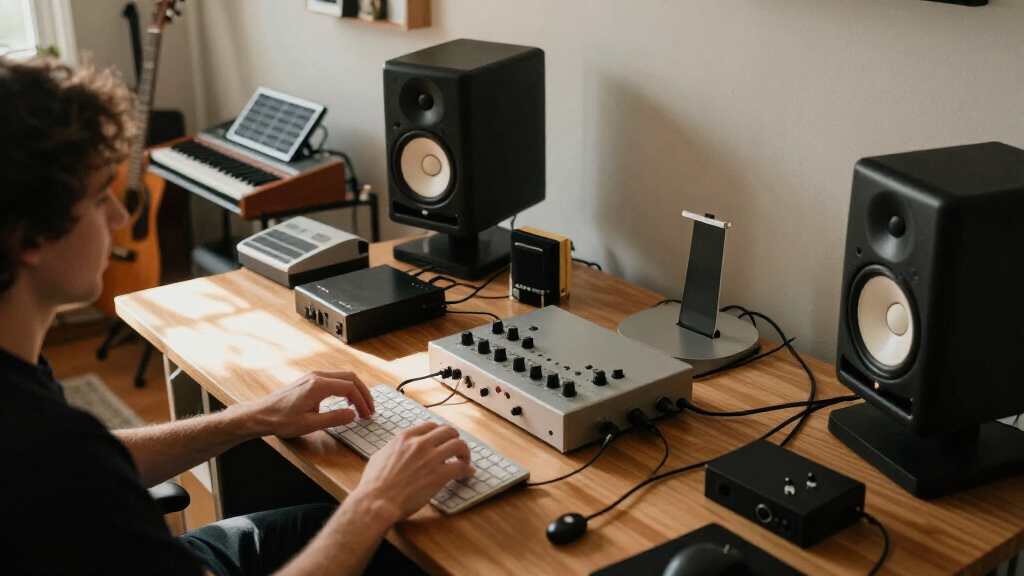
We evaluated these Mac mini options based on core performance metrics such as CPU and GPU power, RAM capacity, and storage options, all critical for handling audio production tasks. Usability factors like port selection, expandability, and compatibility with studio equipment were also considered. Price-to-performance ratio played a major role, ensuring each recommendation offers value relative to its capabilities. The ranking reflects a balance between raw power, future-proofing, and affordability, aiming to guide different levels of home studio builders—whether beginners or seasoned professionals.| mac mini for home studio workstation | Chip |
|---|---|
| Apple 2026 Mac Studio Desktop | M5 Max |
| Apple 2024 Mac mini Desktop Co | — |
| Apple 2026 Mac mini Desktop Co | Apple M5 Pro |
| Apple 2024 Mac mini Desktop Co | — |
| Apple 2022 Mac Studio with M1 | — |
| Apple 2026 Mac mini Desktop Co | Apple M6 |
| Apple 2020 Mac Mini with Apple | — |
| Apple 2026 Mac mini Desktop Co | Apple M6 |
| Apple 2026 Mac mini Desktop Co | Apple M6 |
| Apple 2024 Mac mini Desktop Co | Apple M4 Pro |
Factors to Consider When Choosing Mac Mini For Home Studio Workstations
When selecting a Mac mini for a home studio workstation, understanding the key factors can prevent costly mistakes and ensure your setup meets your creative needs. It’s tempting to focus solely on processor speed, but other elements like RAM, storage, and connectivity are equally vital for seamless audio workflows. Considering expandability and future-proofing can save money long-term. Here are the main aspects to evaluate:Processor Power and Chipset
The choice of chip directly impacts your ability to run multiple plugins, digital audio workstations, and real-time effects. The latest M6 chips offer the best performance for demanding tasks, but they come at a higher cost. Mid-range options like M4 Pro still handle most audio production needs efficiently and are more budget-friendly. Avoid older chips if you plan to use intensive software or multiple tracks, as they may struggle with multitasking or future updates.
Memory and Storage
For home studios, 16GB of RAM is often the minimum for smooth multitasking, especially when running large sample libraries or multiple DAWs. Opting for 24GB or more can significantly improve your experience, reducing lag and processing bottlenecks. Storage speed and capacity matter too—SSD drives with 512GB or higher allow quick project access and space for large audio files. Balancing cost with these factors is key: more RAM and storage mean higher upfront costs but better long-term performance.
Connectivity and Expandability
Multiple Thunderbolt ports, USB-C, and Ethernet options are essential for connecting audio interfaces, MIDI controllers, and external drives. The Mac mini’s limited internal expandability makes port selection critical; choose a model with enough ports to avoid costly hubs or adapters. For those with future expansion plans, models with higher port counts or support for external PCIe cards (via Thunderbolt) are worth considering. Remember, a cluttered workspace can hinder workflow, so prioritize models with ample and versatile connectivity.
Size, Noise, and Power Consumption
The compact form factor of the Mac mini makes it ideal for small studios or shared spaces. However, higher-performance chips generate more heat and noise, which can affect recording quality. Look for models with efficient cooling and low noise levels if your studio environment is sensitive. Power consumption is another factor—more powerful chips draw more juice, impacting electricity costs over time. Balance your need for performance with these environmental considerations.
Budget and Future Proofing
While lower-cost options may seem appealing, they often lack the processing headroom needed for future software updates and larger projects. Investing in a slightly more expensive model with a newer chip and more RAM can extend the lifespan of your studio setup. Consider your long-term goals—if you plan to expand your studio or handle more complex productions, paying extra now could save money later. Conversely, entry-level models work well for basic recording and mixing tasks without breaking the bank.
Frequently Asked Questions
Is a Mac mini powerful enough for professional music production?
Yes, recent Mac mini models with M4 Pro or M6 chips provide sufficient power for most professional music production tasks, including mixing, mastering, and handling multiple plugins. However, for extremely large projects or demanding virtual instruments, opting for the highest-tier chips and maximum RAM offers more headroom. Keep in mind that the Mac mini’s limited internal expansion means initial specifications should meet your long-term needs, especially if you plan to upgrade software or add hardware peripherals.
Should I prioritize more RAM or faster storage for my home studio?
Both are important, but if you need to choose, more RAM generally provides a more noticeable impact on multitasking and handling large projects, reducing lag and crashes. Storage speed affects load times and data transfer, but once a project is loaded, RAM plays a bigger role in smooth operation. For a balanced setup, aim for at least 16GB of RAM and a fast SSD with 512GB or more, especially if working with large sample libraries or high-resolution audio files.
Is a newer M6 chip worth the extra cost over an M4 Pro?
For demanding studio work, the M6 chip offers a notable boost in processing power, which can make a difference when running multiple virtual instruments or complex effects. If your workflow involves intensive tasks or future software updates that leverage newer hardware, investing in the M6 model provides more longevity. However, for moderate projects or hobbyist use, the M4 Pro remains a cost-effective choice that still delivers excellent performance.
How important are ports and expandability for a home studio Mac mini?
Ports are vital because they determine how many peripherals and external drives you can connect without clutter. The Mac mini’s limited internal expansion makes external connectivity essential. For home studios, having multiple Thunderbolt and USB-C ports allows flexible setups with audio interfaces, MIDI controllers, and storage devices. Choosing a model with enough ports upfront reduces the need for additional hubs or adapters, which can complicate your workspace and introduce potential latency issues.
Does the size of the Mac mini affect its performance or cooling?
The small form factor of the Mac mini is designed to manage heat effectively, but more powerful chips generate more heat, which can lead to increased noise levels or thermal throttling. Modern models incorporate efficient cooling systems, but if you plan to run intensive sessions for extended periods, consider a well-ventilated space or opting for a model with a higher-performance chip. Overall, size does not directly impact performance but influences heat dissipation and acoustic environment.
Conclusion
For most home studio builders, the Apple 2024 Mac mini with M4 Chip offers a compelling balance of power and price, making it ideal for hobbyists or semi-professionals. The Mac Studio with M5 Max remains the best choice for those demanding top-tier performance and future-proofing, suitable for professional studios. Beginners or those on a tighter budget should consider the M1 Mac mini, which still handles basic recording and editing tasks well. If you need a compact setup with room to grow, models with the latest M6 chips and higher RAM are worth the investment. Ultimately, matching your current needs and future plans will guide you toward the best Mac mini for your home studio in 2026.
As an affiliate, we earn on qualifying purchases.Halloween Picks
halloween