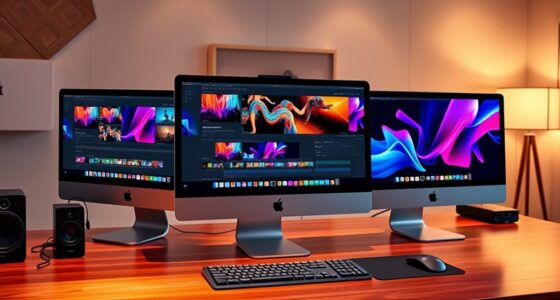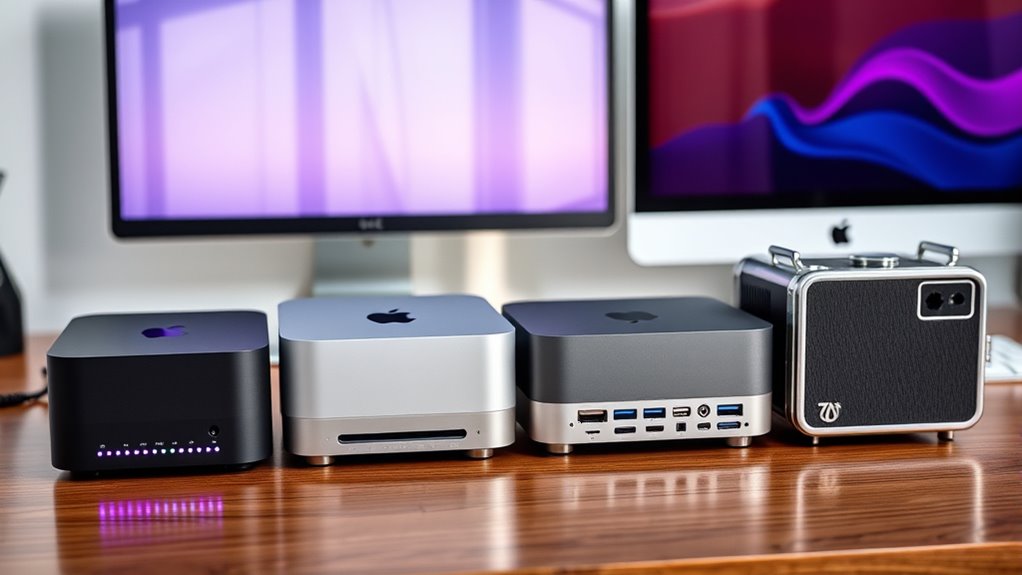

If you’re looking to build the perfect media server, I recommend considering four top Mac Mini options. The Apple Mac mini with the M4 Pro chip offers powerful performance, while models with the M4 chip, 16GB RAM, and 512GB SSD provide a great balance of speed and storage. For more memory, the M4 with 24GB is ideal, and the 2024 version guarantees future-proofing. Keep reading to find out which suits your setup best.
Key Takeaways
- Choose models with powerful Apple M4 chips (Pro or Max) for smooth media transcoding and multitasking.
- Opt for at least 16GB of RAM and SSD storage for quick access and efficient media management.
- Prioritize models with multiple connectivity options: Thunderbolt, HDMI, USB-C, Ethernet for versatile device integration.
- Consider energy-efficient models to reduce power costs during 24/7 media server operation.
- Balance budget with future-proof features like higher RAM, storage, and support for third-party media apps.
Apple Mac mini Desktop Computer with M4 Pro Chip
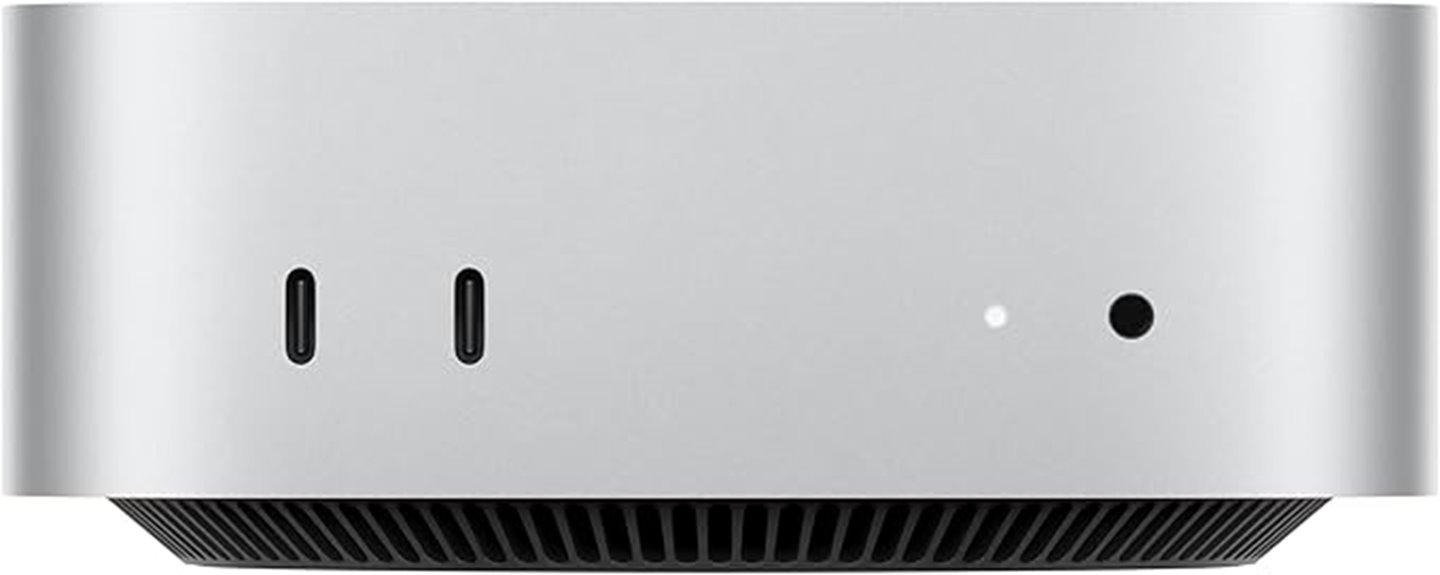
If you need a compact desktop that delivers serious power, the Apple Mac mini with the M4 Pro chip is an excellent choice. Its five-by-five-inch design fits easily beside your monitor or in tight spaces, yet it packs a punch with a 12-core CPU, 16-core GPU, and 24GB of unified memory. With 512GB SSD storage, it handles demanding tasks effortlessly. Connectivity is versatile, featuring Thunderbolt, HDMI, USB-C, Ethernet, and a headphone jack. Optimized for macOS and Apple Silicon, it runs professional software smoothly, making it ideal for media editing, coding, or multitasking—powerful performance in a tiny package.
Best For: power users who need a compact yet highly capable desktop for demanding tasks like media editing, coding, and multitasking.
Pros:
- Compact five-by-five-inch design fits easily in tight spaces or next to monitors
- Equipped with powerful M4 Pro chip featuring 12-core CPU and 16-core GPU for high performance
- Seamless integration with Apple ecosystem and macOS optimized for professional software
Cons:
- Limited upgradeability due to integrated hardware design
- Higher price point compared to less powerful compact desktops
- Limited storage options beyond 512GB SSD without external solutions
Apple Mac mini Desktop Computer with M4 Chip, 16GB RAM, 512GB SSD
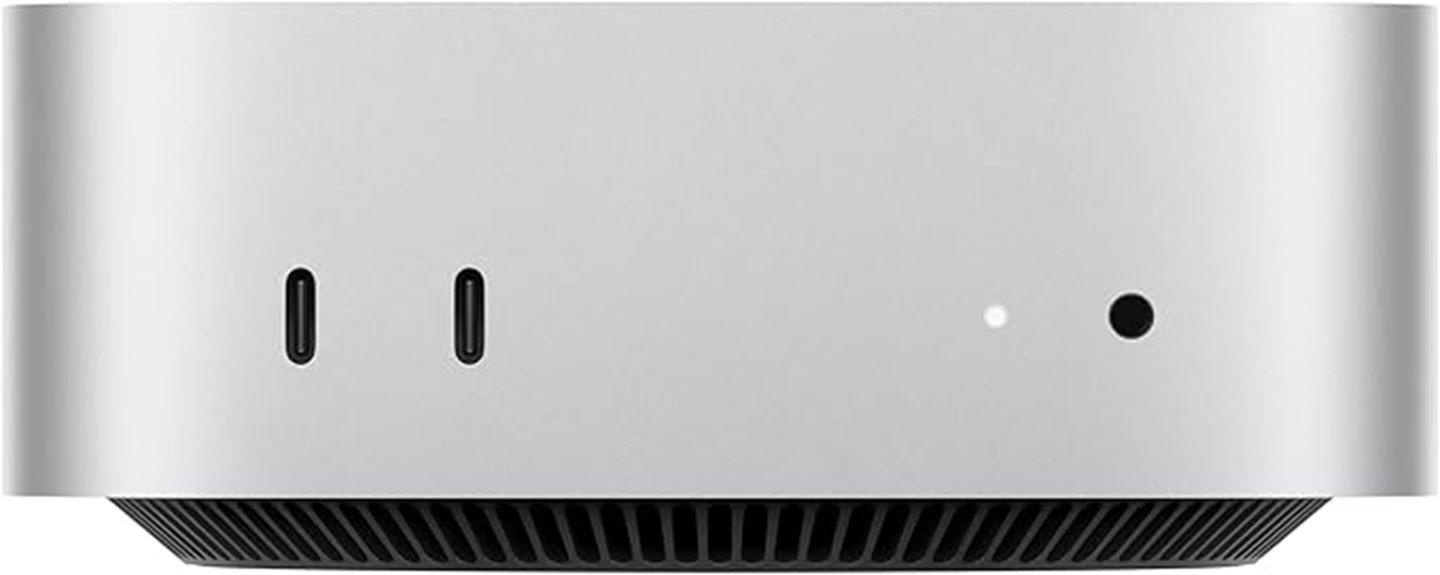
The Apple Mac mini with M4 chip, 16GB RAM, and 512GB SSD stands out as an ideal choice for demanding professionals who need powerful performance in a compact design. Its small, five-by-five-inch footprint easily fits next to a monitor or in tight spaces, making it perfect for a media server setup. The M4 chip delivers a 10-core CPU and GPU, ensuring snappy, smooth performance even with intensive tasks. Multiple ports—including Thunderbolt, HDMI, and USB-C—allow seamless connectivity. Built around Apple silicon, it integrates effortlessly into the Apple ecosystem, boosting productivity and privacy while supporting essential apps like Adobe Creative Cloud and Microsoft 365.
Best For: professionals and creatives who require a compact yet powerful desktop capable of handling demanding applications and seamless Apple ecosystem integration.
Pros:
- Compact five-by-five-inch design fits easily in tight spaces and next to monitors
- Powered by the advanced M4 chip with a 10-core CPU and GPU for superb performance
- Multiple connectivity options including Thunderbolt, HDMI, and USB-C for versatile peripherals
Cons:
- Limited upgradeability due to integrated architecture
- May require additional peripherals for complete setup
- Premium price point might be a consideration for budget-conscious users
Apple Mac mini Desktop Computer with M4 Chip and 24GB Memory
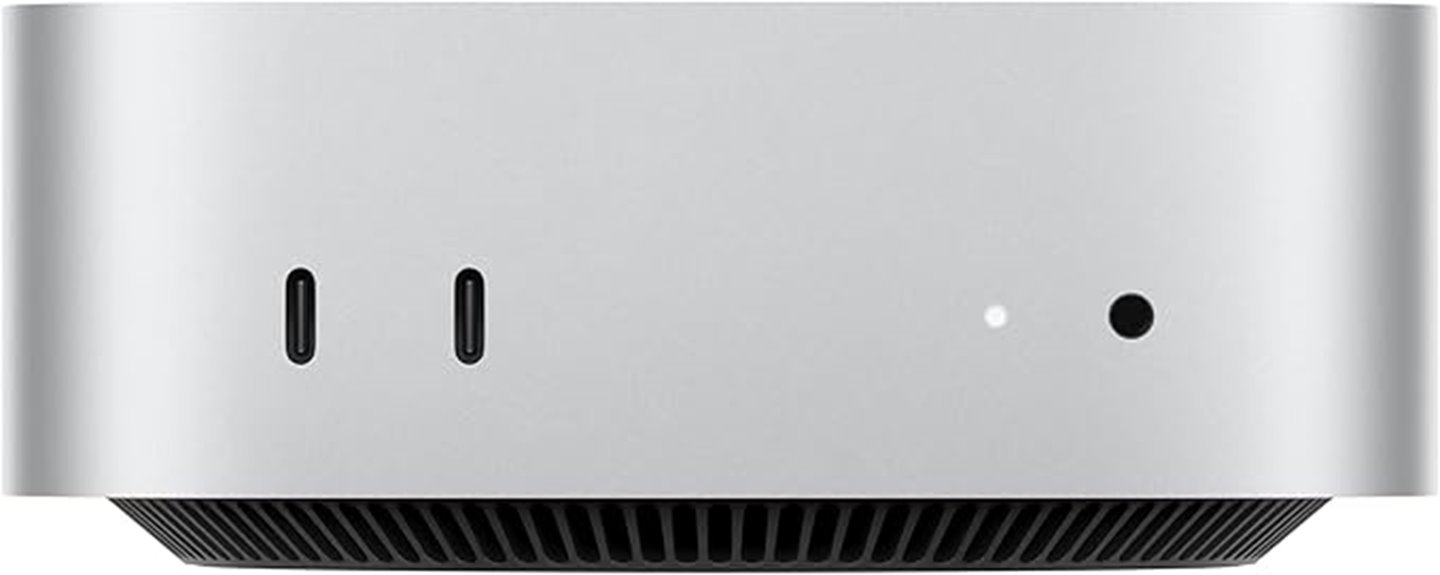
Looking for a compact desktop that combines powerful performance with seamless integration into the Apple ecosystem? The Mac mini with M4 chip and 24GB memory fits the bill perfectly. Its small, five-by-five-inch design easily fits next to your monitor or in tight spaces. The M4 chip with a 10-core CPU and GPU delivers lightning-fast responsiveness, while 24GB of unified memory and a 512GB SSD ensure smooth multitasking and quick data access. It offers versatile connectivity, including Thunderbolt, HDMI, USB-C, Ethernet, and a headphone jack. Built for macOS and Apple’s ecosystem, it’s ideal for media servers, creative workflows, or everyday use.
Best For: users seeking a compact yet powerful desktop that seamlessly integrates with the Apple ecosystem for creative work, media servers, or everyday productivity.
Pros:
- Small, space-saving design fits easily next to monitors or in tight spaces
- Powered by the efficient M4 chip with a 10-core CPU and GPU for fast performance
- Ample 24GB memory and 512GB SSD enable smooth multitasking and quick data access
Cons:
- Limited upgradability due to integrated hardware design
- Might be less suitable for high-end gaming or extremely intensive tasks compared to larger desktops
- Price may be higher relative to other compact PCs with similar specs
Apple 2024 Mac mini Desktop Computer with M4 Chip
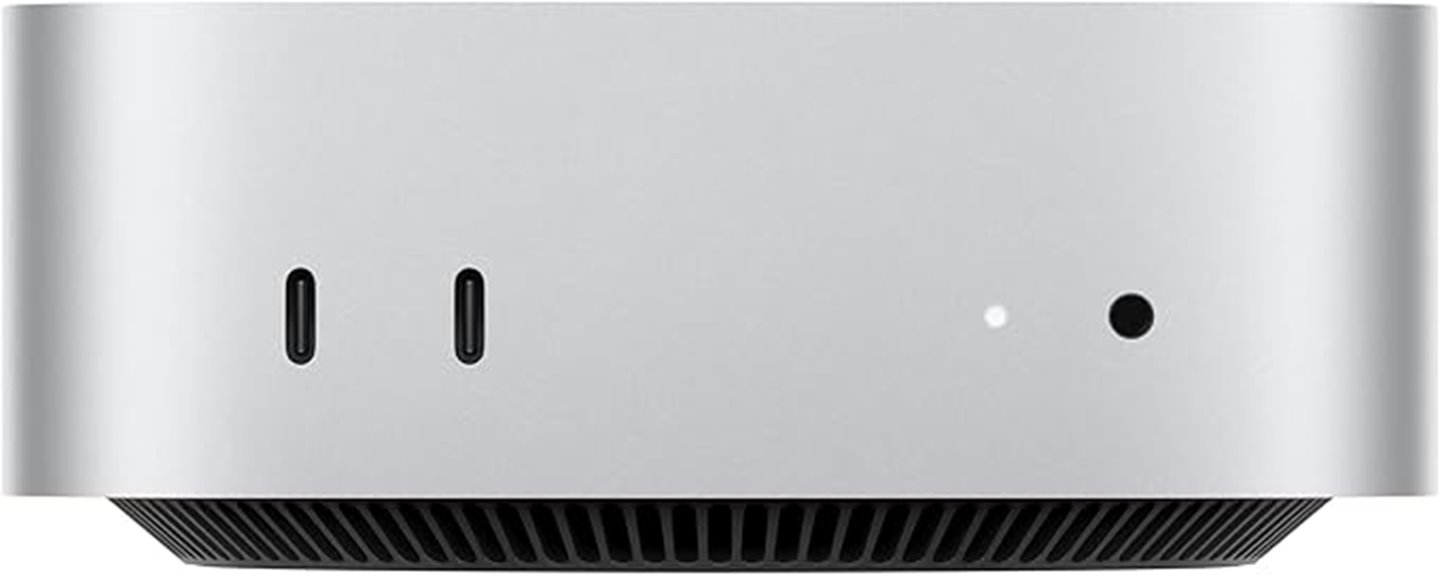
For those who need a powerful yet compact desktop, the Apple 2024 Mac mini with M4 chip stands out as a top choice. Its five-by-five-inch design easily fits next to monitors or in tight spaces, yet it packs impressive performance. The M4 chip with a 10-core CPU and GPU delivers fast, smooth operation, perfect for demanding tasks. With 16GB of unified memory and a 256GB SSD, it handles multitasking effortlessly. Connectivity options include Thunderbolt, HDMI, Gigabit Ethernet, USB-C, and a headphone jack. This Mac mini runs macOS optimized for Apple silicon and integrates seamlessly with other Apple devices, making it ideal for media servers and everyday use.
Best For: individuals or professionals seeking a compact yet powerful desktop computer for multitasking, media, and everyday computing with seamless Apple ecosystem integration.
Pros:
- Small form factor fits easily into tight spaces and next to monitors
- Powerful M4 chip with 10-core CPU and GPU ensures smooth performance
- Versatile connectivity options including Thunderbolt, HDMI, and Ethernet
Cons:
- Limited internal storage options beyond 256GB SSD may require external solutions
- No dedicated graphics card for high-end gaming or intensive 3D rendering
- May be more expensive compared to other compact PCs with similar hardware
Factors to Consider When Choosing Mac Mini as a Media Server

When choosing a Mac Mini as a media server, I consider several key factors to guarantee it meets my needs. I look at processing power, storage options, and connectivity features to handle media streaming smoothly. Additionally, compatibility with my devices and ongoing software support are essential for a reliable setup.
Processing Power Needs
Choosing the right Mac Mini for a media server hinges on its processing power, as this determines how well it can handle multiple streams, transcoding, and media rendering simultaneously. I look for models with multi-core CPUs, like a 10-core or higher, to guarantee smooth multitasking without lag. GPU capabilities are also essential—preferably with a 10-core or 16-core GPU—to manage video transcoding and rendering efficiently. Larger RAM, such as 16GB or more, supports seamless media processing and multitasking. Storage capacity matters too; I opt for at least 512GB SSD to store large media libraries and enable fast data access. Overall, I assess the processing architecture, favoring Apple’s M4 Pro or M4 chips, for peak performance tailored specifically to media server needs.
Storage Capacity Options
Selecting the right storage capacity for your Mac mini as a media server depends on how extensive your media library is and how quickly you need access to your files. Storage options typically range from 256GB to 2TB or more, based on the model. If you have a large collection of high-resolution videos or extensive music libraries, opting for higher capacity guarantees you can store everything locally without constantly managing external drives. External SSDs or NAS solutions can also expand your storage, but internal SSDs offer faster access and greater reliability, especially for streaming and editing. Choosing higher storage not only simplifies access but can also improve overall media performance, making your setup more efficient and less cluttered.
Connectivity Features
To make certain your Mac mini functions effectively as a media server, it’s vital to pay attention to its connectivity features. Look for models with multiple ports like Thunderbolt, HDMI, and USB-C to support various media devices and peripherals. A high-speed Ethernet port is essential for reliable network streaming and large data transfers. Confirm the Mac mini supports Wi-Fi 6 or later for fast, stable wireless connections. Audio options such as headphone jacks or digital audio ports are important for high-quality sound output. Additionally, check if the device can support peripheral hubs or docks, which expand connectivity options as your setup grows. These features ensure seamless media streaming, device compatibility, and future-proof your media server.
Compatibility With Devices
When setting up a Mac mini as a media server, verifying its compatibility with your existing devices makes a big difference. First, check that it has the necessary ports like Thunderbolt or HDMI to connect to your TV, speakers, or external drives. Next, confirm it works smoothly with your network, whether via Wi-Fi or Ethernet, for seamless streaming and file sharing. It’s also crucial to verify the Mac mini supports the latest macOS updates so your media apps and streaming services stay compatible. Additionally, review its hardware specs, such as processing power and memory, to handle media transcoding and multitasking without issues. Finally, make sure it can integrate easily with your other Apple devices, enabling effortless content sharing and remote management. Compatibility is key to a reliable, versatile media server setup.
Software Support and Updates
Since software support and updates are crucial for maintaining compatibility and security, it’s important to keep your Mac mini’s operating system current. Regular updates from Apple ensure your device stays compatible with the latest media server applications and security patches. macOS offers built-in support for media management, streaming, and sharing, which are indispensable for a reliable media server. Compatibility with third-party software like Plex, Emby, or Jellyfin depends on ongoing macOS support and updates. Firmware and driver updates delivered via macOS enhance hardware performance and stability, especially during media streaming. Staying current with software updates minimizes security vulnerabilities, improves overall performance, and ensures your media server runs smoothly and securely over time.
Power Consumption Levels
Choosing a Mac Mini for your media server means considering how much energy it uses during operation. Lower power consumption helps cut electricity costs and reduces environmental impact over time. Efficient energy use is especially important for a 24/7 setup, preventing overheating and minimizing ongoing energy bills. Devices with optimized power levels generate less heat, which means quieter operation and a longer lifespan for your hardware. Power consumption varies depending on workload; idle states consume much less energy than active tasks like streaming or transcoding. Picking a model with energy-efficient components not only saves money but also helps you meet green standards and energy certifications. Ultimately, considering power consumption ensures your media server runs smoothly, efficiently, and sustainably, without unnecessary energy waste.
Budget Considerations
Considering your budget is essential when selecting a Mac Mini for your media server, as it helps you find a model that balances performance and affordability. Determine a clear budget range to choose a model that provides the necessary power without overspending. Higher-end models with more RAM and storage cost more but considerably enhance media server capabilities and future-proofing. Remember to factor in long-term value and potential upgrade costs, ensuring your choice meets future needs. Balance your budget against critical specifications like CPU, memory, and connectivity options to optimize streaming performance. Don’t forget additional expenses such as external drives, accessories, or software for a complete setup. Keeping these considerations in mind ensures you make a smart investment aligned with both your current and future media needs.
Frequently Asked Questions
How Does the M4 Pro Chip Improve Media Server Performance?
The M4 Pro chip markedly boosts media server performance by offering faster processing speeds and improved efficiency. I notice quicker data handling, smoother streaming, and better multitasking capabilities with this chip. It handles high-resolution media files effortlessly, reducing lag and buffering. Overall, the M4 Pro makes my media server more responsive and reliable, ensuring I enjoy seamless access to my media library without interruptions or delays.
Is 16GB RAM Sufficient for Large Media Libraries?
Think of 16GB RAM as a sturdy backpack for your media library—great for most trips, but a bit cramped for a cross-country journey. I find it sufficient for managing large media libraries, streaming, and multitasking. However, if you’re dealing with extremely high-resolution videos or a massive collection, upgrading to more RAM might be wise. For most users, though, 16GB hits the sweet spot between performance and cost.
What Storage Options Are Available for Mac Mini Media Servers?
When it comes to storage options for Mac Mini media servers, I recommend considering both internal and external solutions. The Mac Mini offers SSD options up to 2TB, which is fast and reliable. For larger media libraries, I suggest adding external drives like Thunderbolt or USB-C SSDs or HDDs. This way, you get ample space and easy expandability without sacrificing speed or performance.
How Does the 2024 Mac Mini Differ From Previous Models?
The 2024 Mac Mini has significant upgrades, including the latest M3 chip for faster performance and enhanced energy efficiency. It offers improved GPU capabilities, more RAM options, and better connectivity features like Thunderbolt 4 and Wi-Fi 6E. I find these improvements make it a powerful choice for media servers, ensuring smoother streaming and multitasking compared to earlier models, which had older processors and limited connectivity options.
What Are the Best Connectivity Options for Media Streaming?
When it comes to media streaming, I prefer a setup that offers seamless connectivity. I rely on Wi-Fi 6 for fast, reliable wireless performance, and Ethernet for steady, high-speed wired connections. Thunderbolt 3 and HDMI ports also come in handy for connecting external displays and audio devices, ensuring I enjoy smooth, high-quality media playback. These options make my media experience both effortless and impressive.
Conclusion
Choosing the right Mac mini is like selecting the perfect vessel for your media universe—whether it’s the sleek power of the M4 Pro or the versatile M4 with ample RAM. Each model offers a unique path through your digital landscape, from quiet streams to bustling servers. Think of it as planting a seed in fertile ground, ready to grow into a vibrant media hub, tailored to your needs and dreams.