If you’re after the best iMacs for stunning visuals in 2025, I recommend models with the latest M4 chip, a 4.5K Retina display supporting a billion colors, and options like Nano-Texture Glass for glare reduction. Look for high brightness levels, wide color gamut support, and fast SSD storage for smooth workflow. These features guarantee top-tier image quality and performance. Keep going to discover detailed insights on choosing the perfect iMac for your photography needs.
Key Takeaways
- The 24-inch Retina display with 4.5K resolution offers vibrant, true-to-life colors ideal for professional photo editing.
- Wide color gamut support and high brightness (500 nits) ensure accurate color calibration and consistent visual fidelity.
- Seamless compatibility with external 6K displays and Thunderbolt 4 ports boosts workflow efficiency for photographers.
- Fast SSD storage (512GB) and robust processing power handle large RAW files and intensive editing tasks smoothly.
- Elegant, all-in-one design with ecosystem integration makes these iMacs both stylish and highly functional for creative professionals.
Apple 2024 iMac Desktop Computer with M4 Chip
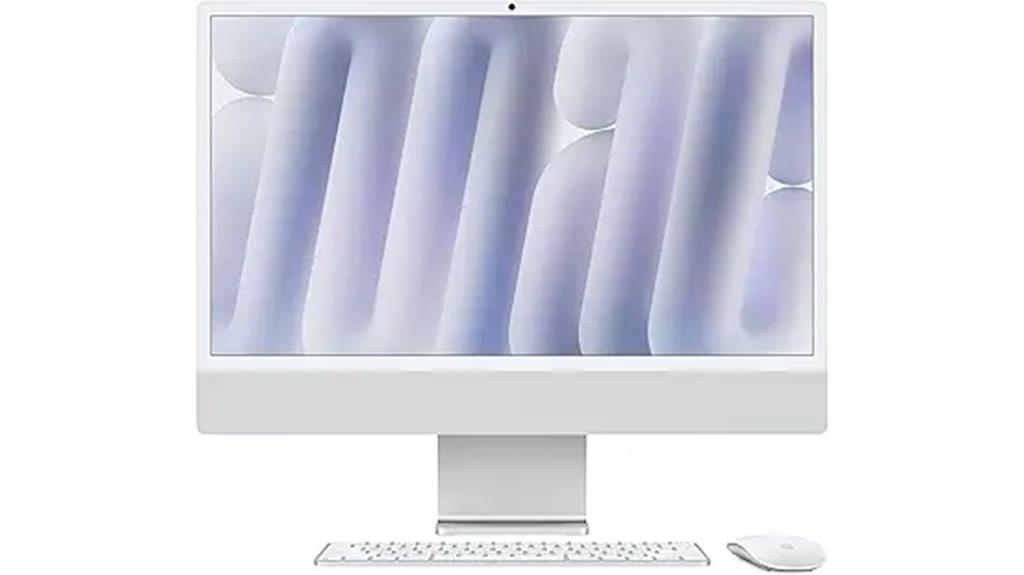
If you’re a photographer seeking a powerful, visually stunning desktop, the Apple 2024 iMac with M4 chip is an excellent choice. Its 24-inch Retina display offers 4.5K resolution with support for a billion colors and 500 nits brightness, making every image pop. The thin, vibrant design fits seamlessly into any space and elevates your workspace aesthetic. Powered by the M4 chip with a 10-core CPU and GPU, it handles demanding editing tasks effortlessly. With 24GB of unified memory and 512GB SSD storage, multitasking and fast data access are guaranteed. Plus, its sleek design and robust connectivity options make it perfect for professional photo editing.
Best For: photographers and creative professionals seeking a high-performance, visually stunning desktop for editing and multimedia work.
Pros:
- Vibrant 24-inch Retina display with 4.5K resolution and billion-color support
- Powerful M4 chip with 10-core CPU and GPU for demanding tasks
- Seamless integration with Apple ecosystem and excellent connectivity options
Cons:
- Limited to 512GB SSD storage, which may require external drives for large projects
- Relatively heavy at 9.77 pounds, potentially less portable for on-the-go use
- Premium price point that might be a consideration for budget-conscious buyers
Apple 2024 iMac Desktop Computer with M4 Chip

The Apple 2024 iMac Desktop Computer with M4 Chip stands out as an excellent choice for photographers who need powerful performance combined with stunning visuals. Its sleek design comes in seven vibrant colors and features a 24-inch Retina display with 4.5K resolution and support for up to 1 billion colors, making photo editing precise and vibrant. The M4 chip with a 10-core CPU and GPU guarantees fast, efficient multitasking. With 16GB of unified memory and a 512GB SSD, it handles demanding creative workflows smoothly. Plus, its seamless integration with the Apple ecosystem makes it easy to work across devices, enhancing productivity.
Best For: photographers and creative professionals seeking a powerful, vibrant, and seamless all-in-one desktop for editing and multimedia tasks.
Pros:
- Stunning 24-inch Retina display with 4.5K resolution and support for up to 1 billion colors for precise editing.
- Powered by the efficient M4 chip with 10-core CPU and GPU, ensuring smooth multitasking and demanding workflows.
- Seamless integration within the Apple ecosystem enhances productivity and ease of use across devices.
Cons:
- Limited to 512GB SSD storage, which may require additional external storage for large projects.
- Higher price point compared to some PC alternatives with similar hardware specifications.
- Limited upgradeability due to its all-in-one design, restricting future hardware modifications.
Apple 2024 iMac Desktop Computer with M4 Chip
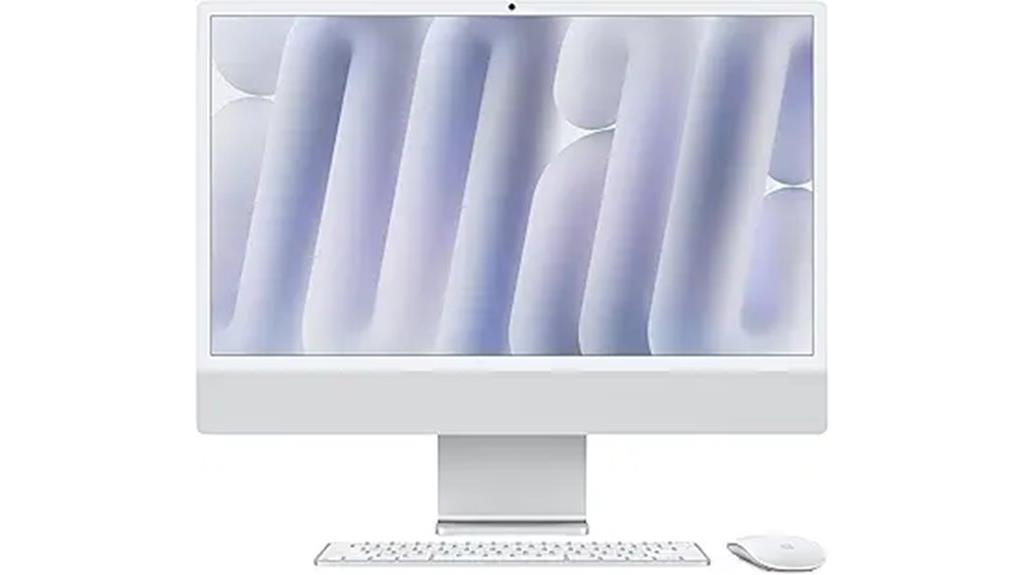
For photographers seeking a powerful and stylish all-in-one desktop, the Apple 2024 iMac with M4 chip stands out with its stunning 24-inch 4.5K Retina display. The Nano-Texture Glass enhances visuals, supporting up to 1 billion colors and 500 nits brightness for vibrant, accurate editing. Its sleek, thin design is available in seven bright colors, fitting seamlessly into any workspace. Powered by the 10-core M4 chip, it offers fast performance for editing, multitasking, and creative workflows. With 16GB of unified memory, a 256GB SSD, and support for multiple high-resolution displays, it’s a reliable choice for photographers demanding beauty and power.
Best For: photographers and creative professionals seeking a stylish, high-performance all-in-one desktop with a stunning display and vibrant visuals.
Pros:
- Vibrant 24-inch 4.5K Retina display with Nano-Texture Glass for accurate color editing
- Powerful M4 chip with a 10-core CPU and GPU for smooth multitasking and creative workflows
- Seamless integration with the Apple ecosystem and support for multiple high-resolution displays
Cons:
- Limited storage options starting at 256GB SSD, which may require external storage for larger files
- Premium price point reflecting its high-end features and design
- Relatively lightweight design might lack some upgradeability compared to traditional desktops
Factors to Consider When Choosing an iMac for Photographers
When choosing an iMac for photography, I focus on display quality, color accuracy, processing power, storage, and connectivity. These factors directly impact how well I can edit and manage high-resolution images efficiently. Understanding what to prioritize helps me find an iMac that meets my specific creative needs.
Display Quality and Resolution
Have you ever wondered why a high-quality display matters so much for photographers? It’s because your work relies on precise detail and true-to-life colors. A 4.5K Retina screen offers sharp resolution, making every pixel count for accurate editing. Supporting up to 1 billion colors ensures your images look vibrant and natural, not washed out or dull. Brightness levels of 500 nits or more improve visibility in various lighting, so you can work comfortably anywhere. Advanced coatings like Nano-Texture Glass reduce glare, giving you clearer images without reflections distracting you. Plus, a larger screen, such as 24 inches, provides ample space for detailed adjustments and color grading. All these factors combine to create a display that truly elevates your editing experience.
Color Accuracy and Support
A high-quality display doesn’t just mean sharp resolution and brightness—it also depends on how accurately it reproduces colors. For photographers, supporting a wide color gamut, like 1 billion colors, is vital for vibrant, true-to-life images. Higher brightness levels, such as 500 nits, allow for precise color and contrast evaluation in different lighting conditions. A Retina display with Nano-Texture Glass reduces glare and reflections, improving color perception across environments. Support for professional standards like P3 wide color gamut ensures the display can render accurate, consistent colors essential for editing and print matching. Additionally, proper color calibration and consistent performance across the screen help maintain color fidelity, guaranteeing your work looks perfect whether viewed digitally or in print.
Processing Power and RAM
Processing power and RAM are essential for photographers who want a smooth, efficient editing experience. A multi-core CPU speeds up rendering and editing of high-resolution images, saving you time and reducing frustration. When working with large files in software like Photoshop or Lightroom, having at least 16GB of RAM ensures multitasking remains seamless. More memory minimizes lag, preventing slowdowns during intensive tasks. Faster processors combined with ample RAM boost overall workflow, allowing you to handle demanding applications effortlessly. Upgrading to an iMac with a powerful CPU and higher memory capacity not only accelerates your editing but also enhances productivity. If you want a machine that keeps up with your creative pace, prioritize processing power and RAM to make your photo editing smoother and more efficient.
Storage Capacity and Speed
Choosing the right storage capacity and speed is essential for photographers who handle large RAW files and high-resolution videos. Ample storage means I can keep my high-res images and footage without constantly offloading to external drives, maintaining a smoother workflow. Fast SSD storage, like 512GB or more, drastically cuts down on file transfer and loading times, saving precious editing time. The speed of my storage impacts how quickly my editing applications can access and save large files, making my work more efficient. Larger storage options help prevent disruptions, ensuring my high-resolution image libraries and backups stay accessible without hassle. Opting for a system with fast, ample storage is a smart move for seamless editing, quick backups, and overall productivity in my photography projects.
Connectivity Options Needed
When selecting an iMac for photography, ensuring it has the right connectivity options can make a significant difference in workflow efficiency. I look for multiple Thunderbolt 4 ports to connect high-resolution monitors and external drives without hassle. Wi-Fi 6E is essential for fast, reliable wireless transfers of large files, saving me time. Bluetooth 5.3 support simplifies connecting peripherals like wireless keyboards, mice, and external storage, keeping my workspace clutter-free. I also verify that the iMac is compatible with external storage solutions via USB-C or Thunderbolt ports for seamless data management. Finally, I consider the number and types of ports to future-proof my setup, ensuring I can expand and integrate new devices effortlessly as my photography needs evolve.
Ecosystem and Compatibility
Since seamless integration within the Apple ecosystem is essential for efficient workflow, I prioritize an iMac that works flawlessly with macOS and my creative software. Compatibility guarantees I can easily transfer and share high-resolution images across my Apple devices without hassle. Support for external displays, such as dual 6K monitors via Thunderbolt 4, boosts my editing precision and productivity. The iMac’s hardware optimizations allow me to handle large RAW image files and demanding editing applications smoothly. Additionally, privacy features within the Apple ecosystem protect my sensitive photo data during storage and transfer. This ecosystem integration not only streamlines my workflow but also enhances security, giving me confidence that my work remains protected while I focus on creating stunning visuals.
Frequently Asked Questions
How Does the M4 Chip Improve Photo Editing Performance?
The M4 chip substantially boosts my photo editing performance by offering faster processing speeds and enhanced multitasking. Its improved neural engine accelerates AI-based tools, making tasks like noise reduction and image enhancement quicker and more efficient. I notice smoother handling of high-resolution files and seamless editing workflows. Overall, the M4 chip helps me work more efficiently, saving time and delivering stunning visuals with less lag and more reliability.
What Screen Size Options Are Best for Professional Photographers?
For professional photography, I recommend 27-inch iMacs for their larger, detailed displays, perfect for editing high-resolution images. The 24-inch model is also good if space is limited, but it’s slightly smaller for precise work. The bigger screen helps me see every detail clearly and makes color grading easier. Ultimately, I choose based on my workspace and need for pixel-perfect visuals, but bigger screens definitely boost my editing accuracy.
Are There Specific Ports Useful for Connecting External Storage Devices?
Think of ports as the gateways to your creative universe. I find Thunderbolt 3 or 4 ports invaluable, as they’re like superhighways for fast, seamless transfers of large photo files. USB-C ports also come in handy, offering versatility for external drives and accessories. Having multiple ports guarantees you’re never stranded when connecting external storage devices, making your workflow more efficient and keeping your creative flow uninterrupted.
How Does Color Accuracy on the New Imac Compare to Earlier Models?
The color accuracy on the new iMac is considerably improved compared to earlier models. I’ve noticed richer, more precise colors right out of the box, which makes editing photos much easier. The enhanced Retina display covers a wider color gamut and supports P3 color space, ensuring my visuals are true to life. Overall, it’s a noticeable upgrade that boosts my confidence in producing accurate, stunning images.
Is the Imac’s Display Calibration Suitable for High-End Printing?
Yes, I find the iMac’s display calibration highly suitable for high-end printing. The color accuracy is impressive right out of the box, and I can easily fine-tune the display to match professional print standards. Its wide P3 color gamut and True Tone technology ensure my images are consistently vibrant and true to life, making it a reliable choice for photographers aiming for precise color reproduction in their prints.
Conclusion
No matter which iMac you choose, you’re getting a powerhouse that can make your photos look even more breathtaking. These top picks are truly the cream of the crop—like having a studio that fits on your desk. Trust me, once you experience the stunning visuals and lightning-fast performance, you’ll wonder how you ever worked without it. It’s not just an upgrade; it’s a game-changer for your photography.