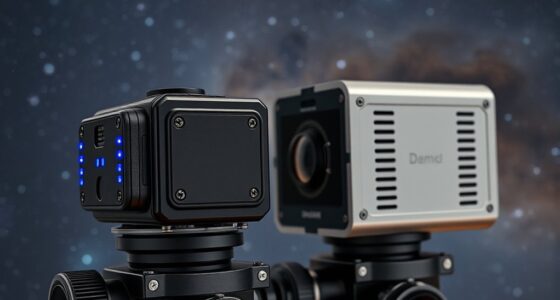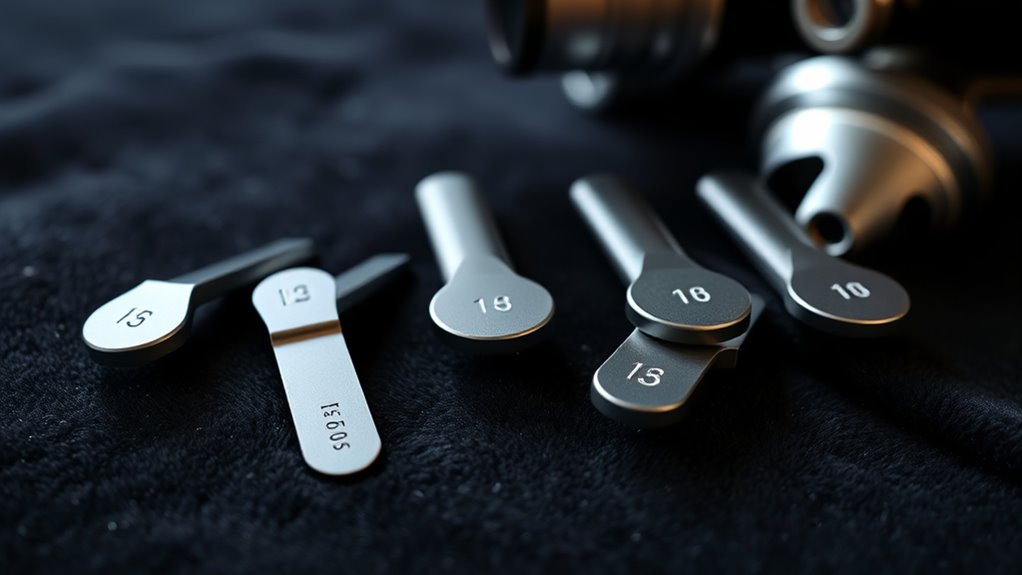

Choosing the right field flattener can dramatically improve your astrophotography and visual observing experience with refractor telescopes. If you’re after sharp, edge-to-edge images, the SVBONY SV503 Upgraded ED Refractor Telescope offers a great combination of quality and portability. For those focusing on deep-sky imaging, the Explore Scientific Field Flattener provides excellent correction for f/5 to f/7 scopes. Meanwhile, the SVBONY SV530 ED Refractor Telescope stands out for its integrated design and versatility, though it’s heavier and less portable. Each option balances optical performance, ease of use, and compatibility differently, so your choice hinges on your specific needs and setup constraints.

Get backup power and energy gear delivered free — and shop member deals
- Fast, free delivery on millions of items
- Access to Prime Big Deal Days deals on October 6–7
- Prime Video, Amazon Music and more included
Key Takeaways
- Field flatteners vary mainly by focal ratio compatibility, with some optimized for specific ranges.
- Integrated solutions like the SVBONY SV530 simplify setup but can add weight and cost.
- Dedicated astrophotography flatteners, such as the Explore Scientific model, are optimized for image quality but may require precise spacing.
- Portability and ease of use often trade off with optical flexibility and correction level.
- Compatibility with your specific telescope and camera system is critical to ensure optimal results.
| SVBONY SV530 ED Refractor Telescope 80mm Aperture with Built-in Field Flattener |  | Best Overall with Integrated Design | Optical Design: Triplet | Aperture: 80mm | Focal Length: 480mm | VIEW ON AMAZON | See Our Full Breakdown |
| Explore Scientific Field Flattener for Refractor Telescopes (f/5 to f/7) |  | Best for Dedicated Astrophotography | Focal Ratio Range: f/5 to f/7 | Optics Coating: Fully Multi-Coated | Mount Compatibility: Refracting telescope mount | VIEW ON AMAZON | See Our Full Breakdown |
| SVBONY SV209 Field Flattener for SV550 122mm Refractor Telescope (0.8X) |  | Best for Specific Refractor Models | Focal Length: 683.2mm | Objective Lens Diameter: 5.1cm | Zoom Ratio: 0.8x | VIEW ON AMAZON | See Our Full Breakdown |
| SVBONY SV503 Upgraded ED Refractor Telescope, 80mm F7 with Field Flattener |  | Best Lightweight for Versatile Use | Objective Diameter: 80mm | Focal Length: 560mm | Focal Ratio: f/7 | VIEW ON AMAZON | See Our Full Breakdown |
| SVBONY SV503 Refractor Telescope with Field Flattener, 70mm ED Refractor |  | Best for Budget and Beginners | Aperture: 70mm | Focal Length: 474mm | Focal Ratio: f/6.78 | VIEW ON AMAZON | See Our Full Breakdown |
| field flatteners for refractor telescope | Focal Length | Focal Ratio |
|---|---|---|
| SVBONY SV530 ED Refractor Tele | 480mm | f/6 |
| Explore Scientific Field Flatt | — | — |
| SVBONY SV209 Field Flattener f | 683.2mm | — |
| SVBONY SV503 Upgraded ED Refra | 560mm | f/7 |
| SVBONY SV503 Refractor Telesco | 474mm | f/6.78 |
More Details on Our Top Picks
SVBONY SV530 ED Refractor Telescope 80mm Aperture with Built-in Field Flattener
This 80mm triplet refractor combines high-quality ED glass with a built-in flattener, making it a compelling all-in-one solution. Its optical design ensures sharp, color-corrected images across the frame, which is particularly beneficial for astrophotographers who want minimal setup fuss. Compared to standalone flatteners, this model simplifies the process by integrating correction directly into the telescope body, but it also adds weight—at 9 pounds—and lacks motorized focus options. It’s well-suited for users who prioritize convenience and high optical quality but are okay with manual adjustments and slightly reduced portability.
Pros:- High-quality triplet optical design for sharp, color-corrected images
- Built-in flattener simplifies astrophotography setup
- Dual-speed focus for precise adjustments
- Suitable for visual observation and astrophotography
Cons:- Not an APO, may show some chromatic aberration
- Relatively heavy at 9 pounds, less portable
- Manual focusing only, no motorized option
Best for: Astrophotographers seeking an integrated, portable solution
Not ideal for: Advanced imaging setups requiring motorized focus or ultra-lightweight equipment
- Optical Design:Triplet
- Aperture:80mm
- Focal Length:480mm
- Focal Ratio:f/6
- Built-in Flattener:Yes
- Focuser:Dual-speed 2.5-inch
Our verdict“A versatile, all-in-one refractor that balances optical quality and convenience, ideal for users who want a ready-to-go astrophotography setup.”
Explore Scientific Field Flattener for Refractor Telescopes (f/5 to f/7)
This field flattener is designed for users with refractors operating between f/5 and f/7. Its fully multi-coated optics and secure T-ring connection ensure high contrast and minimal light loss, which are vital for capturing crisp, detailed images. Compared with integrated options, it offers greater flexibility for different telescopes but demands careful spacing—specifically 55mm—to achieve optimal correction. Manual focus means it’s best suited for stable, controlled imaging sessions rather than quick visual adjustments. Its strength lies in high correction quality for DSLR and CCD cameras, but it’s less forgiving for beginners unfamiliar with spacing precision.
Pros:- Reduces star distortion for sharper astrophotos
- Compatible with a range of refractors (f/5 to f/7)
- Fully multi-coated for high transmission
- Easy camera attachment via secure T-ring
Cons:- Designed for specific focal ratios, not universal
- Requires precise 55mm spacing for best results
- Manual focus may need fine-tuning during use
Best for: Astrophotographers with compatible refractors seeking high correction quality
Not ideal for: Telescopes outside f/5 to f/7 range or users seeking an all-in-one solution
- Focal Ratio Range:f/5 to f/7
- Optics Coating:Fully Multi-Coated
- Mount Compatibility:Refracting telescope mount
- Focus Type:Manual
- Field of View:1.86 degrees
Our verdict“A focused, high-quality correction tool best suited for dedicated astrophotographers with compatible scopes willing to fine-tune spacing.”
SVBONY SV209 Field Flattener for SV550 122mm Refractor Telescope (0.8X)
The SV209 0.8x focal reducer and flattener is tailored for the SV550 122mm f/7 telescope. It effectively reduces focal length for wider fields, making it ideal for capturing large nebulae or star fields. Its correction of field curvature ensures sharpness across the entire image, a significant upgrade over typical reducers. However, its specificity for the SV550 limits its use with other scopes, and manual focus adjustments can be tricky for newcomers. Its screw-in design offers stability, but installation precision is key to achieving optimal results.
Pros:- Reduces focal length for wider, faster imaging
- Corrects field curvature for edge-to-edge sharpness
- Secure screw-in connection for stability
- Compatible with DSLR and CCD cameras
Cons:- Limited to specific model (SV550 122mm)
- Manual focus adjustment required
- Challenging for beginners to install correctly
Best for: Owners of the SV550 122mm refractor wanting wider, sharper images
Not ideal for: Other refractors or users seeking a universal flattening solution
- Focal Length:683.2mm
- Objective Lens Diameter:5.1cm
- Zoom Ratio:0.8x
- Thread Size:63×1 metric
Our verdict“A specialized focal reducer and flattener that significantly enhances the imaging quality of the SV550, but limited in scope.”
SVBONY SV503 Upgraded ED Refractor Telescope, 80mm F7 with Field Flattener
The SV503 80ED combines an 80mm ED objective with a 0.8x focal reducer and a high-quality field flattener. Its lightweight design makes it particularly appealing for portable astrophotography or quick visual sessions. The dual-speed focuser provides fine control, and its ED glass reduces chromatic aberration, resulting in clearer images. While it’s primarily a fixed-mount setup, this model offers an excellent balance of optical correction and ease of transport. It’s ideal for those who want a reliable, high-quality scope that can be easily carried to dark skies, albeit with some limitations in tracking or advanced imaging features.
Pros:- High-quality ED glass for minimal chromatic aberration
- Lightweight and portable design
- Includes a 0.8x focal reducer for wider, faster images
- Dual-speed focuser for precise focus
Cons:- Limited to fixed mount, no tracking capability
- Edge sharpness may vary with larger sensors
- Additional accessories needed for advanced imaging
Best for: Portable astrophotographers seeking lightweight yet corrected imaging
Not ideal for: Mount-based astrophotography requiring tracking or advanced imaging accessories
- Objective Diameter:80mm
- Focal Length:560mm
- Focal Ratio:f/7
- Focus Type:Manual
- Weight:2.5kg
Our verdict“A lightweight, portable scope with effective field correction, perfect for mobile astrophotographers but less suited for mount-based imaging.”
SVBONY SV503 Refractor Telescope with Field Flattener, 70mm ED Refractor
The SV503 70mm ED refractor offers a compact, affordable package with a built-in flat-field system. Its 70mm aperture provides bright, sharp images with minimal chromatic aberration, making it suitable for both visual use and entry-level astrophotography. Its self-flat-field system simplifies setup, but the small aperture limits deep-sky imaging potential. Manual focus and the absence of included finderscope mean it’s best for those just starting out or for casual observers looking for decent wide-field views without complex accessories. It is a good starting point but might require upgrades for serious astrophotography.
Pros:- Flat-field correction reduces edge distortion
- High-quality ED glass for true-to-life colors
- Dual-speed focuser for fine adjustments
- Compact and lightweight
Cons:- No finderscope included
- Limited to manual focus
- Requires additional accessories for advanced imaging
Best for: Beginners and casual sky watchers on a budget
Not ideal for: Advanced astrophotographers needing high-resolution, deep-sky imaging
- Aperture:70mm
- Focal Length:474mm
- Focal Ratio:f/6.78
- Optical Tube Length:47.4cm
- Weight:2.69kg
Our verdict“An accessible, budget-friendly scope with decent correction suited for beginners or casual observers, but less capable for high-end astrophotography.”

How We Picked
Our selection process focused on field flatteners that are widely compatible with popular refractor telescopes, especially those used in astrophotography. We prioritized models that balance optical correction quality with ease of integration and value. Considerations included optical coatings, focal ratio range, build quality, and user feedback. We aimed for options suitable for both beginners and experienced astrophotographers, ensuring each product offers a clear role and tradeoffs aligned with different user needs.
| field flatteners for refractor telescope | Focal Ratio |
|---|---|
| SVBONY SV530 ED Refractor Tele | f/6 |
| Explore Scientific Field Flatt | — |
| SVBONY SV209 Field Flattener f | — |
| SVBONY SV503 Upgraded ED Refra | f/7 |
| SVBONY SV503 Refractor Telesco | f/6.78 |
Factors to Consider When Choosing Field Flatteners For Refractor Telescopes
Selecting a field flattener depends heavily on your telescope’s focal ratio, compatibility, and intended use. For astrophotographers aiming for sharp, edge-to-edge images, understanding the focal ratio range and optical coatings is essential. Portability and ease of use matter for outdoor setups, while budget considerations influence whether you choose integrated solutions or dedicated flatteners. Ensuring compatibility with your camera system and telescope is key, as is recognizing the importance of proper spacing and focus adjustment to achieve optimal correction.
Compatibility and Focal Ratio Range
Most flatteners are optimized for specific focal ratios, typically between f/5 and f/7. Using a flattener outside its recommended range can lead to subpar correction and star distortion. Always verify your telescope’s focal ratio before purchasing and select a model designed for that range to maximize image quality. Compatibility with your camera’s sensor size and thread fittings is also critical to prevent vignetting or installation issues.
Optical Quality and Coatings
High-quality, fully multi-coated optics improve light transmission and contrast, which are vital for capturing detailed celestial images. ED glass reduces chromatic aberration, a common challenge in refractors, especially at the edges. Investing in quality coatings and glass can significantly enhance your imaging results, but often at a higher price point.
Design and Ease of Use
Integrated designs like the SVBONY SV530 offer simplicity but can add weight and limit flexibility. Dedicated flatteners, such as the Explore Scientific model, require precise spacing and may involve a learning curve, especially for manual focus adjustment. For beginners, models with straightforward installation and minimal setup are preferable, while experienced users might prioritize optical correction over convenience.
Portability and Budget
Lightweight, compact flatteners like the SV503 ED are ideal for portable setups, but they often compromise on correction capabilities compared to dedicated, larger units. Budget options can be appealing for beginners, but investing in a quality, well-made flattener pays off in improved image quality and durability for serious astrophotography.
Frequently Asked Questions
What is a field flattener used for in astrophotography?
A field flattener is designed to correct the curvature inherent in many telescope optics, especially fast refractors. Without one, stars at the edges of your images often appear distorted or bloated. A good flattener ensures sharp, pin-point stars across the entire frame, which is essential for producing high-quality astrophotos.
Can I use a general camera lens as a field flattener?
No, camera lenses are not designed to serve as field flatteners because they lack the precise optical correction needed. Dedicated flatteners are manufactured specifically to counteract field curvature in telescopes, ensuring consistent sharpness at the edges. Using a lens as a flattener usually leads to subpar results and potential damage.
How important is focal ratio compatibility when choosing a flattener?
Focal ratio compatibility is vital because flatteners are optimized for specific ranges. Using a flattener outside its designed ratio can result in inadequate correction or even introduce aberrations. Always match your telescope’s focal ratio with the flattener’s recommended range to achieve the best image quality.
Do I need a separate flattener if my telescope has an integrated one?
If your telescope has a built-in flattener, it’s usually sufficient for most visual and casual astrophotography needs. However, dedicated flatteners often provide better correction for high-resolution imaging. Consider your imaging goals—if you want the sharpest possible edges, a specialized flattener might still be beneficial.
What are the main tradeoffs between integrated and standalone flatteners?
Integrated flatteners simplify setup and reduce the number of components, making them convenient for quick sessions. However, they tend to be bulkier and less adjustable. Standalone flatteners offer more flexibility, better correction, and compatibility with a broader range of telescopes and cameras, but they require precise spacing and more careful installation. Your choice depends on your priorities—ease versus optical perfection.
Conclusion
For those new to astrophotography or casual observers, the SVBONY SV503 Refractor with Field Flattener provides an accessible entry point with decent correction. Intermediate users who want more control and better correction should consider the Explore Scientific Field Flattener, especially if working within its focal ratio range. Experienced astrophotographers aiming for maximum image quality with specific telescopes might prefer the SV209 Flattener for SV550 or integrated options like the SVBONY SV530 ED. Each choice hinges on your setup, goals, and willingness to fine-tune your equipment.
Fall Picks
fall essentials
As an affiliate, we earn on qualifying purchases.