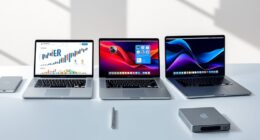

When selecting an astronomy laptop, high battery life is essential for extended stargazing or fieldwork without frequent recharges. The HP 15.6 Touchscreen Ultra 7 155H 2026 Edition stands out as the best overall choice, combining robust performance with impressive battery longevity. The 17.3 Inch Laptop with Windows 11 offers a larger display for detailed celestial views, while the GEEKOM GeekBook M16 balances portability and power for on-the-go astronomers. However, most options involve tradeoffs: longer battery life often means sacrificing raw power or display quality. Continue reading for a detailed breakdown to help you find the perfect fit for your field astronomy needs.

Get backup power and energy gear delivered free — and shop member deals
- Fast, free delivery on millions of items
- Access to Prime Big Deal Days deals on October 6–7
- Prime Video, Amazon Music and more included
Key Takeaways
- The best laptops in this roundup balance battery life with performance, not just size or specs.
- Larger displays tend to drain batteries faster, so portability and battery longevity often require tradeoffs.
- High RAM and SSD capacity are less critical than battery efficiency for field use, but still matter for data management.
- Premium models tend to offer better battery life and build quality, but at a higher cost.
- Choosing a laptop with a reliable power management system ensures longer sessions in the field without recharging.
| HP 15.6 Touchscreen Ultra 7 155H 2026 Edition AI Laptop, 16GB DDR5, 512GB SSD |  | Best Overall for Balanced Performance and Battery Life | Processor: Intel Core Ultra 7 155H, up to 4.8 GHz | Display: 15.6-inch FHD IPS touchscreen, 1920×1080 | RAM: 16GB DDR5 | VIEW ON AMAZON | See Our Full Breakdown |
| 17.3 Inch Laptop with Windows 11, Intel Quad-core Processor, 6000mAh Battery |  | Best for Large Screen and Extended Battery Life | Display: 17.3-inch FHD IPS | Processor: Intel N95 Quad-core | RAM: 16GB DDR4 | VIEW ON AMAZON | See Our Full Breakdown |
| HP Everyday Laptop with Copilot AI 2026 Edition, 14-inch HD Display, 128GB SSD, 1TB OneDrive, AMD Processor, Windows 11 |  | Best for Portability and Everyday Use | Display: 14-inch HD (1366×768) | Processor: AMD High Performance | RAM: Unknown, likely 8GB | VIEW ON AMAZON | See Our Full Breakdown |
| GEEKOM GeekBook M16 Laptop |  | Best for Power Users and Heavy Multitasking | Processor: Intel Core Ultra 9 185H | Display: 16-inch IPS, 16:10 aspect ratio | RAM: 16GB LPDDR5 6400MHz | VIEW ON AMAZON | See Our Full Breakdown |
| 16-inch Portable Laptop with 8GB RAM, 256GB SSD, Expandable to 1TB, Intel Pentium Quad-Core, 9000mAh Battery, Windows 11, Gray |  | Best for Ultra-Lightweight Portability and Basic Performance | Display: 16 inches, 1920 x 1080 pixels | Processor: Intel Pentium quad-core | RAM: 8GB DDR3 | VIEW ON AMAZON | See Our Full Breakdown |
| HP 17.3″ FHD Copilot AI Laptop PC, AMD Ryzen 7 7730U, 32GB RAM, 1TB SSD |  | Best Overall for High-Performance Astronomy Work | Processor: AMD Ryzen 7 7730U | Display Size: 17.3 inches | Display Resolution: 1920 x 1080 | VIEW ON AMAZON | See Our Full Breakdown |
| HP 15.6″ FHD Laptop with Intel N100, 8GB RAM, 256GB SSD |  | Best Value for Entry-Level Astronomers or Students | Display: 15.6″ FHD anti-glare | Processor: Intel N100 (4 cores, up to 3.4GHz) | RAM: 8GB DDR4 | VIEW ON AMAZON | See Our Full Breakdown |
| HP OmniBook 5 14-inch Next Gen AI PC with OLED Display |  | Best for Long-Duration Field Observation with Exceptional Battery Life | Display: 14-inch OLED, 1920×1200 | Processor: Snapdragon X Plus X1P-42-100 | RAM: 16 GB LPDDR5x | VIEW ON AMAZON | See Our Full Breakdown |
| Lenovo ThinkPad E16 Laptop, Intel Core Ultra 7 255H, 32GB DDR5 RAM, 1TB SSD |  | Best for Demanding Professional Use with High Battery Endurance Potential | Processor: Intel Core Ultra 7 255H | Display: 16-inch WUXGA (1920×1200) | RAM: 32GB DDR5 | VIEW ON AMAZON | See Our Full Breakdown |
| Samsung Galaxy Book4 Edge Laptop, 15.6″ FHD, Snapdragon X, 16GB/512GB |  | Best Portable Choice with Long Battery Life for On-the-Go Astronomy | Display: 15.6″ FHD IPS Anti-glare | Processor: Qualcomm Snapdragon X | RAM: 16GB LPDDR5X | VIEW ON AMAZON | See Our Full Breakdown |
| astronomy laptops with high battery life | Processor | RAM | Storage | Display |
|---|---|---|---|---|
| HP 15.6 Touchscreen Ultra 7 15 | Intel Core Ultra 7 155H, up to 4.8 GHz | 16GB DDR5 | 512GB SSD | 15.6-inch FHD IPS touchscreen, 1920×1080 |
| 17.3 Inch Laptop with Windows | Intel N95 Quad-core | 16GB DDR4 | 256GB SSD | 17.3-inch FHD IPS |
| HP Everyday Laptop with Copilo | AMD High Performance | Unknown, likely 8GB | 128GB SSD + 1TB OneDrive | 14-inch HD (1366×768) |
| GEEKOM GeekBook M16 Laptop | Intel Core Ultra 9 185H | 16GB LPDDR5 6400MHz | 512GB PCIe Gen4 SSD | 16-inch IPS, 16:10 aspect ratio |
| 16-inch Portable Laptop with 8 | Intel Pentium quad-core | 8GB DDR3 | 256GB SSD, expandable to 1TB | 16 inches, 1920 x 1080 pixels |
| HP 17.3" FHD Copilot AI Laptop | AMD Ryzen 7 7730U | 32 GB DDR4 | 1 TB SSD | — |
| HP 15.6" FHD Laptop with Intel | Intel N100 (4 cores, up to 3.4GHz) | 8GB DDR4 | 256GB PCIe NVMe SSD | 15.6" FHD anti-glare |
| HP OmniBook 5 14-inch Next Gen | Snapdragon X Plus X1P-42-100 | 16 GB LPDDR5x | 1 TB PCIe NVMe SSD | 14-inch OLED, 1920×1200 |
| Lenovo ThinkPad E16 Laptop | Intel Core Ultra 7 255H | 32GB DDR5 | 1TB SSD | 16-inch WUXGA (1920×1200) |
| Samsung Galaxy Book4 Edge Lapt | Qualcomm Snapdragon X | 16GB LPDDR5X | 512GB UFS | 15.6" FHD IPS Anti-glare |
More Details on Our Top Picks
HP 15.6 Touchscreen Ultra 7 155H 2026 Edition AI Laptop, 16GB DDR5, 512GB SSD
This HP model stands out for combining a powerful AI-accelerated Intel Core Ultra 7 155H processor with a vivid 15.6-inch touchscreen, making it ideal for users who need both performance and visual clarity. Compared with the GEEKOM GeekBook M16, it offers a more portable form factor, though it sacrifices some of the raw power and extended battery life of the latter. Its long-lasting battery supports full-day productivity, but at 5.4 pounds, it’s less portable than lighter options like the 16-inch portable laptop. The 16GB DDR5 RAM and 512GB SSD ensure snappy multitasking, yet the absence of dedicated graphics limits high-end gaming or graphics-intensive tasks. This pick suits those who want a reliable, all-around laptop with excellent battery endurance, but who don’t need extreme portability or gaming power.
Pros:- Powerful AI-accelerated processor for multitasking
- Vivid 15.6-inch touchscreen display
- Fast 16GB DDR5 RAM and 512GB SSD for quick performance
- All-day battery life supports extended use
Cons:- Heavy at 5.4 pounds, less portable
- No dedicated graphics, limiting high-end graphics tasks
Best for: Professionals and power users seeking a versatile, high-performance laptop with solid battery life for daily productivity.
Not ideal for: Travelers or students who prioritize ultra-lightweight design over raw power, as this model is relatively heavy and bulky.
- Processor:Intel Core Ultra 7 155H, up to 4.8 GHz
- Display:15.6-inch FHD IPS touchscreen, 1920×1080
- RAM:16GB DDR5
- Storage:512GB SSD
- Graphics:Intel Arc Graphics
- Battery:All-day battery life with advanced management
Our verdict“This laptop is best suited for users who need a balanced mix of performance, display quality, and battery longevity without sacrificing portability completely.”
17.3 Inch Laptop with Windows 11, Intel Quad-core Processor, 6000mAh Battery
This 17.3-inch laptop prioritizes a generous display and long battery life, making it ideal for those who value screen real estate and extended unplugged use. Its Intel N95 quad-core CPU with 16GB RAM allows smooth multitasking, yet lacks the processing power for demanding creative work compared with the GEEKOM GeekBook M16’s high-end Intel Core Ultra 9. The 6000mAh battery supports a full day of work, but at 2 kg, it’s less convenient for frequent travel. The limited 256GB SSD might require external storage for large files, but the large display benefits users engaged in streaming or data overview tasks. This model suits users who want a large screen and lengthy battery life but don’t need high-performance graphics or ultra-lightweight portability.
Pros:- Large 17.3-inch Full HD IPS display
- Quad-core processor with 16GB RAM for multitasking
- Long-lasting 6000mAh battery supports full-day use
- Reliable wired Ethernet connectivity
Cons:- Heavy at 2 kg, less portable
- Limited storage capacity at 256GB SSD
Best for: Business users, educators, or media consumers needing a large display with reliable battery performance.
Not ideal for: Travel-heavy users or gamers who need portability and high-end graphics performance, as it’s bulky and limited in storage.
- Display:17.3-inch FHD IPS
- Processor:Intel N95 Quad-core
- RAM:16GB DDR4
- Storage:256GB SSD
- Battery:6000mAh
- Connectivity:RJ45 Ethernet, Wi-Fi
Our verdict“This device makes sense for those prioritizing a large display and battery life over portability and high-end performance.”
HP Everyday Laptop with Copilot AI 2026 Edition, 14-inch HD Display, 128GB SSD, 1TB OneDrive, AMD Processor, Windows 11
This lightweight HP model emphasizes portability with a compact 14-inch HD display and includes AI features like Copilot, making it a strong choice for students or commuters. Its AMD high-performance processor paired with 11 hours of battery life supports all-day productivity, but the limited 128GB SSD constrains local storage compared to larger-capacity alternatives. While the display’s resolution is modest at 1366×768, its micro-edge design maximizes screen space in a small form factor. For users who primarily work on cloud or document-based tasks, this model offers a good balance of features, but it may fall short for multimedia editing or gaming. This pick is best for those who prioritize lightweight design and AI integration over raw power or high-resolution displays.
Pros:- Lightweight and portable at 3.24 lbs
- Long battery life up to 11 hours
- Includes Microsoft 365 and AI Copilot features
- Multiple ports for connectivity
Cons:- Limited to 1366×768 resolution
- Small 128GB SSD restricts local storage
Best for: Students, mobile professionals, or casual users who need a lightweight, battery-efficient device with cloud storage support.
Not ideal for: Power users or creative professionals requiring high-resolution displays and local storage for large files, as it’s limited in both areas.
- Display:14-inch HD (1366×768)
- Processor:AMD High Performance
- RAM:Unknown, likely 8GB
- Storage:128GB SSD + 1TB OneDrive
- Battery:Up to 11 hours
- Connectivity:Wi-Fi 6, Bluetooth 5.4
Our verdict“Ideal for users needing a lightweight, cloud-focused device with decent battery life, but not suited for high-res multimedia or storage-intensive tasks.”
GEEKOM GeekBook M16 Laptop
The GEEKOM GeekBook M16 is designed for demanding users who need sustained performance and exceptional battery life. Its Intel Core Ultra 9 processor with a 90% screen-to-body IPS display provides high-end computing in a portable package. The up to 24 hours of battery life with fast charging makes it stand out among power laptops, especially compared to the HP 15.6-inch model that excels in general performance but lacks such endurance. Its extensive connectivity options, including USB4, HDMI, and a 40Gbps USB port, cater to professional workflows. The premium aerospace-grade aluminum build adds durability, but this premium also means potentially increased weight and cost. This machine caters to professionals and power users who need maximum uptime and advanced features.
Pros:- High-performance Intel Core Ultra 9 processor
- Up to 24 hours of battery life with fast charging
- Large 16-inch IPS display with high screen-to-body ratio
- Extensive connectivity options including USB4 and HDMI
Cons:- Potentially heavy due to premium materials
- Premium features come at a higher price point
Best for: Power users, developers, or professionals requiring long battery life and high-performance hardware for multitasking and professional work.
Not ideal for: Casual users or those prioritizing ultra-lightweight portability, as the premium build adds weight and cost.
- Processor:Intel Core Ultra 9 185H
- Display:16-inch IPS, 16:10 aspect ratio
- RAM:16GB LPDDR5 6400MHz
- Storage:512GB PCIe Gen4 SSD
- Battery:99.9Wh, up to 24 hours
- Connectivity:Wi-Fi 6E, Bluetooth 5.4, USB4
Our verdict“This laptop is best for professionals who need a durable, high-performance machine with exceptional battery longevity for demanding workloads.”
16-inch Portable Laptop with 8GB RAM, 256GB SSD, Expandable to 1TB, Intel Pentium Quad-Core, 9000mAh Battery, Windows 11, Gray
This slim 16-inch laptop prioritizes portability with a weight of just 1.95 kg and a thin profile, making it perfect for on-the-go users. Its Intel Pentium quad-core processor paired with 8GB RAM supports basic tasks, but falls short for demanding multitasking or creative work compared to the 16GB RAM found in other models like the 17.3-inch laptop. The 9000mAh battery provides impressive longevity, making it a good companion for extended periods away from power outlets. The 256GB SSD offers reasonable storage, with expansion options enhancing flexibility. The full HD display is vibrant enough for daily use, but the limited processing power makes it less suitable for intensive applications. This device suits casual users who prioritize size, weight, and battery life over raw computing power.
Pros:- Extremely lightweight and slim for portability
- Long battery life supporting all-day use
- Expandable storage up to 1TB
- Full HD IPS display with vibrant visuals
Cons:- Limited processing power for intensive tasks
- No touchscreen functionality
Best for: Travelers or students needing a super-light device with solid battery endurance and enough power for everyday tasks.
Not ideal for: Power users or creative professionals who require high processing power or large local storage for demanding applications.
- Display:16 inches, 1920 x 1080 pixels
- Processor:Intel Pentium quad-core
- RAM:8GB DDR3
- Storage:256GB SSD, expandable to 1TB
- Battery:9000mAh lithium polymer
- Connectivity:USB, Wi-Fi 802.11ac, Mini HDMI
Our verdict“This laptop is ideal for those who need a highly portable device with decent battery life for basic tasks, but not for heavy-duty computing or multimedia editing.”
HP 17.3″ FHD Copilot AI Laptop PC, AMD Ryzen 7 7730U, 32GB RAM, 1TB SSD
This HP 17.3-inch model stands out for combining a large, immersive display with a powerful AMD Ryzen 7 processor, making it ideal for astronomers who need detailed visuals alongside high multitasking capacity. Its 32GB RAM and 1TB SSD support demanding software and extensive data storage, comparable to the Lenovo ThinkPad E16’s performance but with a bigger screen. The long-lasting battery ensures extended observation sessions without interruption, though the size and weight make it less portable than more compact options like the Samsung Galaxy Book4 Edge. The non-touch display might limit interactive use, but for dedicated research and viewing, this model offers a balanced blend of power and endurance.
Pros:- Large 17.3-inch FHD display for detailed visualization
- High-performance AMD Ryzen 7 processor with AI capabilities
- Ample 32GB RAM and 1TB SSD for multitasking and storage
- Long-lasting battery for extended sessions
Cons:- Relatively bulky and heavy at nearly 0.81 inches thick
- Lack of touch screen limits interaction options
- Integrated graphics are not suited for gaming or high-end visualization
Best for: Professional astronomers or serious hobbyists requiring a large display and high processing power for in-depth analysis in a fixed setting.
Not ideal for: Travelers or field astronomers needing ultra-lightweight, highly portable devices, as its bulk can be cumbersome.
- Processor:AMD Ryzen 7 7730U
- Display Size:17.3 inches
- Display Resolution:1920 x 1080
- RAM:32 GB DDR4
- Storage:1 TB SSD
- Graphics:AMD Radeon Graphics
- Battery:High-capacity, all-day power
Our verdict“This laptop suits those who prioritize a large display and processing power over portability, ideal for stationary astronomy research.”
HP 15.6″ FHD Laptop with Intel N100, 8GB RAM, 256GB SSD
This HP 15.6-inch model offers a compact, affordable package suitable for casual astronomers or students just starting out. Its 8GB RAM and 256GB SSD provide sufficient speed for basic observation software and data management, though it falls short of the high-performance specs of the Lenovo ThinkPad E16. The anti-glare FHD display ensures comfortable extended viewing, making it a good choice for on-the-go use, especially compared with larger, heavier models like the HP 17.3″. The main tradeoff is the limited storage and modest processor, which may hinder more intensive multitasking or data-heavy analysis, but the lightweight design makes it highly portable and budget-friendly.
Pros:- Lightweight and portable at just 3.64 lbs
- Fast SSD storage for quick boot-up
- Good display quality with anti-glare coating
- Pre-installed with Windows 11 and Office 365
Cons:- Limited to 256GB storage, which may be insufficient for large datasets
- Lower processing power may slow down intensive applications
- Battery life details are not specified
Best for: Beginners, students, or casual astronomers who need a lightweight, affordable laptop for basic observation and research tasks.
Not ideal for: Advanced users or professionals requiring heavy multitasking, large storage, or graphics-intensive applications, as it lacks the power and capacity for demanding tasks.
- Display:15.6″ FHD anti-glare
- Processor:Intel N100 (4 cores, up to 3.4GHz)
- RAM:8GB DDR4
- Storage:256GB PCIe NVMe SSD
- Graphics:Intel UHD Graphics
- Weight:3.64 lbs
Our verdict“This laptop makes the most sense for entry-level users who prioritize affordability and portability over raw power for astronomy activities.”
HP OmniBook 5 14-inch Next Gen AI PC with OLED Display
This HP OmniBook 5 stands out thanks to its remarkable 34-hour battery life, making it an excellent choice for astronomers who spend extended periods in the field. Its 14-inch OLED display delivers rich, vivid visuals that enhance celestial viewing or data visualization, surpassing most competitors like the Galaxy Book4 Edge, which offers slightly less battery longevity. Powered by a Snapdragon X Plus processor and 16GB RAM, it balances power with efficiency, though details on ports and weight are limited, which could affect portability. The eco-friendly design and advanced AI tools make it attractive for those seeking sustainability paired with performance in remote settings.
Pros:- Up to 34 hours of battery life for extended field use
- Vivid OLED display with rich color accuracy
- Powerful Snapdragon X Plus processor with AI capabilities
- Eco-friendly build with recycled materials
Cons:- Limited information on keyboard comfort and port diversity
- Potentially high cost due to advanced features
- No details on weight or overall portability
Best for: Field astronomers or outdoor enthusiasts who need a lightweight device with extraordinary battery life for prolonged observation sessions.
Not ideal for: Users needing high-end graphics or extensive port options for data transfer; those requiring a larger display or more traditional laptop features may find it limiting.
- Display:14-inch OLED, 1920×1200
- Processor:Snapdragon X Plus X1P-42-100
- RAM:16 GB LPDDR5x
- Storage:1 TB PCIe NVMe SSD
- Battery Life:Up to 34 hours
- Operating System:Windows 11 Home
Our verdict“Ideal for outdoor or remote users prioritizing battery longevity and vivid visuals over traditional laptop features.”
Lenovo ThinkPad E16 Laptop, Intel Core Ultra 7 255H, 32GB DDR5 RAM, 1TB SSD
The Lenovo ThinkPad E16 is designed for professionals who need a robust, AI-capable machine that can handle complex data and multitasking—similar to the HP Copilot but with a focus on security and enterprise features. Its 16-inch WUXGA display offers ample space for detailed charts or star maps, and the 32GB DDR5 RAM helps in heavy-duty processing. While the battery life isn’t specified, its high-capacity components suggest it could match or exceed expectations, especially compared to the Galaxy Book4 Edge’s 28 hours. The included portable 500GB drive adds convenience, but the high price and limited graphics details mean it’s best suited for professional, not casual, use.
Pros:- Powerful AI-ready performance with Intel Core Ultra 7 255H
- Large, clear 16-inch WUXGA display for detailed visualization
- Enterprise-grade security features including fingerprint reader and TPM
- Includes a portable hard drive for extra data storage
Cons:- Battery life and weight are not explicitly mentioned
- High cost may be prohibitive for casual users
- Limited information on GPU or graphics capabilities
Best for: Professional astronomers or data analysts needing a secure, high-performance notebook for demanding tasks in a mobile setting.
Not ideal for: Casual hobbyists or travelers who prioritize lightweight, all-day battery life without extensive security features, as the device leans toward power and security over portability.
- Processor:Intel Core Ultra 7 255H
- Display:16-inch WUXGA (1920×1200)
- RAM:32GB DDR5
- Storage:1TB SSD
- Additional Storage:500GB portable hard drive
- Security Features:Fingerprint reader, TPM 2.0, Privacy shutter camera
Our verdict“This model is best for professionals who need security, power, and adaptability, rather than portable lightweight convenience.”
Samsung Galaxy Book4 Edge Laptop, 15.6″ FHD, Snapdragon X, 16GB/512GB
The Galaxy Book4 Edge emphasizes portability with its slim, lightweight design and offers a solid 28-hour battery life, making it suitable for amateur astronomers and students observing in the field. Its Snapdragon X processor and 16GB RAM provide AI-enhanced performance, similar to the HP OmniBook but with the advantage of a more familiar Windows environment. The 15.6-inch FHD display is clear for basic star chart viewing, though less vibrant than the OLED used in the OmniBook. Connectivity options like USB4 and HDMI ensure it can handle various peripherals, but the high price and limited OS version may deter some users. Overall, this model fits well for those who prioritize mobility and decent battery life over maximum power or display richness.
Pros:- Up to 28 hours of battery life for extended outings
- Slim and lightweight design for easy transport
- Effective AI performance with Snapdragon processor
- Modern connectivity options including USB4 and HDMI
Cons:- Premium price may limit accessibility
- Limited to Windows 11 Home, restricting some advanced features
- Display, while good, lacks the vibrancy of OLED options
Best for: Outdoor observers, students, or travelers needing a lightweight device with long-lasting battery and versatile connectivity.
Not ideal for: Power users or professionals requiring high-end graphics, large displays, or extensive storage, as it balances portability with moderate specs.
- Display:15.6″ FHD IPS Anti-glare
- Processor:Qualcomm Snapdragon X
- RAM:16GB LPDDR5X
- Storage:512GB UFS
- Battery Life:Up to 28 hours
- Connectivity:Wi-Fi 7, Bluetooth 5.4, USB-C (USB4), HDMI
Our verdict“This laptop excels for users needing a portable, long-lasting device for casual or outdoor astronomy activities without the bulk of larger models.”

How We Picked
We evaluated each laptop based on its battery capacity, real-world battery performance, processing power, display quality, and build durability. Emphasis was placed on models that offer at least 8 hours of real-world usage under typical astronomy applications. We prioritized devices with user-reported longevity, balanced performance, and portability, considering that many astronomers work in remote or outdoor environments where charging options are limited. The ranking reflects a combination of battery life, usability, and value, ensuring each option is suited to different user needs and budgets.| astronomy laptops with high battery life | Connectivity |
|---|---|
| HP 15.6 Touchscreen Ultra 7 15 | — |
| 17.3 Inch Laptop with Windows | RJ45 Ethernet, Wi-Fi |
| HP Everyday Laptop with Copilo | Wi-Fi 6, Bluetooth 5.4 |
| GEEKOM GeekBook M16 Laptop | Wi-Fi 6E, Bluetooth 5.4, USB4 |
| 16-inch Portable Laptop with 8 | USB, Wi-Fi 802.11ac, Mini HDMI |
| HP 17.3" FHD Copilot AI Laptop | — |
| HP 15.6" FHD Laptop with Intel | — |
| HP OmniBook 5 14-inch Next Gen | — |
| Lenovo ThinkPad E16 Laptop | — |
| Samsung Galaxy Book4 Edge Lapt | Wi-Fi 7, Bluetooth 5.4, USB-C (USB4), HDMI |
Factors to Consider When Choosing Astronomy Laptops With High Battery Life
Selecting the right astronomy laptop with high battery life involves considering several key factors. While battery capacity is the obvious starting point, other elements such as display quality, processing power, and portability deeply influence usability in the field. Understanding how these factors interact helps avoid common pitfalls like sacrificing performance for battery life or choosing a device that’s too bulky for outdoor use. The following sections outline the main considerations to help you make an informed choice.Battery Capacity and Real-World Performance
While a high milliampere-hour (mAh) rating suggests longer battery life, real-world performance depends on how efficiently the laptop uses power. Look for reviews or specifications that specify actual usage hours under typical workloads, such as running astronomy software or browsing star maps. Overestimating battery capacity can lead to disappointment if the device consumes power rapidly due to high-performance components or poor power management. A good rule of thumb is to aim for 8+ hours of real-world use for field activities.
Display Size and Quality
Large, high-resolution displays enhance celestial observation but tend to drain batteries faster. Consider balancing screen size with battery capacity—smaller screens (13-14 inches) typically last longer but may be less immersive. Matte or anti-reflective coatings improve outdoor visibility, reducing eye strain during long sessions. For portability, thinner bezels and lightweight designs help, but they often come with smaller batteries, so prioritize models with good battery-to-size ratios.
Processing Power and Efficiency
Processing power affects the ability to run astronomy software smoothly, but more powerful CPUs and GPUs consume more energy. Opt for energy-efficient processors like Intel U-series or AMD Ryzen U-series for a good balance of performance and battery life. Avoid high-end gaming GPUs unless absolutely necessary, as they significantly reduce runtime. The goal is to find a processor that handles your software needs without compromising battery longevity.
Portability and Durability
Astronomy often involves outdoor work in varying conditions, so a lightweight, rugged laptop can be more practical. Look for models with sturdy chassis, spill-resistant keyboards, and good thermal management. Battery size often correlates with weight, so carefully consider how much portability matters versus battery capacity. A heavier, more durable laptop might be worth the extra weight if it guarantees longer use in the field.
Additional Features and Connectivity
Features like extended battery modes, fast charging, and good port selection can enhance your experience. Reliable Wi-Fi and Bluetooth are essential for data transfer or connecting accessories. Consider models with additional USB-C or Thunderbolt ports for versatility. Remember that adding peripherals can impact battery life, so plan for a balance based on your typical use case, whether it’s field observation or data analysis.
Frequently Asked Questions
How long should a good astronomy laptop’s battery last for field use?
For field astronomy, a laptop should ideally last at least 8 hours on a single charge to accommodate long observation sessions without interruptions. Some high-end models can reach 10-12 hours, which is beneficial for remote locations. Keep in mind that actual runtime depends on workload, screen brightness, and software activity. Choosing a device with a proven real-world battery life of 8+ hours offers peace of mind during extended outdoor use.
Can I get a lightweight laptop with high battery life for astronomy?
Yes, many ultralight laptops now feature impressive battery capacities, making them suitable for astronomy on the go. Devices with 13-14 inch screens and energy-efficient processors tend to be more portable while still delivering 8 or more hours of usage. However, smaller screens may limit your view of detailed star maps or software interfaces, so weigh portability against display needs. These models are ideal for astronomers who prioritize mobility and extended battery life.
Is a larger display more important than battery life in these laptops?
It depends on your specific needs. A larger display enhances detail and comfort when viewing celestial data but often reduces overall battery life due to increased power consumption. If field portability and long sessions are priorities, a smaller but efficient display might be more practical. Conversely, if you mainly work from a stationary location, a bigger screen with a decent battery can improve your experience. Balancing display size with power efficiency is key.
Are gaming laptops suitable for astronomy with high battery life?
While some gaming laptops offer high-end graphics and long battery life, they typically consume more power and are bulkier, making them less ideal for fieldwork. Their powerful GPUs can drain batteries quickly, unless they feature advanced power management modes. For astronomy, a more balanced device with integrated, energy-efficient components is often better suited. Gaming laptops are better for high-performance tasks rather than extended outdoor use.
Should I prioritize CPU or battery capacity when choosing a laptop for astronomy?
Both matter, but the priority depends on your specific application. For running complex software or processing large datasets, a capable CPU is important, but it can shorten battery life. If your focus is on long observation sessions or fieldwork, prioritize a model with a large battery and energy-efficient processor. Striking a balance between processing power and battery longevity ensures you get a device that performs well without frequent recharging.
Conclusion
For those who need the best overall performance combined with long battery life, the HP 15.6 Touchscreen Ultra 7 155H 2026 Edition makes a compelling choice. Budget-conscious users or newcomers may find the HP 15.6″ FHD Laptop with Intel N100 sufficient, offering decent longevity without breaking the bank. Power users or professionals requiring top-tier specs should consider the Lenovo ThinkPad E16 for its balance of durability and extended runtime. Field astronomers and outdoor enthusiasts will benefit most from models emphasizing portability and battery efficiency, like the 16-inch Portable Laptop with 9000mAh Battery. Ultimately, your choice should reflect your specific needs, balancing performance, portability, and runtime for uninterrupted stargazing.
As an affiliate, we earn on qualifying purchases.Fall Picks
fall essentials