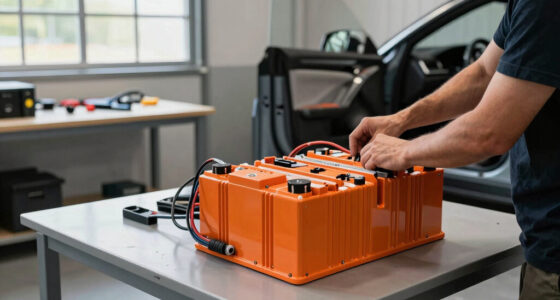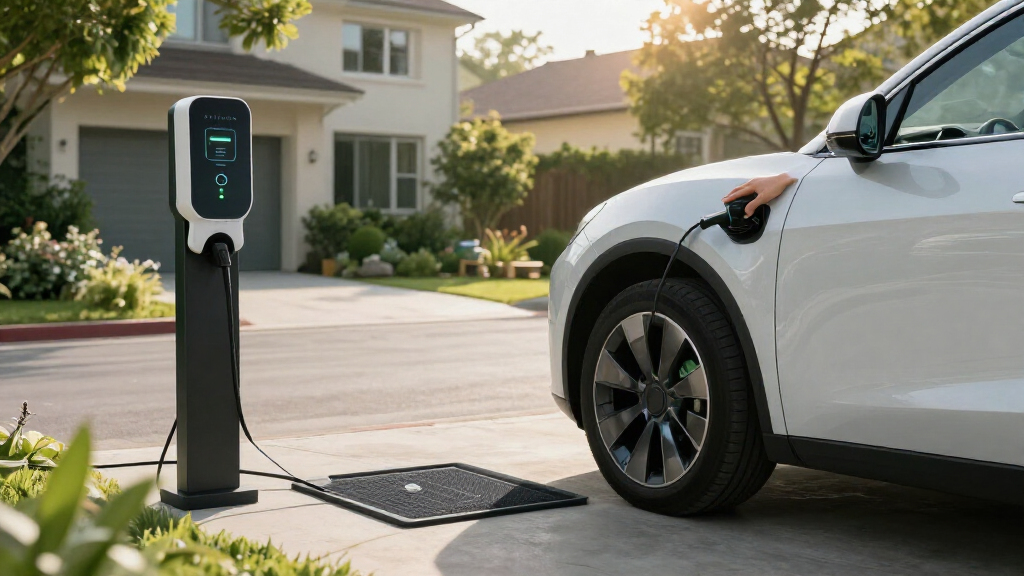

The best wireless EV chargers in this roundup are Wi-Fi-enabled home chargers, not chargers that send power through the air. I rank the Emporia Level 2 as the best overall for its 48A hardwired setup and smart connectivity, while the ChargePoint HomeFlex stands out for buyers who want an established home-charging platform and the Raylix portable charger suits drivers who need plug-in flexibility. The main tradeoffs are charging capacity versus installation requirements, and smart controls versus a simpler setup. Plug-in models can be easier to install, while hardwired units typically support higher output but call for a dedicated installation. Read on for the full breakdown and guidance on choosing a charger that fits your vehicle, electrical service, and parking setup.

Get backup power and energy gear delivered free with Prime
- Fast, free delivery on millions of items
- Prime Video, Amazon Music and more included
- Member-only deals all year
Key Takeaways
- Emporia, ChargePoint, and Autel occupy the strongest positions for buyers seeking higher-output, hardwired home charging; the right choice depends on smart controls, ecosystem preference, and installation fit.
- Plug-in and hardwired models serve different jobs. The Hicrab, Leviton, EVIQO, and Lectron use a NEMA 14-50 plug, while several 48A and 50A picks require hardwiring.
- Portable chargers trade peak output for flexibility. Raylix and the dual-voltage app-controlled option can suit travel or occasional charging, but their 16A limit is below the 40A–50A class.
- Cable reach is a real differentiator. The AIXINE lists a 27-foot cable, while the Lectron has a 16-foot cord; measure the route from the charging point to the vehicle inlet before choosing.
- Wi-Fi is common, but feature details vary. Some listings also specify Bluetooth or RFID, yet buyers should check app functions, network requirements, connector compatibility, and electrical ratings before purchase.




| wireless EV charger | Connector | Cable length | Warranty |
|---|---|---|---|
| Hicrab Level 2 J1772 EV Charge | SAE J1772 | 25 ft | 3 years |
| Raylix Portable Level 1 and Le | SAE J1772 | 25 ft | — |
| Level 1 & 2 Portable EV Charge | J1772 | 25 ft | — |
| EVIQO Level 2 J1772 EV Charger | J1772 | 25 ft | 3 years |
| Autel 50A Level 2 EV Charger | J1772 | 25 ft | 5 years |
| Leviton Smart Level 2 EV Charg | — | 25 ft | — |
| Calion 50A Level 2 Hardwired E | J1772 | 25 ft | 1 year |
| Autel 50A Level 2 J1772 EV Cha | J1772 | 25 ft | 3 years |
| AIMILER Level 2 EV Charger | J1772 | 25 ft | — |
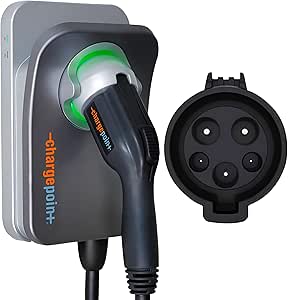
| ChargePoint HomeFlex Level 2 H | J1772 | 23 ft | 3 years |
| AIXINE Level 2 EV Charger | J1772 | 27 ft | 2 years |
| Lectron Level 2 J1772 WiFi EV | J1772 | — | 2 years |
| Emporia Level 2 J1772 EV Charg | SAE J1772 | 25 ft | 3 years |
| 48A Level 2 EV Charger with Wi | SAE J1772 | 25 ft | — |
| IYILO Level 2 J1772 EV Charger | SAE J1772 | 25 ft | 3 years |
More Details on Our Top Picks
Hicrab Level 2 J1772 EV Charger with NEMA 14-50 Plug and Wi-Fi
The Hicrab 40A is a strong fit for drivers who want a full-power plug-in charger with useful app controls rather than a hardwired installation. Its 25-foot cable can reach vehicles parked farther from the outlet, while Wi-Fi scheduling, adjustable current, and energy monitoring add control over everyday charging. RFID cards and plug-and-play operation give you alternatives to app access. Compared with the Raylix Portable Level 1 and Level 2, Hicrab delivers substantially more power, but it is less flexible for travel because it depends on a dedicated NEMA 14-50 outlet. Its IP55 enclosure supports outdoor placement, though the EVIQO’s IP66/NEMA 4 protection is a stronger weather rating. Choose Hicrab for a capable home setup, not for maximum weather protection or Tesla compatibility without an adapter.
Pros:- Up to 40A and 9.6 kW output supports faster home charging than the 16A Raylix and EVDANCE options.
- The 25-foot cable gives more parking-position flexibility than shorter-reach setups.
- Wi-Fi app offers scheduling, current adjustment, and energy monitoring, with RFID and plug-and-play alternatives.
- IP55 weather resistance and listed electrical compliance support indoor or outdoor installation.
Cons:- Requires a dedicated NEMA 14-50 outlet and suitable 50A/240V circuit.
- Tesla vehicles need a separately purchased NACS adapter.
- Smart features require a 2.4 GHz Wi-Fi connection.
Best for: J1772 EV owners with a dedicated NEMA 14-50 outlet who want 40A home charging, app scheduling, and a long cable.
Not ideal for: Drivers without a suitable 50A/240V circuit, Tesla owners unwilling to buy a separate NACS adapter, or households that need app control without 2.4 GHz Wi-Fi.
- Charging level:Level 2
- Connector:SAE J1772
- Maximum output:40A / 9.6 kW
- Input voltage:240 V AC
- Plug:NEMA 14-50
- Cable length:25 ft
- Current adjustment:8–40A
- Weather resistance:IP55
- Warranty:3 years
Our verdict“Choose Hicrab for feature-rich 40A plug-in charging with a long cable, provided your home already has the required outlet and circuit.”
Raylix Portable Level 1 and Level 2 J1772 EV Charger, 16A, 25 ft Cable
The Raylix 16A prioritizes outlet flexibility over charging speed: its included connections support Level 1 from a standard household outlet and Level 2 from a NEMA 6-20 outlet. That makes it a more adaptable option for drivers who split time between home and other locations, though its 3.68 kW Level 2 ceiling is well below the 40A Hicrab and EVIQO chargers. Four current settings and a delay timer help tailor charging to the available circuit or schedule, while the color display shows live charging data without requiring an app. Its IP65 enclosure has a higher stated rating than Hicrab’s IP55, but Raylix lacks the Wi-Fi monitoring offered by Hicrab and the EVDANCE portable charger. Pick it for straightforward portability, not fast daily replenishment.
Pros:- Included NEMA 5-15 and NEMA 6-20 connections support both Level 1 and Level 2 charging.
- Four current settings and a 1–12-hour delay timer help adapt charging to outlet capacity and schedule.
- TFT color display shows charging data directly on the unit.
- IP65 enclosure and overheat, overvoltage, and overcurrent protections support varied use conditions.
Cons:- At 16A and 3.68 kW on Level 2, it charges much more slowly than the 40A Hicrab or EVIQO.
- Level 2 use requires a NEMA 6-20 outlet.
- Level 1 output is limited to 12A, and there is no app-based control.
Best for: J1772 drivers who need one portable unit for standard 120V outlets and NEMA 6-20 Level 2 outlets, with on-device charging information.
Not ideal for: Drivers who need high-power home charging, app-based monitoring, or Level 1 charging above 12A.
- Charging levels:Level 1 and Level 2
- Connector:SAE J1772
- Maximum current:16A
- Level 2 output:240V, 3.68 kW
- Level 1 output:120V, 1.44 kW
- Included plug options:NEMA 6-20 and NEMA 5-15 adapter
- Cable length:25 ft
- Current settings:8A, 10A, 12A, and 16A
Our verdict“Choose Raylix if outlet flexibility and a clear onboard display matter more than high charging power or Wi-Fi features.”
Level 1 & 2 Portable EV Charger with Smart App Control, WiFi/Bluetooth, 25ft TPE Cable, ETL Listed J1772 EVSE for All EVs & PHEVs (Black, 16A, NEMA 5-15/6-20)
This EVDANCE charger combines the dual-outlet flexibility of the Raylix with Wi-Fi and Bluetooth app controls, making it the better match for drivers who want scheduling and remote monitoring in a portable 16A unit. It supports Level 1 from a 120V outlet and Level 2 through a NEMA 6-20 adapter, but its power ceiling remains far below the 40A Hicrab and EVIQO. The 25-foot TPE cable is described as flexible in extreme temperatures, and the NEMA 4 rating is suited to outdoor use. Compared with Raylix, it adds app functions but gives up the latter’s built-in color display and clearly specified delay timer. The product data also lists “ETL Listed” as its warranty field, so warranty length is not supplied. It suits flexible, connected charging, not buyers seeking a clearly documented warranty or fast Level 2 output.
Pros:- Supports Level 1 from a standard 120V outlet and Level 2 with the NEMA 6-20 adapter.
- Wi-Fi and Bluetooth app control enables monitoring, scheduling, and safety alerts.
- The 25-foot TPE cable is designed to stay flexible across temperature conditions.
- NEMA 4 weather protection and ETL listing support indoor or outdoor use.
Cons:- The 16A maximum is much lower than the 40A Hicrab and EVIQO models.
- Tesla vehicles require a separate adapter.
- The supplied product data does not specify a warranty duration, and the unit may be bulky to store.
Best for: J1772 drivers who want a portable Level 1/Level 2 charger with app monitoring and scheduling for home or occasional travel.
Not ideal for: Drivers who need faster charging than 16A, prefer an onboard display, or want a clearly stated warranty duration.
- Charging levels:Level 1 and Level 2
- Connector:J1772
- Maximum amperage:16A
- Level 1 input:120 V AC
- Level 2 adapter:NEMA 6-20
- Cable length:25 ft
- Connectivity:Wi-Fi and Bluetooth
- Weight:7 lb
Our verdict“Choose this EVDANCE model if you want app-connected portable charging across Level 1 and Level 2 outlets and can accept its 16A limit.”
EVIQO Level 2 J1772 EV Charger, 40A, NEMA 14-50
The EVIQO 40A is a practical choice when a NEMA 14-50 outlet is already in place and the charger will face outdoor exposure. Like the Hicrab, it offers up to 9.6 kW through a 25-foot cable, plus 2.4 GHz Wi-Fi controls for charging speed, remote start and stop, reminders, and energy tracking. Its IP66/NEMA 4 enclosure carries a higher stated weather-protection rating than Hicrab’s IP55, and the glow-in-the-dark holster makes the connector easier to locate at night. The tradeoff is that it still needs a dedicated 50A circuit and a compatible J1772 vehicle inlet; Tesla and other inlet types may need an adapter. Compared with the hardwired Autel 50A, EVIQO is simpler to connect to an existing outlet but cannot match its 50A maximum.
Pros:- 40A output and 9.6 kW power provide substantially more charging capacity than the portable 16A models.
- IP66/NEMA 4 protection is a strong fit for outdoor installation.
- App supports remote start and stop, charging-speed adjustment, reminders, and energy tracking.
- The glow-in-the-dark holster helps with connector storage and visibility after dark.
Cons:- Requires a dedicated 50A circuit and NEMA 14-50 outlet.
- App features require 2.4 GHz Wi-Fi.
- J1772 may require an adapter for vehicles with a different charging inlet.
Best for: J1772 EV owners with an existing dedicated NEMA 14-50 outlet who want a weather-rated outdoor charger and app controls.
Not ideal for: Drivers without a 50A circuit, those seeking a hardwired 50A charger, or buyers whose vehicle needs a separate connector adapter.
- Connector:J1772
- Maximum current:40A
- Maximum power:9.6 kW
- Input voltage:240 V
- Outlet:NEMA 14-50
- Required circuit:Dedicated 50A circuit
- Cable length:25 ft
- Weather protection:IP66 / NEMA 4
- Warranty:3 years
Our verdict“Choose EVIQO over Hicrab when stronger stated weather protection and a visible nighttime holster matter more than a higher output ceiling.”
Autel 50A Level 2 EV Charger, 240V Hardwired, 25 ft Cable
For a permanent installation where a qualified electrician can provide the wiring, the Autel 50A offers the highest stated output in this group. Its current adjusts from 6A to 50A, giving owners more room to match charging to the circuit and vehicle than the 40A Hicrab and EVIQO. The Autel Charge app adds scheduling, monitoring, and usage insights, while temperature monitoring and flame-retardant materials address safety during sustained charging. The 25-foot J1772 cable supports flexible parking, and the five-year warranty is longer than the three-year coverage listed for Hicrab and EVIQO. The key cost in convenience is installation: unlike those plug-in models, Autel is hardwired and may require an electrician. It is the stronger fit for a dedicated home charging point, not for renters or drivers who need a portable unit.
Pros:- Adjustable 6–50A current provides a higher maximum than the 40A Hicrab and EVIQO.
- Autel Charge app supports scheduling, monitoring, and usage history.
- Temperature monitoring and flame-retardant materials support safe operation.
- Five-year warranty exceeds the three-year coverage listed for Hicrab and EVIQO.
Cons:- Hardwired installation may require a qualified electrician.
- It is not a portable or plug-in option for moving between outlets.
- J1772 compatibility may require an adapter for vehicles with a different inlet.
Best for: Homeowners planning a permanent 240V installation who want adjustable charging up to 50A, app monitoring, and a longer stated warranty.
Not ideal for: Renters, drivers who need to move a charger between outlets, or households that want plug-in installation without electrician work.
- Installation:Hardwired, indoor or outdoor
- Input voltage:240 V
- Adjustable current:6–50A
- Connector:J1772
- Cable length:25 ft
- App:Autel Charge
- Safety certification:UL-certified by CSA
- Dimensions:13 × 4.8 × 6.7 in
- Warranty:5 years
Our verdict“Choose Autel for a permanent, electrician-installed home setup when its 50A capacity and five-year warranty matter more than plug-in convenience.”
Leviton Smart Level 2 EV Charger, 40A, Wi-Fi, NEMA 14-50 Plug
The Leviton EV40P suits drivers who want app-based scheduling without committing to a hardwired installation. Its NEMA 14-50 plug can simplify setup when a compatible receptacle is already in place, while Wi-Fi supports remote monitoring and start or stop control. At up to 9.6 kW and 40A, it offers less peak output than the hardwired Calion and Autel 50A models, but its plug-in format gives it a more flexible installation path. The 25-foot cable and NEMA 3R enclosure also make garage or outdoor placement practical. The tradeoff is that the outlet must match the charger’s requirements, and Tesla drivers need a separate Leviton NACS adapter. Choose it for convenient home charging, not maximum output.
Pros:- NEMA 14-50 plug can simplify installation where a compatible receptacle is available.
- My Leviton app supports remote monitoring, scheduling, and start or stop control.
- 25-foot cable offers reach across many garage and driveway layouts.
- NEMA 3R enclosure supports indoor or outdoor installation.
Cons:- 40A and up to 9.6 kW are below the maximum output of the Calion and Autel 50A models.
- Requires a compatible NEMA 14-50 receptacle.
- Tesla vehicles need a separate Leviton NACS adapter.
Best for: Drivers with a compatible NEMA 14-50 receptacle who want Wi-Fi scheduling and the option to avoid hardwiring.
Not ideal for: Households seeking 50A-class output or Tesla owners who do not want to buy a separate NACS adapter.
- Model:EV40P
- Input voltage:240 V
- Current:40 A
- Charging power:Up to 9.6 kW
- Connectivity:Wi-Fi
- Cable length:25 ft
- Connector and plug:SAE J1772; NEMA 14-50P
- Certifications:UL; Energy Star
Our verdict“Choose the Leviton EV40P if you have the right outlet and value app scheduling and plug-in setup over higher charging output.”
Calion 50A Level 2 Hardwired EV Charger with Wi-Fi, Bluetooth, and 25 ft Cable
The Calion’s main distinction is Wi-Fi and Bluetooth app control on a 50A hardwired charger. That combination gives buyers two connection options for checking charging status and notifications, while its 25-foot cable helps reach vehicles parked farther from the wall. Its 240V, 50A rating puts it alongside the Autel 50A charger for peak current, but the Autel offers adjustable output down to 6A and a stated 12 kW maximum; the Calion’s listed details focus more on connectivity and electrical protections. Its IP65 enclosure and broad operating-temperature range suit exposed installations, though permanent wiring means planning an electrician visit rather than plugging into an existing outlet. A one-year warranty is also shorter than the three years listed for Autel and ChargePoint.
Pros:- 50A, 240V output supports high-current Level 2 charging.
- Wi-Fi and Bluetooth app controls provide charging status and notifications.
- 25-foot cable offers useful reach for garage and driveway parking.
- IP65 enclosure and listed electrical protections suit indoor or outdoor placement.
Cons:- Hardwired installation requires electrical work and is less flexible than a plug-in charger such as the Leviton EV40P.
- J1772 connector is not a direct fit for vehicles with a different inlet.
- One-year warranty is shorter than the three-year warranties listed for the Autel and ChargePoint models.
Best for: J1772 EV owners installing a hardwired charger outdoors who want both Wi-Fi and Bluetooth app access.
Not ideal for: Renters, drivers who need a plug-in charger, or buyers prioritizing a longer stated warranty.
- Output voltage:240 V
- Current:50 A
- Cable length:25 ft
- Connector:J1772
- Connectivity:Wi-Fi and Bluetooth
- Installation:Hardwired, wall-mounted
- Weather resistance:IP65
- Operating temperature:-31°F to 131°F
- Warranty:1 year
Our verdict“Pick the Calion if you want a hardwired 50A charger with two app connection methods and outdoor-rated construction.”
Autel 50A Level 2 J1772 EV Charger, 240V Hardwired, 25 ft
The Autel Maxi US AC W12 is the most adaptable high-output option in this group: its current can be set anywhere from 6A to 50A, rather than being limited to one fixed maximum setting. That range can help match charging to a home’s electrical capacity, though installation and circuit limits still need to be handled correctly. Like the Calion, it reaches 50A and includes a 25-foot J1772 cable, but Autel adds app scheduling and session monitoring, a stated 12 kW maximum, and a three-year warranty. Its NEMA 4X protection is another useful distinction for outdoor placement. The cost of this flexibility is a permanent hardwired installation, unlike the plug-in Leviton EV40P. It also weighs 20.9 pounds, so buyers should check the proposed mounting location and cable routing.
Pros:- Adjustable 6A–50A output offers more setting flexibility than the fixed-current options listed here.
- Wi-Fi and Bluetooth app controls support scheduling and session monitoring.
- NEMA 4X enclosure is designed for indoor or outdoor installation.
- Three-year warranty is longer than the Calion’s listed one-year coverage.
Cons:- Requires permanent hardwired installation, unlike the plug-in Leviton EV40P.
- J1772 connector may require an adapter for vehicles with another inlet type.
- At 20.9 lb, it is heavier than the ChargePoint HomeFlex listed here.
Best for: Homeowners planning a hardwired installation who want to adjust charging current to suit their electrical setup.
Not ideal for: Drivers who need a portable or plug-in charger, or who want to move the unit between locations.
- Model:Maxi US AC W12
- Installation:240V hardwired
- Maximum output:50A; 12 kW
- Adjustable current:6A–50A
- Connector:J1772
- Cable length:25 ft
- Connectivity:Wi-Fi and Bluetooth
- Outdoor protection:NEMA 4X
- Warranty:3 years
Our verdict“Choose the Autel if you want a hardwired 50A charger with adjustable current, app scheduling, and outdoor-rated protection.”
AIMILER Level 2 EV Charger, 48A/11.5kW Hardwired, 25 ft Cable, ETL Certified, J1772 Connector, Carbon
The AIMILER separates itself with an LED touchscreen alongside Wi-Fi app controls. That gives drivers a visible way to check charging status at the unit, while the app adds scheduling, monitoring, and cost tracking. Its 48A, 11.5 kW output is close to the 50A Autel and Calion models, though the Autel has a wider adjustable range starting at 6A; AIMILER’s range is 24–48A. The 25-foot J1772 cable serves typical garage and driveway layouts, but this is a hardwired-only charger that calls for a circuit breaker of at least 60A. Compared with the Leviton EV40P, it trades plug-in flexibility for greater listed output and a screen. Tesla drivers also need an adapter, so check connector fit before buying.
Pros:- 48A and 11.5 kW output provide high-capacity Level 2 charging.
- LED touchscreen displays real-time status at the charger.
- Wi-Fi app supports scheduling, monitoring, and cost tracking.
- 25-foot J1772 cable offers practical reach for many home parking setups.
Cons:- Hardwired installation requires a circuit breaker rated at least 60A.
- No NEMA 14-50 plug, making it less flexible than the plug-in Leviton EV40P.
- Tesla vehicles require a separate adapter.
Best for: Homeowners wanting a hardwired 48A charger with on-unit status display, app scheduling, and cost tracking.
Not ideal for: Renters or buyers who need a NEMA 14-50 plug, and Tesla owners without a compatible adapter.
- Output voltage:240 V
- Current and power:48 A; 11.5 kW
- Connector:J1772
- Cable length:25 ft
- Installation:Hardwired; requires at least a 60A circuit breaker
- Current adjustment:24A–48A
- Connectivity:Wi-Fi
- Display:LED touchscreen
- Certifications:ETL; FCC; listed UL and SAE J1772 standards
Our verdict“Pick the AIMILER if you want 48A hardwired charging with a touchscreen and app-based cost tracking, and already have the required circuit planned.”
ChargePoint HomeFlex Level 2 Hardwired EV Charger, J1772, 50A
The ChargePoint HomeFlex is a strong fit for buyers who value a cold-resistant cable and a wide current-adjustment range more than the longest reach. Its output adjusts from 16A to 50A, allowing the charger setting to better match a home’s electrical setup, and its 23-foot cable is designed for lower temperatures. That cable is two feet shorter than the 25-foot leads on the Calion and Autel, so parking position matters more in a spread-out garage. ChargePoint’s app supplies charging information and reminders, but some features require Wi-Fi; the Autel also offers Bluetooth, which adds another connection option. This model is hardwired and calls for electrician installation. Its UL certification, Energy Star status, and three-year warranty distinguish it from the Calion’s shorter stated warranty.
Pros:- Adjustable 16A–50A charging supports a range of home electrical setups.
- 23-foot cable is specified as cold-resistant.
- Indoor or outdoor installation is supported.
- UL-certified and Energy Star, with a three-year warranty.
Cons:- Hardwired installation by an electrician is required, unlike the plug-in Leviton EV40P.
- Cable is shorter than the 25-foot leads on the Calion and Autel.
- Wi-Fi is required for some app features.
Best for: Drivers in cold climates who want a hardwired charger with adjustable current and a cable designed to resist cold.
Not ideal for: Buyers who need a 25-foot cable, plug-in installation, or app features without Wi-Fi.
- Model:CPH50-HARDWIRE-L23
- Installation:Hardwired
- Output voltage:240V AC
- Adjustable amperage:16A–50A
- Connector:J1772
- Cable length:23 ft
- Charging speed:Up to 37 mi/hr
- Certification:UL-certified; Energy Star
- Warranty:3 years
Our verdict“Choose the ChargePoint HomeFlex if cold-weather cable handling and adjustable output matter more than a 25-foot reach or plug-in setup.”
AIXINE Level 2 EV Charger, 40 A, J1772, 27 ft Cable, Wi-Fi App
The AIXINE pairs 40A charging with the longest cable in this group: its 27-foot reach can make parking position less of a constraint than with the Lectron’s 16-foot cord. Current settings from 10A to 40A are available at the charger or in the app, giving owners a way to match charging to their electrical setup; the app also handles schedules and usage tracking. Its IP67 rating and safety shutoffs add protection for a portable unit that may be packed away or used in varying conditions. The tradeoff is that it still needs a 240V NEMA 14-50 outlet, and its J1772 connector does not fit a Tesla NACS port without an adapter. I’d choose it for reach and flexibility, not for hardwired charging capacity like the Emporia.
Pros:- 27-foot cable offers more parking flexibility than the Lectron’s 16-foot cord.
- Current adjusts from 10A to 40A through the LCD or app.
- App supports schedules, usage monitoring, and cost tracking.
- IP67 rating, multiple automatic shutoffs, and included storage bag support portable use.
Cons:- Requires a 240V NEMA 14-50 outlet, limiting where it can be used.
- J1772 connector is not directly compatible with Tesla NACS vehicles.
- 40A maximum output falls short of the hardwired Emporia and other 48A options.
Best for: J1772 EV owners with a 240V NEMA 14-50 outlet who need extra cable reach for a garage, driveway, or travel setup.
Not ideal for: Tesla owners with a NACS charge port who do not want to buy an adapter, and households seeking a permanently hardwired 48A charger.
- Maximum current:40A
- Maximum charging power:9.6 kW
- Voltage:240V
- Connector:J1772
- Plug:NEMA 14-50
- Cable length:27 ft
- Ingress protection:IP67
- Warranty:2 years
Our verdict“Choose the AIXINE if you want a portable 40A charger with unusually long reach and have a compatible NEMA 14-50 outlet.”
Lectron Level 2 J1772 WiFi EV Charger, 240V, 40A, NEMA 14-50 Plug, 16 ft Cord
The Lectron makes a straightforward case for buyers who want a portable charger that is easy to pack: it includes a carrying case and offers Wi-Fi app controls for monitoring, schedules, and energy settings. Its 40A, 9.6kW output matches the AIXINE, but the Lectron’s 16-foot cord is much shorter, so it suits a compact garage or a dependable outlet close to the parking spot better than awkward driveway layouts. The stated UL 2251 and Energy Star credentials give buyers useful certification details to compare, while the two-year warranty matches the AIXINE’s. The main limitation is the same portable-charger constraint: it needs a NEMA 14-50 receptacle. I’d pick it over the AIXINE when storage and travel convenience matter more than extra cable reach.
Pros:- Carrying case makes storage and transport more convenient.
- Wi-Fi app provides charging monitoring, scheduling, and energy controls.
- Up to 40A and 9.6kW charging from a compatible 240V outlet.
- IP65 rating and listed UL 2251, Energy Star, ETL, and FCC credentials.
Cons:- 16-foot cable offers substantially less reach than the AIXINE’s 27 feet.
- Requires a compatible 240V NEMA 14-50 outlet.
- J1772 connector limits direct compatibility with vehicles using NACS.
Best for: J1772 drivers who already have a NEMA 14-50 outlet and want a portable charger with a case and app-based scheduling.
Not ideal for: Owners whose outlet is far from the vehicle, or buyers who need a hardwired installation or a directly compatible NACS connector.
- Maximum current:40A
- Maximum charging power:9.6 kW
- Input voltage:240V
- Connector:J1772
- Plug:NEMA 14-50
- Cord length:16 ft
- Connectivity:Wi-Fi
- Warranty:2 years
Our verdict“Pick the Lectron for a travel-ready 40A charger when its shorter cable will reach your vehicle comfortably.”
Emporia Level 2 J1772 EV Charger, 48A, 240V, Wi-Fi, 25 ft Cable, Hardwired, White
The Emporia is the practical step up for drivers who want to move beyond a plug-in 40A unit: its hardwired 48A output supports higher charging power, while the 25-foot cable gives useful reach without the AIXINE’s outlet-based portability. Wi-Fi monitoring and scheduled charging help owners track and manage home charging, and the package includes the wall mount, holster, and mounting hardware. Its UL listing, ENERGY STAR certification, and three-year warranty offer a clearer specification trail than the 48A model with display and RFID in this group. The tradeoff is installation: hardwiring calls for a suitable circuit and professional work, so this is not the charger to take along or plug into an existing receptacle. J1772 also means NACS vehicles need an adapter.
Pros:- 48A hardwired output exceeds the 40A ceiling of the AIXINE and Lectron.
- 25-foot cable supports flexible parking around a home charging spot.
- Wi-Fi enables scheduled charging and energy monitoring.
- UL listed, ENERGY STAR certified, and backed by a three-year warranty.
Cons:- Hardwired installation is less portable and requires suitable electrical work.
- J1772 connector requires a compatible adapter for vehicles with NACS ports.
- No plug-in option for buyers who want to use an existing NEMA 14-50 outlet.
Best for: J1772 EV owners planning a permanent home installation who want 48A charging, app monitoring, and a longer warranty.
Not ideal for: Renters, frequent travelers, or households without a suitable circuit and budget for professional hardwired installation.
- Maximum current:48A
- Voltage:240V
- Connector:SAE J1772
- Cable length:25 ft
- Installation:Hardwired with whip
- Connectivity:2.4 GHz Wi-Fi
- Certifications:UL listed; ENERGY STAR certified
- Warranty:3 years
Our verdict“Choose the Emporia for a permanent, certified 48A J1772 setup if you can accommodate hardwired installation.”
48A Level 2 EV Charger with Wi-Fi, RFID, and 25-Foot Cable
This hardwired charger is the clearest fit for a household or shared parking area where RFID access matters: users can control access at the unit, while the app adds schedules, energy tracking, and notifications. Its 4.3-inch display gives charging information a visible home without requiring a phone check, a feature the Emporia does not list. Both offer 48A output and a 25-foot J1772 cable, but this model adds adjustable current from 32A to 48A and an aluminum housing. That flexibility comes with conditions: 48A operation calls for a 60A-or-higher circuit, and installation is hardwired. The product data also cautions against direct sun or exposed rain despite its IP65 rating, which narrows placement options compared with a simple weather-rating figure alone.
Pros:- RFID access helps manage shared use without relying only on app controls.
- 4.3-inch display shows charging information at the unit.
- Current adjusts from 32A to 48A to suit the available circuit.
- 25-foot J1772 cable and app scheduling support flexible daily use.
Cons:- 48A charging requires a 60A-or-higher circuit and hardwired installation.
- Tesla NACS vehicles need a separately sold adapter.
- Product guidance advises against installation in direct sunlight or exposed rain despite the IP65 rating.
Best for: Households or shared garages with multiple drivers who want RFID access, on-unit charging information, and a hardwired 48A charger.
Not ideal for: Buyers needing a portable or plug-in charger, or those whose only mounting location is exposed to direct sun or rain.
- Maximum output:48A, 11.5 kW
- Voltage:240V
- Adjustable current:32A–48A
- Connector:SAE J1772
- Cable length:25 ft
- Display:4.3-inch LCD
- Connectivity and access:Wi-Fi, app, RFID
- Recommended breaker for 48A:60A or higher
Our verdict“Choose this model over the Emporia when shared access and an on-unit display matter enough to justify its placement and installation limits.”
IYILO Level 2 J1772 EV Charger, 48A, 11.5 kW, 240V
The IYILO stands apart from the Emporia and the RFID-equipped 48A charger through its unusually broad 6A–48A adjustment range, set in 1A increments. That gives owners more room to tune charging to a circuit or coordinate usage, while its listed power-sharing feature can let two chargers operate on one circuit. App controls cover schedules, energy tracking, RFID, and multiple accounts; connector temperature monitoring adds a specific safeguard if the plug overheats. Like the other 48A picks, it is a permanent hardwired installation, not a portable alternative to the AIXINE or Lectron, and it requires a 60A breaker plus a licensed electrician. Its Wi-Fi is 2.4 GHz only, and Tesla drivers must supply their own NACS adapter. The three-year warranty is a useful match for the Emporia.
Pros:- Current adjusts from 6A to 48A in 1A increments for fine control.
- Power sharing can support two chargers on one circuit.
- App offers schedules, energy tracking, RFID, and multiple user accounts.
- Connector temperature monitoring can stop charging if overheating occurs.
Cons:- Requires a 60A breaker, hardwiring, and a licensed electrician.
- Wi-Fi works on 2.4 GHz only.
- NACS adapter for Tesla vehicles is not included.
Best for: Homeowners with a suitable 60A circuit who want precise current adjustment, app-based user controls, or power sharing between two chargers.
Not ideal for: Renters or buyers seeking plug-in portability, and households whose Wi-Fi setup does not support 2.4 GHz.
- Maximum current:48A
- Maximum power:11.5 kW
- Voltage:240V
- Current adjustment:6A–48A in 1A increments
- Connector:SAE J1772
- Cable length:25 ft
- Installation:Hardwired; 60A breaker and licensed electrician required
- Warranty:3 years
Our verdict“Choose the IYILO over the Emporia if fine-grained current settings and power sharing matter more than a plug-in installation.”
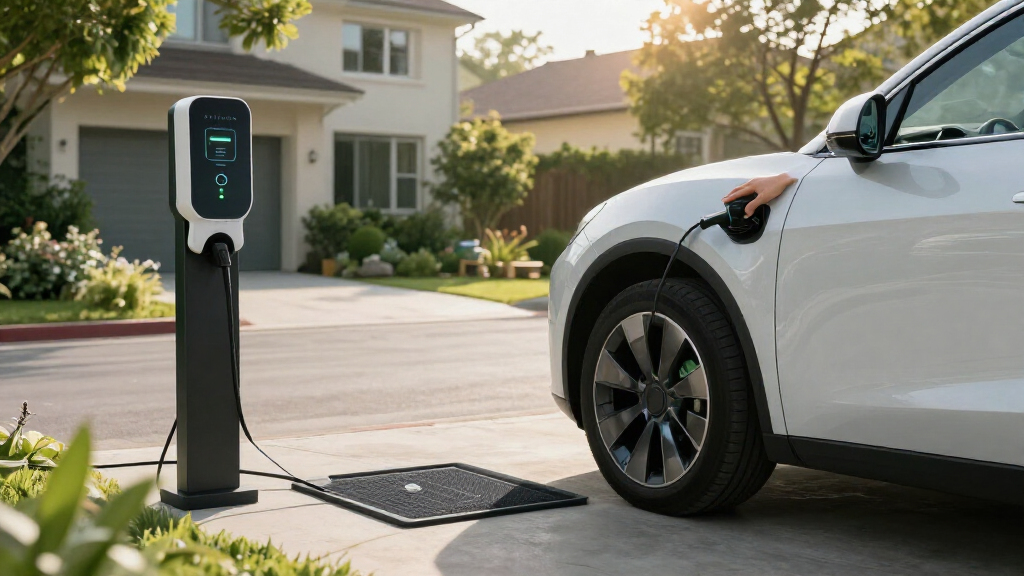
How We Picked
I compared the 15 listed chargers by the factors that shape day-to-day home charging: rated amperage, plug-in versus hardwired installation, cable length, connector type, and listed connectivity. I gave more weight to the needs of a primary home charger than to portability, while still including portable options for drivers who value flexible outlets or travel use. Where product names identify a feature—such as Wi-Fi, Bluetooth, RFID, or ETL listing—I treated that as a point of comparison, not proof of performance beyond the stated information.
The ranking favors models that combine useful charging capacity with a clear installation path and practical cable reach. The Emporia leads as a balanced 48A hardwired smart option; ChargePoint and Autel follow for buyers who prioritize a recognized charging platform or a high-capacity setup. Plug-in 40A units rank well for homes with a suitable 14-50 receptacle, while 16A portable chargers place lower for permanent daily use but remain more relevant to drivers who need mobility. I also account for drawbacks: hardwired chargers need an electrician, plug-in units depend on a correctly rated circuit, and app features are only useful when they match the buyer’s network and control needs.
| wireless EV charger | Connector |
|---|---|
| Hicrab Level 2 J1772 EV Charge | SAE J1772 |
| Raylix Portable Level 1 and Le | SAE J1772 |
| Level 1 & 2 Portable EV Charge | J1772 |
| EVIQO Level 2 J1772 EV Charger | J1772 |
| Autel 50A Level 2 EV Charger | J1772 |
| Leviton Smart Level 2 EV Charg | — |
| Calion 50A Level 2 Hardwired E | J1772 |
| Autel 50A Level 2 J1772 EV Cha | J1772 |
| AIMILER Level 2 EV Charger | J1772 |
| ChargePoint HomeFlex Level 2 H | J1772 |
| AIXINE Level 2 EV Charger | J1772 |
| Lectron Level 2 J1772 WiFi EV | J1772 |
| Emporia Level 2 J1772 EV Charg | SAE J1772 |
| 48A Level 2 EV Charger with Wi | SAE J1772 |
| IYILO Level 2 J1772 EV Charger | SAE J1772 |
Factors to Consider When Choosing Best Wireless EV Chargers
Before choosing from these wireless EV chargers, separate the wireless control features from the electrical installation. Wi-Fi may let you monitor or schedule charging, but it does not determine whether a unit fits your panel, outlet, vehicle, or parking layout. These checks can prevent an otherwise capable charger from becoming an awkward or costly match.
Confirm the Vehicle Connector and Charging Limit
Most models in this roundup use a J1772 connector, which fits many North American EVs and plug-in hybrids, but some vehicles use a different inlet or require an adapter. Check the owner’s manual and the car’s maximum AC charging rate before paying for a higher-amperage unit. A 48A or 50A charger cannot make a vehicle accept power faster than its onboard charger allows. If you expect to change vehicles, confirm the next vehicle’s connector and charging capability too. Matching the charger to the car avoids paying for capacity that will sit unused.
Check the Electrical Circuit Before Picking Plug-In or Hardwired
A NEMA 14-50 plug can make a charger easier to disconnect or relocate, but the receptacle and circuit must be suitable for continuous EV charging. A dryer outlet or an existing 14-50 receptacle should not be assumed safe without checking its wiring, breaker, and installation condition. Hardwired models can support higher output and avoid a plug connection, but they require a fixed installation by a qualified electrician. Ask an electrician to check panel capacity and the route to the parking space before ordering. Choosing the charger first and checking the circuit later can lead to extra electrical work or a lower charging limit.
Choose Amperage for Your Routine, Not the Largest Number
Higher amperage can shorten overnight charging, but many drivers do not need the maximum available rate. Estimate how many miles you typically add overnight and compare that with the vehicle’s charging limit and the available circuit. A 16A portable unit may be adequate as a backup or for modest daily driving, while a 40A–50A charger makes more sense for frequent long commutes or a shorter overnight window. A higher-capacity charger also places greater demands on the home electrical system. Paying for extra output is useful only when the car and circuit can support it.
Measure Cable Reach and Parking Approach
Cable length affects everyday convenience more than a small difference in listed features. Measure from the planned charger position to the vehicle’s charge port with the car parked as it normally will be, including the path around walls or obstacles. A longer cable can serve more than one parking position, but it needs a safe place to hang and should not cross a walkway or be pinched by a door. A shorter cord can keep a compact installation tidy when the charger sits close to the inlet. Do not rely on a cable extension as a substitute for choosing a suitable charger location.
Treat Smart Features as a Fit Question
Wi-Fi, Bluetooth, and RFID can add scheduling, charging information, or access control, but the feature name alone does not tell you how the app behaves. Check whether the charger needs a reliable signal at the parking spot and whether its controls work when the internet is unavailable. RFID can help limit access in a shared garage, while Bluetooth may be useful where Wi-Fi coverage is weak. If you only need dependable overnight charging, extra controls may add setup without changing your routine. Verify the functions you actually want before selecting a smart model.
Plan for Outdoor Exposure and Ongoing Use
Installation location and upkeep affect the life and convenience of a home charger. Check the product’s stated indoor or outdoor suitability, temperature limits, and enclosure rating rather than assuming every wall-mounted EVSE can sit in the weather. Keep the connector and cable off the ground, and choose a spot that limits exposure to standing water, vehicle impact, and harsh sunlight. For a shared or frequently used charger, a secure mount and easy cable storage matter as much as app functions. If the listing does not clearly state environmental ratings or warranty terms, confirm those details before purchase.
Frequently Asked Questions
Does “wireless EV charger” mean my car charges without a cable?
For the products in this roundup, wireless refers to connected features such as Wi-Fi or app controls, not power transfer through the air. Each listed charger uses a physical cable and vehicle connector. True cable-free charging requires a compatible inductive charging system, which is a different product category and is not represented here. Check the listing and installation requirements if you specifically want inductive charging. These picks are for drivers seeking connected, cable-based home EVSEs.
Can I install a 40A or 48A charger on an existing NEMA 14-50 outlet?
Do not assume that an existing NEMA 14-50 outlet supports the charger’s full rating. The circuit, breaker, wiring, receptacle condition, and charger configuration all matter, and EV charging is a sustained electrical load. Some plug-in products are designed for a particular current level, while many 48A models in this list are hardwired. Have an electrician verify the circuit and set the charger to a permitted output. If the circuit cannot support the desired rate, a lower setting or electrical upgrade may be needed.
Is a 48A or 50A charger worth choosing over a 40A model?
A higher-rated charger can add more range during a limited charging window, but the benefit depends on your vehicle’s AC charging limit and home circuit. If your car accepts less power than the charger can provide, the car sets the practical ceiling. Higher output may also require hardwiring or an electrical upgrade, adding work that a 40A plug-in setup might avoid. Compare your daily driving and overnight parking time rather than choosing by the largest amperage figure. For many drivers who leave the car parked overnight, 40A may already meet the routine.
Should I choose a portable 16A charger as my only home charger?
A 16A portable charger can work as a primary option for drivers with low daily mileage and enough time to recharge, but it will generally replenish a battery more slowly than the 40A–50A home units here. Its portability is useful when you need to move between compatible outlets or keep a backup charger in the vehicle. The tradeoff is that outlet availability and safe circuit capacity can limit where it can be used. Confirm the connector, voltage, and included plug configuration before relying on it for routine charging. If you regularly need a large recharge overnight, a dedicated Level 2 installation is a better fit.
What should I verify before buying a Wi-Fi EV charger for a detached garage?
First check Wi-Fi signal strength at the planned charger location; a connection that works inside the house may not reach a detached garage reliably. Confirm whether the charger offers Bluetooth or local controls if the network drops, and check what app functions depend on internet access. Ask an electrician to assess the power route and circuit capacity, since a detached structure may need separate electrical work. Also verify outdoor suitability, cable reach, and the placement of the vehicle’s charge port. If connectivity is unreliable, prioritize a charger whose basic operation does not depend on continuous cloud access.
Conclusion
For most buyers seeking one connected home charger, I recommend the Emporia Level 2 as the best overall pick: its 48A hardwired setup pairs smart connectivity with strong home-charging capacity. The Raylix portable charger is the best value for drivers who put flexibility ahead of rapid charging, while ChargePoint HomeFlex is my best premium choice for buyers who favor a dedicated home-charging platform. Beginners with a correctly installed 14-50 outlet should look at a plug-in model such as the Leviton or EVIQO, after confirming circuit capacity. For specific needs, the AIXINE’s 27-foot cable may suit a less convenient parking layout, and the RFID-equipped 48A model may appeal in a shared space. Match the charger to your vehicle, electrical service, and cable route before deciding between higher output and easier installation.
Black Friday Picks

Ninja Foodi DualZone Smart XL Air Fryer, 10-Quart, 6-in-1, Black, DZ550
As an affiliate, we earn on qualifying purchases.