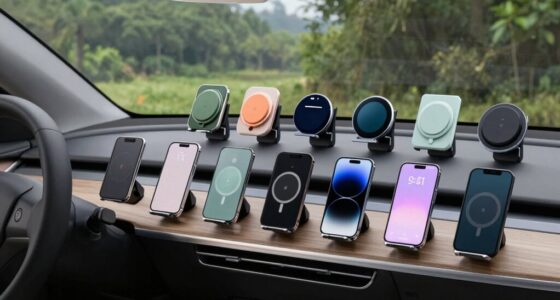
The best Rivian chargers and accessories depend on whether you need home charging, compatible DC fast charging, or a tidier cabin setup. I rank the Rivian Wall Charger with NACS Connector as the best overall for a dedicated home setup, while the EVDANCE portable J1772 charger is a flexible pick for owners who need a backup charging option. For Supercharger access, the NACSTOCCS 500A adapter stands out among several similar NACS-to-CCS1 choices. The main tradeoffs are fixed installation versus portability, adapter compatibility and certification details, and convenience features versus vehicle-specific fit. Read on for the full breakdown and guidance on choosing the right combination for your Rivian.

Get backup power and energy gear delivered free with Prime
- Fast, free delivery on millions of items
- Prime Video, Amazon Music and more included
- Member-only deals all year
Key Takeaways
- The Rivian Wall Charger is the clearest home-charging choice in this lineup, while the portable EVDANCE unit suits drivers who need flexibility rather than a permanent installation.
- Six NACS-to-CCS1 adapters make up much of the list; connector fit, vehicle and network compatibility, and verified electrical ratings matter more than small differences in headline specs.
- The three 500A, 1000V adapters are not automatically interchangeable; buyers should confirm approval and compatibility for their exact Rivian and charging network before purchase.
- TWRAPS serves a different need from the charging products: its dual wireless charger and two dashboard mounts address cabin convenience, so fit and phone setup should guide the choice.
- Paying for a dedicated charger makes most sense for regular home charging; occasional travelers may get more value from a portable unit or a compatible fast-charging adapter.
| EVDANCE Portable Level 1 and Level 2 J1772 EV Charger, 16A, 25 ft Cable |  | Best Portable Home Charger | Connector: J1772 | Charging levels: Level 1 and Level 2 | Current: 12A at 120V; 16A at 240V | VIEW LATEST PRICE | See Our Full Breakdown |
| NACSTOCCS NACS-to-CCS1 Tesla Supercharger Adapter, 500A, 1000V |  | Best Straightforward Supercharger Adapter | Adapter type: NACS to CCS1 | Maximum current: 500A | Maximum voltage: 1000V | VIEW LATEST PRICE | See Our Full Breakdown |
| AFI NACS to CCS1 Adapter for Tesla Superchargers, 500A, 1000V DC Fast Charging |  | Best Feature-Rich Supercharger Adapter | Connector type: NACS to CCS1 | Maximum amperage: 500A | Maximum power: 250 kW | VIEW LATEST PRICE | See Our Full Breakdown |
| TopAutoGear NACS to CCS1 EV Charging Adapter, 250 kW |  | Best Certified Supercharger Adapter | Connector types: NACS and CCS1 | Maximum DC power: 250 kW | Compatible chargers: Tesla V3 and V4 Superchargers | VIEW LATEST PRICE | See Our Full Breakdown |
| TWRAPS Dual MagSafe-Compatible Charger for Rivian R1T/R1S, Up to 25W per Side |  | Best Dual-Phone Rivian Accessory | Connector: USB Type-C | Wireless charging standard: MagSafe | Maximum wattage: Up to 25W per side | VIEW LATEST PRICE | See Our Full Breakdown |
| Amphenol NACS to CCS1 DC Adapter for Tesla Superchargers |  | Best for Broad NACS DC Fast-Charger Access | Model: HVCONT1001 | Compatibility: CCS1 EVs with automaker-enabled Supercharger access; not Tesla or CHAdeMO | Charging type: DC fast charging only | VIEW LATEST PRICE | See Our Full Breakdown |
| Rivian Wall Charger with NACS Connector |  | Best for Newer Rivian Home Charging | Connector: NACS | Input and output voltage: 240 V AC | Maximum charging current: Up to 48 A | VIEW LATEST PRICE | See Our Full Breakdown |
| NACS to CCS1 Tesla Supercharger Adapter for Compatible EVs |  | Best for V3-Only Supercharger Stops | Connector type: NACS to CCS1 | Compatible charger: Tesla V3 Superchargers only | Maximum current: 500 A | VIEW LATEST PRICE | See Our Full Breakdown |
| TWRAPS Magnetic Dashboard Phone Mount for Rivian R1S and R1T |  | Best for a Clean, Tool-Free Dashboard Install | Compatible vehicles: Rivian R1S and R1T (2021–2027) | Phone compatibility: MagSafe-compatible iPhone | Mounting type: Dashboard insert | VIEW LATEST PRICE | See Our Full Breakdown |
| TWRAPS Dashboard Phone Mount for Rivian R1S and R1T (2021–2027) |  | Best for Vent-Mounted Phone Flexibility | Compatible vehicles: Rivian R1S and R1T (2021–2027) | Phone compatibility: Android and iPhone; MagSafe compatible | Mounting type: Dashboard AC vent | VIEW LATEST PRICE | See Our Full Breakdown |
| Aipechy NACS to CCS1 Tesla Supercharger Adapter, 500A, 1000V |  | Best for Compact DC Fast-Charging Backup | Connection: NACS to CCS1 | Current type: DC | Connector type: V3/V4 DC Tesla Supercharger | VIEW LATEST PRICE | See Our Full Breakdown |
| Rivian chargers and accessorie | Compatible vehicles |
|---|---|
| EVDANCE Portable Level 1 and L | — |
| NACSTOCCS NACS-to-CCS1 Tesla S | Select Ford, Rivian, GM, Volvo, and Polestar models |
| AFI NACS to CCS1 Adapter for T | Authorized CCS EVs from Ford, Rivian, GM, Polestar, and Volvo |
| TopAutoGear NACS to CCS1 EV Ch | — |
| TWRAPS Dual MagSafe-Compatible | Rivian R1T 2021–2026; Rivian R1S 2022–2026 |
| Amphenol NACS to CCS1 DC Adapt | — |
| Rivian Wall Charger with NACS | Rivian R1S and R1T (2026+); Rivian R2 (2027+) |
| NACS to CCS1 Tesla Supercharge | — |
| TWRAPS Magnetic Dashboard Phon | Rivian R1S and R1T (2021–2027) |
| TWRAPS Dashboard Phone Mount f | Rivian R1S and R1T (2021–2027) |
| Aipechy NACS to CCS1 Tesla Sup | — |
More Details on Our Top Picks
EVDANCE Portable Level 1 and Level 2 J1772 EV Charger, 16A, 25 ft Cable
The EVDANCE is the most flexible home-charging pick here: it can use a standard 120V outlet for slower Level 1 charging or a compatible 240V outlet for up to 3.68 kW. Its 25-foot cable gives more room to reach a Rivian parked in a driveway or awkward garage spot than a short lead would. That versatility comes with a clear limitation: Rivians use a different connector, so this J1772 charger requires a compatible adapter, and the listed outlet plugs may not suit every installation. Compared with the TopAutoGear NACS-to-CCS1 adapter, this is for charging from household or 240V outlets, not gaining Supercharger access. I’d choose it for flexible backup or home charging, but not for faster DC road-trip stops.
Pros:- Supports Level 1 and Level 2 charging, allowing use with compatible 120V and 240V outlets.
- 25-foot cable offers useful reach in garages and driveways.
- Includes a carrying bag, 6-20 to 5-15 adapter, and LED status display.
- IP66-rated housing is designed for resistance to dust and water.
Cons:- Rivian use requires a compatible J1772-to-vehicle adapter, which is not included.
- At up to 16A and 3.68 kW on 240V, charging is slower than higher-power home charging options.
- Compatibility depends on the vehicle and outlet; other outlet types may need additional adapters.
Best for: Rivian owners who want a portable home charger for compatible 120V or 240V outlets and already have the required vehicle adapter.
Not ideal for: Drivers seeking direct Rivian plug compatibility, high-power home charging, or a DC fast-charging adapter for Supercharger trips.
- Connector:J1772
- Charging levels:Level 1 and Level 2
- Current:12A at 120V; 16A at 240V
- Maximum power:Up to 3.68 kW at 240V
- Cable length:25 ft
- Outlet plugs:NEMA 5-15 and NEMA 6-20
- Housing protection:IP66
- Warranty:1 year
Our verdict“Choose the EVDANCE if you need a portable, dual-voltage J1772 charger and can accommodate its connector and power limits.”
NACSTOCCS NACS-to-CCS1 Tesla Supercharger Adapter, 500A, 1000V
For a Rivian owner with authorized Supercharger access, the NACSTOCCS adapter offers a direct way to connect a CCS vehicle to a Tesla Supercharger. Its listed 500A and 1000V ratings make it a high-capacity option on paper, while plug-and-play connection keeps the physical setup simple. The catch is that those ratings do not promise a particular charging speed: the station generation and vehicle both affect performance, and full functionality requires a Tesla vehicle protocol update. Compared with the AFI NACS-to-CCS1 adapter, this listing provides fewer documented details about safety features, weather protection, and included storage. I’d favor AFI when those specifics matter; NACSTOCCS suits buyers prioritizing the stated electrical ratings and a basic connection, after verifying vehicle authorization and compatibility.
Pros:- Connects select CCS vehicles to Tesla Supercharger stations.
- Rated for up to 500A and 1000V.
- Plug-and-play connection avoids a more involved physical setup.
- Listed compatibility includes select Rivian models.
Cons:- Full functionality requires a Tesla vehicle protocol update and vehicle authorization.
- Actual charging speed varies by Supercharger generation and vehicle.
- The provided product details do not specify ingress protection or included protective storage.
Best for: Rivian drivers with confirmed Supercharger authorization who want a high-rated NACS-to-CCS1 adapter for compatible charging stops.
Not ideal for: Owners without the required vehicle protocol update or Supercharger authorization, and buyers who want clearly specified weather protection or additional safety features.
- Adapter type:NACS to CCS1
- Maximum current:500A
- Maximum voltage:1000V
- Compatible vehicles:Select Ford, Rivian, GM, Volvo, and Polestar models
- Charging network:Tesla Supercharger stations
- Item weight:1.54 lb
- Package dimensions:7.4 x 5.28 x 3.5 in
Our verdict“Pick NACSTOCCS for a high-rated Supercharger connection when your Rivian’s compatibility and authorization are confirmed.”
AFI NACS to CCS1 Adapter for Tesla Superchargers, 500A, 1000V DC Fast Charging
The AFI earns its place through a better-documented set of protections than the NACSTOCCS adapter: dual-sided locks, thermal monitoring, an engagement indicator, and an IP55-rated housing. Those details matter when an adapter will live in the vehicle and face outdoor charging conditions. It is rated for up to 500A and 250 kW on compatible Tesla V3 and V4 Superchargers, though the vehicle still needs authorized access and the station’s capabilities shape actual results. The included padded case also helps protect the connector contacts between stops. Unlike the TopAutoGear adapter, whose listing highlights UL certification and a two-year warranty, AFI emphasizes monitoring and weather protection. Skip it for AC charging: it does not support Destination Chargers or Level 2 stations.
Pros:- Supports up to 500A and 250 kW on compatible Tesla V3 and V4 Superchargers.
- Dual-sided locks and thermal monitoring add specified safety features.
- IP55 housing is designed to resist dust and water exposure.
- Padded travel case helps protect the adapter and its contacts.
Cons:- Requires Supercharger access to be authorized for the vehicle.
- Does not work with Tesla Destination Chargers or Level 2 AC stations.
- The one-year warranty extension requires registration within 30 days.
Best for: Rivian road-trippers with authorized Supercharger access who want a DC adapter with specified locking, thermal, and weather-protection features.
Not ideal for: Drivers who need a home Level 2 adapter, lack Supercharger authorization, or use Tesla Destination Chargers.
- Connector type:NACS to CCS1
- Maximum amperage:500A
- Maximum power:250 kW
- Compatible chargers:Tesla V3 and V4 Superchargers
- Compatible vehicles:Authorized CCS EVs from Ford, Rivian, GM, Polestar, and Volvo
- Ingress protection:IP55
- Operating temperature:-22°F to 122°F
- Warranty:1 year; register within 30 days for a 6-month extension
Our verdict“Choose AFI over a more basic adapter when you want clearly listed monitoring and weather protections for authorized DC fast charging.”
TopAutoGear NACS to CCS1 EV Charging Adapter, 250 kW
TopAutoGear’s strongest differentiator is its UL certification, paired with a locking interlock, built-in protection circuits, and a two-year manufacturer warranty. For Rivian owners considering a third-party Supercharger adapter, that combination gives this model a more clearly stated certification and warranty profile than the NACSTOCCS adapter. It supports up to 250 kW on compatible CCS1 vehicles and NACS Superchargers, but that figure is a peak rating rather than a promise of the vehicle’s charging speed. The compact design and storage pouch make it easier to keep in the vehicle than a bulky charging accessory. AFI lists thermal monitoring and an IP55 rating, while TopAutoGear specifies IP54 and overload, short-circuit, and overheat protection. Check vehicle authorization and connector compatibility before relying on it for a trip.
Pros:- UL-certified design connects compatible CCS1 vehicles to Tesla V3 and V4 Superchargers.
- Locking interlock helps keep both connector sides secured.
- Built-in overload, short-circuit, and overheat protection circuits are specified.
- Includes a storage pouch and a two-year manufacturer warranty.
Cons:- The 250 kW figure is a maximum rating; actual charging performance varies.
- Limited to compatible CCS1 vehicles and NACS charging connectors.
- The listed details do not specify a maximum current rating.
Best for: Rivian drivers seeking a third-party Supercharger adapter with stated UL certification, built-in protection circuits, and a longer listed warranty.
Not ideal for: Owners who need an adapter for AC or Destination charging, or who want a 500A rating explicitly listed rather than a 250 kW peak power figure.
- Connector types:NACS and CCS1
- Maximum DC power:250 kW
- Compatible chargers:Tesla V3 and V4 Superchargers
- Compatible devices:Ford, Rivian, GM, Volvo, and Polestar
- Certification:UL certified
- Housing protection:IP54
- Warranty:2-year manufacturer warranty
- Included accessory:Storage pouch
Our verdict“Choose TopAutoGear if UL certification and its two-year warranty matter more to you than AFI’s specifically listed thermal monitoring and IP55 rating.”
TWRAPS Dual MagSafe-Compatible Charger for Rivian R1T/R1S, Up to 25W per Side
Unlike the adapters in this roundup, the TWRAPS pad is a cabin accessory: it turns the center console into a place to charge two compatible phones side by side. Its N52 magnets help keep phones aligned, and the two-level design leaves room for camera bumps. Tool-free installation makes it a less involved upgrade than a permanent mount, but it uses both USB-C ports under the armrest, so owners give up those ports while charging. The TWRAPS Magnetic Dashboard Phone Mount is a better fit for drivers who mainly want their phone visible for navigation; this pad prioritizes charging two phones rather than dashboard access. It fits listed R1T and R1S model years through 2026, not 2027 vehicles, and charging output depends on the phone and conditions.
Pros:- Charges two compatible phones side by side, with up to 25W per side.
- N52 magnets help keep compatible phones aligned on the charging pucks.
- Raised, two-level design provides clearance for phone camera bumps.
- Installs without tools or adhesives.
Cons:- Uses both USB-C ports under the armrest, leaving neither available for another device.
- Listed compatibility excludes 2027 R1T and R1S models.
- Charging speed depends on the phone, case, battery level, temperature, and available vehicle power.
Best for: R1T or R1S owners with two compatible wireless-charging phones who want a tidy, tool-free center-console charging setup.
Not ideal for: Owners of 2027 R1T or R1S models, drivers who need both under-armrest USB-C ports for other devices, or buyers seeking a visible navigation mount.
- Connector:USB Type-C
- Wireless charging standard:MagSafe
- Maximum wattage:Up to 25W per side
- Magnets:N52
- Compatible vehicles:Rivian R1T 2021–2026; Rivian R1S 2022–2026
- Installation:No tools or adhesives required
- Kit contents:One dual charging pad with two charging pucks
- Warranty:One-year replacement warranty
Our verdict“Choose this pad for two-phone console charging in a listed 2021–2026 R1T or 2022–2026 R1S, but skip it if you need the USB-C ports or a navigation mount.”
Amphenol NACS to CCS1 DC Adapter for Tesla Superchargers
For Rivian owners whose compatible CCS1 vehicle has automaker-enabled Supercharger access, the Amphenol HVCONT1001 stands out for working with Tesla V3 and V4 Superchargers as well as other NACS DC fast chargers. That broader charger coverage gives it an advantage over the NACS to CCS1 Tesla Supercharger Adapter for Compatible EVs, which is limited to V3 stations. Its UL 2252 certification, automatic interlock, and thermal protection add safeguards around high-current charging, while the included case makes a 2.64-pound adapter easier to stow. The tradeoff is that compatibility still depends on the vehicle and its enabled charging access; the adapter does not make every CCS1 Rivian compatible. It is also DC-only, so it cannot replace a home AC charger.
Pros:- Supports compatible CCS1 vehicles at Tesla V3 and V4 Superchargers and other NACS DC fast chargers.
- UL 2252 certification, automatic interlock, and thermal switches add layers of connection and temperature protection.
- IP67 enclosure with an ice-protection cover and a stated operating range from -40°F to 104°F.
- Impact-resistant housing and included protective carrying case.
Cons:- Does not work with Tesla or CHAdeMO vehicles and requires automaker-enabled Supercharger access.
- For DC fast charging only; it cannot serve as a home AC charging adapter.
- Actual charging speed depends on the vehicle and charging station.
Best for: Rivian drivers with a compatible CCS1 vehicle and enabled Supercharger access who want one adapter for Tesla V3/V4 and other NACS DC fast chargers.
Not ideal for: Owners of Tesla or CHAdeMO vehicles, drivers without automaker-enabled access, or anyone seeking an AC home-charging adapter.
- Model:HVCONT1001
- Compatibility:CCS1 EVs with automaker-enabled Supercharger access; not Tesla or CHAdeMO
- Charging type:DC fast charging only
- Maximum current:Up to 600 A; 380 A continuous
- Voltage:Up to 1000 V DC
- Safety and compliance:CSA-certified to UL 2252; SAE J3400-1 compliant
- Ingress protection:IP67; Type 3R when connected
- Dimensions and weight:5 × 4.5 × 3 in; 2.64 lb
- Included accessory:Protective carrying case
Our verdict“Choose the Amphenol if your compatible CCS1 Rivian has enabled access and you want wider NACS fast-charger coverage than a V3-only adapter offers.”
Rivian Wall Charger with NACS Connector
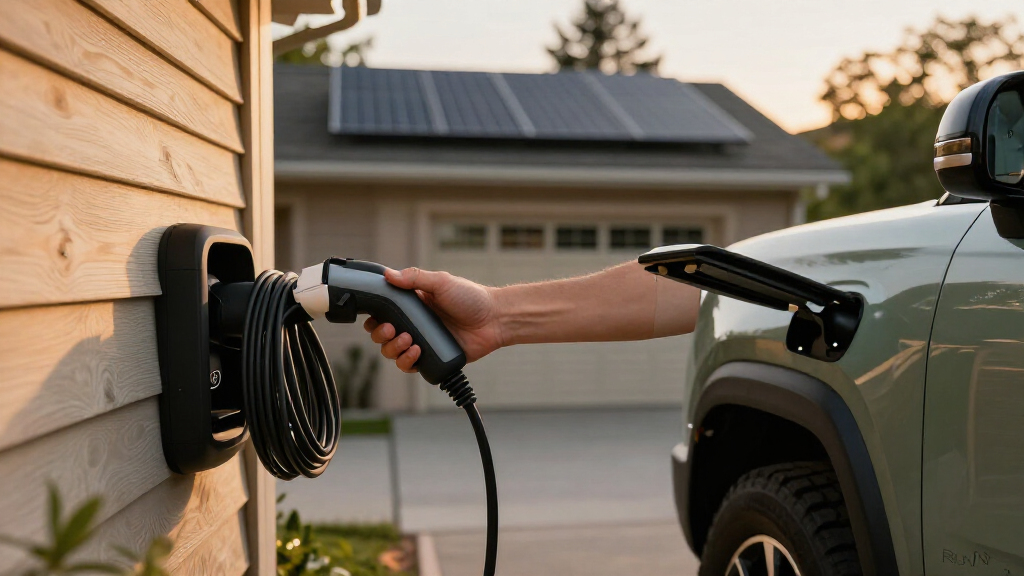
The Rivian Wall Charger with NACS Connector is the lineup’s dedicated home-charging pick for owners of specified newer Rivian models. Its 240 V AC supply and support for up to 48 A are aimed at regular overnight charging, while Wi-Fi enables software updates without making the charger dependent on a phone for basic use. Rivian lists up to 25 miles of range per hour for R1S and R1T and up to 38 for R2 under optimal conditions; those figures are estimates, not a promise for every home circuit or climate. Unlike the EVDANCE Portable Level 1 and Level 2 J1772 EV Charger, this is a fixed, single-port installation rather than a portable option. Its main limitation is a narrow compatibility window: the listed R1S/R1T fit starts with 2026 models, and R2 with 2027 models.
Pros:- Supports charging up to 48 A on a 240 V AC connection.
- NACS connector is specified for newer Rivian R1S, R1T, and R2 models.
- Wi-Fi connectivity allows software updates.
- ENERGY STAR certified and backed by a four-year warranty.
Cons:- Compatibility is limited to the specified 2026-and-newer R1S/R1T and 2027-and-newer R2 models.
- Fixed, single-port design lacks the flexibility of a portable charger such as the EVDANCE Level 1/Level 2 unit.
- Actual charging rates vary with vehicle, electrical supply, temperature, and other conditions.
Best for: Owners of 2026-or-newer Rivian R1S or R1T, or 2027-or-newer R2, who want a fixed Wi-Fi-connected home charger with a native NACS connector.
Not ideal for: Owners of earlier Rivian models, drivers needing a portable charger, or households that need one unit to serve vehicles outside the listed compatibility range.
- Connector:NACS
- Input and output voltage:240 V AC
- Maximum charging current:Up to 48 A
- Ports:1
- Compatible vehicles:Rivian R1S and R1T (2026+); Rivian R2 (2027+)
- Connectivity:Wi-Fi
- Dimensions:7.8 × 5.5 × 16.3 in (D × W × H)
- Certification:ENERGY STAR
- Warranty:4 years
Our verdict“Pick this wall charger for a compatible newer Rivian and a permanent home setup, but look elsewhere if you need portability or support for earlier models.”
NACS to CCS1 Tesla Supercharger Adapter for Compatible EVs
This adapter is a more narrowly targeted alternative to the Amphenol NACS to CCS1 DC Adapter: it connects select CCS1 vehicles to Tesla V3 Superchargers only. Its stated 500 A and 1000 V DC ratings suit high-power DC charging, and the temperature cutoff is designed to stop charging if the adapter reaches 194°F. The listed vehicle makes span many brands, including Rivian, but that does not mean every model is supported; verify the specific vehicle and station access before buying. Compared with the Amphenol, this unit excludes V4 stations and other NACS DC chargers, so its use is less flexible. A tight plug fit can also make connecting and removing it more effortful. The tradeoff may suit drivers whose routes rely on compatible V3 sites and who value a clearly specified V3-focused adapter.
Pros:- Supports DC fast charging at compatible Tesla V3 Superchargers.
- Rated for up to 500 A and 1000 V DC, with a listed maximum power of 500 kW.
- Temperature cutoff is specified at 194°F (90°C).
- Silver-plated copper conductor and IP55-rated housing.
Cons:- Limited to Tesla V3 Superchargers; it does not support V1, V2, V4, or other charger types.
- Only select CCS1 vehicle models are compatible, so make-and-model verification is required.
- Tight plug fit can make connection and removal more difficult.
Best for: Rivian drivers with a specifically supported CCS1 model and enabled access who mainly use compatible Tesla V3 Superchargers.
Not ideal for: Drivers who need V4 or non-Tesla NACS DC-charger support, or buyers whose vehicle is not on the supported-model list.
- Connector type:NACS to CCS1
- Compatible charger:Tesla V3 Superchargers only
- Maximum current:500 A
- Maximum voltage:1000 V DC
- Maximum power:500 kW
- Temperature cutoff:194°F (90°C)
- Conductor material:Silver-plated copper
- Housing:Glass fiber-containing PC; IP55-rated
- Compatibility:Select CCS1 EV models; check the specific vehicle and charger access
Our verdict“Choose this adapter only if your supported Rivian uses compatible V3 Superchargers and you do not need the broader station coverage of the Amphenol.”
TWRAPS Magnetic Dashboard Phone Mount for Rivian R1S and R1T
The TWRAPS Magnetic Dashboard Phone Mount stands apart from the lineup’s charging gear by addressing the everyday cabin setup around a Rivian. Its dashboard-insert base fits listed R1S and R1T models from 2021 to 2027 without tools, screws, or adhesive, and the adjustable 17 mm ball mount lets a driver change the phone angle while keeping the road view clear. Compared with the vent-mounted TWRAPS Dashboard Phone Mount for Rivian R1S and R1T, this version does not rely on an AC vent, which may appeal to drivers who prefer not to occupy one. The tradeoff is phone compatibility: the magnetic attachment is described as MagSafe-compatible, making it a less straightforward choice for many Android phones. It is also a vehicle-specific accessory, not a general-purpose mount.
Pros:- Installs without tools, screws, or adhesive.
- Adjustable 17 mm ball mount allows flexible phone positioning.
- Designed to keep the road view unobstructed.
- Made in the USA and includes a dashboard base, extender, and phone mount.
Cons:- Designed specifically for Rivian R1S and R1T dashboards from 2021 to 2027.
- MagSafe-compatible phone attachment may not suit users without a compatible iPhone or case.
- The 14.4-ounce assembly is heavier than the vent-mounted TWRAPS alternative.
Best for: R1S and R1T owners who want a tool-free, dashboard-insert mount and use a MagSafe-compatible iPhone.
Not ideal for: Drivers of other vehicles or Android users who need a confirmed magnetic mounting solution for their phone.
- Compatible vehicles:Rivian R1S and R1T (2021–2027)
- Phone compatibility:MagSafe-compatible iPhone
- Mounting type:Dashboard insert
- Adjustment:Adjustable, rotatable 17 mm ball mount
- Material:Carbon fiber-infused ABS plastic
- Dimensions:5 × 3 × 2 in
- Weight:14.4 oz
- Included components:Dashboard base, extender, phone mount
- Warranty and origin:1 year; made in the USA
Our verdict“Choose this mount over the vent-mounted TWRAPS option if you want a tool-free dashboard insert and have a MagSafe-compatible phone.”
TWRAPS Dashboard Phone Mount for Rivian R1S and R1T (2021–2027)
This TWRAPS mount earns a distinct spot for Rivian drivers who want the flexibility to position a phone on either side of the cabin. It attaches to an existing AC vent without tools or adhesive, unlike the dashboard-insert TWRAPS mount, which avoids using a vent but is listed for MagSafe-compatible iPhones. This version lists Android and iPhone compatibility alongside a MagSafe-compatible magnetic attachment, making it the more adaptable choice on paper for mixed-phone households. Its adjustable base and extender help place the screen within view while preserving the driver’s sightline. The compromise is the vent-based installation: it occupies an AC vent, and the mount is not water resistant. As with the other TWRAPS option, fit is limited to R1S and R1T dashboards from 2021 to 2027.
Pros:- Installs in an existing AC vent without tools or adhesive.
- Can be positioned on the driver or passenger side.
- Lists Android and iPhone compatibility with a MagSafe-compatible magnetic attachment.
- Adjustable positioning is designed to keep the phone visible without blocking the road view.
Cons:- Uses an AC vent, unlike the dashboard-insert TWRAPS mount.
- Not water resistant.
- Fits only Rivian R1S and R1T models from 2021 to 2027.
Best for: R1S or R1T drivers who want a phone mount that can sit on either side of the dashboard and need listed Android and iPhone compatibility.
Not ideal for: Owners who want to keep dashboard vents unobstructed, need water resistance, or drive a vehicle outside the listed R1S/R1T years.
- Compatible vehicles:Rivian R1S and R1T (2021–2027)
- Phone compatibility:Android and iPhone; MagSafe compatible
- Mounting type:Dashboard AC vent
- Adjustment:Adjustable; driver- or passenger-side placement
- Material and color:Plastic; black
- Weight:8 oz
- Water resistance:Not water resistant
- Model number:RVN-R1TS-ACDASHMNT-
- Warranty and origin:1 year; made in the USA
Our verdict“Choose this vent-mounted version if side-to-side placement and broader listed phone compatibility matter more than keeping the AC vent free.”
Aipechy NACS to CCS1 Tesla Supercharger Adapter, 500A, 1000V
The Aipechy earns a place for Rivian owners who need a portable route to compatible Tesla Superchargers, not a home-charging solution. Its NACS-to-CCS1 connection is designed for supported Rivian and other CCS vehicles, while the compact format makes it easier to keep in a glove compartment than a fixed charging accessory. Compared with the Rivian Wall Charger with NACS Connector, this adapter serves public DC fast charging rather than charging at home; compared with the EVDANCE Portable Level 1 and Level 2 J1772 EV Charger, it does not provide AC charging at all. The listed ratings reach 500A and 1000V, with the description specifying up to 250kW. The main limitation is access: vehicle compatibility and manufacturer authorization are required, and the adapter cannot be used with Level 1 or Level 2 chargers.
Pros:- Designed for compatible Rivian and other CCS1 vehicles
- Supports DC fast charging up to 500A and 1000V
- Portable size can be stored in a glove compartment
- Description specifies charging support up to 250kW
Cons:- Tesla Supercharger access depends on vehicle compatibility and manufacturer authorization
- Does not work with Level 1 or Level 2 AC chargers
- The listed power specification conflicts with the description: 500,000W versus 250kW
Best for: Rivian owners with a CCS1 vehicle that has authorized Tesla Supercharger access who want a compact DC adapter for road trips.
Not ideal for: Owners without confirmed vehicle compatibility or network authorization, and drivers seeking a home, Level 1, or Level 2 charging solution.
- Connection:NACS to CCS1
- Current type:DC
- Connector type:V3/V4 DC Tesla Supercharger
- Compatibility:CCS1 electric vehicles with authorized Tesla Supercharger network access
- Maximum amperage:500A
- Input voltage:1000V
- Maximum power:250kW in description; 500,000W in listed specification
- Quantity:1
Our verdict“Choose the Aipechy if your Rivian has authorized Supercharger access and you want a compact DC adapter, but skip it for home charging or if compatibility is unconfirmed.”
How We Picked
I ranked these products by how directly they solve a Rivian owner’s charging or cabin-accessory need, then compared compatibility, practical usability, electrical specifications, build considerations, and versatility. For chargers and adapters, I gave priority to clear connector information and ratings that buyers can verify against the vehicle and charging network. For phone accessories, I focused on Rivian-specific fit, mounting approach, and whether the product addresses a distinct cabin need.
The order reflects differences in role, not a claim that every item suits every Rivian. The Rivian Wall Charger leads for owners seeking a dedicated home solution; EVDANCE ranks well for flexibility; and the NACSTOCCS adapter is the lead option among a crowded group of fast-charging adapters. I placed the remaining adapters and cabin accessories according to how clearly they differentiate themselves, while treating close alternatives as choices that require buyers to check fit, approval, and exact specifications before ordering.
| Rivian chargers and accessorie | Compatible vehicles |
|---|---|
| EVDANCE Portable Level 1 and L | — |
| NACSTOCCS NACS-to-CCS1 Tesla S | Select Ford, Rivian, GM, Volvo, and Polestar models |
| AFI NACS to CCS1 Adapter for T | Authorized CCS EVs from Ford, Rivian, GM, Polestar, and Volvo |
| TopAutoGear NACS to CCS1 EV Ch | — |
| TWRAPS Dual MagSafe-Compatible | Rivian R1T 2021–2026; Rivian R1S 2022–2026 |
| Amphenol NACS to CCS1 DC Adapt | — |
| Rivian Wall Charger with NACS | Rivian R1S and R1T (2026+); Rivian R2 (2027+) |
| NACS to CCS1 Tesla Supercharge | — |
| TWRAPS Magnetic Dashboard Phon | Rivian R1S and R1T (2021–2027) |
| TWRAPS Dashboard Phone Mount f | Rivian R1S and R1T (2021–2027) |
| Aipechy NACS to CCS1 Tesla Sup | — |
Factors to Consider When Choosing Best Rivian Chargers And Accessories
Before choosing from this roundup, I would start with the charging situation you need to solve, then verify the vehicle and connector details. A charger, a DC fast-charging adapter, and a phone accessory serve different jobs; buying the wrong category will not solve the problem, even if the product name sounds compatible.
Choose Between Home Charging and Portable Charging
For regular charging where the vehicle is parked overnight, a wall-mounted unit can make the routine simpler, but installation depends on your electrical service, wiring, and parking location. A portable Level 1/Level 2 charger offers more flexibility, though its charging rate depends on the outlet and circuit available. A common mistake is choosing a portable unit based only on its maximum stated amperage without checking the supply it will plug into. Ask an electrician to confirm circuit capacity before planning around Level 2 charging. If you mainly charge away from home, a permanent wall unit may add less value than a portable backup or a compatible fast-charging adapter.
Verify Adapter Compatibility Before Comparing Ratings
NACS-to-CCS1 adapters are intended to bridge specific connector standards, but that alone does not establish compatibility with every Rivian, charger, or charging network. Confirm that the adapter is approved for your vehicle and accepted at the network you plan to use; check the vehicle’s software and current manufacturer guidance as well. Treat headline amperage and voltage as specifications to verify, not proof that the adapter will work in every situation. A frequent buying error is assuming that two adapters with similar ratings have identical certification, construction, or supported use. When the details are unclear, ask the seller or manufacturer for documentation before relying on the adapter for a trip.
Match Charger Capacity to the Electrical Setup
A charger’s rated output is only useful when the home’s circuit, wiring, and installation support it. A higher-capacity wall unit may leave a buyer paying for capability the electrical setup cannot deliver, while an undersized circuit can limit charging regardless of the product’s advertised maximum. Have the installation plan reviewed before choosing a unit, including the distance from the panel and whether the charger will be indoors or exposed to weather. Check connector style and cable reach against where the Rivian’s charge port sits when parked. Planning around the actual parking position can prevent a technically compatible charger from being awkward to use each day.
Prioritize Documentation and Support for Fast-Charging Adapters
Adapters are small, but they carry more compatibility and safety questions than their size suggests. Look for clear manufacturer information on supported vehicles, charging networks, electrical limits, and care instructions, then compare that documentation across options with similar ratings. Do not assume a high current rating means an adapter is suitable for every charging session or climate. Keep the connector clean and inspect it for damage according to its instructions; dirt or wear can affect fit and reliability. If a product offers little documentation or unclear support, a better-documented alternative may be the safer choice even when its headline specifications look similar.
Choose Cabin Accessories Around Fit and Daily Habits
Phone mounts and wireless charging accessories can improve convenience, but their usefulness depends on the Rivian model, dashboard layout, phone size, case, and preferred viewing position. A magnetic mount may suit a compatible phone or case, while a broader dashboard mount may better fit a buyer who wants a different attachment style. For a multi-phone setup, a dual charging pad addresses a different need from a single mount. Check whether the product description specifies your exact R1T or R1S model year and whether the installation interferes with controls or visibility. Avoid choosing by appearance alone: a mount that places a phone poorly can become a distraction rather than an upgrade.
Spend More Only for a Need You Can Name
A dedicated wall charger can be a sensible investment for a household that charges at home most nights, but it brings installation work and less portability. A portable charger or adapter may better suit an owner who charges in varied locations, provided the product matches the electrical supply and vehicle requirements. Cabin accessories are optional convenience upgrades, so the strongest case for them is a specific routine, such as keeping two phones charged or placing navigation within easy view. Compare the complete ownership setup, including installation, cable storage, and adapter handling, rather than judging a product by its feature list alone. Buying one accessory that solves a recurring problem is often more useful than assembling several products with overlapping roles.
Frequently Asked Questions
Can I use any NACS-to-CCS1 adapter with my Rivian at a Tesla Supercharger?
No. Connector shape and advertised electrical ratings do not by themselves confirm that a specific adapter is approved for your Rivian or accepted at a particular Supercharger location. Check Rivian’s current compatibility guidance, the adapter maker’s documentation, and the charging network’s access rules before buying. Network access can also depend on the vehicle’s software and account setup. If any of those sources disagree or leave the answer unclear, do not rely on the adapter for a planned trip.
Should I buy a wall charger or a portable charger for home use?
Choose based on how often you charge at home and whether you want a fixed installation. A wall charger suits a regular home routine when the parking location and electrical circuit can support it, while a portable unit can be easier to move or keep as a backup. Portable does not mean it can deliver the same output from every outlet, so confirm the outlet and circuit limits first. If you rent, move often, or have not settled on a parking location, portability may matter more than a permanent setup. For a dedicated garage and frequent charging, a wall unit is usually the more straightforward daily arrangement.
Are the 500A, 1000V Supercharger adapters better than the 250 kW option?
Those numbers do not provide a direct, complete comparison on their own. Current, voltage, power, and charging conditions describe different parts of the electrical picture, and the vehicle or charger may set the actual limit. I would compare verified compatibility, approval, documentation, and supported use before treating a larger-looking rating as an advantage. Confirm that the adapter’s specifications apply to your vehicle and the charging network you intend to use. If the maker does not explain how its ratings relate to supported operation, ask for clarification rather than guessing.
Do I need a Rivian-specific phone mount, or will a universal mount work?
A universal mount can work if it attaches securely and leaves the vehicle’s controls and view unobstructed, but fit can vary with the dashboard, phone, and case. Rivian-specific mounts may offer a more tailored placement, while magnetic options require a compatible phone or magnetic case arrangement. Check the product’s stated R1T or R1S model-year fit and how it attaches before ordering. If you regularly switch phones or use a bulky case, flexibility may matter more than a close-fitting design. Prioritize stable placement and easy reach over a mount that simply looks integrated.
Can a portable Level 1/Level 2 charger replace a dedicated home wall charger?
It can cover home charging when its connector and operating limits match the outlet and circuit available, but it may not offer the same convenience or output as a dedicated installation. Level 1 charging can be slow for drivers who cover long distances each day, while Level 2 operation requires an appropriate circuit. A portable unit also needs safe, practical storage and access to a suitable outlet wherever it is used. Before treating it as a replacement, compare your daily driving, overnight parking time, and electrical setup. Drivers who regularly need faster home replenishment may prefer a properly installed wall charger.
Conclusion
For a regular home-charging routine, I recommend the Rivian Wall Charger with NACS Connector as the best overall; it is the most direct fit for owners who want a dedicated setup. The EVDANCE portable charger is my best-value-style pick for flexibility, especially for drivers who need a movable option, though its output depends on the available outlet. For a fast-charging adapter, the NACSTOCCS 500A model is the lead pick in this comparison, but buyers should verify approval and network compatibility before relying on it. The Rivian wall unit is also the best premium-style choice for a permanent home setup, while EVDANCE is the best option for beginners who want a portable starting point and can match it to a suitable power source. Choose the TWRAPS dual charger if keeping two phones powered is the specific need; pick one of the TWRAPS mounts if phone placement matters more. For every adapter, compatibility documentation should decide the purchase—not the label alone.
Black Friday Picks

Sony WH-1000XM6 Wireless Noise-Canceling Headphones, Black
As an affiliate, we earn on qualifying purchases.