Editorial update log
November 11, 2026:
Deal update: RoundupForge price history now flags ASIN B0CQXM3NJL on amazon.com as below its typical tracked range. RF labels the deal as all_time_low.
Exact pricing remains intentionally gated through the live Grimfaste price module in the article.
October 30, 2026:
Deal update: RoundupForge price history now flags ASIN B0CQXM3NJL on amazon.com as below its typical tracked range. RF labels the deal as all_time_low.
Exact pricing remains intentionally gated through the live Grimfaste price module in the article.
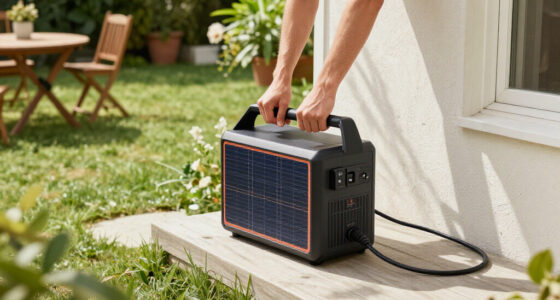
Home battery backup systems range from small UPS units for electronics to large battery-and-inverter setups for household circuits, so the right pick depends on what you need to keep running and for how long. I rank the EcoFlow DELTA Pro Ultra as the best overall for buyers seeking a larger, expandable home backup platform. The ECO-WORTHY Powermega with Liber 10KP inverter stands out for a fixed battery-and-inverter setup, while the Jackery Explorer 5000 Plus offers high output in a portable power-station format. The main tradeoffs are capacity versus portability, appliance starting power versus runtime, and plug-in simplicity versus installation requirements. Read on for the full breakdown, including smaller options for refrigerators, essential electronics, and short outages.

Get backup power and energy gear delivered free with Prime
- Fast, free delivery on millions of items
- Prime Video, Amazon Music and more included
- Member-only deals all year
Key Takeaways
- The lineup spans different jobs: the CyberPower UPS models suit brief electronics backup, while the ECO-WORTHY 48V systems target larger household loads.
- Battery capacity alone does not determine what you can run: inverter output and appliance startup demands matter, especially for refrigerators, pumps, and other motor-driven equipment.
- The EcoFlow DELTA Pro Ultra leads for a scalable home-backup approach, while ECO-WORTHY’s Liber 10KP bundles pair large batteries with a hybrid inverter for a more system-oriented setup.
- Jackery’s 3,584Wh HomePower 3600 Plus appears in both solar-bundle and standalone configurations, so buyers should compare included equipment rather than assume the base power station differs.
- Portable stations and fixed 48V systems solve different problems: portable models are easier to reposition, while larger battery-and-inverter combinations call for more planning around wiring, placement, and installation.
| ECO-WORTHY Powermega 48V 314Ah LiFePO4 Battery, 16.07kWh |  | Best for Expandable Stationary Storage | Chemistry: LiFePO4 | Nominal voltage: 51.2V | Capacity: 314Ah | VIEW LATEST PRICE | See Our Full Breakdown |
| Jackery HomePower 3600 Plus with 2x200W Solar Panels – 3584 Wh, 3600 W AC Output |  | Best Portable High-Output Pick | Battery capacity: 3,584Wh | Continuous output: 3,600W | Voltage: 120V; 120V and 240V in parallel | VIEW LATEST PRICE | See Our Full Breakdown |
| EcoFlow DELTA Pro Ultra 12kWh Home Backup Power Station with Extra Battery |  | Best for Whole-Home Backup Expansion | Battery capacity: 12kWh | Base battery capacity: 6,144Wh | Expandable capacity: Up to 90kWh | VIEW LATEST PRICE | See Our Full Breakdown |
| Growatt HELIOS 3600 Portable Power Station with Solar Panels |  | Best Included-Solar Starter Kit | Capacity: 3,600Wh | Continuous output: 3,600W | Included solar panels: 2 × 200W | VIEW LATEST PRICE | See Our Full Breakdown |
| CyberPower CP1500PFCLCD 1500VA/1000W PFC Sinewave UPS Battery Backup and Surge Protector |  | Best for Computers and Network Gear | Capacity: 1,500VA/1,000W | Battery-backup outlets: 6 | Total outlets: 12 NEMA 5-15R | VIEW LATEST PRICE | See Our Full Breakdown |
| BLUETTI FridgePower Portable Power Station, 2016Wh, 1800W |  | Best for Refrigerator Backup | Battery capacity: 2016Wh | Battery chemistry: LFP | Output wattage: 1800W | VIEW LATEST PRICE | See Our Full Breakdown |
| EcoFlow Portable Power Station Delta 3 Classic, 1024Wh 1800W |  | Best for Fast Recharging | Battery capacity: 1024Wh | Battery type: LiFePO4 | Continuous output power: 1800W | VIEW LATEST PRICE | See Our Full Breakdown |
| Jackery Explorer 5000 Plus Portable Power Station, 5040Wh, 7200W AC Output |  | Best for High-Load Whole-Home Backup | Capacity: 5040Wh | Expandable capacity: Up to 60kWh | Surge output: 14,400W | VIEW LATEST PRICE | See Our Full Breakdown |
| Jackery Explorer 2000 v2 Portable Power Station, 2042Wh, 2200W AC Output |  | Best Portable 2kWh Pick | Capacity: 2042Wh | Battery type: LiFePO4 | AC output power: 2200W | VIEW LATEST PRICE | See Our Full Breakdown |
| ECO-WORTHY Powermega 48V 314Ah UL1973 LiFePO4 Energy Storage System with Liber 10KP 10kW Hybrid Inverter, Active Balancing BMS, Built-in Bluetooth & WiFi |  | Best for Installed Home Energy Storage | Nominal voltage: 51.2V | Battery capacity: 314Ah | Usable energy: Up to 16.1kWh | VIEW LATEST PRICE | See Our Full Breakdown |
| ECO-WORTHY 48V Home Backup Power, 10240Wh Battery, Liber 10KP 10KW Inverter |  | Best for Whole-Home-Style Output | Battery chemistry: LiFePO4 | Battery configuration: 2 × 51.2 V, 100 Ah batteries | Stated battery capacity: 10,240 Wh | VIEW LATEST PRICE | See Our Full Breakdown |
| Jackery HomePower 3000 with 2x200W Solar Panels, 3072Wh, 3600W AC Output |  | Best Portable Backup Bundle | Battery capacity: 3,072 Wh | Battery chemistry: LiFePO4 | Continuous AC output: 3,600 W | VIEW LATEST PRICE | See Our Full Breakdown |
| ECO-WORTHY Powermega 48V 314Ah LiFePO4 Battery, 2-Pack |  | Best for Long-Duration Battery Storage | Quantity: 2 batteries | Battery chemistry: LiFePO4 | Nominal voltage: 51.2 V | VIEW LATEST PRICE | See Our Full Breakdown |
| CyberPower CP1500AVRLCD3 Intelligent LCD UPS Battery Backup |  | Best for Computers and Networking | Capacity: 1500 VA / 900 W | Output waveform: Simulated sine wave | Outlets: 12 NEMA 5-15R: 6 battery backup and surge protected; 6 surge protected | VIEW LATEST PRICE | See Our Full Breakdown |
| Jackery HomePower 3600 Plus Portable Power Station, 3584Wh, 3600W AC Output |  | Best Expandable Portable Backup | Battery capacity: 3,584 Wh | Battery chemistry: LFP | AC output: 3,600 W | VIEW LATEST PRICE | See Our Full Breakdown |
| home battery backup system | Weight |
|---|---|
| ECO-WORTHY Powermega 48V 314Ah | — |
| Jackery HomePower 3600 Plus wi | 77.2 pounds |
| EcoFlow DELTA Pro Ultra 12kWh | 293.6 pounds |
| Growatt HELIOS 3600 Portable P | — |
| CyberPower CP1500PFCLCD 1500VA | 24.9 pounds |
| BLUETTI FridgePower Portable P | 41.9 pounds |
| EcoFlow Portable Power Station | — |
| Jackery Explorer 5000 Plus Por | 134.5 pounds |
| Jackery Explorer 2000 v2 Porta | 39.5 pounds |
| ECO-WORTHY Powermega 48V 314Ah | 293.2 pounds |
| ECO-WORTHY 48V Home Backup Pow | — |
| Jackery HomePower 3000 with 2x | 59.5 lb |
| ECO-WORTHY Powermega 48V 314Ah | — |
| CyberPower CP1500AVRLCD3 Intel | 23.8 lb |
| Jackery HomePower 3600 Plus Po | — |
More Details on Our Top Picks
ECO-WORTHY Powermega 48V 314Ah LiFePO4 Battery, 16.07kWh
I’d shortlist the Powermega for a home system built around a compatible 48V inverter, especially when a single battery’s stored energy matters more than portability. Its 16.07kWh capacity is far beyond the Jackery HomePower 3600 Plus’s 3.584kWh, giving a properly configured system more reserve for extended outages. Expansion to 15 parallel units leaves room to grow, while the 200A BMS, active cell balancing, circuit breaker, and aerosol fire suppression add protective measures for a stationary installation. Touchscreen, WiFi, Bluetooth, RS485, and CAN provide several ways to monitor or integrate the battery. The tradeoff is that this is a battery, not a complete power station: buyers need compatible inverter equipment and installation planning. It is also a large, heavy pallet shipment, unlike wheeled portable options.
Pros:- 16.07kWh capacity provides much more stored energy than the portable stations in this lineup.
- Supports expansion to as many as 15 parallel batteries.
- Includes active cell balancing, an external circuit breaker, and aerosol fire suppression.
- Offers a touchscreen plus WiFi, Bluetooth, RS485, and CAN connectivity.
Cons:- Requires a compatible inverter and system setup; it is not a standalone power station.
- Large, heavy pallet delivery requires suitable access and handling.
- Battery capacity alone does not specify the AC output available to household loads.
Best for: Homeowners building or expanding a compatible 48V inverter-based backup system who want substantial stored energy and a path to add batteries.
Not ideal for: Buyers seeking an all-in-one portable station, a plug-and-play setup, or delivery that cannot accommodate a truck and pallet.
- Chemistry:LiFePO4
- Nominal voltage:51.2V
- Capacity:314Ah
- Energy:16.07kWh
- BMS current:200A
- Maximum parallel units:15
- Display:7-inch HD touchscreen
- Connectivity:WiFi, Bluetooth, RS485, CAN
- Warranty:10 years
Our verdict“Choose the Powermega if you want a high-capacity battery foundation for a compatible stationary home backup system and can manage its installation and delivery requirements.”
Jackery HomePower 3600 Plus with 2x200W Solar Panels – 3584 Wh, 3600 W AC Output
The Jackery HomePower 3600 Plus suits households that want substantial appliance output without committing to a stationary battery-and-inverter installation. Its 3,600W continuous output can support heavier loads than the CyberPower CP1500PFCLCD, which is designed for electronics and provides 1,000W. The Jackery also stores 3,584Wh and can expand to 21kWh per unit, giving buyers a route from portable backup toward longer outages. Hybrid AC and DC charging can refill it in two hours, while wheels and a telescoping handle make relocation more practical than with the 293.6-pound EcoFlow DELTA Pro Ultra. Still, at 77.2 pounds, it is not easy to lift, and its portable format is not the same as a permanently integrated whole-home system. The solar panels also ship separately.
Pros:- 3,600W continuous output supports heavier loads than small electronics-focused UPS units.
- 3,584Wh capacity can expand to 21kWh per unit.
- Hybrid AC and DC charging is specified to reach full charge in two hours.
- Wheels and a telescoping handle ease movement across level ground.
Cons:- At 77.2 pounds, it remains difficult to lift despite its wheels.
- Portable power-station format is not a fixed whole-home backup installation.
- The included solar panels ship separately and require additional handling.
Best for: Households that need a movable power station with high AC output for selected appliances, plus the option to add capacity later.
Not ideal for: Buyers who need a permanently integrated whole-home system, frequent lifting over stairs, or solar panels delivered and handled with the main unit.
- Battery capacity:3,584Wh
- Continuous output:3,600W
- Voltage:120V; 120V and 240V in parallel
- Expansion:Up to 21kWh per unit; 43kWh with multiple units
- Hybrid charging:0–100% in 2 hours with AC and DC
- Solar charging time:4 hours
- Weight:77.2 pounds
- Warranty:5-year manufacturer warranty
Our verdict“Pick the HomePower 3600 Plus if you want strong portable appliance output and expandable storage, but not a permanently installed home battery system.”
EcoFlow DELTA Pro Ultra 12kWh Home Backup Power Station with Extra Battery
The DELTA Pro Ultra is the strongest fit here for buyers who want a scalable home backup platform rather than a compact portable station. It supplies 120V and 240V output with up to 7,200W, and its capacity can grow from 6,144Wh to 90kWh. That gives it a much higher expansion ceiling than the Jackery HomePower 3600 Plus, whose per-unit capacity tops out at 21kWh. The listed 0ms UPS transfer time also suits sensitive loads that need uninterrupted power, while solar, wall, EV charging, and generator inputs give owners several replenishment options. The cost of this capability is physical and logistical: the system weighs 293.6 pounds, and the inverter and battery arrive in separate packages. Buyers also need to plan how the system will connect to household circuits; its capacity alone does not make setup effortless.
Pros:- Provides 120V and 240V output with up to 7,200W.
- Capacity can expand to 90kWh for longer backup needs.
- 0ms UPS transfer time supports loads that cannot tolerate a power interruption.
- Accepts charging from solar, wall outlets, EV charging stations, or generators.
Cons:- At 293.6 pounds, it is not a practical unit for routine relocation.
- Inverter and battery ship in separate packages.
- A scalable system requires household connection and installation planning.
Best for: Homeowners planning scalable 120V/240V backup for multiple household loads who can accommodate a heavy system and installation planning.
Not ideal for: Renters, buyers who need a lightweight unit to move often, or anyone seeking a simple small-load UPS rather than a scalable home setup.
- Battery capacity:12kWh
- Base battery capacity:6,144Wh
- Expandable capacity:Up to 90kWh
- Output power:7,200W
- Maximum AC output:21.6kW with three inverters
- Voltage:120V and 240V
- UPS transfer time:0ms
- Weight:293.6 pounds
- Outlets:6
Our verdict“Choose the DELTA Pro Ultra if your priority is expandable 120V/240V home backup and you can handle the system’s weight and setup demands.”
Growatt HELIOS 3600 Portable Power Station with Solar Panels
The Growatt HELIOS makes sense for buyers who want a portable backup system with solar charging equipment in the package. Its 3,600Wh capacity and 3,600W output put it in the same broad class as the Jackery HomePower 3600 Plus, while the two included 200W panels provide a starting point for recharging without grid power. Growatt lists maximum solar input at 2,000W, so the included 400W of panels is a starter array, not the system’s full solar potential. Capacity can expand to 36kWh, and two units can provide up to 7,200W at 240V—more expansion than the Jackery’s stated per-unit capacity, though it requires buying additional equipment. Its 15ms EPS switching and operation down to -22°F add backup flexibility, but it is not instantaneous like the EcoFlow DELTA Pro Ultra’s listed 0ms transfer.
Pros:- Includes two 200W solar panels for a 400W starting array.
- Supports up to 36kWh of expanded capacity.
- Two-unit parallel operation can provide up to 7,200W at 240V.
- LFP battery, 15ms EPS switching, and operation down to -22°F suit varied backup conditions.
Cons:- Included 400W of solar panels is well below the stated 2,000W maximum solar input.
- Whole-home expansion at 240V requires purchasing a second unit.
- Its 15ms EPS switching is not as fast as the EcoFlow DELTA Pro Ultra’s listed 0ms transfer.
Best for: Buyers starting with portable backup and included solar panels who may later add panels or a second unit for more capacity and 240V output.
Not ideal for: People who need 0ms transfer for sensitive loads, expect the included panels to reach the maximum solar input, or want whole-home expansion without another unit.
- Capacity:3,600Wh
- Continuous output:3,600W
- Included solar panels:2 × 200W
- Maximum solar charging:2,000W
- Expandable capacity:Up to 36kWh
- Parallel output:Up to 7,200W at 240V with two units
- EPS switching time:15ms
- Operating temperature:As low as -22°F
- Battery chemistry:LFP
Our verdict“Choose the HELIOS if you want a solar-equipped portable starting point with room to expand, and can accept the gap between its included panel capacity and maximum solar input.”
CyberPower CP1500PFCLCD 1500VA/1000W PFC Sinewave UPS Battery Backup and Surge Protector
The CyberPower CP1500PFCLCD serves a narrower but useful role: keeping computers, networking equipment, and similar electronics running through brief outages and power fluctuations. Its 1,000W sine-wave output supports active PFC power supplies, while automatic voltage regulation corrects minor fluctuations without drawing on battery. That makes it a better fit for a desktop or router than the Jackery HomePower 3600 Plus, which offers far more output and stored energy but is a larger portable power station. The CyberPower’s 12 outlets and tilting LCD make it easy to manage a desk setup, but only six outlets receive battery backup; the rest provide surge protection only. Its 1,500VA/1,000W rating also puts it well below the appliance-running capacity of the Growatt HELIOS or EcoFlow DELTA Pro Ultra. Treat it as electronics protection, not a household battery system.
Pros:- Sine-wave output is compatible with active PFC power supplies.
- Automatic voltage regulation handles minor fluctuations without switching to battery.
- Provides 12 outlets, including six with battery backup.
- Tilting color LCD and Type-A and Type-C USB ports aid desk-side use.
Cons:- The 1,000W output and UPS format are not suited to major household appliances.
- Only six of the 12 outlets provide battery backup.
- At 24.9 pounds, the mini-tower is bulky for a desk-side unit.
Best for: People who need short-duration battery backup and voltage regulation for a desktop computer, NAS, router, or other sensitive electronics.
Not ideal for: Households seeking long-duration outage coverage or enough output to run major appliances; only half its outlets have battery backup.
- Capacity:1,500VA/1,000W
- Battery-backup outlets:6
- Total outlets:12 NEMA 5-15R
- USB charging ports:1 Type-A, 1 Type-C
- Voltage regulation:Automatic Voltage Regulation (AVR)
- Display:Multifunction color LCD; tilts up to 22 degrees
- Dimensions:14 × 3.9 × 11 inches
- Weight:24.9 pounds
- Warranty:3 years, including battery
Our verdict“Choose the CyberPower for computer and network protection during short outages, not as a substitute for a high-capacity home battery system.”
BLUETTI FridgePower Portable Power Station, 2016Wh, 1800W
I’d choose the BLUETTI FridgePower for a household that wants a dedicated outage buffer for a refrigerator, sump pump, or similar appliance without installing a whole-home system. Its 2016Wh LFP battery and 1800W output offer more stored energy than the EcoFlow DELTA 3 Classic’s 1024Wh, while the 10ms UPS switching is designed to keep supported equipment powered through a grid interruption. The narrow 75mm profile gives it placement options that many boxier portable stations lack, including wall mounting. It can also grow to 8064Wh with compatible expansion batteries. The tradeoff is that expansion is needed to reach that capacity, and at 41.9 pounds it is not an effortless carry. I’d skip it if you need 240V output or a ready-made whole-home installation.
Pros:- 10ms UPS switching helps reduce interruptions for supported connected equipment
- 2016Wh capacity exceeds the EcoFlow DELTA 3 Classic’s 1024Wh base capacity
- Slim 75mm form supports narrow placement or wall mounting
- Expandable to 8064Wh with compatible batteries
Cons:- Weighs 41.9 pounds, limiting easy movement around the home
- Maximum stated capacity requires additional expansion batteries
- 1800W output does not provide the 240V support offered by larger home systems
Best for: Homeowners who want fast-switching backup for a refrigerator or sump pump and have a narrow space for a portable unit
Not ideal for: Buyers who need 240V support, a lightweight station, or the full 8064Wh capacity without purchasing expansion batteries
- Battery capacity:2016Wh
- Battery chemistry:LFP
- Output wattage:1800W
- Surge output:3600W
- UPS switching time:10ms
- Expansion capacity:Up to 8064Wh
- Weight:41.9 pounds
- Dimensions:13.78 x 2.95 x 22.83 inches
- Smart home compatibility:Alexa and Google Home
Our verdict“Choose the FridgePower if you want compactly placed, quick-switching backup for key 120V household appliances and can accept the weight and expansion cost in equipment.”
EcoFlow Portable Power Station Delta 3 Classic, 1024Wh 1800W
The EcoFlow DELTA 3 Classic suits buyers who expect to use a backup station often and value getting it ready again quickly. It supplies 1800W continuous output with a 3600W surge rating, but its 1024Wh battery stores about half the energy of the BLUETTI FridgePower. That difference matters during a long outage: the EcoFlow can handle demanding appliances, yet offers less stored energy before recharging. Its standout advantage is speed, reaching 80% charge in 45 minutes from AC, with a sub-10ms UPS switch time and app controls for monitoring. X-Boost can support loads up to 2600W under its stated feature, though it does not add battery capacity. I’d favor it for shorter outages and frequent recharge opportunities, not for buyers seeking long refrigerator runtimes or expandable storage.
Pros:- 1800W continuous output and 3600W surge rating support a range of household appliances
- Reaches 80% charge in 45 minutes via AC
- Sub-10ms UPS switching supports sensitive connected electronics
- LiFePO4 battery and app controls support monitoring and backup management
Cons:- 1024Wh capacity is substantially lower than the BLUETTI FridgePower’s 2016Wh
- Not compatible with Delta 2 or Delta 3 Series Smart Extra Batteries
- X-Boost output capability does not increase stored energy or outage runtime
Best for: Households that need strong 120V appliance output, fast AC recharging, and app monitoring for shorter outages
Not ideal for: Buyers who prioritize long runtimes or battery expansion, especially compared with the BLUETTI FridgePower
- Battery capacity:1024Wh
- Battery type:LiFePO4
- Continuous output power:1800W
- Surge power:3600W
- Expandable output (X-Boost):2600W
- AC charging time to 80%:45 minutes
- Solar recharge time:2.5 hours with a 500W panel
- UPS switch time:Less than 10ms
Our verdict“Pick the DELTA 3 Classic if quick recharging and high 120V output matter more to you than extended runtime or expandable capacity.”
Jackery Explorer 5000 Plus Portable Power Station, 5040Wh, 7200W AC Output
For buyers who need more than a few essential outlets, the Jackery Explorer 5000 Plus is the strongest portable option in this group for both stored energy and output. Its 5040Wh capacity and 7200W rated output are well above the Jackery Explorer 2000 v2’s 2042Wh and 2200W, while 120V/240V support brings larger appliances into the conversation. Expansion up to 60kWh and solar input up to 4000W can support a more sustained backup setup, though panels are sold separately. The tradeoff is its 134.5-pound weight: this is better treated as a stationary home unit than something to move casually. It also has only two listed outlets, so buyers should check whether its connection layout suits their equipment. I’d choose it for serious backup needs, not compact storage or frequent transport.
Pros:- 5040Wh capacity provides substantially more stored energy than the Jackery Explorer 2000 v2
- 7200W rated output with 120V and 240V support
- Expandable to 60kWh for longer backup needs
- Accepts up to 4000W of solar input
Cons:- At 134.5 pounds, it is difficult to move without planning
- Solar panels are optional and sold separately
- Only two outlets are listed, which may constrain direct connections
Best for: Homeowners seeking high output, 240V support, and a path to expanded battery storage for larger household loads
Not ideal for: Renters or buyers who need a lightweight, frequently moved station or expect solar panels to be included
- Capacity:5040Wh
- Expandable capacity:Up to 60kWh
- Surge output:14,400W
- Voltage:120V/240V
- Maximum solar input:4000W
- Recharge time:About 2 hours with up to 4000W input
- Battery type:LiFePO₄
- Weight:134.5 pounds
Our verdict“Choose the Explorer 5000 Plus if you need high-output 120V/240V backup and can dedicate space to a heavy system with separately sourced solar panels.”
Jackery Explorer 2000 v2 Portable Power Station, 2042Wh, 2200W AC Output
The Jackery Explorer 2000 v2 lands between compact emergency stations and the much heavier Explorer 5000 Plus. Its 2042Wh LiFePO4 battery and 2200W AC output can cover a useful set of household essentials, while its 39.5-pound weight makes it easier to relocate than the 134.5-pound 5000 Plus. That portability comes with less capacity and no listed 240V output, so it is not a substitute for a high-output home system. For a refrigerator, communications gear, or small-business equipment, the combination of three AC ports, a 100W USB-C port, and quiet operation can be practical. AC fast charging reaches 80% in 66 minutes; solar charging with a 400W input takes six hours for a full charge. I’d skip it if extended outages or heavy 240V loads are your main concern.
Pros:- 2042Wh capacity and 2200W AC output suit many essential 120V loads
- 39.5-pound weight is easier to manage than the Explorer 5000 Plus
- AC charging reaches 80% in 66 minutes
- Under-30dB operation and a 100W USB-C PD port add flexibility
Cons:- Nearly 40 pounds can still be cumbersome to carry
- A full charge with a 400W solar input takes six hours
- No 240V output or capacity expansion is listed
Best for: Households or small-business owners who need portable 2kWh-class backup for essential 120V equipment
Not ideal for: Buyers who need 240V output, very long runtimes, or a high-capacity expandable system like the Explorer 5000 Plus
- Capacity:2042Wh
- Battery type:LiFePO4
- AC output power:2200W
- AC ports:3
- USB-C PD port:100W
- Weight:39.5 pounds
- AC charging time to 80%:66 minutes
- Full solar charging time:6 hours with a 400W input
- Noise level:Less than 30dB
Our verdict“Choose the Explorer 2000 v2 for portable, quiet backup of essential 120V devices, but look to the Explorer 5000 Plus for 240V loads and longer runtimes.”
ECO-WORTHY Powermega 48V 314Ah UL1973 LiFePO4 Energy Storage System with Liber 10KP 10kW Hybrid Inverter, Active Balancing BMS, Built-in Bluetooth & WiFi
This ECO-WORTHY Powermega system is a different kind of backup choice from the portable Jackery Explorer 2000 v2: it combines a 48V battery with a 10kW hybrid inverter for a more installation-oriented home setup. The stated 16.1kWh usable energy and split-phase 240V or single-phase 120V output suit households planning to support substantial loads, solar storage, or an off-grid cabin. Built-in Wi-Fi and Bluetooth monitoring, an LCD, and an active-balancing BMS add useful oversight for a fixed system. That capability brings serious practical costs: the unit weighs 293.2 pounds, needs careful delivery and placement, and is not a grab-and-go outage station. I’d shortlist it when high output and fixed storage matter more than portability, but buyers should plan for installation and confirm system compatibility before purchase.
Pros:- Stated 16.1kWh usable energy paired with a 10kW hybrid inverter
- Supports split-phase 240V and single-phase 120V output
- Wi-Fi, Bluetooth, and LCD provide several monitoring options
- Active-balancing BMS and listed UL1973 battery certification support a fixed storage setup
Cons:- At 293.2 pounds, it requires planned delivery and a permanent placement area
- A fixed 48V system calls for compatibility checks and installation planning
- Its size and setup are excessive for buyers who only need portable essential-device backup
Best for: Homeowners or cabin owners planning fixed 48V storage with 120V/240V output, solar integration, and high inverter capacity
Not ideal for: Renters, apartment dwellers, or anyone seeking a portable backup unit that can be moved or set up without installation planning
- Nominal voltage:51.2V
- Battery capacity:314Ah
- Usable energy:Up to 16.1kWh
- Inverter wattage:10,000W
- Peak output power:10,000W
- Output voltage:240V AC; split-phase or 120V single-phase options
- Waveform:Pure sine wave
- Dimensions:32.56 x 20.47 x 9.92 inches
- Weight:293.2 pounds
Our verdict“Choose the Powermega system if you are planning a fixed, high-capacity 120V/240V home or cabin setup and have space and support for installation.”
ECO-WORTHY 48V Home Backup Power, 10240Wh Battery, Liber 10KP 10KW Inverter
I’d choose this system when high continuous output matters more than plug-and-play convenience. Its 10 kW inverter and 120/240 V split-phase support can serve larger loads than the Jackery HomePower 3000, which is a portable 120 V station aimed at selected appliances. The two LiFePO4 batteries provide about 10 kWh of stated capacity, while a 20 kW peak rating offers headroom for brief startup surges. UL1973 and UL1741 certifications, communications ports, and app monitoring add useful safeguards and visibility for a fixed installation.
The tradeoff is the installation burden: this is a multi-component, heavy system, not a battery you simply roll out and plug in. Its expansion potential is substantial, but it also makes more sense for buyers planning a solar or off-grid setup than for someone who only needs a few hours of backup. I’d skip it if portability or simple setup is the priority.
Pros:- 10 kW continuous output with 20 kW peak capacity supports larger loads and brief startup surges.
- 120/240 V split-phase output suits a broader range of household equipment than a 120 V portable station.
- Two LiFePO4 batteries provide about 10 kWh of stated energy capacity.
- UL1973 and UL1741 certifications, CAN/RS485, and Bluetooth/Wi-Fi monitoring support a more informed fixed installation.
Cons:- Installation is complex and may call for a qualified professional.
- Heavy components shipped separately make transport and setup more involved than with the Jackery HomePower 3000.
- The high-output system is a poor fit for buyers who need only a compact, ready-to-use backup.
Best for: Homeowners planning a professionally installed backup or off-grid system who need 120/240 V split-phase output and substantial inverter capacity.
Not ideal for: Renters or buyers seeking a simple, portable backup unit; installation is complex, and the system’s weight and separate components may require professional handling.
- Battery chemistry:LiFePO4
- Battery configuration:2 × 51.2 V, 100 Ah batteries
- Stated battery capacity:10,240 Wh
- Continuous output:10,000 W
- Peak output:20,000 W
- AC output:120 V; supports 240 V split-phase
- Waveform:Pure sine wave
- Expansion:Up to six inverters and 32 batteries; system expansion stated up to 60 kW
- Safety certifications:UL1973 and UL1741
Our verdict“Choose this ECO-WORTHY system for fixed backup that needs 10 kW output and split-phase power, not for effortless portability.”
Jackery HomePower 3000 with 2x200W Solar Panels, 3072Wh, 3600W AC Output
The Jackery HomePower 3000 suits buyers who want a ready-to-move 120 V station for essential circuits, appliances, or RV use rather than a permanently installed home system. Its 3,072 Wh battery and 3,600 W continuous output give it more capacity and output than a small UPS like the CyberPower CP1500AVRLCD3, while multiple AC, USB, and DC connections make it useful beyond an outage. The included two 200 W solar panels give buyers a way to recharge away from the grid, though the stated solar time to 80% is about nine hours.
Recharge speed is a strong point: hybrid AC/DC charging is listed at 1.7 hours, and AC-only charging at 2.2 hours. Still, this weighs 59.5 pounds, so “portable” means movable rather than easy to carry. Unlike the ECO-WORTHY 48V system, it offers no stated 240 V split-phase output or comparable home-system expansion. I’d favor it for flexible backup, not whole-home wiring.
Pros:- 3,600 W continuous output and 7,200 W surge capacity cover more than small electronics and networking gear.
- 3,072 Wh LiFePO4 battery offers substantially more stored energy than the CyberPower CP1500AVRLCD3 UPS.
- Hybrid AC/DC recharge is listed at 1.7 hours, with AC-only charging at 2.2 hours.
- Included two 200 W solar panels and AC, USB, DC, and TT-30 RV connections support varied backup uses.
Cons:- At 59.5 pounds, it is cumbersome to carry even though it is portable.
- Solar charging to 80% is listed at about nine hours with the included panels.
- 120 V output is less suited to larger home loads than the ECO-WORTHY 48V system’s split-phase setup.
Best for: Households that want a self-contained 120 V backup for essential appliances, plus solar panels for recharging and occasional RV or outdoor use.
Not ideal for: Buyers needing 240 V split-phase household backup, fixed-system expansion, or a unit light enough to carry frequently.
- Battery capacity:3,072 Wh
- Battery chemistry:LiFePO4
- Continuous AC output:3,600 W
- Surge output:7,200 W
- AC voltage:120 V
- Weight:59.5 lb
- Included solar panels:2 × 200 W SolarSaga panels
- Recharge time:1.7 hours hybrid AC/DC; 2.2 hours AC-only
Our verdict“Pick the HomePower 3000 bundle for portable 120 V backup with included solar panels, but not for split-phase home integration.”
ECO-WORTHY Powermega 48V 314Ah LiFePO4 Battery, 2-Pack
This two-battery pack is for buyers building a large 48 V storage bank, not shoppers looking for a complete backup station. Each battery is listed at 16.07 kWh, so the pair offers far more stated stored energy than the Jackery HomePower 3600 Plus’s 3,584 Wh portable battery. That capacity can support longer backup windows when paired with a compatible inverter and properly designed system. A 200 A active-balancing BMS, aerosol fire suppression, UL 1973 certification, and a 7-inch touchscreen add practical safety and monitoring features.
The distinction from the ECO-WORTHY 48V Home Backup Power package is that this product is a battery pair, not the listed 10 kW inverter-and-battery system. Buyers need to plan for compatible power conversion, installation, and delivery: the batteries are large, ship by truck on a pallet, and need an accessible delivery location. I’d choose this for capacity-led system design, but skip it if a ready-to-use backup is the goal.
Pros:- Two batteries rated at 16.07 kWh each provide much greater stated storage than the Jackery HomePower 3600 Plus.
- 200 A active-balancing BMS helps manage cell balance within each battery.
- Aerosol fire suppression, external two-pole circuit breakers, and UL 1973 certification add safety provisions.
- Touchscreen plus Wi-Fi, Bluetooth, RS485, CAN, and RS232 support monitoring and system communication.
Cons:- Batteries alone do not provide AC power; a compatible inverter and system installation are required.
- Large, heavy units arrive on a pallet by truck, so the delivery site must accommodate freight.
- The substantial capacity may be unnecessary for buyers seeking backup for only a few small devices.
Best for: Homeowners or off-grid system builders who already have, or are selecting, a compatible 48 V inverter and need substantial battery storage.
Not ideal for: Buyers seeking a complete power station or straightforward portable backup; this heavy pallet delivery requires system planning and compatible equipment.
- Quantity:2 batteries
- Battery chemistry:LiFePO4
- Nominal voltage:51.2 V
- Capacity per battery:314 Ah
- Energy per battery:16.07 kWh
- Battery management system:200 A with active cell balancing
- Safety features:UL 1973 certification, aerosol fire suppression, external two-pole circuit breaker
- Monitoring and communications:7-inch touchscreen; Wi-Fi, Bluetooth, RS485, CAN, and RS232
- Warranty:10 years
Our verdict“Choose this battery pair when long-duration 48 V storage is the priority and you have a compatible inverter and freight-ready installation site.”
CyberPower CP1500AVRLCD3 Intelligent LCD UPS Battery Backup
I’d treat the CyberPower CP1500AVRLCD3 as short-duration equipment protection, not as a substitute for a home battery station. Its 900 W limit and 1500 VA rating suit a desktop, router, or entertainment setup, while the LCD shows power and battery conditions. Automatic voltage regulation corrects minor fluctuations without drawing on the battery, which can preserve backup charge during unstable utility service. Compared with the Jackery HomePower 3000, this UPS has far less power and stored energy, but it is designed to keep sensitive equipment running through brief interruptions and provide time for an orderly shutdown.
There are meaningful limits: the listed runtime is just three minutes, and its simulated sine wave output may not suit every power supply or device. Six outlets provide battery backup; the other six offer surge protection only. I’d select it for a workstation or network corner, not for refrigerators, extended outages, or household circuits. Its AVR and LCD are useful, but they do not change its narrow role.
Pros:- Automatic voltage regulation handles minor power fluctuations without switching to battery.
- LCD panel provides immediate battery and power-condition information.
- Twelve outlets include six with battery backup and surge protection, plus six surge-only outlets.
- USB-A and USB-C ports can charge mobile devices.
Cons:- 900 W maximum output and a listed three-minute runtime make it unsuitable for extended home backup.
- Simulated sine wave output may not be appropriate for every connected device.
- Only six of the twelve outlets receive battery backup.
Best for: Home-office users who need brief backup and voltage regulation for a desktop workstation, router, or entertainment equipment.
Not ideal for: Households seeking hours of appliance backup or support for high-wattage loads; its listed runtime is three minutes at the specified condition and output is limited to 900 W.
- Capacity:1500 VA / 900 W
- Output waveform:Simulated sine wave
- Outlets:12 NEMA 5-15R: 6 battery backup and surge protected; 6 surge protected
- Input:120 V, NEMA 5-15P plug with 6 ft power cord
- Automatic voltage regulation:Yes
- USB charging:1 USB-A and 1 USB-C port
- Listed runtime:3 minutes
- Weight:23.8 lb
Our verdict“Choose this CyberPower UPS for brief computer and network protection, not for powering household appliances through a prolonged outage.”
Jackery HomePower 3600 Plus Portable Power Station, 3584Wh, 3600W AC Output
The Jackery HomePower 3600 Plus stands out among portable options for combining 3,600 W output with several charging routes and expandable capacity. Its 3,584 Wh battery is slightly larger than the HomePower 3000’s 3,072 Wh, and its LFP cells carry a stated 6,000-cycle rating. AC, solar, gas-generator, and hybrid charging give owners more ways to restore power than a solar-only plan. When units are connected in parallel, the system can provide 120/240 V operation and higher output, a useful step beyond the HomePower 3000’s listed 120 V output.
Expansion comes with a planning tradeoff: the headline 21 kWh capacity per unit and 43 kWh with multiple units depend on adding equipment, rather than being available from the base station alone. At 77.2 pounds, wheels and a telescopic handle help with movement but do not make it easy to lift. I’d choose it for portable backup that may grow over time; for a fixed 48 V installation, the ECO-WORTHY system is more directly aimed at that job.
Pros:- 3,600 W output and 3,584 Wh capacity provide substantial portable backup for selected home loads.
- AC, solar, gas-generator, and hybrid charging offer more replenishment choices than a solar-only setup.
- Parallel operation supports 120/240 V and up to 7,200 W output.
- Wheels and a telescopic handle ease movement, while the LFP battery has a stated 6,000-cycle rating.
Cons:- At 77.2 pounds, it remains difficult to lift despite its wheeled design.
- Expanded capacity and 240 V operation require additional units rather than coming from the base station alone.
- Solar panels are optional, unlike the panel bundle offered with the Jackery HomePower 3000.
Best for: Households wanting a movable backup station with multiple recharging options and a path to higher capacity or 240 V operation using additional units.
Not ideal for: Buyers who need a lightweight carry-in unit or expect split-phase output and expanded capacity from the base station without adding equipment.
- Battery capacity:3,584 Wh
- Battery chemistry:LFP
- AC output:3,600 W
- Parallel output:Up to 7,200 W
- Voltage:120 V; 120/240 V in parallel
- Expandable capacity:Up to 21 kWh per unit or 43 kWh with multiple units
- Charging options:Hybrid AC/DC, AC, solar, and gas generator
- Recharge times:Hybrid AC/DC: 2 hours; AC: 2.5 hours; solar: 4 hours; gas generator: 2.5 hours
- Weight and warranty:77.2 lb; 5 years
Our verdict“Choose the HomePower 3600 Plus if you want a portable station with varied charging and a clear expansion path, and can accept its weight and add-on requirements.”

How We Picked
I compared these options as home backup systems, not as interchangeable battery boxes. The main criteria were usable stored energy, AC output, ability to handle likely household loads, expandability, charging options, and how much setup the system appears to require. I also considered the practical difference between a UPS for sensitive electronics, a portable power station for selected appliances, and a battery-and-inverter system intended for broader home use.
The ranking favors products whose design and listed specifications fit a clearly useful backup role, with flexibility and household relevance carrying more weight than capacity figures alone. That puts the EcoFlow DELTA Pro Ultra first for its home-oriented expandable format, while the ECO-WORTHY inverter bundles appeal to buyers planning a more fixed system. Compact Jackery and BLUETTI stations follow for targeted appliance backup; the CyberPower units rank lower for whole-home use because their UPS role is narrower. I treat similarly named products and bundle configurations separately, since included panels, battery count, inverter hardware, and connection requirements change what a buyer receives.
Factors to Consider When Choosing Home Battery Backup Systems
Before choosing a system, I would start with the loads and outage pattern rather than a headline capacity number. The following factors help separate a short electronics bridge from a system meant to carry household essentials for hours.
1. List the Loads You Need to Keep Running
Write down each device you expect to power and its wattage, then identify which must run at the same time. A refrigerator, router, lights, and medical equipment create a different demand profile from a laptop and a few lamps. Motor-driven appliances can draw more power when starting than they use once running, so their startup demand can exceed a station’s AC rating. A common mistake is to add appliance wattages without checking whether the inverter can handle the combined load or a startup surge. If you need only a computer and network gear through a brief interruption, a UPS may fit better than a multi-kilowatt station. For a broader circuit plan, have an electrician check the loads and connection method before buying.
2. Estimate Runtime With Realistic Energy Use
Capacity in watt-hours estimates stored energy, not guaranteed time at a particular load. Divide the energy you expect to use by the devices’ combined wattage for a rough runtime, then allow for conversion losses and variation in conditions. A 2,000Wh class unit can support a modest load for longer than a powerful appliance that runs continuously, but it cannot provide unlimited backup merely because its output rating is high. Buyers often overestimate runtime by using a device’s peak rating rather than its typical consumption and hours of operation. Measure actual use where possible, especially for refrigerators and communications equipment that cycle on and off. If outages commonly last overnight or longer, prioritize expansion options and a plan for recharging.
3. Match the System Format to Your Home
Portable power stations can be moved between rooms or taken elsewhere, but that flexibility does not automatically make them a whole-home backup system. A battery paired with a hybrid inverter may better suit buyers planning to supply selected circuits, though it can involve more involved setup and electrical work. Directly plugging appliances into a station is simpler, while feeding household circuits requires compatible equipment and a safe transfer arrangement. Never connect a portable generator or inverter to home wiring through an improvised method, which can create serious hazards for workers and equipment. Check whether the system’s connections, voltage, and installation requirements match your intended use before purchase. The choice is less about which format is universally better and more about how much of the home you want to support.
4. Treat Solar Panels as a Charging Plan, Not a Runtime Guarantee
Solar panels can restore energy during an outage, but production varies with weather, season, shade, panel angle, and available daylight. A bundle that includes panels reduces the need to source them separately, yet the panel wattage still needs to match your daily energy use and the station’s input limits. A frequent misstep is assuming a panel’s rated output will be available for a full day; real production is lower and interrupted by changing sunlight. Check whether panels are included, whether the connectors are compatible, and how quickly the unit can accept solar input. For multi-day outages, plan around the energy needed for priority loads and the time available to recharge. If solar is secondary to grid charging, an included panel bundle may not be worth choosing over a better-fitting standalone configuration.
5. Compare Expansion and System Components
Expansion can add stored energy, but it does not necessarily increase inverter output or make every appliance compatible. Confirm which extra batteries work with the exact station or inverter, whether they are included, and whether expansion requires separate cables or hardware. Bundles can look similar while differing in battery count, solar panels, or inverter inclusion, so compare the contents line by line. Larger 48V batteries also bring practical questions about space, ventilation, wiring, and service access that compact stations avoid. Paying more for expansion makes sense when you expect demand to grow or need longer runtime, not simply because a larger number sounds reassuring. I would choose a system with a clear path to the capacity you need rather than buy excess hardware without a defined load plan.
6. Check UPS Behavior, Maintenance, and Backup Expectations
A UPS is designed to keep connected electronics powered through short interruptions and may provide power conditioning, but it is not a substitute for a large home battery. Buyers should check how the unit behaves when utility power fails, whether it switches quickly enough for their equipment, and what load it can sustain. For every battery system, review operating limits, storage guidance, charging options, and the manufacturer’s warranty and service terms. Battery chemistry and built-in management features matter, but they do not remove the need to follow safe placement and charging instructions. Consider whether the unit will sit ready for emergencies or cycle regularly, since that affects how you use and maintain it. Choose based on the outage job you expect it to perform, not on a general label such as “home backup.”
Frequently Asked Questions
Can a portable power station run my whole house during an outage?
Usually, a portable station is best treated as backup for selected appliances rather than an automatic whole-home solution. Its output rating limits how many devices can run at once, and its stored energy limits how long they can run. Connecting it to household circuits also requires compatible equipment and a safe transfer method; a standard outlet connection does not power every circuit in the home. Make a list of essential loads and check both their running and startup demands. If you want several circuits backed up, compare systems designed for that use and consult a qualified electrician about installation.
How do I work out how much battery capacity I need?
Start with the devices you want to power, their typical wattage, and how many hours you need them to run. Multiply watts by hours for a rough energy requirement, add the loads that will operate together, and leave room for conversion losses and changing usage. For appliances that cycle, such as refrigerators, use measured or manufacturer-provided energy consumption when available instead of assuming they draw full rated power continuously. Then check that the inverter can handle the combined load and startup surge. If outages can last more than a day, include a practical recharge plan rather than sizing only for the first stretch of battery use.
Is a battery-and-inverter system a better choice than a portable station?
It depends on whether you value easier repositioning or a more integrated home setup. Portable stations are generally suited to powering selected devices directly and can be moved where needed. A battery paired with a hybrid inverter may suit planned backup for household circuits, but it brings added installation and compatibility questions. Compare the included components carefully: a battery-only product does not provide the same function as a bundle that includes an inverter. If your goal involves home wiring, ask an electrician to confirm that the equipment and connection approach fit your panel and intended loads.
Will solar panels keep a home battery charged during a long outage?
Solar can extend backup, but it cannot promise a fixed amount of energy each day. Production changes with sunlight, shade, weather, season, panel orientation, and the system’s solar input limit. Compare the panel’s rated output with your daily energy needs, then allow for real-world conditions that reduce production. You will also need compatible connections and enough daytime sunlight to recharge while running essential loads. For a prolonged outage, plan a reduced load schedule and decide which devices take priority when solar generation is limited.
Should I buy a UPS or a larger home battery for my computer and router?
For a computer, router, and other sensitive electronics during brief power interruptions, a UPS is often the more direct fit. It is designed for equipment backup and can provide a bridge while you save work or wait for utility power to return. A larger station makes more sense if you also need to power appliances, want longer runtime, or need a portable source for multiple locations. Check the UPS’s watt limit against the connected equipment and remember that runtime falls as the load rises. If the outage lasts longer than the UPS can support, a separate recharge source or larger battery may be needed.
Conclusion
For a broad home-backup role, I would start with the EcoFlow DELTA Pro Ultra, the best overall pick here for buyers who want an expandable home-oriented platform. The best value depends on the load: the Jackery Explorer 2000 v2 is a more focused choice for essential appliances, while the CyberPower UPS models make better sense for electronics and brief interruptions. For a premium, system-oriented setup, compare the ECO-WORTHY Powermega bundles with Liber 10KP inverter against your installation needs and desired capacity; they are not plug-and-play substitutes for a small station. Beginners who want a portable format can start with a Jackery HomePower 3600 Plus, choosing the solar bundle only if the included panels fit their recharge plan. For fridge-focused backup, the BLUETTI FridgePower is the targeted option; for a computer and router, choose a CyberPower UPS. Match output, runtime, and connection method to your actual loads before deciding.