
Portable solar laptop chargers range from compact 20,000mAh banks that add a few hours of runtime to 220Wh power stations that can fully recharge a laptop several times over — and picking the wrong size is the most common mistake buyers make. The Portable Power Station 300W (220Wh) stands out as the best overall choice for laptops thanks to its high capacity and 300W inverter, while the MARBERO 200W (148Wh) offers a better balance of portability for campers, and the SinKeu 24,000mAh suits travelers who need something that fits in a bag. The core tradeoffs in this category are weight versus capacity, built-in solar panels versus separate panels, and battery chemistry (LiFePO4 longevity versus lighter standard lithium). Continue reading for the full breakdown of all 14 models and which one fits your setup.

Get backup power and energy gear delivered free with Prime
- Fast, free delivery on millions of items
- Prime Video, Amazon Music and more included
- Member-only deals all year
Complete the kit


Key Takeaways
- The 220Wh and 148Wh power stations (picks 9 and 13) delivered the most reliable full laptop recharges, while 20,000–24,000mAh banks typically provide only 50–80% of one laptop charge.
- Built-in solar panels (picks 5 and 10) recharge far too slowly to power a laptop directly — they’re phone chargers first; separate 21–40W panels (picks 6 and 11) are the real solar solution.
- The Daran‘s LiFePO4 battery (89.6Wh) offers roughly four times the cycle life of standard lithium banks, making it the best long-term durability pick despite similar capacity to cheaper rivals.
- 65W AC outlets (picks 3 and 12) are the minimum for charging most modern laptops; anything below 65W risks slow or failed charging on power-hungry 16-inch models.
- Hand-crank and magnetic extras (pick 10) are emergency conveniences, not laptop-charging features — the crank output is a rounding error against laptop power draw.
| Portable Power Station, 146Wh 100W Solar Powered Power Bank with AC Outlet | 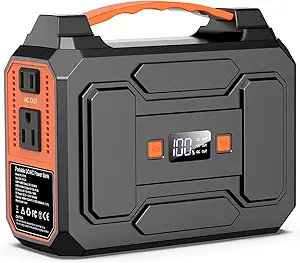 | Best Overall | Capacity: 146Wh / 39,600mAh | AC Output: 2x 110V, 100W | Other Outputs: 2x USB 5V/3.1A, 1x USB QC3.0, 1x DC 12V/10A | VIEW LATEST PRICE | See Our Full Breakdown |
| Daran Portable Power Station 89.6Wh LiFePO4 Battery 100W Solar Power Bank |  | Best Battery Longevity | Capacity: 89.6Wh, LiFePO4 | Output: 100W continuous, 200W peak | Ports: 7 total: 2 AC, 2 USB-C, 2 USB-A, 1 DC5521 | VIEW LATEST PRICE | See Our Full Breakdown |
| Apowking Portable Power Bank with AC Outlet, 65W Portable Laptop Charger |  | Best Compact Travel Pick | Capacity: 88.8Wh / 24,000mAh | AC Output: 65W peak, 110V | Ports: 4 | VIEW LATEST PRICE | See Our Full Breakdown |
| GENSROCK Portable Power Bank, 24,000mAh Portable Laptop Charger |  | Best Value | Capacity: 24,000mAh (~88Wh) | AC Output: 2 outlets, 120W / 150W peak | Ports: 8 total: 2 AC, 2 DC 12V, USB-C, QC 3.0, USB-A | VIEW LATEST PRICE | See Our Full Breakdown |
| BLAVOR Solar Power Bank 20000mAh Wireless Charger for Phones & Apple Watch |  | Best Rugged Phone Companion (Laptop Adjacent) | Capacity: 20,000mAh | Max Output: 20W via USB-C | Ports: 2 USB-C, 1 iOS, 1 USB-A | VIEW LATEST PRICE | See Our Full Breakdown |
| Portable Power Station with 40W Solar Panel, 100W Solar Generator |  | Best Complete Solar Kit for the Price | Wattage: 100W | Included Solar Panel: 40W foldable | Solar Conversion Efficiency: 22.8% | VIEW LATEST PRICE | See Our Full Breakdown |
| MARBERO Portable Power Station 88Wh, 120W Surge, Solar Generator 24,000mAh |  | Best Ultralight Backup | Battery Capacity: 88Wh / 24,000mAh | Output Power: 80W continuous, 120W surge | Weight: 3.2 lbs | VIEW LATEST PRICE | See Our Full Breakdown |
| SinKeu 24000mAh Portable Power Bank with AC Outlet |  | Best for Commuter Laptop Charging | Capacity: 24,000mAh / 88.8Wh | AC Outlet: 110V / 65W | USB Outputs: QC3.0 9V/2A, 5V/3A | VIEW LATEST PRICE | See Our Full Breakdown |
| Portable Power Station 300W, 220Wh Solar Generator Backup Battery Pack |  | Best Mid-Size Workhorse | Wattage: 300W (600W peak) | Battery Capacity: 220Wh lithium-ion | Outputs: 2x 110V AC, 3x USB-A, 1x USB-C, 1x DC vehicle port | VIEW LATEST PRICE | See Our Full Breakdown |
| FEELLE Solar Power Bank 50000mAh Magnetic Portable Charger with Hand Crank |  | Best Emergency Preparedness Pick | Battery Capacity: 50,000mAh lithium polymer | Solar Panels: 4 built-in panels | Output: 5V / 3A | VIEW LATEST PRICE | See Our Full Breakdown |
| Takki Solar Generator 120W Peak Portable Power Station with 21W Solar Panel |  | Best Complete Solar Kit | Capacity: 88.8Wh | Power Output: 80W running, 120W peak | Solar Panel: 21W foldable, included | VIEW LATEST PRICE | See Our Full Breakdown |
| Portable Solar Power Bank with AC Outlet 65W 110V |  | Best Budget All-in-One | Battery Capacity: 24,000mAh | AC Output: 65W, 110V | Solar Panel: 30W integrated | VIEW LATEST PRICE | See Our Full Breakdown |
| MARBERO 200W Portable Power Station 148Wh Camping Solar Generator with AC Outlet, USB, DC, LED Flashlights |  | Best for Multi-Day Trips | Capacity: 148Wh (40,000mAh) | Power Output: 200W continuous, 270W peak | AC Outlets: 2-prong and 3-prong sockets | VIEW LATEST PRICE | See Our Full Breakdown |
| Portable Power Station 89.6Wh 100W PD USB-C with AC Outlet |  | Best Premium Pick | Capacity: 89.6Wh | Battery Type: LiFePO4 with BMS | Power Output: 200W (400W peak) | VIEW LATEST PRICE | See Our Full Breakdown |
| portable solar laptop charger | Capacity | Weight |
|---|---|---|
| Portable Power Station | 146Wh / 39,600mAh | 3.3 lbs |
| Daran Portable Power Station 8 | 89.6Wh, LiFePO4 | 2.54 lbs |
| Apowking Portable Power Bank w | 88.8Wh / 24,000mAh | — |
| GENSROCK Portable Power Bank | 24,000mAh (~88Wh) | 2.3 lbs |
| BLAVOR Solar Power Bank 20000m | 20,000mAh | — |
| Portable Power Station with 40 | — | — |
| MARBERO Portable Power Station | — | 3.2 lbs |
| SinKeu 24000mAh Portable Power | 24,000mAh / 88.8Wh | — |
| Portable Power Station 300W | — | 5 lbs |
| FEELLE Solar Power Bank 50000m | — | — |
| Takki Solar Generator 120W Pea | 88.8Wh | 2.29 lbs |
| Portable Solar Power Bank with | — | 1.6 lbs |
| MARBERO 200W Portable Power St | 148Wh (40,000mAh) | — |
| Portable Power Station 89.6Wh | 89.6Wh | 2.5 lbs |
More Details on Our Top Picks
Portable Power Station, 146Wh 100W Solar Powered Power Bank with AC Outlet
This option stands out for offering the largest capacity per dollar in this batch at 146Wh, which translates to roughly two full laptop recharges plus phone top-ups before you need sunlight. Compared with the GENSROCK 24,000mAh, it trades a little portability for meaningfully more stored energy, and unlike the Daran 89.6Wh, its twin AC outlets let you run a lamp and charge a laptop simultaneously. The catch: the solar panel is not included, so the “solar powered” part of the pitch depends on an extra purchase, and the 100W AC ceiling rules out power-hungry workstations or gaming laptops. For writers, photographers, and remote workers keeping a 13–14 inch ultrabook alive off-grid, this pick makes the most sense as the centerpiece of a solar kit.
Pros:- 146Wh capacity delivers roughly two full laptop recharges
- Dual AC outlets plus USB, QC3.0, and 12V DC in one unit
- 3.3 lbs is light for this capacity class
- Three recharge methods: wall, car, and solar
Cons:- Solar panel sold separately
- 100W AC limit excludes gaming and workstation laptops
- No fast USB-C PD charging listed for laptops
Best for: Remote workers and campers who need multi-day laptop runtime and plan to pair it with a separately purchased solar panel
Not ideal for: Buyers wanting an all-in-one solar solution out of the box, or anyone running laptops that draw more than 100W
- Capacity:146Wh / 39,600mAh
- AC Output:2x 110V, 100W
- Other Outputs:2x USB 5V/3.1A, 1x USB QC3.0, 1x DC 12V/10A
- Weight:3.3 lbs
- Recharging:AC adapter, car socket, solar panel (panel not included)
- Extras:Dual LED flashlights with SOS mode, BMS safety protection
Our verdict“The best foundation for a solar laptop kit if you can budget for a separate panel and your laptop sips power.”
Daran Portable Power Station 89.6Wh LiFePO4 Battery 100W Solar Power Bank
The LiFePO4 chemistry is the whole story here: with 3,500+ rated cycles, this unit should outlast the GENSROCK and the 146Wh power station above by two to three times in calendar lifespan, which matters if your solar kit lives in a van or go-bag for years. At 2.54 lbs and roughly the size of a large water bottle, it is easier to sling into a backpack than the bigger stations, and the 0–80% recharge in 1.5 hours means less downtime waiting on a wall socket between trips. Fanless operation is a quiet advantage over boxier stations when you are working in a tent. The tradeoff is capacity — 89.6Wh is roughly one laptop recharge plus change, and the solar panel is extra. This model is better suited to buyers prioritizing durability and fast turnaround over raw runtime.
Pros:- LiFePO4 cells rated for 3,500+ cycles, roughly triple a standard lithium-ion lifespan
- Charges 0–80% in 1.5 hours
- Seven ports including dual USB-C PD for direct laptop charging
- Silent, fanless operation for tents and bedrooms
Cons:- 89.6Wh caps you at about one laptop recharge
- Solar panel not included
- 100W continuous ceiling limits bigger laptops
Best for: Van lifers and frequent travelers who recharge often and want a battery that survives years of daily cycling
Not ideal for: Anyone needing multi-day laptop runtime without sun — the sub-90Wh capacity runs dry quickly
- Capacity:89.6Wh, LiFePO4
- Output:100W continuous, 200W peak
- Ports:7 total: 2 AC, 2 USB-C, 2 USB-A, 1 DC5521
- Weight:2.54 lbs
- Recharge Speed:0–80% in 1.5 hours
- Life Cycles:3,500+
- Charging Methods:AC, USB-C PD, car, solar panel (panel not included)
Our verdict“The durability pick for people who will actually cycle the battery hundreds of times rather than stash it for emergencies.”
Apowking Portable Power Bank with AC Outlet, 65W Portable Laptop Charger
At 88.8Wh in a power-bank form factor, this Apowking squeezes right under the airline carry-on limit while still offering an AC outlet, something the BLAVOR 20,000mAh in this roundup cannot do at all. The 65W AC output is the constraint that shapes who this is for: it happily covers a Chromebook, MacBook Air, or ultrabike-style travel laptop, but a 16-inch MacBook Pro under full load or any gaming rig will trip it. Compared with the Daran, you give up LiFePO4 longevity and one USB-C port in exchange for something that genuinely fits a laptop sleeve pocket. Like everything else in this batch, the solar panel is a separate buy, so budget accordingly if off-grid recharging is the plan rather than just travel backup.
Pros:- 88.8Wh stays under the 100Wh airline limit
- AC outlet plus multiple ports in a palm-sized body
- Recharges via AC, car, or solar panel
Cons:- 65W AC ceiling excludes most performance laptops
- Solar panel not included
- Only four ports limits simultaneous device charging
Best for: Business travelers and students with low-wattage laptops who want AC power in a carry-on-legal package
Not ideal for: Owners of power-hungry laptops — 65W peak will not keep a performance machine charged under load
- Capacity:88.8Wh / 24,000mAh
- AC Output:65W peak, 110V
- Ports:4
- Battery Type:Lithium Ion
- Recharging:AC, car, solar (panel not included)
- Extras:Built-in LED flashlight
Our verdict“The right call for light-laptop travelers who need occasional AC power without checking a bag.”
GENSROCK Portable Power Bank, 24,000mAh Portable Laptop Charger
For shoppers watching the budget, this GENSROCK undercuts the bigger stations while offering eight output ports and 150W peak AC power — the highest in this batch — which means it can briefly handle laptop power spikes the Apowking (65W) and Daran (100W) would refuse. The 1500-cycle lithium-ion rating is the honest tradeoff against the Daran’s 3,500-cycle LiFePO4 cells: cheaper chemistry, shorter life. The digital display and emergency lights add genuine utility at a price point where rivals often cut them. Capacity is the other compromise — 24,000mAh (about 88Wh) means one solid laptop recharge plus phone duty, well short of the 146Wh power station. This pick makes the most sense as a first solar-ready battery for someone testing whether off-grid laptop work fits their lifestyle before investing in a full kit.
Pros:- Eight ports including two AC, two DC, and QC 3.0 USB
- 150W peak handles laptop power spikes others reject
- Digital display and emergency lights included at a low price
- 2.3 lbs is the lightest station-style option here
Cons:- Lithium-ion cells rated only 1,500 cycles versus 3,500+ for LiFePO4 rivals
- Solar panel not included
- 88Wh capacity limits runtime to roughly one laptop recharge
Best for: Budget-conscious buyers who want the most ports and peak wattage per dollar as an entry into solar laptop charging
Not ideal for: Long-haul off-gridders — one laptop recharge per cycle and standard lithium-ion lifespan won’t sustain multi-day work
- Capacity:24,000mAh (~88Wh)
- AC Output:2 outlets, 120W / 150W peak
- Ports:8 total: 2 AC, 2 DC 12V, USB-C, QC 3.0, USB-A
- Weight:2.3 lbs
- Cycle Life:1,500+
- Recharging:AC outlet, car outlet, solar panel (panel not included)
- Extras:Emergency lights, BMS protection, digital display
Our verdict“The cheapest credible way to start solar laptop charging, as long as you accept shorter battery life and modest capacity.”
BLAVOR Solar Power Bank 20000mAh Wireless Charger for Phones & Apple Watch
I need to be blunt about the fit here: with no AC outlet and a 20W USB-C ceiling, this BLAVOR will not meaningfully charge the laptops this roundup is about — but it earns a slot as the durable sidekick to any of the station-style picks above. Its built-in solar panel actually works, unlike the 146Wh station or the Daran, which both require a separate panel purchase, giving it genuine trickle-charge capability clipped to a backpack. The waterproof, shockproof, dustproof shell outclasses every other product in this batch for abusive environments, and the wireless pad plus Apple Watch charging covers the rest of a mobile kit. The tradeoffs are weight — it is heavier than the larger-capacity GENSROCK — and slow multi-device charging when everything draws at once.
Pros:- Integrated solar panel actually recharges the battery off-grid
- Waterproof, shockproof, dustproof construction
- Wireless charging for phones plus Apple Watch support
- Built-in flashlight, compass, and thermometer for outdoor use
Cons:- No AC outlet and only 20W output — not a real laptop charger
- Heavy for its 20,000mAh capacity
- Simultaneous multi-device charging slows everything down
Best for: Hikers and field workers who need a self-solar-charging, weatherproof battery for phones and wearings alongside a laptop station
Not ideal for: Anyone expecting laptop charging — 20W USB-C output and no AC outlet make it a phone-first device
- Capacity:20,000mAh
- Max Output:20W via USB-C
- Ports:2 USB-C, 1 iOS, 1 USB-A
- Wireless Charging:Yes, phones and Apple Watch
- Solar Charging:Built-in panel
- Durability:Waterproof, shockproof, dustproof
- Extras:Flashlight, compass, thermometer
Our verdict“Buy it as a rugged, self-solar-charging phone companion — not as your laptop power source.”
Portable Power Station with 40W Solar Panel, 100W Solar Generator
This is the only entry in this batch that ships with both a battery and a solar panel, which changes the value equation entirely. Most competitors here, like the Portable Power Station 300W, require you to buy a panel separately, often doubling the total cost. The 40W folding panel paired with 22.8% conversion efficiency means you can realistically recharge the 100W station off-grid in a full day of good sun — something the solar-less alternatives simply can’t do out of the box.
The tradeoff is capacity. At 100W, it sits below the MARBERO 88Wh in practical laptop runtime, and it can’t run anything with serious power draws. One genuine weakness: the junction box isn’t waterproof, so rainy-weather solar charging demands care and positioning. The battery also wants regular top-ups to stay healthy, which makes this a kit you maintain, not one you forget in a closet for two years.
Pros:- Battery and 40W solar panel included as a matched kit
- 22.8% solar conversion efficiency is strong for this price class
- AC, USB, and DC outputs cover phones, tablets, and modest laptops
- Built-in BMS protection guards against overcharge and short circuits
Cons:- 100W output ceiling excludes high-power laptops and appliances
- Solar panel junction box is not waterproof, limiting wet-weather use
- Battery requires regular recharge cycles to maintain long-term health
Best for: Campers and off-grid workers who want a true solar generator kit in one purchase without shopping for panels separately
Not ideal for: Anyone charging power-hungry laptops or small appliances — the 100W ceiling rules out most gaming or workstation machines
- Wattage:100W
- Included Solar Panel:40W foldable
- Solar Conversion Efficiency:22.8%
- Outputs:AC, USB, DC
- Recharge Methods:Wall outlet, solar panel, carport
- Safety Features:Built-in BMS protection
- Voltage:120V
Our verdict“Buy this if you want a ready-to-go solar charging system for weekend off-grid use; skip it if your laptop pulls more than 100 watts.”
MARBERO Portable Power Station 88Wh, 120W Surge, Solar Generator 24,000mAh
At 3.2 pounds and roughly the size of a large hardcover book, the MARBERO is the easiest station in this lineup to actually carry. Compared with the SinKeu 24000mAh power bank, which holds a nearly identical amount of energy, the MARBERO wins on fast refueling — it hits 80% in about two hours — and on versatility, with eight ports plus a built-in flashlight that earns its place during outages rather than feeling like a gimmick.
The 88Wh capacity is the honest limit here. It will top up a USB-C laptop a couple of times, but it won’t sustain all-day work sessions the way the 220Wh station later in this roundup can. And unlike the Portable Power Station with 40W Solar Panel, no panel comes in the box, so going solar means an extra purchase. This pick makes the most sense for buyers who prioritize grab-and-go weight over raw endurance.
Pros:- Featherweight at 3.2 lbs with a compact 6.5-inch footprint
- Charges from 0 to 80% in roughly 2 hours
- Eight output ports plus a multi-brightness LED flashlight
- UL-standard cylindrical battery cells with overload and short-circuit protection
Cons:- 88Wh capacity limits laptop runtime to a few charges
- No wireless charging, unlike the FEELLE solar power bank
- Solar panel sold separately
Best for: Day hikers, road-trippers, and apartment dwellers who want outage insurance they can carry in one hand
Not ideal for: Remote workers needing multi-day laptop runtime — 88Wh runs dry after a few full charges
- Battery Capacity:88Wh / 24,000mAh
- Output Power:80W continuous, 120W surge
- Weight:3.2 lbs
- Dimensions:6.5 x 4.6 x 3.1 inches
- Output Ports:8
- Charge Time:2 hours (0 to 80%)
- Recharge Methods:AC, solar, battery
- Protection:Overload, over-voltage, short circuit, overcharge
Our verdict“The MARBERO is the pick when weight matters more than capacity — a genuine one-hand-carry backup for short trips and short outages.”
SinKeu 24000mAh Portable Power Bank with AC Outlet
The SinKeu occupies a smart middle ground: laptop-class power in a power-bank body. Its 110V/65W AC outlet and QC3.0 USB ports will charge most ultrabooks and tablets on a train or flight, and the OLED display removes the guesswork the MARBERO 88Wh leaves you with — you see exactly how much energy remains before your laptop dies. A sub-four-hour recharge also beats many rivals in this capacity class.
Where it stumbles is portability in the literal sense. It’s heavier and bulkier than the MARBERO despite holding the same 88.8Wh, so bag space is the price of the AC outlet. The 65W ceiling also excludes gaming laptops and anything with a discrete GPU, so buyers with power-hungry machines should step up to the 300W station instead. And unlike the FEELLE solar power bank, there’s no solar input at all — this is a wall-charged device through and through.
Pros:- 110V/65W AC outlet handles most ultrabook chargers
- OLED display shows real-time charge status and remaining capacity
- QC3.0 and DC outputs charge phones and tablets alongside a laptop
- Full recharge in under 4 hours
Cons:- Heavier and bulkier than comparable 88Wh rivals like the MARBERO
- 65W AC limit excludes high-wattage laptops
- No solar recharging option, unlike the FEELLE or the 40W solar kit
Best for: Students and business travelers who need reliable laptop top-ups in transit and want a real-time battery readout
Not ideal for: Owners of gaming or workstation laptops — 65W AC output won’t keep those machines charged under load
- Capacity:24,000mAh / 88.8Wh
- AC Outlet:110V / 65W
- USB Outputs:QC3.0 9V/2A, 5V/3A
- DC Output:9–12.6V / 10A
- Recharge Time:Under 4 hours
- Display:OLED status screen
- Safety:BMS protection system
Our verdict“A focused, no-nonsense laptop backup for travelers who value a clear battery display and don’t need solar input.”
Portable Power Station 300W, 220Wh Solar Generator Backup Battery Pack
With 220Wh of capacity and a 300W output (600W peak), this station is where this roundup stops being about emergency phone charges and starts being about real work. It holds roughly two and a half times the energy of the MARBERO 88Wh or the SinKeu, and its ability to run seven devices at once — two AC outlets, three USB-A, USB-C, and a vehicle port — makes it the most credible option here for a full day of mixed laptop, camera, and lighting use at a campsite.
Two honest caveats. First, despite the ‘solar generator’ name, no panel is included — unlike the Portable Power Station with 40W Solar Panel, you’re buying the battery alone and budgeting extra for solar. Second, at 5 pounds it’s twice the weight of the MARBERO, which pushes it toward car-camping and home-backup duty rather than backpacking. Over 1000 charge cycles does soften the long-term cost, though.
Pros:- 220Wh capacity supports multiple full laptop charges
- Runs up to 7 devices simultaneously across AC, USB, and DC
- 600W peak power handles brief startup surges from small appliances
- Rated for over 1000 charge cycles for long service life
Cons:- Solar panel not included despite solar generator branding
- 300W ceiling still excludes kettles, heaters, and power tools
- Heavier than compact rivals like the MARBERO at 5 lbs
Best for: Car campers, van-lifers, and home-backup planners who need all-day laptop and multi-device power from one unit
Not ideal for: Backpackers counting ounces — at 5 lbs it belongs in a trunk, not a pack
- Wattage:300W (600W peak)
- Battery Capacity:220Wh lithium-ion
- Outputs:2x 110V AC, 3x USB-A, 1x USB-C, 1x DC vehicle port
- Simultaneous Devices:Up to 7
- Weight:5 lbs
- Dimensions:8.5 x 6.7 x 4.1 inches
- Charge Cycles:1,000+
- Recharge Methods:Solar, AC, car
Our verdict“The strongest all-around capacity-per-dollar pick here for buyers who mostly stay near a car or wall outlet but want multi-device endurance.”
FEELLE Solar Power Bank 50000mAh Magnetic Portable Charger with Hand Crank
The FEELLE takes a different bet than every other product here: instead of an AC outlet for laptops, it piles on survival features — four solar panels, a hand crank, a compass, and 50000mAh of capacity. That crank is the real differentiator. When the Portable Power Station with 40W Solar Panel runs flat after three cloudy days, the FEELLE can still generate light and a phone trickle charge by muscle power alone. Its magnetic wireless charging also matches how most people actually top up modern phones, no cable hunting required.
But this is not a laptop charger in any meaningful sense — 5V/3A output means phones and tablets only, a sharp contrast to the SinKeu’s 65W AC outlet. It’s also heavy and chunky for a power bank, and the claim of 50000mAh deserves realistic expectations: solar topping-up at this scale takes days of direct sun, not hours. Think of it as insurance for communication devices, not productivity gear.
Pros:- Massive 50000mAh capacity for many phone recharges
- Hand-crank provides power when solar and grid both fail
- Magnetic wireless charging plus built-in cable for phones
- Shockproof, dustproof, and waterproof construction for harsh conditions
Cons:- 5V/3A output cannot charge laptops — a fundamental limitation here
- Heavy and bulky compared with ordinary power banks
- Solar recharging a battery this large takes days of good sunlight
Best for: Emergency-kit builders and multi-day hikers who prioritize keeping phones and GPS devices alive when no outlet exists
Not ideal for: Laptop users — 5V/3A output can’t charge a computer, making it a poor fit for this roundup’s core laptop mission
- Battery Capacity:50,000mAh lithium polymer
- Solar Panels:4 built-in panels
- Output:5V / 3A
- Ports:3 (USB-A, USB-C, built-in cable)
- Wireless Charging:Magnetic, phone-mounted
- Emergency Features:Hand crank, compass
- Durability:Shockproof, dustproof, waterproof
Our verdict“A survival-first power bank for keeping phones alive indefinitely off-grid; laptop owners should choose the SinKeu or the 300W station instead.”
Takki Solar Generator 120W Peak Portable Power Station with 21W Solar Panel
This option stands out for being the only entry in this group that ships with both a power station and a foldable solar panel in one box, which removes the guesswork of matching panel wattage to battery input. At 2.29 lbs total, it undercuts the MARBERO 200W on weight, though its 80W running ceiling means it handles a laptop and phone comfortably but nothing hungrier. Compared with the Portable Solar Power Bank 65W, the Takki gives you a larger 88.8Wh reserve plus a dedicated LED flashlight with SOS mode, but the no pass-through charging limitation is a real annoyance — you can’t top off the station and charge your laptop at the same time.
Pros:- Solar panel included, so no separate purchase or compatibility research needed
- Featherlight at 2.29 lbs for a station-plus-panel combo
- Multiple output types covering AC, USB, and DC devices
- Built-in LED flashlight with SOS mode adds emergency utility
Cons:- Cannot charge devices while the station itself recharges
- Solar recharge takes 5-7 hours in good conditions
- 80W device ceiling is low even by budget-station standards
Best for: Campers and hikers who want a true solar charging solution out of the box without researching separate panels
Not ideal for: Anyone hoping to run a small cooler, fan, or other appliance over 80W — this ceiling rules out most comforts beyond electronics
- Capacity:88.8Wh
- Power Output:80W running, 120W peak
- Solar Panel:21W foldable, included
- Weight:2.29 lbs
- Recharge Time (Solar):5-7 hours
- Extras:LED flashlight with SOS mode
Our verdict“Buy this if you want the simplest path from box to off-grid laptop power; skip it if pass-through charging matters to you.”
Portable Solar Power Bank with AC Outlet 65W 110V
For buyers who want solar input baked into the device itself rather than hauling a separate panel, this pick makes the most sense. The integrated solar panel plus 65W AC outlet in a 1.6-pound package is lighter than both the Takki kit and the 89.6Wh PD station, making it a genuine toss-in-the-backpack option. Its 24,000mAh cell roughly matches the GENSROCK power bank on capacity, but the advantage here is three-way recharging — wall, car, and sun. The tradeoff is output headroom: 65W covers most laptops but chokes on anything demanding, and the AC outlet requires manual switching, which is easy to forget when a charging session ends.
Pros:- Solar panel is built in, so there’s nothing extra to carry
- Recharges via wall, car, or sunlight for maximum flexibility
- Four USB ports including Quick Charge for multi-device households
- Competitively light at 1.6 pounds
Cons:- AC outlet must be manually turned on and off each use
- Solar junction box is not waterproof, limiting rugged outdoor use
- 65W output ceiling is the lowest among AC-outlet picks here
Best for: Budget-conscious travelers and day hikers who want one self-contained device rather than a station-plus-panel system
Not ideal for: Users running gaming laptops or small appliances — the 65W AC limit will shut down mid-task
- Battery Capacity:24,000mAh
- AC Output:65W, 110V
- Solar Panel:30W integrated
- USB Ports:4, including Quick Charge
- Recharging Methods:Wall AC, solar, car
- Weight:1.6 lbs
Our verdict“This is the pick for minimalists who value a single solar-capable device over raw power; power users should look at the MARBERO instead.”
MARBERO 200W Portable Power Station 148Wh Camping Solar Generator with AC Outlet, USB, DC, LED Flashlights
With 148Wh on tap and a 200W output ceiling with 270W peak, this model is the workhorse of this batch — it holds roughly 66% more energy than the Takki and can power devices the 65W solar power bank simply can’t start. The port selection is the strongest here too: 2-prong and 3-prong AC sockets, five USB ports including PD, and a DC barrel, so a laptop, camera, and drone batteries can all charge simultaneously. The catch is that no solar panel comes in the box, and unlike the Takki kit, you’ll need to budget for one and verify compatibility. The 7-9 hour recharge time also demands patience unless you plug in overnight before departure.
Pros:- 148Wh capacity is the largest in this batch, supporting genuine multi-day use
- 200W continuous output handles devices beyond laptop charging
- Richest port array including both AC socket types and USB-C PD
- Dual LED flashlights with adjustable modes
Cons:- Solar panel sold separately, adding cost and research
- 7-9 hour recharge times test your planning discipline
- Still capped at 200W, ruling out kettles or high-draw appliances
Best for: Car campers and off-grid workers who need enough capacity for a laptop plus accessories across a weekend
Not ideal for: Backpackers counting ounces — at this capacity with a separate panel needed, the total kit weight adds up fast
- Capacity:148Wh (40,000mAh)
- Power Output:200W continuous, 270W peak
- AC Outlets:2-prong and 3-prong sockets
- USB Ports:4 USB-A, 1 USB-C PD
- Recharging Methods:Wall, car, solar (panel not included)
- Recharge Time:7-9 hours
Our verdict“The clear choice when runtime and output matter more than weight, provided you accept buying a panel separately.”
Portable Power Station 89.6Wh 100W PD USB-C with AC Outlet
Where this model separates itself from the Daran 89.6Wh station and everything else in the batch is recharge speed and battery chemistry. A 1.3-hour wall recharge — or 2.2 hours via solar — demolishes the MARBERO’s 7-9 hour wait, and the LiFePO4 cells are rated for far more charge cycles than the standard lithium-ion packs in the Takki or the 65W solar bank. The 65W USB-C input means one laptop charger tops it off. Compared with the similarly sized Daran, the dual USB-C ports and seven total outputs give it an edge for modern gear. The obvious cost: no solar panel included, and the compact frame means capacity tops out quickly on demanding days.
Pros:- Fastest recharge in the batch at 1.3 hours via AC/DC/PD
- LiFePO4 chemistry with BMS offers far better cycle life than lithium-ion rivals
- Seven ports including dual USB-C cover modern device arsenals
- Venti-cup footprint slips into any bag
Cons:- Solar panel not included, requiring an extra purchase
- 89.6Wh capacity runs dry quickly with a laptop plus peripherals
- Port count, while versatile, may fall short for group charging scenarios
Best for: Frequent travelers and commuters who want airline-friendly capacity, fast refills, and a battery that lasts years of daily use
Not ideal for: Off-grid purists — without a bundled panel and with modest capacity, this leans more ‘portable outlet’ than ‘solar generator’
- Capacity:89.6Wh
- Battery Type:LiFePO4 with BMS
- Power Output:200W (400W peak)
- Ports:7 (2 AC, 2 USB-C, 2 USB-A, 1 DC)
- Recharge Time:1.3 hours AC/DC/PD, 2.2 hours solar
- Weight:2.5 lbs
- Warranty:12 months
Our verdict“Pay the premium for this if recharge speed and battery longevity matter more than bundled solar gear.”
How We Picked
I evaluated these 14 chargers against what actually determines whether they can charge a laptop off-grid: sustained AC/USB-C output in watts, usable capacity in watt-hours, charging input speed (since a charger that takes 8 hours to refill helps less than one that refills in 3), weight and portability, and solar recharge practicality — whether the bundled or built-in panel can meaningfully replenish the battery in a day of sun. Battery chemistry and cycle life also factored in, because a portable power station is a multi-year purchase.
The ranking reflects a simple hierarchy: models that can reliably fully recharge a laptop multiple times sit at the top, mid-capacity units that offer partial charges in a travel-friendly form factor come next, and phone-first power banks with laptop capability as an afterthought land lower — regardless of how flashy their solar or hand-crank features look on paper.
Factors to Consider When Choosing Portable Solar Laptop Chargers
Before choosing a portable solar laptop charger, it helps to understand the category’s physics and the marketing tactics that trip buyers up. These factors shaped how I ranked the 14 models above.Watt-Hours Matter More Than mAh
The single most misleading spec in this category is mAh, because it’s measured at the battery’s internal voltage (3.7V), not the voltage your laptop charges at. A 24,000mAh bank sounds huge, but it translates to roughly 89Wh — enough for about half a charge on a 15-inch laptop and less on a power-hungry gaming machine. Watt-hours give you the honest number, so always convert mAh to Wh (divide mAh by 1000, multiply by 3.7) before comparing a power bank against a power station. Also subtract 15–20% for inverter and conversion losses when charging through an AC outlet. A common mistake is buying a big-sounding bank only to discover it delivers one partial laptop charge. If you need multiple full recharges, you’re shopping for a 140Wh+ power station, not a power bank.
Sustained Output and Inverter Quality
Laptop chargers draw 45W to 100W continuously, and some laptops refuse to charge at all if the source can’t sustain their required wattage. A power bank advertising a “65W peak” may only sustain 45W, which means slow charging or battery drain under load on larger machines. Check the sustained (rated) output, not the peak or surge rating — surge ratings like the MARBERO’s 120W figure only cover startup spikes, not continuous charging. Pure sine wave inverters (common on the larger stations) are gentler on laptop power bricks than modified sine wave, though most modern chargers tolerate both. If you own a 16-inch MacBook Pro or a gaming laptop, aim for a 100W USB-C PD port or a 150W+ AC outlet to avoid disappointment.
Built-In Solar Versus Separate Panels
Many products in this category advertise “solar powered” on the strength of a small panel glued to the case. Those built-in panels typically produce 1–5W — enough to trickle-charge the bank over two or three sunny days, which is fine for a phone emergency but useless for laptop-scale replenishment. A separate folding panel of 21W or more is the practical minimum for meaningful solar recharge, and even then, expect 6–10 hours of direct sun to refill an 88–146Wh battery. If genuine off-grid laptop use is the goal, budget for a panel-included bundle (like the 40W and 21W kits in this lineup) rather than assuming the integrated panel does the work. Panel orientation matters too: propping the panel at an angle toward the sun can double harvest compared with laying it flat.
Battery Chemistry and Lifespan
Standard lithium-ion banks and stations typically last 300–500 charge cycles before capacity drops noticeably, while LiFePO4 chemistry (as in the Daran) is rated for 2,000–3,000 cycles. For occasional camping trips, that difference barely matters and the cheaper, lighter lithium-ion option makes sense. But if the unit will cycle weekly — van life, frequent field work, emergency-preparedness rotation — LiFePO4’s longevity pays for the price premium within a couple of years. LiFePO4 also tolerates heat better, which matters for a device sitting in a sunny campsite. The tradeoff is slightly heavier weight per watt-hour and usually a higher sticker price. Match the chemistry to how often you’ll actually drain and recharge it, not to spec-sheet enthusiasm.
Weight, Portability, and Airline Rules
There’s a hard cliff in this category: anything under 100Wh can legally fly in carry-on luggage (with airline approval up to 160Wh), which is why so many products cluster at 88–96Wh — right at the safety limit. If you travel by air, an 89.6Wh unit like the Daran or MARBERO 88Wh is the practical ceiling; the 148Wh and 220Wh stations are car-trunk and campsite devices only. Weight follows capacity: 20,000mAh banks weigh about a pound, while 220Wh stations approach five pounds. Also check whether the unit holds a charge in storage — some cheaper banks self-discharge quickly and may be dead when an emergency hits. The best travel strategy is often a sub-100Wh unit for the flight plus a folding panel waiting at your destination.
Charging Input Speed and Pass-Through
A charger’s refill time is the spec nobody checks until they’re frustrated. Some budget banks accept only 15–20W input, meaning an 88Wh battery takes six-plus hours to recharge from a wall — a real problem if you’re rotating one unit through daily use. Look for 60W+ USB-C PD input or fast AC input; the better stations here refill in two to four hours. Pass-through charging (charging your devices while the unit itself recharges) is another quietly useful feature for desk-adjacent use, though it stresses the battery on some models. Also count the output ports realistically: one AC outlet plus one USB-C PD port covers a laptop-and-phone setup, and anything more is convenience rather than necessity. Buying the fastest input you can afford saves aggravation every single day you own the device.
Frequently Asked Questions
Can a 20,000mAh solar power bank actually charge a laptop?
Barely, and only once. A 20,000mAh bank holds about 74Wh, and after inverter and voltage-conversion losses you’ll get roughly 40–50Wh delivered to the laptop — enough for about 50–70% of a charge on a typical 13–14 inch machine, and less on larger models. Models like the BLAVOR or GENSROCK work as laptop extenders for a few extra hours of work, not as full recharges. If you need at least one complete laptop charge, step up to an 88Wh+ unit like the SinKeu or MARBERO. The built-in solar panel on these banks is also too small to meaningfully refill them for laptop purposes — plan on wall charging between uses.
Do I need a pure sine wave inverter to charge my laptop safely?
For almost all modern laptops, no — the power brick that came with your laptop already converts AC to DC, and most bricks handle modified sine wave output acceptably. Where modified sine wave causes trouble is with sensitive electronics, some audio equipment, and occasionally cheaper bricks that run hot or buzz on rough power. The larger stations in this lineup use cleaner inverters, which is one reason they cost more. If you’ll only ever plug in your laptop brick and a phone charger, you can safely save money on a modified sine wave unit. If you plan to run other devices off it too, the cleaner output is worth the premium.
How long does it take to recharge one of these with a solar panel?
Realistically, count on a full sunny day per 100Wh of capacity when using a 20–40W panel. A 40W panel might harvest 120–160Wh across a good solar day (panels rarely hit rated output), so refilling the 146Wh station takes roughly one long day of direct sun. The small built-in panels on power banks produce 1–5W, which means days of sun for a partial refill — they’re emergency trickle features, not a charging strategy. Angle the panel toward the sun and reposition it every couple of hours, and you can noticeably improve harvest over leaving it flat on the ground. Cloud cover can cut output by 70% or more, so build slack into any off-grid plan.
Is LiFePO4 worth paying extra for in a portable charger?
It depends entirely on how often you’ll cycle the battery. LiFePO4 cells like those in the Daran are rated for 2,000–3,000 cycles versus 300–500 for standard lithium-ion, so frequent users (van lifers, weekly campers, people using it as a rotating backup) get years more usable life. LiFePO4 also handles heat better and is less prone to thermal runaway, which matters for a device sitting in a hot car or tent. For occasional vacation use, the chemistry difference never gets a chance to pay off, and a cheaper lithium-ion unit with the same capacity makes more sense. Expect roughly 10–20% more weight per watt-hour as the tradeoff. If your usage pattern is “once a month,” save the money; if it’s “every week,” spend it.
What size charger do I need for a weekend of remote work?
Start by multiplying your laptop’s battery capacity by the number of workdays, then add 20% for conversion losses. A typical 14-inch laptop holds 60–70Wh, so two full days of off-grid work calls for roughly 150–170Wh of usable capacity — pointing you toward the 146Wh or 220Wh stations rather than any power bank. If you can work in short bursts and top up midday with a solar panel, a 100Wh unit plus a 30W+ panel can stretch further. Also account for your phone, hotspot, and headlamp, which quietly add 15–25Wh per day. The most common planning error is budgeting only for the laptop and running dry on day two because everything else drained the bank.
Conclusion
The right pick depends on how you work off-grid. For best overall, the Portable Power Station 300W (220Wh) is the only model here that comfortably powers a full weekend of laptop work with headroom for other devices. For best value, the MARBERO 88Wh and SinKeu 24,000mAh deliver dependable partial-to-full laptop charges at power-bank prices. For best premium, the Daran 89.6Wh LiFePO4 justifies its price through battery longevity and cycle life that the cheaper units can’t match. For beginners, the GENSROCK 24,000mAh is a low-cost, low-risk way to test whether off-grid charging fits your routine before investing in a station. And for specific needs: the panel-included bundles (40W and Takki 21W kits) for genuine solar self-sufficiency, and the FEELLE 50,000mAh with hand crank for emergency-preparedness buyers who value redundancy over charging speed. Match the capacity to your actual laptop workload first — everything else is secondary.
Halloween Picks
halloween
As an affiliate, we earn on qualifying purchases.