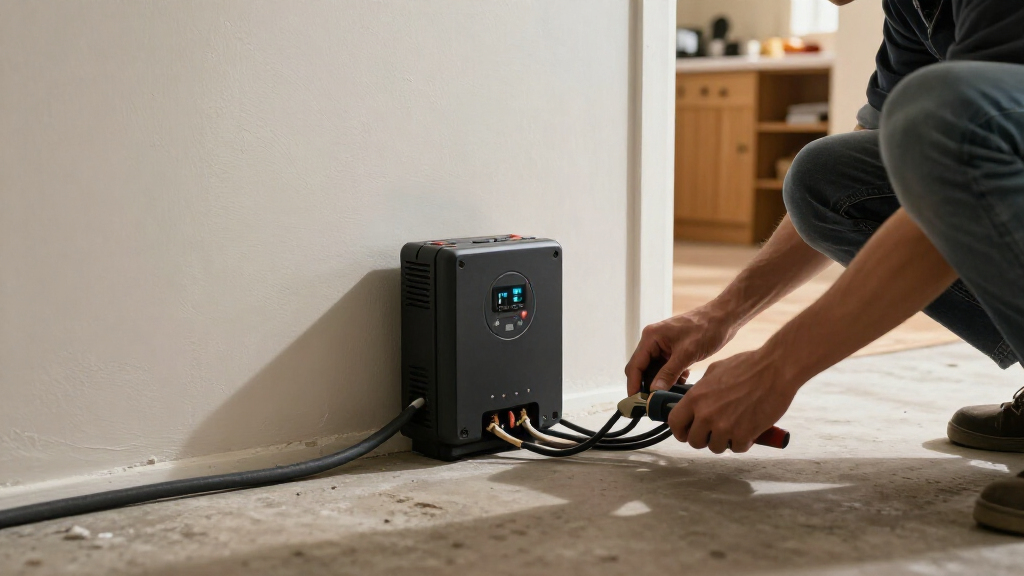
Choosing a home battery backup inverter means weighing more than the inverter’s wattage: the battery’s usable energy, voltage configuration, expansion path, and installation demands all shape what it can actually back up. I’d start with the ECO-WORTHY PowerMega for its included 16.1kWh battery and 10kW hybrid inverter, and the EF ECOFLOW DELTA Pro Ultra for its household-scale 120V/240V output, expansion, and near-instant UPS behavior. The Jackery HomePower 3600 Plus is a more portable alternative for buyers who value wheels and flexible charging over a permanently installed setup.

Get backup power and energy gear delivered free with Prime
- Fast, free delivery on millions of items
- Prime Video, Amazon Music and more included
- Member-only deals all year
Those picks solve different problems. A bundled 48V system can provide substantial stored energy but calls for careful planning and heavy equipment handling; a portable power station is simpler to move but starts with less capacity; and a modular whole-home-oriented unit can scale higher while requiring space and separate deliveries. I’ve ranked these five by how directly they serve home backup needs, not by treating every inverter as an interchangeable appliance. The BELTTT is included as a smaller 12V inverter option, but it is not a self-contained battery backup system.
Key Takeaways
Best bundled capacity: ECO-WORTHY PowerMega combines 16.1kWh usable energy with a 10kW hybrid inverter, but its 293.2-pound battery needs a serious delivery and placement plan.
Best expandable household setup: EF ECOFLOW DELTA Pro Ultra offers 120V/240V output and capacity expansion up to 90kWh; its initial battery capacity and heavy, split-package delivery are part of the tradeoff.
Best portable starting point: Jackery HomePower 3600 Plus has wheels, multiple charging methods, and 3,584Wh of capacity, but 240V requires a parallel configuration.
Best kit for planned expansion: ECO-WORTHY’s 10kW kit supports parallel batteries and inverters, though its 120/240V configuration requires multiple inverters rather than a single unit.
Different category: BELTTT’s 12V-to-120V inverter is a compact conversion component, not a battery or complete home backup system; it needs a separate 12V battery sized for the intended loads.
| ECO-WORTHY PowerMega 48V 314Ah LiFePO4 Energy Storage System with 10kW Hybrid Inverter |  | Best Overall — bundled capacity and output for planned home backup | Battery chemistry: LiFePO4 | Battery voltage and capacity: 51.2V, 314Ah | Usable energy: 16.1kWh | VIEW LATEST PRICE | See Our Full Breakdown |
| EF ECOFLOW DELTA Pro Ultra 12 kWh Power Station with Extra Battery |  | Best Premium — broad expansion and household voltage flexibility | Output: 7,200W at 120V or 240V | Maximum output: 21.6kW with three inverters | Capacity per battery: 6,144Wh | VIEW LATEST PRICE | See Our Full Breakdown |
| ECO-WORTHY 48V Home Backup Power Kit with 10,240Wh Battery Capacity and 10kW Inverter |  | Best for Expansion — a 10kW foundation for a configurable system | Battery capacity: 10,240Wh total | Battery configuration: Two 51.2V 100Ah LiFePO4 batteries | Inverter output: 10,000W | VIEW LATEST PRICE | See Our Full Breakdown |
| Jackery HomePower 3600 Plus Portable Power Station, 3584Wh, 3600W |  | Best Portable — movable backup with several recharge options | Battery capacity: 3,584Wh | Output wattage: 3,600W | Parallel output: 7,200W | VIEW LATEST PRICE | See Our Full Breakdown |
| BELTTT 2000W Pure Sine Wave Inverter, 12V DC to 120V AC |  | Best Compact Inverter Component — for an existing 12V battery setup | Input voltage: 12V DC | Output voltage: 120V AC | Continuous and peak output: 2,000W continuous; 4,000W peak | VIEW LATEST PRICE | See Our Full Breakdown |
| home battery backup inverter | Output voltage |
|---|---|
| ECO-WORTHY PowerMega 48V 314Ah | 240V split-phase or 120V single-phase |
| EF ECOFLOW DELTA Pro Ultra 12 | — |
| ECO-WORTHY 48V Home Backup Pow | 120V; 120/240V with multiple inverters in parallel |
| Jackery HomePower 3600 Plus Po | — |
| BELTTT 2000W Pure Sine Wave In | 120V AC |
More Details on Our Top Picks
ECO-WORTHY PowerMega 48V 314Ah LiFePO4 Energy Storage System with 10kW Hybrid Inverter
I put the ECO-WORTHY PowerMega first because its listed package combines two of the hardest pieces of a home backup decision: 16.1kWh of usable energy and a 10kW hybrid inverter. That makes it a more immediately substantial backup foundation than the 3,584Wh Jackery, while avoiding the ECO-WORTHY kit’s stated need for multiple inverters to reach 120/240V split-phase output. It also supports either split-phase 240V or single-phase 120V output, giving buyers a more direct fit for household circuits than a 12V accessory inverter.
The system’s 48V LiFePO4 battery, active-balancing BMS, built-in circuit breaker, aerosol fire suppression, and alarm features make the safety and battery-management details more developed than the BELTTT’s basic inverter protections. WiFi and Bluetooth monitoring add visibility into the system, while RS485, CAN, and RS232 communications give the setup more integration options than a simple plug-in power station. The stated 9,000+ cycle life at 80% depth of discharge and 10-year warranty are compelling specifications, though they should not be read as a guarantee of a particular service life under every use pattern.
The main drawback is physical and logistical: at 293.2 pounds, the battery is not a casual delivery or placement job, and the listing says truck freight is required. It also notes that the inverter exterior version is selected randomly, which may frustrate buyers who expect to choose a particular finish or version. Compared with EcoFlow’s wider 90kWh expansion ceiling, PowerMega offers less stated growth headroom, but the supplied package starts with a notably large usable battery. I’d choose it for substantial backup from the outset, not for a lightweight or easily relocated setup.
Pros:- Pairs a 10kW hybrid inverter with 16.1kWh of stated usable energy.
- Supports 240V split-phase or 120V single-phase output.
- Includes WiFi and Bluetooth monitoring plus several communication interfaces.
- Lists active balancing, a built-in breaker, aerosol fire suppression, and a 10-year warranty.
Cons:- The 293.2-pound battery requires a freight and placement plan.
- The inverter exterior version is selected randomly.
- Its substantial fixed-system design is less suitable for buyers seeking easy portability.
Best for: Homeowners planning a substantial fixed backup system who want a listed 10kW inverter paired with 16.1kWh of usable storage and can arrange freight delivery and installation.
Not ideal for: Buyers who need a portable system, cannot accommodate a 293.2-pound battery, or want a clearly specified expansion ceiling and selectable inverter exterior.
- Battery chemistry:LiFePO4
- Battery voltage and capacity:51.2V, 314Ah
- Usable energy:16.1kWh
- Inverter power:10kW
- Output voltage:240V split-phase or 120V single-phase
- Cycle life:9,000+ cycles at 80% DoD, as stated
- Connectivity:WiFi, Bluetooth, RS485, CAN, and RS232
- Weight and warranty:293.2 lb battery; 10 years
Our verdict“I rank the PowerMega first for buyers who want substantial included storage and 10kW output, provided they can handle its freight-scale weight.”
EF ECOFLOW DELTA Pro Ultra 12 kWh Power Station with Extra Battery
The EF ECOFLOW DELTA Pro Ultra ranks second for buyers prioritizing a flexible household backup architecture. Its stated 7,200W output at 120V or 240V gives it a more direct split-phase option than the Jackery, which requires parallel units for 240V. It can also scale to 21.6kW AC output with three inverters and expand to a stated 90kWh capacity. That ceiling makes it the most growth-oriented choice in this lineup, especially for a homeowner who expects backup needs to increase over time.
Its charging options are another point of separation: solar, wall outlets, EV chargers, and generators give the system more ways to replenish than a basic battery inverter. The stated 0ms transfer time is intended to keep connected devices powered without an interruption, a useful distinction for sensitive electronics when the system is configured appropriately. App-based circuit prioritization also speaks to household backup planning rather than simply running whatever is plugged into an outlet. Compared with PowerMega, EcoFlow offers a higher stated expansion ceiling and more charging paths, but its listed battery capacity is 6,144Wh per battery rather than PowerMega’s 16.1kWh usable energy in the supplied package.
There is a meaningful handling and delivery cost in effort: the listed unit weighs 293.6 pounds, and the inverter and battery arrive separately. Buyers should plan the installation and placement around the actual system configuration, rather than assume it behaves like a small portable power station. The supplied specifications also distinguish 6,144Wh per battery from the product title’s 12kWh description, so I would confirm the included battery configuration and exact usable capacity before designing a backup plan. I’d pick EcoFlow over the ECO-WORTHY kit when expansion flexibility and charging variety matter most; I’d pick PowerMega when the larger stated usable capacity in the listed package is the priority.
Pros:- Provides stated 7,200W output at 120V or 240V.
- Can expand to 90kWh and up to 21.6kW AC output with three inverters.
- Supports charging from solar, wall outlets, EV chargers, or generators.
- Lists 0ms transfer time and app-based circuit prioritization.
Cons:- The listed weight is 293.6 pounds.
- Inverter and battery arrive in separate packages.
- The supplied capacity details distinguish 6,144Wh per battery from the 12kWh title, so buyers should verify the included configuration.
Best for: Homeowners seeking a configurable 120V/240V backup system with several charging routes and a path to substantially higher capacity as needs grow.
Not ideal for: Buyers who need a lighter, easy-to-move unit, want all equipment delivered as one package, or require the highest clearly stated starting usable capacity in this comparison.
- Output:7,200W at 120V or 240V
- Maximum output:21.6kW with three inverters
- Capacity per battery:6,144Wh
- Expandable capacity:Up to 90kWh
- Charging methods:Solar, wall outlets, EV chargers, or generators
- Transfer time:0ms, as stated
- Outlets:6
- Weight:293.6 lb
Our verdict“I recommend the DELTA Pro Ultra to buyers who value expansion and 120V/240V flexibility more than portability or the largest stated starting battery.”
ECO-WORTHY 48V Home Backup Power Kit with 10,240Wh Battery Capacity and 10kW Inverter
This ECO-WORTHY kit makes the most sense for buyers who want a 10kW inverter and 10,240Wh of listed battery capacity as a starting point, then expect to add components. It includes two 51.2V 100Ah LiFePO4 batteries, dual independent MPPT controllers, and a 200A battery charger. Against the PowerMega, it starts with less listed energy—10.24kWh versus 16.1kWh usable—but offers a specified path to parallel up to six inverters and 32 batteries. That makes it a more explicitly configurable foundation, not the best choice for maximum included storage on day one.
The kit provides a pure sine wave output and supports 120V or 120/240V, but buyers need to read the configuration detail carefully: a single inverter provides 120V, and the 120/240V arrangement requires multiple inverters in parallel. That requirement is central to choosing between this kit and the PowerMega or EcoFlow, both of which list split-phase capability in their supplied system descriptions without the same stated multi-inverter condition. The two MPPT controllers give solar inputs separate control paths, while Bluetooth and WiFi battery monitoring help make system status visible.
Shipping the components separately can complicate delivery coordination, and a multi-inverter split-phase build adds planning and installation work. The advertised expansion ceiling—up to 163.84kWh across 32 batteries—is a substantial stated maximum, but it does not mean the included kit arrives with that capacity. I’d choose this option for a buyer who is comfortable planning a modular electrical system and expects to expand. Someone who wants the clearest ready-to-use package for split-phase backup should compare it closely with the PowerMega or EcoFlow before buying.
Pros:- Includes two LiFePO4 batteries and a 10kW pure sine wave inverter.
- Lists dual independent MPPT controllers and a 200A battery charger.
- Supports expansion to six inverters and up to 32 batteries, as stated.
- Offers Bluetooth and WiFi battery monitoring.
Cons:- A single inverter provides 120V; 120/240V requires multiple inverters in parallel.
- Items ship separately, adding delivery coordination.
- The included 10.24kWh capacity is lower than PowerMega’s 16.1kWh usable-energy figure.
Best for: A technically prepared homeowner or installer planning a modular 48V backup system with a 10kW base inverter and room to add batteries and inverters.
Not ideal for: Buyers who need 120/240V from one inverter, want the largest included usable capacity, or prefer a simple all-in-one delivery and setup.
- Battery capacity:10,240Wh total
- Battery configuration:Two 51.2V 100Ah LiFePO4 batteries
- Inverter output:10,000W
- Peak output:20,000W
- Output voltage:120V; 120/240V with multiple inverters in parallel
- Solar charging:Two independent MPPT controllers
- Expansion:Up to six inverters and 32 batteries, as stated
- Safety testing:UL 1973 and UL 1741
Our verdict“I’d choose this kit over PowerMega for a planned modular build, but not when single-inverter split-phase output or maximum included storage is the main goal.”
Jackery HomePower 3600 Plus Portable Power Station, 3584Wh, 3600W
The Jackery HomePower 3600 Plus is the clearest choice here for someone who wants a backup power station that can move around the home or travel with them. It lists 3,584Wh of capacity and 3,600W output, and its wheels and telescoping handle make it easier to reposition than the 293-pound ECO-WORTHY and EcoFlow systems. Its LFP battery, stated 6,000-cycle rating, and five-year warranty position it as a portable unit intended for repeated use rather than a one-time emergency box.
Charging flexibility is a standout: it can take power from AC, solar, a gas generator, or a hybrid AC-plus-DC method. The stated hybrid charging time is two hours, while AC or generator charging is listed at 2.5 hours and solar at four hours. Actual charging time depends on the source and conditions, but the variety matters if a household needs to restore charge when one energy source is unavailable. Compared with BELTTT, Jackery includes its own battery and charging system; compared with the larger ECO-WORTHY packages, it sacrifices starting capacity and home-system scale for mobility.
The main limitation for household integration is 240V output requires a parallel configuration. Its 3,584Wh capacity is also a smaller reserve than the PowerMega’s 16.1kWh usable energy or the ECO-WORTHY kit’s 10.24kWh total, so a buyer should match it to priority devices and runtime rather than assume it will carry a whole house for an extended outage. At 77.2 pounds, it is movable but not light to lift, and the supplied listing specifies two outlets. I’d pick it for flexible backup that can be moved and recharged through different sources, not for a fixed split-phase household installation without further configuration.
Pros:- Combines 3,584Wh of capacity with 3,600W output.
- Wheels and a telescoping handle help with repositioning.
- Supports AC, solar, gas-generator, and hybrid AC-plus-DC charging.
- Lists expandable capacity and 240V output when configured in parallel.
Cons:- 240V output requires a parallel configuration.
- Its starting capacity is below the larger ECO-WORTHY and EcoFlow systems.
- At 77.2 pounds, it is still heavy to lift.
Best for: People who want a movable power station for selected home circuits or devices, with wheels and several ways to recharge it.
Not ideal for: Buyers seeking substantial whole-home stored energy, straightforward 240V output from one unit, or a very light portable battery.
- Battery capacity:3,584Wh
- Output wattage:3,600W
- Parallel output:7,200W
- Voltage:120V; 240V in parallel
- Expandable capacity:Up to 21kWh per unit or 43kWh with multiple units, as stated
- Charging methods:Hybrid AC+DC, AC, solar, or gas generator
- Weight and warranty:77.2 lb; 5 years
Our verdict“I recommend Jackery for movable, multi-source backup of selected loads, not as the strongest out-of-box whole-home inverter system in this lineup.”
BELTTT 2000W Pure Sine Wave Inverter, 12V DC to 120V AC
The BELTTT 2000W inverter is the smallest and most component-like option in this group. It converts 12V DC to 120V AC, with 2,000W continuous output and 4,000W peak capacity. That can suit a buyer who already owns an appropriately sized 12V battery and needs AC power for selected equipment. The LCD reports battery and load status, while the remote controller’s 23-foot cable can help when the inverter itself is mounted out of reach.
This is not a direct substitute for any of the other four products. It does not include a battery, does not store energy by itself, and does not provide the 240V split-phase output listed by PowerMega or EcoFlow. Unlike the Jackery, it is not a self-contained power station with built-in charging options. A buyer has to select and provide the battery, confirm that it can supply the inverter’s current demands, and plan suitable wiring and protection. The inclusion of battery cables and fuses is useful, but it does not turn the unit into a complete home backup installation.
Its pure sine wave output is a practical advantage for compatible sensitive or inductive loads, and the stated efficiency is greater than 93% under normal operation. Protections cover undervoltage, overvoltage, overload, excessive temperature, short circuit, and reverse connection. Still, the 12V input limits its role compared with the 48V home systems in this roundup, and 2,000W continuous output is far below the 7kW–10kW class units. I’d select it only when the buyer wants an inverter component for an existing 12V setup; for a complete home battery backup system, I’d move up to Jackery or one of the integrated battery-and-inverter choices.
Pros:- Pure sine wave output with 2,000W continuous and 4,000W peak ratings.
- LCD shows input and output voltage, battery status, and load status.
- Provides AC outlets, a 20A outlet, USB, and a hardwire port.
- Includes a remote controller with a 23-foot cable and several stated safety protections.
Cons:- Requires a separate 12V battery and is not a complete backup system.
- Provides 120V output only and has less output than the home-scale systems.
- A 12V setup may be a poor fit for buyers planning a larger household backup architecture.
Best for: A buyer with a suitable existing 12V battery who needs a compact 120V inverter for selected loads rather than a complete backup system.
Not ideal for: Anyone shopping for a self-contained battery backup, 240V household output, or the high output and storage of a home-scale 48V system.
- Input voltage:12V DC
- Output voltage:120V AC
- Continuous and peak output:2,000W continuous; 4,000W peak
- Waveform:Pure sine wave
- Conversion efficiency:Greater than 93% under normal operation, as stated
- Connection options:Dual AC sockets, 20A outlet, USB, and hardwire port
- Display and remote:Graphical LCD; remote with 23-foot cable
- Weight:7.7 lb
Our verdict“I’d buy the BELTTT only as a 12V inverter component; buyers seeking a complete home battery backup should choose one of the other four systems.”
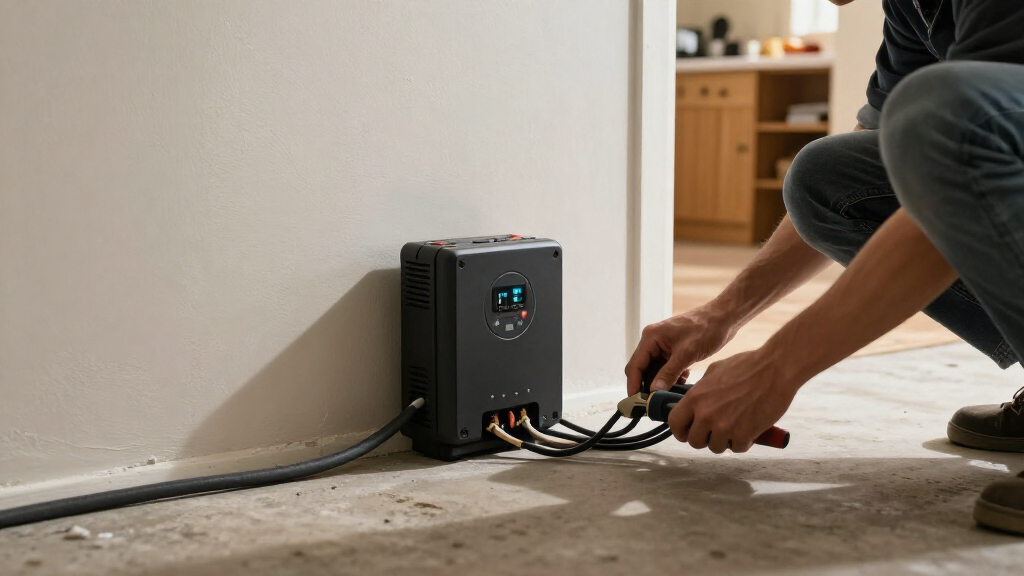
How We Picked
I ranked these options by how well their stated capabilities map to real home backup decisions: usable battery capacity, continuous output, voltage compatibility, expansion, and charging flexibility. A high wattage figure alone does not tell me how long a system can power a home, while a large battery is less useful if the inverter cannot support the loads or voltage the buyer needs. I gave the strongest positions to systems that provide a clearer path to household backup rather than simply converting battery power for a few devices.
I also weighed practical constraints that affect whether a system fits a home: weight and placement, configuration requirements, included components, and monitoring or safety information. Product details supplied for this comparison describe capabilities and stated ratings; they do not establish performance in a particular home or compatibility with every electrical panel. I have not treated the products as interchangeable: the BELTTT is a 12V inverter without a battery, while the Jackery is a portable power station, and the ECO-WORTHY and EcoFlow options are broader battery-and-inverter systems.
My ranking favors the PowerMega for its unusually direct combination of substantial usable storage and 10kW output in one listed package. EcoFlow follows for flexible 120V/240V output and a larger expansion ceiling, although its listed starting battery capacity is lower and the system is very heavy. The ECO-WORTHY kit is attractive for buyers who want a configurable 10kW foundation, but its split-phase configuration has an explicit multi-inverter requirement. Jackery earns a place for mobility and simpler charging versatility, not for matching the starting capacity of the larger systems. BELTTT ranks fifth because it can complement an existing 12V battery setup but cannot stand alone as home battery backup.
Factors to Consider When Choosing Home Battery Backup Inverters
I’d compare these products by the job they need to do, not by wattage alone. A home battery backup inverter has to pair stored energy with the right output and a workable connection plan. The questions below help separate a fixed home system, an expandable modular build, a portable power station, and a standalone inverter.
Start with the loads and the voltage you need
List the devices or circuits you expect to power, then note their voltage and running wattage. 120V-only output can suit many individual appliances and electronics, but a home requiring split-phase 240V needs a system configured for that output. PowerMega lists 240V split-phase or 120V single-phase, while EcoFlow lists 120V and 240V. The ECO-WORTHY 10kW kit needs multiple inverters in parallel for 120/240V, and Jackery also requires a parallel configuration for 240V. BELTTT is 120V only.
Do not treat surge or peak figures as continuous capacity. A motor or compressor may draw more power at startup than during normal operation, so check the appliance requirements and the inverter’s continuous rating. Also confirm how the system connects to the circuits you want to back up. A high-output inverter does not automatically mean a home panel can be connected without compatible equipment and qualified installation.
Separate power from stored energy
Wattage tells me what can run at once; kilowatt-hours indicate how much energy is stored. A 10kW inverter paired with a battery can support a high combined load for a period, but runtime depends on the actual load and available battery energy. PowerMega lists 16.1kWh usable energy, and the ECO-WORTHY kit lists 10.24kWh total. Jackery starts at 3,584Wh. EcoFlow lists 6,144Wh per battery, while its product title refers to a 12kWh system; buyers should confirm the included battery configuration and usable capacity before planning runtimes.
To make a rough estimate, add the watts of the loads you plan to run and multiply by the hours you need them. For example, a load averaging 500W for eight hours uses 4kWh before accounting for conversion losses or reserve capacity. Real demand changes over time, so use appliance labels and expected duty cycles rather than assuming every device draws its maximum continuously.
Choose between fixed, modular, and portable designs
A fixed or semi-fixed battery system may be the better fit when the goal is household backup with higher output and substantial storage. PowerMega is the most direct included-capacity pick here, but its 293.2-pound battery needs freight handling and a considered placement location. EcoFlow has a similar heavy-equipment constraint and ships its inverter and battery separately.
A modular system suits a buyer who expects to build capacity over time and can plan the configuration. The ECO-WORTHY kit names expansion to 32 batteries and six inverters, but its 120/240V configuration requires multiple inverters. A portable power station trades some initial capacity and installation integration for mobility. Jackery’s wheels and handle help reposition it, although 77.2 pounds is still a substantial lift. BELTTT is smaller still, but only as an inverter: the separate battery remains essential.
Check charging paths and solar compatibility
Backup capacity only helps for as long as the stored energy lasts. Consider how you’ll recharge after an outage: solar, grid power, a generator, or another source. Jackery lists AC, solar, gas-generator, and hybrid AC-plus-DC charging. EcoFlow lists solar, wall outlets, EV chargers, and generators. PowerMega includes an MPPT efficiency specification and the ECO-WORTHY kit has two MPPT controllers, but buyers should confirm solar input limits, panel compatibility, and installation details for the exact configuration.
Charging-time figures are tied to particular input conditions and may not describe real-world performance with every solar array or generator. Ask what charging power is available at your site and whether the system can accept it. A setup that cannot recharge from the energy source available during an outage may need a larger battery reserve or a different charging plan.
Plan the installation, delivery, and safety details
Weight and shipping are part of the buying decision, not minor afterthoughts. PowerMega and EcoFlow each list weights near 293 pounds, while the ECO-WORTHY kit ships components separately. Check access routes, floor or mounting requirements, ventilation guidance, clearances, and the manufacturer’s installation instructions before delivery. For any hardwired connection or panel integration, work with a qualified electrician and confirm the system is approved for the intended application.
Compare stated battery chemistry, protection features, certifications, warranty, and communications. PowerMega lists an active-balancing BMS, built-in breaker, aerosol fire suppression, and UL 1973 battery certification. The ECO-WORTHY kit lists UL 1973 and UL 1741 safety testing. Specifications are not a substitute for checking applicable local rules, system compatibility, and required permits. Confirm the exact package contents and warranty terms for the configuration being purchased.
Understand what expansion claims do—and do not—promise
Expansion claims describe a possible system ceiling, not the capacity included in the box. EcoFlow lists expansion up to 90kWh, and the ECO-WORTHY kit lists up to 32 batteries and six inverters. Jackery lists expansion options as well, including 240V in parallel. I would verify compatible battery models, inverter counts, connection hardware, firmware requirements, and whether expansion changes output or voltage before relying on a maximum figure.
For a buyer who wants substantial backup immediately, the PowerMega’s stated 16.1kWh usable energy is more relevant than a high future expansion ceiling. For someone planning staged growth, EcoFlow or the ECO-WORTHY kit may offer more room to build, with different requirements. Match the expansion path to a realistic future plan rather than paying attention only to the largest number in a product description.
Frequently Asked Questions
What is the difference between inverter output and battery capacity?
Inverter output, measured in watts, describes how much power can be delivered at a time. Battery capacity, usually shown in watt-hours or kilowatt-hours, describes how much energy is stored. A 10kW inverter can support larger simultaneous loads than a 2kW inverter, but runtime depends on the battery and the actual load. When comparing PowerMega, the ECO-WORTHY kit, and Jackery, check both figures rather than using inverter wattage as a proxy for backup duration.
Which options in this roundup provide 240V output?
PowerMega lists 240V split-phase output, and EcoFlow lists 120V and 240V output. The ECO-WORTHY kit requires multiple inverters in parallel for 120/240V, while Jackery requires a parallel configuration for 240V. BELTTT converts 12V DC to 120V AC only. Before buying, verify the exact system configuration and how it can connect to the circuits or equipment you intend to back up.
Can the BELTTT inverter provide home battery backup by itself?
No. The BELTTT is an inverter, not a battery, so it needs a separate 12V DC battery to store energy and supply input power. It provides 120V AC output rated at 2,000W continuous, but it does not include the storage, charging methods, or higher-voltage household output found in the other options. I’d treat it as a component for an existing 12V setup, not as a complete home backup system.
How do I estimate how much battery capacity I need?
Add the energy use of the loads you want backed up for the time you need them. A rough starting calculation is average watts multiplied by hours, converted to kilowatt-hours; for instance, 500W for eight hours equals 4kWh before conversion losses and reserve capacity. Actual appliances cycle and draw different amounts, so check their specifications and usage patterns. Compare that estimate with usable energy, not just the battery’s nominal capacity, and leave room for losses and changing conditions.
Do these systems connect directly to a home electrical panel?
Panel connection depends on the system configuration, compatible transfer or connection equipment, local electrical rules, and the home’s wiring. A high inverter rating by itself does not confirm that a unit can be connected directly to a panel. Portable stations such as Jackery may be used for selected loads in different ways from fixed systems, while larger battery-and-inverter packages may call for professional installation. I recommend checking the manufacturer’s instructions and consulting a qualified electrician before planning a hardwired setup.
Conclusion
My recommendation depends on the kind of backup you are building. For a buyer who wants substantial included storage paired with a 10kW inverter, I’d start with ECO-WORTHY PowerMega, provided freight handling and its fixed-system footprint are manageable. For someone who wants more expansion headroom and several charging paths, EcoFlow is the stronger fit, with the caveat that the stated battery configuration should be confirmed before estimating runtime. Buyers planning a modular 48V system can favor the ECO-WORTHY 10kW kit, but should account for its multi-inverter requirement for 120/240V.
If you want movable backup for selected devices and value flexible recharging, Jackery is the practical portable pick, though its 240V output depends on parallel configuration and its starting capacity is smaller. If you already own a suitable 12V battery and only need an inverter, BELTTT can fill that narrow role; it should not be mistaken for a full home battery system. I’d make the final choice after matching the intended loads, usable energy, voltage, installation plan, and expansion needs to the product’s actual configuration.
Halloween Picks
halloween
As an affiliate, we earn on qualifying purchases.