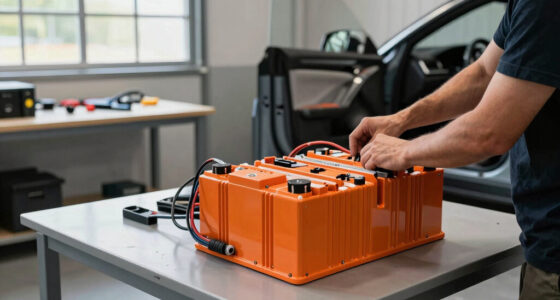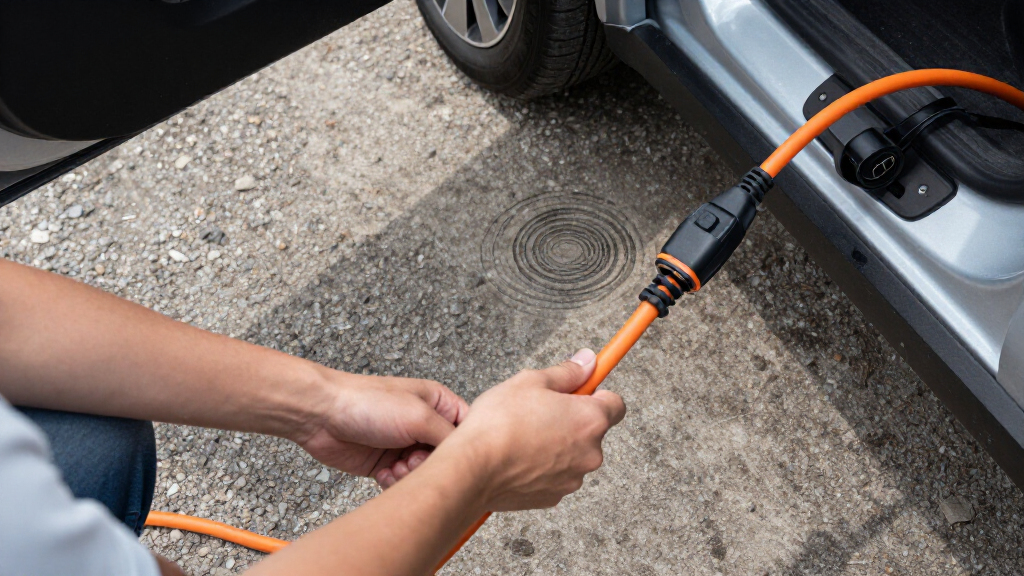

Finding the best EV charging extension cables comes down to three things: matching the amperage of your charger, getting the right connector standard (J1772 or NACS), and choosing a length that covers your parking situation without wasting money on excess cable. The SEGUMA 50A 20FT UL Listed J1772 cable earns my top spot because its UL listing, high amperage ceiling, and manageable length make it a safe, versatile fit for most Level 2 home setups. For Tesla owners, the EVDANCE NACS 50A 21FT cord is the clear connector-specific winner, while the EVDANCE 40A 30FT model is the pick for long driveways where reach matters more than anything else. The main tradeoff in this category is cost and stiffness versus length and amperage headroom — heavier-gauge cables charge faster but are harder to coil and store. Cheaper 32A options save money but permanently cap your charging speed if you ever upgrade to a 48A station. Keep reading for the full breakdown of all 15 cables and which one fits your charger, your car, and your parking spot.

Get backup power and energy gear delivered free — and shop member deals
- Fast, free delivery on millions of items
- Access to Prime Big Deal Days deals on October 6–7
- Prime Video, Amazon Music and more included
Key Takeaways
- UL listing was the biggest differentiator in this lineup — only a handful of the 15 cables carry it, and SEGUMA‘s UL-listed 50A model took the top spot partly for that reason.
- Amperage headroom matters more than current price: 32A cables like the VEVOR and WenStorm are fine for overnight charging but become the bottleneck if you upgrade to a 40A or 48A station later.
- The two RV-style cords (CircleCord and POWGRN NEMA 14-50) only work with stations that use a detachable 14-50 plug — they cannot extend a J1772 connector, which is the most common buyer mistake in this category.
- Cables at 40A and above are noticeably heavier and stiffer than 32A models, so buyers with tight garage storage or daily coiling should weigh convenience against charging speed.
- The ELEVOCHARGE 48A cable is the only pick that bundles a carrying bag, signalling its premium positioning, while the unbranded 40FT 50A cable wins on raw reach but lacks the brand accountability of EVDANCE or SEGUMA.
- NACS (Tesla) owners have only one strong option here — the EVDANCE NACS 50A — so connector compatibility narrows the field before any other criteria come into play.


| EV charging extension cable | Length | Connector | Water Resistance | Amperage |
|---|---|---|---|---|
| LEFANEV 40A 20-Foot EV Charger | 20 feet | J1772 Male-to-Female | Water resistant | — |
| SEGUMA EV Charger Extension Ca | 20 ft (6m) | J1772 | — | 50A |
| Wissandric EV Charger Extensio | 21 ft | SAE J1772 | — | 50A |
| EVDANCE EV Charger Extension C | 30 ft (360 inches) | SAE J1772 Male-to-Female | Water resistant | 40A |
| SEGUMA EV Charger Extension Ca | 21 ft (6.4 m) | J1772 | — | — |
| EVDANCE NACS Extension Cord fo | 21 feet | NACS (Tesla) | IP66 | 50A |
| EVDANCE J1772 EV Charger Exten | 21 feet | SAE J1772 male-to-female | IP66 | 50A |
| CircleCord 50 Amp 25 Feet RV/E | 25 feet | — | — | 50A |
| SEGUMA J1772 EV Charger Extens | — | J1772 | IP66 | — |
| VEVOR EV Charger Extension Cab | 21 ft | J1772 (Type 1) male-to-female | IP66 | 32A |
| WenStorm J1772 EV Extension Ca | 21 feet | SAE J1772 Male-to-Female | IP66 | 32A |
| J1772 EV Extension Cable | 40 ft | — | IP66 | — |
| EV Charger Extension Cable | 17 ft | — | IP67 | — |
| ELEVOCHARGE 21ft J1772 EV Exte | 21 feet | Male-to-Female SAE J1772 | IP55 | 48 A |
| POWGRN 25 FT 50 Amp NEMA 14-50 | 25 ft | — | IP65 | 50A max |
More Details on Our Top Picks
LEFANEV 40A 20-Foot EV Charger Extension Cord for J1772 Charging Stations
This LEFANEV cable earns the top spot because it gets the fundamentals right without asking you to overpay for capacity you may never use. The 40A / 10,000W rating covers the actual charging speed of the vast majority of home Level 2 stations, and its SAE J1772 compliance means the connector geometry and pilot signal pass through cleanly, so your charger and car communicate as if the cable weren’t there. At 3 kg, it’s also the lightest full-size option here — noticeably easier to coil and hang than the SEGUMA 50A model, which weighs nearly three times as much. Compared with the EVDANCE 30FT cable, you give up 10 feet of reach but gain a more manageable package for daily garage use. The tradeoff is real, though: 40A is a ceiling, not headroom, and there’s no formal UL listing or IP rating stated.
Pros:- 40A / 10,000W capacity matches most home Level 2 chargers
- Lightest full-length option in this lineup at 3 kg
- Built to meet or exceed SAE J1772 safety specifications
- Water-resistant housing for outdoor use
Cons:- 40A ceiling leaves no headroom for higher-amperage stations
- No stated UL certification or specific IP rating
Best for: Homeowners with a 32A or 40A Level 2 station who need moderate extra reach and want a proven, lightweight daily-use cable
Not ideal for: Owners of 48A hardwired stations or anyone who wants certified waterproofing — the 40A limit and unstated IP rating will be dealbreakers
- Connector:J1772 Male-to-Female
- Maximum Current:40A
- Maximum Voltage:250V
- Wattage:10,000 watts
- Length:20 feet
- Weight:3 kg (6.6 lbs)
- Water Resistance:Water resistant
- Warranty:12 months
Our verdict“The most balanced pick here — buy it if your charger is 40A or less and you value manageable weight over maximum spec.”
SEGUMA EV Charger Extension Cable, 50A 20FT UL Listed J1772 Extension Cord
Where the LEFANEV 40A cable plays it safe on specs, the SEGUMA 50A goes all-in on construction quality. The UL listing is the standout differentiator — none of the other cables in this batch carry it — and for anyone charging outdoors overnight, that third-party safety verification matters more than any marketing claim. The silver-plated contacts reduce resistance at the junction points, which is exactly where cheap extension cables generate heat, and the IP66 rating shrugs off driving rain in a way the vaguely “water resistant” LEFANEV can’t promise on paper. The price of that robustness is literal: at 8.36 pounds, it’s the heaviest cable here, and the extra male-to-female junction adds one more connection to keep dry and clean. This is the cable you buy once and forget about, provided your wall bracket can handle the weight.
Pros:- UL Listed — independently verified safety, rare in this category
- 50A / 12,000W capacity supports high-amperage Level 2 charging
- IP66 waterproof rating for genuine all-weather outdoor use
- Silver-plated contacts and 100% copper TPE construction resist heat buildup
Cons:- Heaviest option in the lineup at 8.36 pounds
- Extra connector junction adds a handling and storage complication
Best for: Owners who charge outdoors year-round and want certified safety and weatherproofing for a 48A-capable station
Not ideal for: Anyone who moves their extension cable between home and travel — the 8.36-pound weight makes it a chore to stash in a trunk
- Connector:J1772
- Amperage:50A
- Voltage:240V
- Wattage:12,000 watts
- Length:20 ft (6m)
- Cable Material:100% copper TPE
- Ingress Protection:IP66
- Certification:UL Listed
- Warranty:1-year manufacturer guarantee
Our verdict“The premium choice for permanent outdoor installations where certified safety justifies the bulk.”
Wissandric EV Charger Extension Cable 21FT, 50A Level 2, J1772
The Wissandric splits the difference between the SEGUMA 50A and the cheaper 40A options by pairing full 50A capacity with 8 AWG pure copper conductors — a thicker gauge than most competitors use, which keeps the cable cool at sustained high current. Dual UL and ETL certification backs up the safety story, and the 21-foot length adds a foot of reach over both the LEFANEV and SEGUMA. What you don’t get is SEGUMA’s IP66 rating being matched by a lighter package: this cable is every bit as heavy and bulky as its 50A rating implies, and it explicitly tops out at 50A, so owners of extreme high-amperage setups get no margin. Compared with the EVDANCE 30FT, the Wissandric trades reach for raw amperage — the right trade if your station pushes serious power, the wrong one if your problem is distance.
Pros:- 8 AWG pure copper wire stays stable under sustained 50A loads
- UL Certified and ETL tested for independent safety verification
- 21 ft length with IP66 weatherproofing for year-round outdoor use
- Universal J1772 plug-and-charge compatibility
Cons:- Heavy and bulky from its heavy-duty construction
- Hard 50A ceiling offers no headroom for higher-amperage EVs
Best for: Drivers with 48A-class home stations who need full charging speed preserved across the extension
Not ideal for: Anyone with a portable or lower-amperage charger — paying for 50A headroom and 8 AWG copper is wasted if you only pull 32A
- Connector:SAE J1772
- Amperage:50A
- Voltage:240V
- Wire Gauge:8 AWG pure copper
- Length:21 ft
- Charging Level:Level 1 & Level 2
- Ingress Protection:IP66
- Certifications:UL Certified, ETL tested
Our verdict“The pick when your station’s amperage, not your parking distance, drives the decision.”
EVDANCE EV Charger Extension Cable, J1772 40A 30FT Charging Cord, 110V-240V
When the problem is distance rather than power, nothing else in this batch comes close to the EVDANCE’s 30-foot reach — that’s 50% more cable than the LEFANEV, SEGUMA, or Wissandric offerings. That extra length solves real problems: driveway parking when the charger is garage-mounted, or reaching a car parked nose-out on a shared lot. The 110V-240V range also makes it one of the few extensions here that works cleanly with Level 1 outlets as well as Level 2 stations. The compromises are predictable. At 4.43 kg it’s heavier than the LEFANEV despite the same 40A rating, and its two-conductor design with only generic “water resistant” construction falls short of the SEGUMA 50A’s IP66 sealed jacket. If you genuinely need 30 feet, this is your cable; if 20 feet would do, a lighter and better-sealed option will serve you better.
Pros:- 30-foot reach is the longest in this lineup, unlocking flexible parking
- Works across 110V-240V for both Level 1 and Level 2 charging
- Universal compatibility with all SAE J1772 chargers and EVs
- Weather-resistant jacket rated for outdoor use
Cons:- Heaviest 40A option at 4.43 kg due to the extra cable length
- Only water resistant — no formal IP rating like the SEGUMA or Wissandric
Best for: Households where the charging station and the parking spot are far apart — long driveways, side-yard installations, or deep garages
Not ideal for: Anyone who actually needs 50A throughput — the 40A limit will throttle a high-amperage station, and the length adds weight you’ll feel daily
- Connector:SAE J1772 Male-to-Female
- Amperage:40A
- Voltage:110V-240V
- Wattage:9,600 watts
- Length:30 ft (360 inches)
- Weight:4.43 kg
- Water Resistance:Water resistant
- Usage:Outdoor/Indoor
Our verdict“Buy it for the reach, not the specs — it’s the distance problem-solver of the group.”
SEGUMA EV Charger Extension Cable, 32Amp 21FT J1772 Charging Cord
This 32A SEGUMA is the sensible-money pick for the majority of EV owners, because most portable and entry-level Level 2 chargers max out at 32 amps anyway — paying for a 50A Wissandric or even the 40A LEFANEV buys capacity your hardware can’t deliver. What you keep from the premium SEGUMA is the good stuff: silver-plated inlets for cool-running connections, 100% copper TPE construction, and the same IP66 weatherproofing as its bigger sibling. The 21-foot length matches the Wissandric and beats the LEFANEV by a foot. Two honest caveats: Tesla drivers need their own adapter since this is J1772-only, and the cable must be fully uncoiled before charging — a coiled cable concentrates heat and is the most common way budget extensions fail. Follow that rule and this is the best capability-per-dollar in the roundup.
Pros:- Same IP66 weatherproofing and silver-plated inlets as higher-amp premium cables
- 21 ft reach matches longer competitors at a lower capacity class
- 100% copper TPE construction with no power loss at rated current
- Ideal match for the 32A chargers most EV owners actually own
Cons:- 32A ceiling throttles faster Level 2 stations
- Tesla compatibility requires a separate adapter not included
- Must be fully uncoiled before use to avoid heat buildup
Best for: Owners of portable or wall-mounted 32A chargers, including plug-in hybrid drivers, who want premium build without paying for unused amperage
Not ideal for: Tesla drivers without a J1772 adapter, and anyone with a 40A+ station — the 32A ceiling would throttle their charging speed
- Connector:J1772
- Max Current:32A
- Charging Level:Level 1 / Level 2
- Length:21 ft (6.4 m)
- Material:100% copper TPE, silver-plated inlets
- Ingress Protection:IP66
- Warranty:1-year manufacturer guarantee
Our verdict“The smart budget pick if your charger tops out at 32A — everything that matters, nothing you’d pay extra for.”
EVDANCE NACS Extension Cord for Tesla – 50A, 21FT, 240V, 12KW
Most extension cables in this roundup are built around the J1772 standard, which makes this EVDANCE cable a rarity: it speaks Tesla’s native NACS connector with no adapter in the chain. That matters because adapters add resistance, failure points, and clutter — here, a Model 3 or Cybertruck owner plugs straight in and pulls a full 50A at 240V, matching the EVDANCE J1772 model’s output but skipping the extra hardware that cable requires for Teslas. The build holds up against the rest of the field too: UL 94 V-0 TPE, silver-plated copper, and an IP66 rating mean outdoor driveway duty is not a concern.
The tradeoffs are real, though. It will not work at Superchargers at all, owners of 48A Wall Connectors must dial output down to 40A, and the button doesn’t pop the charge port door — a small daily annoyance Tesla drivers will notice immediately.
Pros:- Native NACS connector charges Teslas without any adapter
- Full 50A / 12kW throughput matches most home Wall Connectors
- UL 94 V-0 TPE and silver-plated copper with IP66 weatherproofing
- Carrying case and 1-year warranty included
Cons:- Not compatible with Tesla Superchargers
- 48A Wall Connector owners must manually reduce output to 40A
- Button doesn’t control the Tesla charge port door
Best for: Tesla Model 3/Y/S/X and Cybertruck owners whose Wall Connector or mobile connector sits just out of reach of their parking spot
Not ideal for: Non-Tesla EV owners — the NACS connector won’t fit J1772 charge ports, and Tesla Supercharger users get no benefit from it at all
- Voltage:240V
- Amperage:50A
- Max Power:12kW
- Length:21 feet
- Connector:NACS (Tesla)
- Water Resistance:IP66
- Material:TPE (UL 94 V-0), silver-plated copper
- Warranty:1 year
Our verdict“The clear pick for Tesla drivers who want a plug-and-play NACS extension — everyone else should look at the J1772 options in this guide.”
EVDANCE J1772 EV Charger Extension Cable, 50A, 21FT
This is the cable I’d point most buyers toward first. It combines the highest practical amperage in this batch — a full 50A, 12kW — with the same 21-foot reach and IP66 weatherproofing as its closest rivals, and it does so at a level of build quality that holds its own against anything here. The silver-plated inlet is the differentiator worth caring about: it cuts resistance at the connection point, which translates to less heat buildup during long overnight sessions. Compared with the SEGUMA 40A model, the extra 10 amps matter if you drive something like a Ford Lightning or an Ioniq 5 that can actually absorb it. Compared with the VEVOR 32A, it’s simply in a different performance class.
The honest tradeoff is weight and stiffness — a 50A cable this long is genuinely heavy to coil every day, and Tesla owners must budget for a separate J1772 adapter, which isn’t in the box.
Pros:- Full 50A / 12kW support for high-output home chargers
- Silver-plated contacts reduce resistance and heat buildup
- IP66 waterproof polycarbonate housing for permanent outdoor use
- Works with every SAE J1772 charger, Level 1 or Level 2
Cons:- Tesla vehicles require a separate adapter (not included)
- Heavy, bulky cable that’s tiring to handle daily
Best for: Owners of non-Tesla EVs with 11kW+ onboard chargers who want maximum charging speed with a future-proof 50A rating
Not ideal for: Tesla drivers without an existing J1772 adapter, and anyone who will find a heavy 50A cable a daily struggle to maneuver
- Connector:SAE J1772 male-to-female
- Voltage:110V-240V
- Amperage:50A
- Max Power:12kW
- Length:21 feet
- Water Resistance:IP66
- Housing:High-strength polycarbonate
- Warranty:12 months
Our verdict“If you charge a mainstream EV at home and want one cable that will never be the bottleneck, this is the one to beat.”
CircleCord 50 Amp 25 Feet RV/EV Charging Extension Cord
This CircleCord takes a completely different approach from the J1772 cables above: instead of extending the connector-to-car link, it extends the outlet side with a NEMA 14-50 plug and receptacle. That makes it the only product in this batch that doubles as an RV shore-power cord — a real advantage if a travel trailer shares the garage with an EV. You also get 25 feet of reach, four more than the EVDANCE J1772 model, plus grip handles on both ends that make pulling a stiff 50A plug out of a wall far less of a wrestling match. ETL listing and pure copper wiring round out a genuinely heavy-duty build.
The catch is flexibility: this only works if your charger terminates in a 14-50 plug, and it can’t extend a hardwired Wall Connector or a J1772 station the way the EVDANCE or SEGUMA cables can. It’s also the bulkiest thing on this page to store.
Pros:- Extends the outlet rather than the connector, so it works with any 14-50 mobile charger
- Doubles as a 50A RV shore-power extension cord
- ETL-listed pure copper build with flame-retardant, UV-resistant jacket
- Grip handles on both ends plus cord organizer and storage bag
Cons:- Cord organizer only works if coiled in a large circle
- Bulky and heavy at 25 feet and 50A capacity
- Useless for hardwired chargers and J1772 connector extension
Best for: Households with a 14-50 outlet setup who want one cord that serves both an EV mobile charger and an RV or travel trailer
Not ideal for: Owners of hardwired or J1772 charging stations — this cord only extends NEMA 14-50 outlet connections, not charging cables
- Amperage:50A
- Length:25 feet
- Max Power (250V):12,500W
- Plug / Receptacle:NEMA 14-50P / 14-50R
- Wire:Pure copper
- Jacket:STW PVC, flame-retardant and UV-resistant
- Certification:ETL Listed
- Includes:Cord organizer, storage bag
Our verdict“A smart buy for the EV-plus-RV household on a 14-50 circuit — the wrong tool for anyone with a J1772 station or hardwired charger.”
SEGUMA J1772 EV Charger Extension Cable, 40A, 21FT, Level 1/2
For a lot of buyers, 40A is the sweet spot — enough to fully charge most EVs overnight, without paying for headroom the car can’t use. This SEGUMA delivers that with the same 21-foot length and IP66 rating as the EVDANCE 50A model, and its silver-plated inlets and full-copper TPE construction address the same heat concerns that justify the pricier cables. Where it gives ground to the EVDANCE is raw throughput: cars that can accept 11kW will charge slower here. But stacked against the VEVOR 32A, it’s a clear step up in capability while keeping a similar all-weather build, and the 12-month warranty with 24/7 support is a nice safety net that budget cables rarely offer.
The limitations are standard for the category: J1772-only compatibility means Tesla owners need their own adapter, and the stiff cable takes some effort to manage in tight garages.
Pros:- 40A charging covers most overnight home-charging needs with no power loss
- Full-copper TPE build with silver-plated inlets to prevent overheating
- IP66 waterproof for permanent outdoor use
- 12-month warranty with 24/7 support
Cons:- Tesla vehicles require a separate adapter (not included)
- J1772-standard only — no use for NACS-native setups
- Stiff, heavy cable can be awkward in tight spaces
Best for: Budget-conscious owners of J1772 EVs and PHEVs whose onboard chargers max out at or below 40A anyway
Not ideal for: Drivers of high-charge-rate EVs like the Ioniq 5 or Model 3 who would leave speed on the table at 40A
- Connector:J1772
- Max Current:40A
- Cable Length:21 ft
- Compatibility:Level 1/2 J1772 EVs and PHEVs
- Material:100% copper TPE
- Water Resistance:IP66
- Warranty:12 months
Our verdict“The smart-money choice if your car can’t use more than 40A — nearly all the capability of the top picks for buyers who don’t need the extra amps.”
VEVOR EV Charger Extension Cable, 32A 21 ft J1772, Level 1/Level 2, IP66
Not everyone needs 50 amps. If you drive a plug-in hybrid or a compact EV with a small battery, a 32A ceiling is rarely a limitation — and this VEVOR covers that job well. Its standout spec is the wide operating range of -22°F to 122°F, the most explicitly cold-rated envelope in this batch, which makes it a dependable choice for unheated driveways in northern climates. The kit is also the most accessorized here: a carrying bag, cleaning cloth, and cable tie come in the box, a nice touch the EVDANCE NACS cable matches but the SEGUMA 40A doesn’t. Fire-resistant materials and IP66 sealing keep it safe outdoors.
Compared with the SEGUMA 40A, you’re giving up meaningful charging speed if your car can use it, and at 5.7 lbs it’s oddly heavy for its rating — heavier per amp than anything else in this group. For light-duty duty cycles, though, that’s a fair trade.
Pros:- Wide -22°F to 122°F operating range suits harsh climates
- Dual 120V/240V support for Level 1 and Level 2 flexibility
- IP66 waterproof and fire-resistant for outdoor use
- Includes carrying bag, cleaning cloth, and cable tie
Cons:- 32A ceiling is the lowest in this batch
- Heavy at 5.7 lbs for its power rating
- Warranty terms are not clearly specified
Best for: PHEV owners and EV drivers in cold climates who need modest Level 2 speeds across a wide temperature range
Not ideal for: Owners of long-range EVs who regularly need fast home top-ups — the 32A cap noticeably lengthens charge times
- Connector:J1772 (Type 1) male-to-female
- Amperage:32A
- Voltage:120V-240V
- Length:21 ft
- Water Resistance:IP66
- Operating Temperature:-22°F to 122°F (-30°C to 50°C)
- Material:Copper TPE, PC + ABS
- Weight:5.7 lbs
Our verdict“A sensible, cold-hardy pick for hybrids and small-battery EVs — skip it if your car can charge faster than 32A.”
WenStorm J1772 EV Extension Cable 32A 21FT, Level 2 EV Charger Extension Cord
Most home Level 2 chargers top out at 32 amps, and this WenStorm 21-footer is built squarely around that reality. Compared with the 50A-rated SEGUMA 20FT or the 40FT 50A cable in this roundup, its lower amperage ceiling is less a limitation than a match — a 32A EVSE never asks for more than this cord can carry, so you give up nothing in real-world charging speed. The IP66 weatherproofing and flame-retardant jacket mean it shrugs off driveway rain and summer sun without complaint, and the included carrying case is a nice touch the longer cables skip. The tradeoff is weight-to-capacity: at 4 pounds it handles like a heavier-duty cable while capping out where many buyers will eventually want to grow.
Pros:- 21FT reach covers most driveway and garage parking scenarios
- IP66 weatherproof and UV-resistant for permanent outdoor runs
- ETL Listed and UL Certified build quality
- Carrying case included for tidy storage
Cons:- 32A ceiling caps future charger upgrades
- 4-pound cable is cumbersome for daily coiling
- No Tesla compatibility without an adapter
Best for: Owners of standard 32A home EVSE units who need extra reach to a driveway or garage spot
Not ideal for: Anyone running a 40A or 48A charger — the cable’s ceiling will bottleneck higher-amperage setups
- Connector:SAE J1772 Male-to-Female
- Amperage:32A
- Voltage:240V
- Wattage:7.68 kW
- Length:21 feet
- Water Resistance:IP66
- Certifications:ETL Listed, UL Certified, SAE J1772 compliant
- Includes:Extension cord, carrying case
Our verdict“If your charger is a standard 32A unit, this is the right-sized pick — skip it if you plan to upgrade amperage later.”
J1772 EV Extension Cable, 40FT, 50A Level 2 Charging Cord
When your parking spot is genuinely far from the charger — think end of a long driveway, curbside, or across a deep garage — 20-foot cables simply don’t get there. This 40-foot option doubles the reach of picks like the WenStorm 21FT or the POWGRN 25FT, while matching the 50A capacity of the shorter premium cords, so you’re not trading speed for distance. The IP66 jacket and copper wiring hold up outdoors year-round. The honest cost is ergonomics: 40 feet of heavy-duty cable is heavy and awkward to coil, and it’s overkill for anyone whose car parks within 25 feet of the EVSE. Think of this as the solution to a specific geometry problem, not an everyday convenience.
Pros:- 40FT reach solves long-driveway and curbside charging setups
- 50A / 240V capacity supports even high-output home chargers
- IP66 weatherproof and UV-resistant for permanent outdoor use
- ETL Listed and UL Certified
Cons:- Heavy and bulky to handle and store
- Excess cable on shorter runs is a tripping and coiling hassle
- J1772 only — Tesla owners need an adapter
Best for: EV owners with long driveways, curbside charging, or awkward garage layouts that defeat standard-length cables
Not ideal for: Anyone parking within 20-25 feet of their charger — the bulk and weight aren’t worth the unused length
- Connector Type:SAE J1772
- Max Current:50 Amps
- Voltage:240V
- Length:40 ft
- Water Resistance:IP66
- Certifications:ETL Listed, UL Certified
- Wiring:Premium copper, flame-retardant jacket
- Compatibility:All J1772 EVs, Level 1 & Level 2 chargers
Our verdict“Buy this only if distance is your problem; for normal reach, a 21-foot cord is easier to live with.”
EV Charger Extension Cable, 50A 17ft SAE J1772 Extension Cord for Level 1/Level 2 EVs/PHEVs
This 17-foot cord takes the opposite approach from the 40FT 50A giant: maximum amperage in the smallest manageable package. Like the SEGUMA 50A 20FT, it carries the full 50 amps most home chargers can deliver, but the shorter length makes it noticeably easier to coil, hang, and store — a real advantage if you charge in a shared garage or tight carport. The silver-plated terminals are a differentiator you won’t find on the WenStorm, reducing contact resistance where it matters, and the 36-month warranty is the longest backing in this batch. One behavior note: it must be fully uncoiled before every session to avoid heat buildup, which is a minor ritual but a real one if you charge daily in tight quarters.
Pros:- Full 50A capacity in a compact, easy-to-store length
- Silver-plated terminals for efficient power transfer
- IP67 waterproof rating exceeds most rivals’ IP55-66
- 36-month warranty — the longest coverage here
Cons:- Must be fully uncoiled before each use to prevent overheating
- 17 feet is short for many driveway setups
- No Tesla support without an adapter
Best for: Drivers with high-amperage chargers and short distance gaps who want full 50A speed without cable clutter
Not ideal for: Anyone needing more than a few extra feet of reach — 17 feet disappears fast in a driveway
- Connector Standard:SAE J1772
- Max Current:50A
- Voltage Compatibility:110V-240V
- Length:17 ft
- Water Resistance:IP67
- Material:TPE coating, pure copper wiring
- Certifications:UL, ETL
- Warranty:36 months
Our verdict“The best pick when you need 50 amps across a short gap and value storage simplicity over reach.”
ELEVOCHARGE 21ft J1772 EV Extension Cable, 48Amp, 110V-240V, with Carrying Bag
For owners of hardwired 48A wall units — increasingly common on newer home installs — most extension cords become the weak link. The ELEVOCHARGE is one of the few here rated to 48A / 11kW, putting it ahead of the 32A WenStorm and just under the 50A ceiling of the SEGUMA options. Its UL94 V-0 flame-rated shell and -22°F to 122°F operating range make it the most temperature-tolerant J1772 pick in this batch, which matters for cold-climate garages. Two quirks temper the appeal: a mandatory 30-second wait after plugging in before connecting to the car, and an IP55 rating — a step below the IP66/IP67 of cheaper rivals. If your charger outputs 48A and you live somewhere with harsh winters, those compromises are reasonable; at 32A, they’re not.
Pros:- 48A / 11kW rating matches high-output home chargers
- Wide -22°F to 122°F operating tolerance
- UL94 V-0 flame-retardant housing
- Carrying bag included
Cons:- IP55 rating trails the IP66/IP67 of competing cords
- 30-second post-plug wait adds friction to every session
- Only 1-year warranty versus 36 months on some rivals
Best for: Owners of 48A hardwired home chargers, especially in climates with extreme temperature swings
Not ideal for: 32A charger owners — the extra amperage headroom costs money and adds handling quirks you won’t use
- Connector:Male-to-Female SAE J1772
- Amperage:48 A
- Wattage:11,000 W
- Voltage:110V-240V
- Length:21 feet
- Water Resistance:IP55
- Operating Temperature:-22°F to 122°F
- Includes:Carry bag, user manual
- Warranty:1 year
Our verdict“The clear choice for 48A charging setups in tough climates, but over-engineered for standard home chargers.”
POWGRN 25 FT 50 Amp NEMA 14-50 RV/EV Extension Cord
This one works differently from every J1772 cable above: instead of extending the connector end, it extends the outlet side, stretching a NEMA 14-50 socket to wherever your mobile charger or RV needs it. Compared with the WenStorm or ELEVOCHARGE J1772 cords, it’s more flexible in one sense — it works with Tesla mobile connectors, RVs, welders, and anything else on a 14-50 plug — but less in another, since your EVSE’s cord must still reach the car. The insulated handle is a genuinely thoughtful safety feature for high-amperage unplugging, and -40°F flexibility beats every J1772 pick here for bitter-cold climates. Just remember it demands a 4-pin 14-50 outlet and full uncoiling during use, like the 17FT cable’s rule.
Pros:- Extends the outlet side, working with EVs, RVs, and Tesla mobile connectors alike
- Insulated handle for safe high-amperage plugging and unplugging
- Stays flexible down to -40°F
- ETL certified with IP65 weatherproof, flame-retardant jacket
Cons:- Only works with 4-pin NEMA 14-50 outlets
- Must be fully unfolded during use for safety
- Doesn’t extend the charging connector itself — total reach still depends on your EVSE cord
Best for: Owners of NEMA 14-50-based mobile chargers, Tesla drivers, and RV owners who need to relocate a 50A outlet’s reach
Not ideal for: Anyone with a hardwired or J1772-cabled wall unit — there’s no outlet to extend, so a J1772 extension is the right tool instead
- Connector Type:NEMA 14-50P Male to NEMA 14-50R Female
- Amperage:50A max
- Voltage:125/250V
- Wattage:6250/12500W
- Length:25 ft
- Conductor Material:Pure copper
- Water Resistance:IP65
- Certification:ETL
Our verdict“The right buy if your charger plugs into a 14-50 outlet that’s too far away; wrong tool if you need to extend the J1772 connector end.”
How We Picked
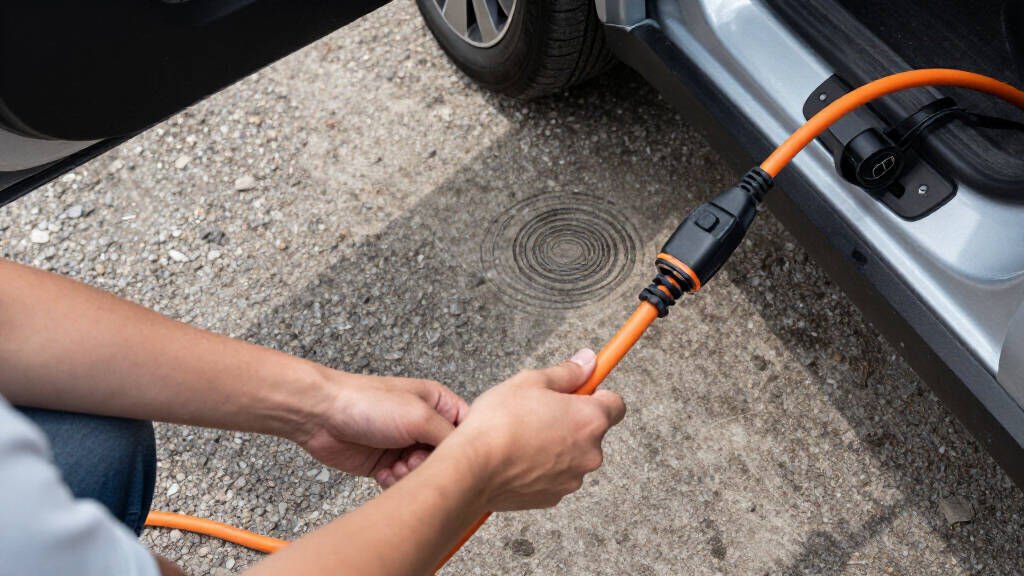
I evaluated each cable against four criteria, weighted in this order: electrical safety and certification, amperage compatibility, connector correctness, and practical usability. Safety came first because an extension cable carrying 40+ amps continuously for hours is a genuine fire risk if built poorly — UL or ETL listing, IP65+ weatherproofing on the connector heads, and thermoplastic sheathing earned higher marks than unverified listings. Amperage compatibility determined whether a cable could handle both today’s charger and a plausible future upgrade, which is why 50A-rated cables consistently ranked above their 32A counterparts at similar quality levels.
Connector type acted as a hard filter before ranking even began: J1772 cables only work with J1772 stations, NACS cables only with Tesla-style connectors, and NEMA 14-50 cords only with stations that have a detachable wall plug. From there, I ranked on length-to-usability balance, cable flexibility, warranty coverage, and included accessories. Cables that paired high amp ratings with smart length choices — around 20 feet, which covers most driveways without excess voltage drop or coiling hassle — ranked highest. Premium pricing only justified itself when it delivered real extras, like the ELEVOCHARGE’s carrying case and 48A ceiling.
| EV charging extension cable | Water Resistance |
|---|---|
| LEFANEV 40A 20-Foot EV Charger | Water resistant |
| SEGUMA EV Charger Extension Ca | — |
| Wissandric EV Charger Extensio | — |
| EVDANCE EV Charger Extension C | Water resistant |
| SEGUMA EV Charger Extension Ca | — |
| EVDANCE NACS Extension Cord fo | IP66 |
| EVDANCE J1772 EV Charger Exten | IP66 |
| CircleCord 50 Amp 25 Feet RV/E | — |
| SEGUMA J1772 EV Charger Extens | IP66 |
| VEVOR EV Charger Extension Cab | IP66 |
| WenStorm J1772 EV Extension Ca | IP66 |
| J1772 EV Extension Cable | IP66 |
| EV Charger Extension Cable | IP67 |
| ELEVOCHARGE 21ft J1772 EV Exte | IP55 |
| POWGRN 25 FT 50 Amp NEMA 14-50 | IP65 |
Factors to Consider When Choosing Best EV Charging Extension Cables
An extension cable seems like a simple purchase until you realize the wrong one can slow your charging, damage your equipment, or fail an inspection. Before picking from the 15 options above, work through these factors in order — they’ll narrow the field faster than any spec comparison.Match the Amperage — With Headroom
The single most common mistake is buying a cable rated at exactly your charger’s output. A 32A cable on a 32A charger technically works, but continuous load at the rating limit generates more heat and leaves no margin for future upgrades. If you’re on a 32A portable charger today but might install a 48A wall unit within a few years, a 40A or 50A-rated cable costs a little more now and avoids a second purchase later. Undersizing has real consequences: thermal cutoffs that interrupt charging overnight, degraded insulation over time, and in worst cases melted connector housings. The gauge of the wire inside determines the rating, and heavier gauge also means lower voltage drop across long runs — so a 50A cable at 40 feet loses less charging speed than a 32A cable at the same length. My general rule: buy one amp tier above what you currently need unless the price gap is large and you’re certain your setup will never change.
Get the Connector Standard Right
Extension cables in this category come in three incompatible formats, and mixing them up is the top reason for returns. A J1772 extension has the five-pin EV connector on both ends and passes the pilot signal through — this is what most non-Tesla EVs in North America need. A NACS extension uses Tesla’s connector and only works with Tesla vehicles or NACS-native stations. A NEMA 14-50 cord is not an EV extension at all in the strict sense: it extends the wall outlet side of a portable charger, not the vehicle side, so it only helps if your station unplugs from the wall. Check your car’s charge port and your station’s cable end before ordering anything. Also note that adapters between standards exist but introduce another failure point — if you need J1772-to-NACS compatibility, an integrated solution beats stacking an adapter onto an extension.
Length: Buy for Your Worst-Case Parking Job
Measure the distance from your charging station’s plug to the farthest position your charge port could be — including backing in differently, a second car in the driveway, or snow banks eating a foot of clearance in winter. Then add about 15 percent. But don’t overshoot: every extra foot of cable adds resistance, cost, weight, and coiling frustration. The 20–21 foot cables in this lineup hit the sweet spot for most single-car garages and standard driveways; the 30- and 40-foot options exist for deep driveways, curbside charging, or shared-station situations. Voltage drop across a quality 50A cable at 30 feet is modest but real, and longer cables are genuinely heavier to handle daily. If you’re choosing between a 21-foot and 30-foot cable and the shorter one reaches with a couple feet to spare, take the shorter one.
Safety Certifications and Weatherproofing
A cable carrying 40 amps for eight hours a night is one of the highest continuous electrical loads in your home, and certification is how you verify it was built for that duty. UL or ETL listing means the product was tested by a recognized lab; unverified “UL-style” claims or missing marks should be a dealbreaker for any permanent outdoor installation. Look for IP65 or IP66 ingress ratings on the connector heads if any part of the cable lives outside, since water in a live J1772 coupling is both a safety hazard and a charging-failure source. Check the operating temperature range too — cheap sheathing stiffens and cracks in freezing climates, which is why thermoplastic elastomer jackets rank above basic PVC for year-round outdoor use. Finally, confirm your home circuit and breaker match the whole chain: an extension can never raise the safety ceiling of the circuit behind it.
Indoor vs. Outdoor and Daily Handling
Where the cable lives should shape what you buy. A permanently routed outdoor cable needs UV-resistant sheathing, a high IP rating, and a connector cap to protect the end when not in use. A cable you drag out nightly for curbside charging needs to be flexible at low temperatures and light enough to coil one-handed — this is where 32A cables genuinely beat their 50A siblings despite the amperage penalty. High-amperage cables use thicker conductors that get stiff in cold weather and can refuse to lie flat, which matters more than buyers expect at 6 a.m. in January. Storage matters too: a carrying bag or wall hook keeps the connector off the ground, and dragging a J1772 head across pavement daily will eventually wear its seals. If your charging is a once-a-week event, handling matters less and you should prioritize rating and length; if it’s daily, weight and flexibility deserve real weight in your decision.
Frequently Asked Questions
Can I use an extension cable with any EV charger, or does the charger need to support it?
Only the connector format has to match — a J1772 extension works with any SAE J1772 station because it passes the pilot signal and locking mechanism straight through. That said, the extension must be rated for the charger’s full output amperage, not just what your car typically draws. Some wall-mounted units with hardwired cables can’t be extended at all without an electrician adding length to the feed side, so check whether your station has a detachable connector before ordering. Tesla-branded wall connectors using NACS need a NACS-specific extension like the EVDANCE model in this lineup. Also confirm your breaker and circuit ampacity cover the entire chain, because an extension never raises what your wiring can safely deliver.
Will a longer extension cable slow down my charging speed?
Yes, slightly — every foot of cable adds resistance, which causes voltage drop, and your car may pull marginally less power as compensation. On a quality 50A-rated cable at 20 feet, the loss is small enough that most owners will never notice it. At 40 feet, especially with a lower-gauge cable, the drop becomes measurable and can add meaningful time to a full charge. This is part of why I ranked the 20–21 foot cables so highly: they cover typical parking distances with minimal electrical penalty. If you genuinely need 40 feet of reach, buy the highest amperage rating you can afford so the conductors are thick enough to keep losses down — that’s exactly the logic behind the 50A 40FT pick in this guide.
Is a 32A extension enough, or should I pay more for 40A or 50A?
It depends entirely on your current and future charging hardware. If you charge from a 32A portable unit and have no plans to upgrade, a 32A cable like the VEVOR or WenStorm handles the job at a lower price and with lighter, more flexible handling. The catch is that a 32A cable becomes a permanent bottleneck the day you install a 40A or 48A wall station — your car will charge at 32A regardless of what the station can deliver. Given that the price gap between 32A and 50A cables is usually modest, I lean toward 40A minimum for anyone who owns their home or plans to keep the cable long-term. Renters charging overnight from a portable unit have the weakest case for paying up.
Are the NEMA 14-50 extension cords (like the CircleCord and POWGRN) interchangeable with J1772 extensions?
No, and confusing the two is the most common ordering mistake in this category. A NEMA 14-50 cord extends the AC outlet side of a charger — it has a standard dryer-style plug on one end and a socket on the other, so it only works with portable stations that unplug from the wall. A J1772 extension has the vehicle connector on both ends and extends the cable that reaches your car. If your charger is hardwired or its cable is permanently attached, a 14-50 cord does nothing for you. The reverse is also true: you can’t extend a wall outlet with a J1772 cable. Identify which end of your charging setup falls short — the wall side or the car side — before choosing between these formats.
Can I leave an EV extension cable plugged in outside permanently?
Only if it’s built for it, and even then there are limits. Look for an IP65 or IP66 rating on the connector heads, UV-resistant outer sheathing, and a verifiable UL or ETL listing — the SEGUMA UL-listed models in this roundup are the strongest candidates for semi-permanent outdoor use. Even with a weatherproof cable, the junction where the extension meets the station’s connector is the weak point, since two mated connectors expose more seals than a single molded one; keep that junction off the ground and out of standing water. In freezing climates, check the cable’s minimum operating temperature, because stiff, cold sheathing cracks over repeated flexing. For truly permanent outdoor runs, the better answer is often having an electrician relocate the station or extend the circuit — an extension cable is best treated as a flexible, semi-permanent solution.
Conclusion
After comparing all 15 cables, the right choice depends less on which is “best” and more on which matches your charger, connector, and parking reality. For best overall, the SEGUMA 50A 20FT UL Listed J1772 cable combines verified safety, high amperage headroom, and a practical length — it’s the pick I’d point most buyers toward. For best value, the SEGUMA 40A 21FT model delivers most of that capability at a lower tier, striking the best capability-per-dollar balance in the lineup. The ELEVOCHARGE 48A with carrying bag takes the premium slot for owners who want maximum future-proofing and tidy storage. Beginners who just want something that works with a portable Level 2 charger should start with the straightforward VEVOR 32A 21FT — simple, weatherproof, and hard to misapply. For specific needs: Tesla owners need the EVDANCE NACS 50A, long-driveway owners should grab the EVDANCE 40A 30FT or the 50A 40FT cable for extreme reach, and anyone extending the wall-outlet side of a portable charger wants the POWGRN NEMA 14-50. Whichever you choose, match the amperage, confirm the connector, and buy the shortest cable that comfortably reaches — that formula will serve you better than any single product name.
Fall Picks
fall essentials
As an affiliate, we earn on qualifying purchases.