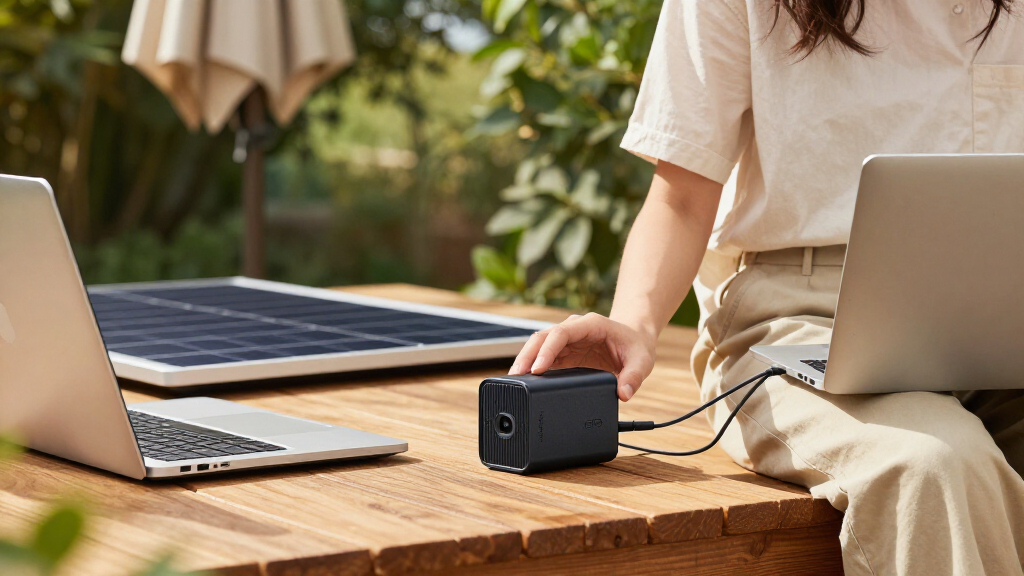
Solar-powered laptop chargers split into two camps: all-in-one power banks with built-in panels and higher-wattage foldable panels paired with a power station, and which camp wins depends entirely on how much laptop runtime you need. For most buyers, the Daran Portable Power Station (89.6Wh, 100W solar input) stands out as the best overall pick because it pairs enough AC capacity for multiple laptop charges with genuine solar input that replenishes it in a day of good sun. If weight matters more than capacity, the FlexSolar 60W foldable panel plus a small battery is the lighter, faster-charging route, while the SinKeu 24000mAh with AC outlet is the budget-friendly middle ground for occasional top-ups. The core tradeoff: cheap solar power banks under 30W rarely recharge a laptop meaningfully from the sun, while serious solar setups cost and weigh more. Read on for the full breakdown of all 15 options.

Get backup power and energy gear delivered free with Prime
- Fast, free delivery on millions of items
- Prime Video, Amazon Music and more included
- Member-only deals all year
Key Takeaways
- The single biggest differentiator in this lineup was solar input wattage: only the FlexSolar 60W, Daran 100W, and the 300W generator bundles can actually recharge a laptop from sunlight in a single day; everything else’s built-in panels are emergency trickle chargers.
- All-in-one solar power banks (the YELOMIN, SOARAISE, Durecopow, and 20000mAh models) consistently trade solar performance for convenience — their small panels need days of direct sun to refill their own batteries, so treat them as power banks first and solar chargers second.
- AC outlet wattage mattered more than raw battery capacity: the 300W stations ran power-hungry laptops that the 65W and 88Wh models couldn’t start, while 65W was fine for Ultrabooks and MacBooks.
- LiFePO4 chemistry (the Daran) offers roughly triple the cycle life of standard lithium-ion options like the SinKeu and 146Wh station, which changes the long-term value math despite similar upfront prices.
- The 280Wh and 220Wh 300W stations ship without panels, so their true cost includes buying a panel separately — once priced honestly, the all-inclusive Daran and Takki bundles became better value for most off-grid laptop users.
| Solar Power Bank 20000mAh with USB-C Portable Charger |  | Best Ultralight Travel Pick | Battery Capacity: 20000mAh | Maximum Output Power: 15W | Ports: USB-A, USB-C (3 total) | VIEW LATEST PRICE | See Our Full Breakdown |
| FlexSolar 60W Foldable Portable Solar Panel Charger |  | Best for Real Solar Charging | Power Output: 60W | Cell Efficiency: Up to 24% | Maximum Voltage: 28V | VIEW LATEST PRICE | See Our Full Breakdown |
| SinKeu 24000mAh Portable Power Bank with AC Outlet |  | Best Laptop-Ready Power Bank | Battery Capacity: 24000mAh (88.8Wh) | AC Outlet: 110V / 65W | Number of Ports: 5 | VIEW LATEST PRICE | See Our Full Breakdown |
| SOARAISE Solar Power Bank 48000mAh Wireless Portable Charger |  | Best for Multi-Day Off-Grid Trips | Battery Capacity: 48000mAh | Solar Panels: 4 built-in panels | Ports: 3 (2 USB-A, 1 USB-C) | VIEW LATEST PRICE | See Our Full Breakdown |
| Daran Portable Power Station 89.6Wh LiFePO4 |  | Best Premium Power Station | Battery Capacity: 89.6Wh | Battery Type: LiFePO4 (3500+ cycles) | Output Power: 100W | VIEW LATEST PRICE | See Our Full Breakdown |
| Takki Solar Generator 120W Peak Portable Power Station with 21W Solar Panel and Battery Power Bank |  | Best Complete Starter Kit | Battery Capacity: 88.8Wh | Max Power Output: 120W peak / 80W continuous | Solar Panel Power: 21W (included) | VIEW LATEST PRICE | See Our Full Breakdown |
| Portable Power Station, 146Wh 100W Solar Powered Power Bank with AC Outlet |  | Best Port Selection | Battery Capacity: 146Wh / 39600mAh | Output Wattage: 100W | Outlets: 7 total (2 AC, 4 USB, 1 DC) | VIEW LATEST PRICE | See Our Full Breakdown |
| Portable Power Station 300W, 110V Solar Generator 280Wh (Without Solar Panel) | 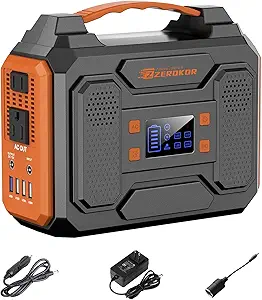 | Best Capacity-per-Dollar | Power Output: 300W max | Battery Capacity: 280Wh | AC Outlets: 2 | VIEW LATEST PRICE | See Our Full Breakdown |
| YELOMIN 10000mAh Solar Power Bank with Foldable Solar Panels, Wireless Charging, and Emergency Flashlight |  | Best Pocket-Size Solar Option | Capacity: 10000mAh (~37Wh) | Solar Panels: 4 foldable panels | Wireless Charging: 15W (MagSafe/Qi) | VIEW LATEST PRICE | See Our Full Breakdown |
| BigBlue 28W High-Efficiency Solar Panel Charger with Dual USB-C and USB-A |  | Best Pure Solar Panel | Power: 28W | Ports: 2 USB-C, 1 USB-A | Total Output: 5V/4.8A | VIEW LATEST PRICE | See Our Full Breakdown |
| Portable Solar Power Bank with AC Outlet 65W 110V |  | Best Hybrid Power Bank | Battery Capacity: 24000mAh | AC Output: 65W, 110V | DC Output: 9V~12.6V/10A Max | VIEW LATEST PRICE | See Our Full Breakdown |
| Solar Charger Power Bank Pack: 20000mAh Wireless Portable Charger with 10W Foldable Solar Panels and 20W PD Fast Charging |  | Best Emergency Preparedness Pick | Battery Capacity: 20000mAh | Power Output: 20W PD | Solar Panel: 10W foldable monocrystalline | VIEW LATEST PRICE | See Our Full Breakdown |
| Durecopow Solar Charger Power Bank 20,000mAh with 4 Cables and 3 Ports |  | Best Budget Multi-Device Pick | Battery Capacity: 20000mAh | Ports: 3 (USB, including USB-C) | Output Current: 2.4A at 5V | VIEW LATEST PRICE | See Our Full Breakdown |
| Portable Power Station 300W, 220Wh Solar Generator Backup Battery Pack |  | Best Power Station Value | Wattage: 300W (600W peak) | Battery Capacity: 220Wh lithium-ion | AC Outlets: 2x 110V pure sine wave | VIEW LATEST PRICE | See Our Full Breakdown |
| Portable Solar Generator 300W with 60W Solar Panel | 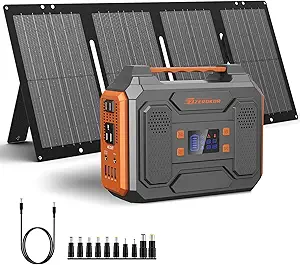 | Best Complete Solar Kit | Power Capacity: 300W | Solar Panel: 60W monocrystalline, foldable | Conversion Efficiency: 20.5% | VIEW LATEST PRICE | See Our Full Breakdown |
| solar-powered laptop charger | Battery Capacity | Weight |
|---|---|---|
| Solar Power Bank 20000mAh with | 20000mAh | 0.52 lbs |
| FlexSolar 60W Foldable Portabl | — | 1.2 kg (2.65 lbs) |
| SinKeu 24000mAh Portable Power | 24000mAh (88.8Wh) | — |
| SOARAISE Solar Power Bank 4800 | 48000mAh | — |
| Daran Portable Power Station 8 | 89.6Wh | 2.54 lbs |
| Takki Solar Generator 120W Pea | 88.8Wh | 2.29 lbs |
| Portable Power Station | 146Wh / 39600mAh | 3.3 lbs |
| Portable Power Station 300W | 280Wh | ~5 lbs |
| YELOMIN 10000mAh Solar Power B | — | — |
| BigBlue 28W High-Efficiency So | — | 1.5 lbs |
| Portable Solar Power Bank with | 24000mAh | — |
| Solar Charger Power Bank Pack: | 20000mAh | 1.2 kg |
| Durecopow Solar Charger Power | 20000mAh | — |
| Portable Power Station 300W | 220Wh lithium-ion | 5 lbs |
| Portable Solar Generator 300W | — | — |
More Details on Our Top Picks
Solar Power Bank 20000mAh with USB-C Portable Charger
At 0.52 lbs, this 20000mAh bank is the lightest option in this roundup, and that alone explains its role. Where the Daran power station weighs over two and a half pounds and the SOARAISE 48000mAh is considerably bulkier, this one slips into a carry-on without a second thought — and it’s TSA-approved for air travel. The onboard solar panel is best treated as an emergency trickle charger rather than a primary input; in practice, the 15W max output means it tops off phones and accessories far better than it charges a laptop. Compared with the YELOMIN 10000mAh, you get double the capacity for multi-day trips without a big weight penalty. The IP65 rating and built-in flashlight round out a genuinely trail-ready package.
Pros:- Featherlight 0.52 lb weight is the easiest to carry anywhere in this roundup
- 20000mAh capacity delivers multiple phone charges over a weekend
- IP65 waterproof and dustproof housing survives camp conditions
- TSA-approved for carry-on luggage
Cons:- Solar charging is slow and unreliable in weak sunlight — plan to pre-charge via wall outlet
- 15W maximum output is underpowered for laptop charging beyond brief top-ups
Best for: Airline travelers and ultralight backpackers who want a wall-charged backup battery with emergency solar as a bonus
Not ideal for: Anyone expecting to charge a laptop primarily from sunlight — the small panel and 15W output can’t keep pace with laptop demands
- Battery Capacity:20000mAh
- Maximum Output Power:15W
- Ports:USB-A, USB-C (3 total)
- Waterproof Rating:IP65
- Weight:0.52 lbs
- Battery Type:Lithium Polymer
Our verdict“Buy this if you want a travel-first backup battery that fits in any bag, and treat its solar panel as a last-resort feature rather than the main event.”
FlexSolar 60W Foldable Portable Solar Panel Charger
This is the only product in the batch that takes sunlight seriously as a primary power source. Every power-bank option here — the SinKeu 24000mAh, the Daran 89.6Wh station — stores energy you gathered elsewhere; the FlexSolar’s 60W of monocrystalline cells at up to 24% efficiency actually harvests it, fast enough to run or charge a laptop directly in good sun. Compared with the BigBlue 28W panel, it more than doubles the wattage for users whose laptops draw real power. The tradeoff is structural: there’s no battery inside at all, so once clouds roll in, charging stops. And unlike some competitors, there’s no built-in kickstand, so you’ll be improvising angles with rocks or a backpack. The junction box also isn’t waterproof, which needs care in rain.
Pros:- 60W output is enough to charge most laptops directly in good sunlight
- 24% efficient monocrystalline cells outperform cheaper panel options
- Folds to 12 x 9.8 inches and weighs only 1.2 kg for the wattage
- IP67 waterproof panels and USB-A, USB-C, and DC outputs for versatility
Cons:- No internal battery means zero power storage for nighttime use
- Junction box is not waterproof and requires caution in wet weather
- Missing kickstand makes optimal tilt angles awkward to maintain
Best for: Off-grid campers and van-lifers who want to charge laptops and power stations directly from genuine daylight hours
Not ideal for: Anyone who needs power after dark or on overcast days — with no internal battery, this panel is useless without sun
- Power Output:60W
- Cell Efficiency:Up to 24%
- Maximum Voltage:28V
- Waterproof Rating:IP67 (panels)
- Output Ports:USB-A, USB-C, DC
- Weight:1.2 kg (2.65 lbs)
- Folded Size:12.0 x 9.8 x 0.7 inches
Our verdict“This pick makes the most sense for buyers who want their laptop charger to actually run on solar rather than just carry a battery with a solar panel bolted on.”
SinKeu 24000mAh Portable Power Bank with AC Outlet
The standout feature here is the 110V/65W AC outlet, which lets this bank charge laptops that lack USB-C PD charging — something the SinKeu’s closest rival in this roundup, the Portable Solar Power Bank with AC Outlet 65W, matches on paper but with a less polished display and feature set. At 88.8Wh, it sits just under the FAA’s carry-on limit, so it flies legally where larger stations like the Daran 89.6Wh cut things extremely close. The OLED display showing remaining charge is a genuine quality-of-life upgrade over the four-LED gauges on the 20000mAh gray-and-orange bank. The honest limitation: 65W won’t power gaming laptops or high-draw machines, and there’s no solar panel included — ‘solar powered’ here means you can pair it with a panel like the FlexSolar 60W, not that it harvests sunlight on its own.
Pros:- AC outlet charges laptops that don’t support USB-C PD charging
- 88.8Wh capacity stays under FAA carry-on limits for flying
- OLED display gives precise remaining-power readings
- Five ports let you charge a laptop, phone, and accessories simultaneously
Cons:- 65W AC ceiling excludes high-wattage laptops
- No solar panel included — solar charging requires buying a separate panel
- Recharge time is slow when limited to lower-input sources
Best for: Remote workers with USB-C or standard AC laptops who need guaranteed off-grid laptop charges and want a flyable battery
Not ideal for: Owners of gaming or workstation laptops drawing over 65W — the AC outlet will cut out under that load
- Battery Capacity:24000mAh (88.8Wh)
- AC Outlet:110V / 65W
- Number of Ports:5
- Display:OLED status screen
- Dimensions:6.8 x 3.8 x 1.78 inches
- Recharging:AC wall, USB, or compatible solar panel (not included)
Our verdict“This is the strongest choice in the batch for travelers who need their laptop charged off-grid by tonight, as long as that laptop draws 65W or less.”
SOARAISE Solar Power Bank 48000mAh Wireless Portable Charger
Capacity is the whole argument here: 48000mAh is double the SinKeu 24000mAh and more than double the gray 20000mAh travel bank, enough for several full laptop-charger cycles plus phones and cameras across a long weekend. The four built-in solar panels also give it the fastest self-charging of any power bank in this roundup — unlike single-panel banks that take days of sun to refill, this one actually makes meaningful progress in a full day of daylight. The inclusion of built-in cables and wireless charging means one less thing to pack, and the shockproof, waterproof housing is built for rough handling. The honest tradeoff is bulk: this is a brick compared with lighter banks, and the fixed cables won’t fit every device. Note that at this Wh capacity, it is not carry-on legal for flights.
Pros:- 48000mAh capacity is the largest in this roundup, supporting multi-day group use
- Four solar panels recharge the bank noticeably faster than single-panel rivals
- Built-in cables and wireless charging reduce what you need to pack
- Waterproof, shockproof, and dustproof construction handles abuse
Cons:- Bulky and heavy compared with lighter banks like the 20000mAh travel pick
- Exceeds airline carry-on battery limits, making it ground-use only
- Charging speed still depends entirely on available sunlight
Best for: Backcountry campers and disaster-prep households who want maximum stored power and genuinely functional solar self-recharging over multiple days
Not ideal for: Airline travelers — the 48000mAh capacity exceeds TSA carry-on limits — and anyone prioritizing pocketability
- Battery Capacity:48000mAh
- Solar Panels:4 built-in panels
- Ports:3 (2 USB-A, 1 USB-C)
- Wireless Charging:Yes
- Output:5V / 3A
- Durability:Waterproof, shockproof, dustproof
- Dimensions:6.38 x 3.43 x 1.57 inches
Our verdict“Pick this if you’re heading somewhere with no outlets for days and want a single high-capacity battery that can slowly refill itself from its own panels.”
Daran Portable Power Station 89.6Wh LiFePO4
Two things separate the Daran from every power bank in this roundup: the LiFePO4 battery chemistry rated for over 3500 cycles, and the seven output ports including two AC outlets. Compared with the SinKeu 24000mAh, you get a second AC outlet, dual USB-C, and a chemistry that will outlast standard lithium-polymer banks by years of daily use — a real advantage if this lives in an emergency kit. The 1.2-hour recharge via AC or USB-C also beats most rivals’ overnight refills, and the fanless design means silent operation beside a tent. The catches: 100W total output rules out anything demanding, the solar panel is sold separately (pair it with the FlexSolar 60W for a true solar setup), and at 2.54 lbs it’s a basecamp item, not a pocket companion.
Pros:- LiFePO4 chemistry rated for 3500+ cycles far outlasts standard power banks
- Seven outputs, including two AC outlets, run a laptop plus accessories at once
- 1.2-hour fast recharge beats overnight-charging rivals
- Fanless, silent operation suits tents and bedrooms
Cons:- Solar panel not included, adding cost and bulk to a complete solar setup
- 100W ceiling excludes power-hungry devices like kettles or gaming laptops
- 89.6Wh may fall short for multi-day high-drain use without recharging
Best for: Emergency-preparedness buyers and basecamp campers who want a long-lived, multi-device power hub with true solar-input capability
Not ideal for: Minimalist hikers and anyone wanting an all-in-one product — the missing solar panel means extra cost and packing
- Battery Capacity:89.6Wh
- Battery Type:LiFePO4 (3500+ cycles)
- Output Power:100W
- Output Ports:2 AC, 2 USB-C, 2 USB-A, DC5521
- Recharge Time:1.2 hours (AC/USB-C)
- Weight:2.54 lbs
- Safety:Advanced BMS with 12 protections
Our verdict“This model is better suited to buyers building a durable emergency or basecamp power kit around a separate panel than to travelers wanting one self-contained gadget.”
Takki Solar Generator 120W Peak Portable Power Station with 21W Solar Panel and Battery Power Bank
This Takki kit earns its place as the only entry in this batch that ships with both a battery and a solar panel in one box, which removes the guesswork that plagues the Portable Power Station 146Wh — that model makes you source a compatible panel separately. The 88.8Wh capacity is modest, and the 80W continuous ceiling means it handles USB-C laptops and small notebooks rather than gaming machines. Compared with the YELOMIN power bank, the AC outlet here is the difference: a real wall-style plug for laptop chargers. The tradeoff is solar patience — the bundled 21W panel needs 5–7 hours of good sun to reach 80%, and pass-through charging isn’t supported, so the battery has to sit full before you plug in a laptop.
Pros:- Panel and power station included — no compatibility homework
- Genuinely light at 2.29 lbs for a station with an AC outlet
- Fast AC recharge hits 80% in about 2 hours
- LED flashlight with SOS mode adds emergency utility
Cons:- 21W panel is slow; a full solar day barely tops up the battery
- No pass-through charging — can’t recharge and power a laptop at once
- 88.8Wh runs out quickly for extended outages
Best for: First-time buyers who want a matched panel-and-battery bundle for charging a USB-C laptop on weekend camping trips
Not ideal for: Power users with 100W+ laptops — the 80W continuous output ceiling will trip or refuse to charge them
- Battery Capacity:88.8Wh
- Max Power Output:120W peak / 80W continuous
- Solar Panel Power:21W (included)
- Charging Time (AC):2 hours to 80%
- Charging Time (Solar):5–7 hours to 80%
- Weight:2.29 lbs
- Ports:AC, USB-A, USB-C
Our verdict“Buy this if you want everything in one purchase for light laptop duty off-grid; skip it if your laptop draws near or above 80W.”
Portable Power Station, 146Wh 100W Solar Powered Power Bank with AC Outlet
With seven outlets including two AC sockets and four USB ports, this 146Wh unit covers more device combinations than anything else here — the Takki feels sparse by comparison. The 100W output is enough for most modern USB-C laptops, and the extra 57Wh of capacity over the Takki translates into roughly one or two additional laptop charges. The catch is baked into the price: no solar panel is included, so the ‘solar powered’ claim depends on buying a third-party panel like the BigBlue 28W — which, ironically, the manufacturer states isn’t suited for charging power stations. Buyers wanting true solar independence should weigh that friction carefully before committing.
Pros:- Seven outputs including dual AC outlets for parallel device use
- 146Wh capacity handles 1–2 full laptop charges
- Three-way recharging: AC, car 12V, or solar input
- Battery management system with temperature and overload protection
Cons:- Solar panel sold separately — added expense and compatibility risk
- 100W ceiling excludes high-draw laptops and appliances
- Heavier than the Takki at 3.3 lbs with less solar practicality
Best for: Multi-device campers who need to run a laptop, phone, camera, and lights simultaneously from one battery
Not ideal for: Anyone expecting out-of-the-box solar charging — the missing panel means hidden extra cost and research
- Battery Capacity:146Wh / 39600mAh
- Output Wattage:100W
- Outlets:7 total (2 AC, 4 USB, 1 DC)
- DC Output:12V/10A
- Recharge Methods:AC, car, solar (panel not included)
- Weight:3.3 lbs
- Battery Type:Lithium ion
Our verdict“A strong pick if you already own a compatible panel and prioritize port variety; otherwise the Takki bundle is the simpler path.”
Portable Power Station 300W, 110V Solar Generator 280Wh (Without Solar Panel)
Nearly double the capacity of the 146Wh unit and triple the Takki’s output ceiling, this 280Wh station is where budget-minded buyers get the most stored watt-hours for laptop charging. That headroom matters: a 65W USB-C laptop can pull full speed here without the station flinching, something the Takki’s 80W limit occasionally struggles with. The compromises mirror the 146Wh model — no panel in the box — and the 5 lb weight pushes it out of backpack territory and into car-camping or emergency-drawer use. Compared with the 146Wh station, this model trades portability and the flashlight for raw endurance, and for buyers who mostly need to outlast a grid outage with a working laptop, that’s a reasonable swap.
Pros:- 280Wh capacity delivers several laptop charges per fill
- 300W output handles most laptops plus small appliances
- Full protection suite: short circuit, over-current, over-voltage, overload
- Three recharge paths: AC, solar input, car 12V
Cons:- Solar panel sold separately, adding to the true cost
- At ~5 lbs, it’s the heaviest option in this batch
- Manufacturer advises against long-term storage or continuous use
Best for: Home-emergency preppers and car campers who need multiple laptop charges during an outage
Not ideal for: Hikers and anyone carrying gear on foot — 5 lbs with no included panel makes it a poor trail companion
- Power Output:300W max
- Battery Capacity:280Wh
- AC Outlets:2
- USB Ports:3 standard + 1 Quick Charge
- DC Output:9V–12.6V/10A max
- Charging Methods:AC, car 12V, solar (panel sold separately)
- Weight:~5 lbs
Our verdict“The value play for stationary backup laptop power, provided you accept buying a panel separately and keeping it topped up.”
YELOMIN 10000mAh Solar Power Bank with Foldable Solar Panels, Wireless Charging, and Emergency Flashlight
This is the most self-contained solar design in the roundup: four folding panels, a battery, built-in USB-C and Lightning cables, and wireless charging all in one rugged brick. Compared with the Takki, it trades an AC outlet for true grab-and-go simplicity — no separate panel to deploy or lose. For laptops, though, honesty is required: 10000mAh (37Wh) is phone-first capacity, capable of topping up a USB-C laptop by maybe 40–50% at best, and there’s no AC outlet at all. Solar recharging from the fold-out panels is slow in anything but strong direct sun. Compared with the BigBlue panel, the YELOMIN stores energy for later; the BigBlue does not, but the BigBlue feeds larger batteries faster.
Pros:- Four foldable solar panels built directly into the power bank
- 15W wireless charging with MagSafe/Qi compatibility
- Integrated USB-C and Lightning cables eliminate cable clutter
- Military-grade housing with sealed ports for outdoor abuse
Cons:- 10000mAh is too small for full laptop charges
- Solar input is slow except in strong, direct sunlight
- Folded panels and rugged shell make it bulky for a pocket
Best for: Day hikers and backpackers who mainly need solar phone charging with an occasional small laptop top-up
Not ideal for: Anyone whose laptop is the primary device — the 37Wh capacity and lack of an AC outlet can’t sustain real work sessions
- Capacity:10000mAh (~37Wh)
- Solar Panels:4 foldable panels
- Wireless Charging:15W (MagSafe/Qi)
- Built-in Cables:USB-C, Lightning
- Flashlight Modes:Constant, Strobe, SOS
- Battery Type:Lithium ion
Our verdict“A clever all-in-one for phone-centric solar users with occasional laptop trickle needs — not a laptop-first solution.”
BigBlue 28W High-Efficiency Solar Panel Charger with Dual USB-C and USB-A
The BigBlue is the inverse of every battery-based pick here: all panel, no storage. Its N-type cells hit a 25.4% conversion rate, the highest in this batch, and at 1.5 lbs it’s lighter than every station listed. Where the YELOMIN trickle-charges its own small battery, the BigBlue pushes a steadier 28W stream — enough to run or slowly charge a low-power USB-C laptop in direct sun, though the manufacturer candidly says it’s not built for laptops or large stations. The right way to think about it: pair this with the 146Wh or 280Wh stations above as their missing solar input, or use it for phones, tablets, and cameras on multi-day treks. The unweatherproofed USB junction box is the one design flaw that demands care.
Pros:- 25.4% cell efficiency, the best solar conversion in this group
- Three ports (2 USB-C, 1 USB-A) for simultaneous device charging
- Featherweight 1.5 lbs with a slim 1.4-inch folded profile
- IP44 water resistance for typical outdoor exposure
Cons:- No battery — dead weight the moment clouds arrive
- USB junction box is not waterproof, limiting rainy-day use
- Insufficient output for direct laptop or power-station charging
Best for: Solar pairing — buyers of a panel-less station, or trekkers who need durable sunlight-to-USB power for phones and tablets
Not ideal for: Anyone expecting laptop charging alone — 28W of intermittent solar can’t reliably feed most laptop chargers
- Power:28W
- Ports:2 USB-C, 1 USB-A
- Total Output:5V/4.8A
- Cell Efficiency:25.4%
- Waterproof Rating:IP44 (junction box not waterproof)
- Weight:1.5 lbs
- Folded Dimensions:11 x 6 x 1.4 inches
Our verdict“An excellent companion panel for batteries in this roundup, but as a standalone laptop solution it falls short.”
Portable Solar Power Bank with AC Outlet 65W 110V
This option pairs a 24,000mAh battery with a foldable 30W solar panel, landing in a sweet spot between slim solar power banks and bulkier power stations. The 65W AC outlet is enough for most ultrabooks and MacBooks, which puts it ahead of the Durecopow 20,000mAh bank that relies on USB output alone — though it falls short of the SinKeu 88.8Wh unit if your laptop draws serious wattage. Compared with the 300W power stations in this lineup, this model wins on portability: the folded panel slips into a backpack at just 0.3 inches thick. The main compromise is capacity per pound — that AC outlet drains the battery quickly, and the manual on/off switch is easy to forget.
Pros:- 65W AC outlet covers most laptop chargers
- Solar, wall, and car recharging in one unit
- Foldable 30W panel packs down to 0.3 inches
- Built-in BMS protection
Cons:- AC outlet requires manual switching on and off
- Hard 65W device limit needs checking before use
- Solar panel junction box is not waterproof
Best for: Hikers and remote workers who need laptop-grade AC power without carrying a power station
Not ideal for: Anyone running gaming laptops or 90W+ chargers — the 65W ceiling will trip the outlet
- Battery Capacity:24000mAh
- AC Output:65W, 110V
- DC Output:9V~12.6V/10A Max
- Solar Panel:30W foldable
- Folded Panel Size:12.7 x 8.4 x 0.3 inches
- USB Ports:5V/2.4A Max; 5V/3A, 9V/2A Max
- Unit Size:6.89 x 3.98 x 1.89 inches
Our verdict“A balanced pick for travelers who want true laptop charging from a bag-sized solar kit.”
Solar Charger Power Bank Pack: 20000mAh Wireless Portable Charger with 10W Foldable Solar Panels and 20W PD Fast Charging
What separates this model from the Durecopow 20,000mAh bank is its redundant power sources: solar, wired PD, wireless charging, and — unusually — a hand crank generator. For emergency kits where you can’t count on sunlight after a storm, that crank is a genuine differentiator, not a gimmick. The 10W foldable monocrystalline panel is smaller than the FlexSolar 60W panel, so solar recovery is slow, but pass-through charging means the panel can feed the battery while the battery feeds your devices. At 1.2 kg, it’s heavier than comparable 20,000mAh banks, and casual users may find the feature set overbuilt.
Pros:- Hand crank backup power when solar and grid fail
- Wireless plus seven wired ports for multiple devices
- Pass-through solar charging
- 36-month warranty, the longest in this lineup
Cons:- Heavy at 1.2 kg for its capacity
- 10W solar panel charges slowly in weak sun
- Feature complexity exceeds casual users’ needs
Best for: Emergency preppers and households building blackout or go-bag kits
Not ideal for: Weight-conscious hikers — 1.2 kg is a lot for a phone-centric power bank
- Battery Capacity:20000mAh
- Power Output:20W PD
- Solar Panel:10W foldable monocrystalline
- Wireless Charging:Yes
- Ports:7 total
- Weight:1.2 kg
- Extras:Hand crank generator, LED flashlight
- Warranty:36 months
Our verdict“The redundancy-focused choice for buyers who prioritize never running out of power over portability.”
Durecopow Solar Charger Power Bank 20,000mAh with 4 Cables and 3 Ports
This is the straightforward value play of the batch. Four built-in cables mean no forgotten charging cords, and the ability to run six devices at once beats the port count of most 20,000mAh competitors. Unlike the 65W AC-outlet power bank above, there’s no wall outlet here — this is USB-only charging, so laptop users need a USB-C PD model to benefit, and the 2.4A output means slower charging than the 20W PD unit. The water, shock, and dust resistance is genuinely useful at campsites, and it undercuts the hand-crank emergency pack on price while matching its capacity. A 12-month warranty is the weakest coverage in this roundup, so buy accordingly.
Pros:- Four built-in cables eliminate cord clutter
- Charges up to six devices simultaneously
- Water, shock, and dust resistant build
- Attractive price for 20,000mAh
Cons:- 2.4A output charges slowly by modern standards
- Bulkier than typical 20,000mAh banks
- Only 12-month limited warranty
Best for: Families and group campers charging many phones, tablets, and accessories on a budget
Not ideal for: Laptop users needing AC or high-wattage PD output — USB-only limits compatibility
- Battery Capacity:20000mAh
- Ports:3 (USB, including USB-C)
- Output Current:2.4A at 5V
- Built-in Cables:4
- Battery Type:Lithium-ion
- Durability:Water, shock, and dust resistant
- Warranty:12 months, limited
Our verdict“Cheap, durable, and cable-free — ideal for multi-phone households that don’t need laptop wattage.”
Portable Power Station 300W, 220Wh Solar Generator Backup Battery Pack
At 220Wh with a pure sine wave inverter, this unit delivers cleaner, laptop-safe AC power than the modified-sine alternatives at similar prices, and its seven outputs let a whole campsite share one battery. It’s only 5 lbs, making it far easier to haul than most 300W stations, and it recharges via solar, wall, or car. The catch: no solar panel is included, so the true off-grid cost is higher than the Portable Solar Generator 300W with 60W panel, which bundles one. Capacity-wise it sits between the Daran 89.6Wh bank and full-size stations — enough for several laptop recharges, but nothing like a mini fridge.
Pros:- Pure sine wave inverter is safe for sensitive laptop electronics
- 220Wh capacity supports several laptop recharges
- Seven outputs charge a full device kit at once
- Light 5 lb build for its class
Cons:- Solar panel sold separately
- 300W AC ceiling excludes most kitchen appliances
- 600W peak is brief, not sustained
Best for: Campers and home-office users who already own a solar panel or plan to buy one separately
Not ideal for: Buyers expecting an all-in-one solar kit — the panel costs extra
- Wattage:300W (600W peak)
- Battery Capacity:220Wh lithium-ion
- AC Outlets:2x 110V pure sine wave
- Other Ports:3 USB-A, 1 fast-charge USB, 1 DC vehicle port
- Recharging:Solar, AC wall, 12V car
- Weight:5 lbs
- Charge Cycles:1000+
- Safety:BMS, short-circuit, overload protection
Our verdict“The smart pick if you want station-grade capacity and clean AC power at a bank-grade price — just budget for a panel.”
Portable Solar Generator 300W with 60W Solar Panel
This is the only true turnkey solar laptop solution in this batch: a 300W generator plus a bundled 60W monocrystalline panel with 20.5% conversion efficiency, roughly six times the harvesting power of the 10W panel on the hand-crank emergency pack. That panel can meaningfully recharge the battery in a day of good sun, which smaller kits simply can’t do. Compared with the 220Wh power station above, you pay more upfront but skip the separate panel purchase and get more output ports, including Quick Charge USB. The tradeoff is shared: 300W caps your appliance options, the panel’s junction box isn’t waterproof, and the battery wants regular charge cycles to stay healthy — not a set-and-forget kit.
Pros:- 60W panel included — genuinely rechargeable off-grid
- 20.5% solar conversion efficiency is strong for the price
- Eight output ports with Quick Charge support
- Full protection suite with BMS and cooling
Cons:- 300W limit excludes most heating appliances
- Solar panel junction box not waterproof
- Battery degrades if left unused for long stretches
Best for: Off-grid campers and van lifers who want laptop and small-appliance power out of one box
Not ideal for: Anyone hoping to run hair dryers, coffee makers, or other 300W+ appliances
- Power Capacity:300W
- Solar Panel:60W monocrystalline, foldable
- Conversion Efficiency:20.5%
- Outlets:2 AC, 1 DC, 3 USB-A, 1 Quick Charge USB
- Recharging:AC wall, 60W solar, 12V carport
- BMS:Yes, with overheating and overload protection
- Included:AC adapter, car adapters, solar panel kit, manual
Our verdict“The most complete package here for buyers who want real solar independence on day one, not an accessory shopping list.”

How We Picked
My ranking logic starts with one question: can this product actually run or recharge a laptop from solar power? That meant separating real solar input capability from marketing. Products with 60W+ panel input earned priority because they can meaningfully recharge a power station during a day of sun. Built-in-panel power banks were judged primarily as batteries, with solar treated as a bonus feature rather than the headline spec.
From there, I weighted AC output wattage (65W runs thin-and-light laptops; 300W handles gaming and workstation machines), usable capacity in Wh (which translates directly to number of laptop charges), battery chemistry and cycle life, and total cost of ownership — including whether a solar panel was included or sold separately. Portability and build quality broke ties. The result is a lineup ordered from most complete solar laptop solutions down to supplementary and budget options.
Factors to Consider When Choosing Solar-powered Laptop Chargers
Before picking a specific model, it helps to understand where buyers most often go wrong with solar laptop charging. These are the factors that ended up mattering most across all 15 products.Solar Input Wattage Is the Spec That Matters Most
The most common mistake buyers make is confusing a solar power bank’s battery capacity with its solar capability. A 20000mAh bank with a 5W built-in panel can take 40+ hours of direct sunlight to fully recharge itself — that’s a week of ideal conditions, not an afternoon. As a working rule, you want at least 40–60W of panel input if solar charging is your primary replenishment method, and 100W if you’re running a laptop daily off-grid. Built-in panels are best understood as emergency trickle chargers that keep a bank from fully dying, not as a real power source. If your plan is genuine off-grid work, budget for a separate foldable panel even if your power bank has a small built-in one.
Match AC Output Wattage to Your Laptop’s Draw
A power station’s AC output rating determines whether it can even start your laptop, and this is where cheap units quietly fail. Thin-and-light laptops and MacBooks draw 30–65W, so a 65W outlet covers them fine. Gaming laptops, mobile workstations, and machines charging while under heavy load can spike to 150–250W or more, which will trip the protection circuit on a 65W or 100W unit and shut it off mid-work. Check your laptop’s charger brick rating and buy a station rated at least 20–30% above it to cover startup surges. Under-sizing here is the most expensive way to save money in this category.
Watt-Hours, Not Milliamp-Hours
Capacity marketing is a mess in this category: power banks advertise mAh at 3.7V cell voltage, while power stations advertise Wh, and the two numbers aren’t directly comparable. A 20000mAh bank is roughly 74Wh — but after voltage conversion losses, you’ll get about 50–60Wh delivered, or one full charge for most 13–14 inch laptops. An 89.6Wh station like the Daran delivers nearly a full extra laptop charge over that bank despite sounding similar. When comparing products across formats, convert everything to Wh first, then discount 15–20% for conversion losses. Also note that AC outlets are less efficient than USB-C PD, so charging via USB-C when possible stretches your stored power.
Battery Chemistry and Cycle Life Change the Value Math
Standard lithium-ion and lithium-polymer banks typically last 300–500 charge cycles before capacity fades noticeably, while LiFePO4 cells (like the Daran’s) are rated for 2000+ cycles with better thermal stability. For occasional camping trips, that difference barely matters and the cheaper chemistry is fine. But if you’re charging weekly or living off-grid part-time, a LiFePO4 unit effectively costs a third as much per year of use. Chemistry also affects cold-weather performance and long-term storage safety — real considerations for van lifers and winter campers. Don’t pay a LiFePO4 premium for occasional use, but don’t cheap out if solar charging is a weekly habit.
Bundles vs. Separate Purchases
Several stations in this category — including the 280Wh and 220Wh 300W models here — ship without a solar panel, which makes their list price misleading. Once you add a decent 60–100W panel ($80–150), a bundle like the Takki or Daran often wins on total cost. Separate purchases do give you flexibility: you can buy a better panel than any bundle includes, and upgrade the panel later without replacing the battery. Bundles win on guaranteed compatibility and one-stop simplicity. My advice: price out the complete system both ways before committing, because the sticker-price winner is frequently the more expensive route.
Weight and Portability Are Real Tradeoffs
There’s a direct tension between solar capacity and carry weight that no product in this lineup escapes. A 300Wh station weighs 6–8 pounds — fine for car camping, miserable in a backpack. The sweet spot for hikers and remote workers on foot is a foldable 20–60W panel plus a sub-2-pound bank, accepting slower recharge speeds. All-in-one solar banks feel portable but their panels barely function, so you’re carrying solar weight with little solar benefit. Be honest about how you’ll actually move the gear: the most common post-purchase regret in this category is buying car-camping capacity for a backpacking use case.
Frequently Asked Questions
Can a small solar power bank actually charge a laptop from the sun alone?
Realistically, no — not in any useful timeframe. Most all-in-one solar power banks have 2–10W of panel area, which under real-world conditions delivers 1–5W after clouds, angle, and heat losses. That means days of direct sun to refill the bank’s own battery, before it charges your laptop anything. These products work well as conventional power banks you charge from a wall before a trip, with solar as an emergency buffer. If solar-first charging is your goal, a separate 40W+ foldable panel feeding a compatible power bank is the only approach that delivers same-day results.
How do I know if 65W, 100W, or 300W of AC output is enough for my laptop?
Check the wattage printed on your laptop’s original charger brick — that’s the sustained draw under heavy load, plus startup surges can exceed it briefly. A 65W outlet covers most Ultrabooks, MacBooks Air, and 13-inch Windows laptops. Machines that ship with 100W+ chargers (MacBook Pro 14/16, gaming laptops, mobile workstations) need a station rated at least 20% above the brick rating, so a 300W station is the safe call. If the station’s output is too low, it typically won’t damage anything — the protection circuit simply trips and cuts power, which is frustrating but recoverable. When in doubt, charge via the USB-C PD port instead, which is sized more precisely for laptops.
Is a solar generator bundle better than buying a power station and panel separately?
It depends on how seriously you’ll use the solar side. Bundles guarantee panel-to-station compatibility, include the right cables and charge controller, and usually cost less than buying the parts individually — the Takki and Daran bundles in this lineup work out cheaper than equivalent separate purchases. The tradeoff is that bundled panels are often the weakest component: a 21W bundled panel charges far slower than the 60–100W panel you could buy separately. If you’re charging a laptop daily off-grid, buy a quality station and a good 100W panel separately. For weekend and emergency use, a bundle’s simplicity usually wins.
How many laptop charges will I actually get from these capacities?
Divide the station’s Wh rating by your laptop’s battery Wh, then discount about 20% for conversion losses. A 13-inch MacBook Air (about 50Wh battery) gets roughly one full charge from a 74Wh power bank, about 1.5 charges from the 89.6Wh Daran, and four to five from a 280Wh station. Larger laptops with 70–100Wh batteries cut those numbers by a third to half. Charging via USB-C PD is more efficient than the AC outlet, which loses extra energy in the inverter — worth knowing if you’re stretching limited capacity. Realistic expectations here prevent most disappointment with this product category.
Are LiFePO4 power stations worth the extra cost over regular lithium-ion?
For frequent users, yes, and the math is straightforward. LiFePO4 cells are typically rated for 2000+ cycles versus 300–500 for standard lithium-ion, meaning they last three to five times as long before capacity fades. They’re also more thermally stable, which matters if the unit lives in a hot van or cold garage. For occasional campers who charge the station a dozen times a year, a lithium-ion unit may never reach its cycle limit anyway, so the premium isn’t justified. If solar charging is part of your weekly or full-time routine, LiFePO4’s lower cost per year of ownership easily covers the higher sticker price.
Conclusion
For most buyers, the Daran 89.6Wh LiFePO4 station is the best overall pick — it’s the rare affordable option with genuine 100W solar input, an AC outlet sized for most laptops, and battery chemistry that outlasts the field. Best value goes to the SinKeu 24000mAh with AC outlet, which delivers a real laptop charge at a power-bank price, while the Takki 120W bundle is the smartest choice for beginners who want everything in one box with nothing to research or match. On the premium end, the 300W generator with 60W panel bundle handles gaming laptops and multi-day off-grid work that nothing else here can touch.
Specific needs narrow it further: hikers and minimalists should pair the FlexSolar 60W or BigBlue 28W panel with a light USB-C bank, accepting slower top-ups in exchange for carry weight. Casual users who mostly need a wall-charged backup with solar as a bonus will be perfectly served by the Durecopow or 20000mAh packs. The one thing I’d urge every buyer to avoid: paying for a product whose solar feature you’ll actually rely on when its panel wattage says you won’t. Match the solar input to your real off-grid hours, and the right pick from this lineup becomes obvious.
Halloween Picks
halloween
As an affiliate, we earn on qualifying purchases.