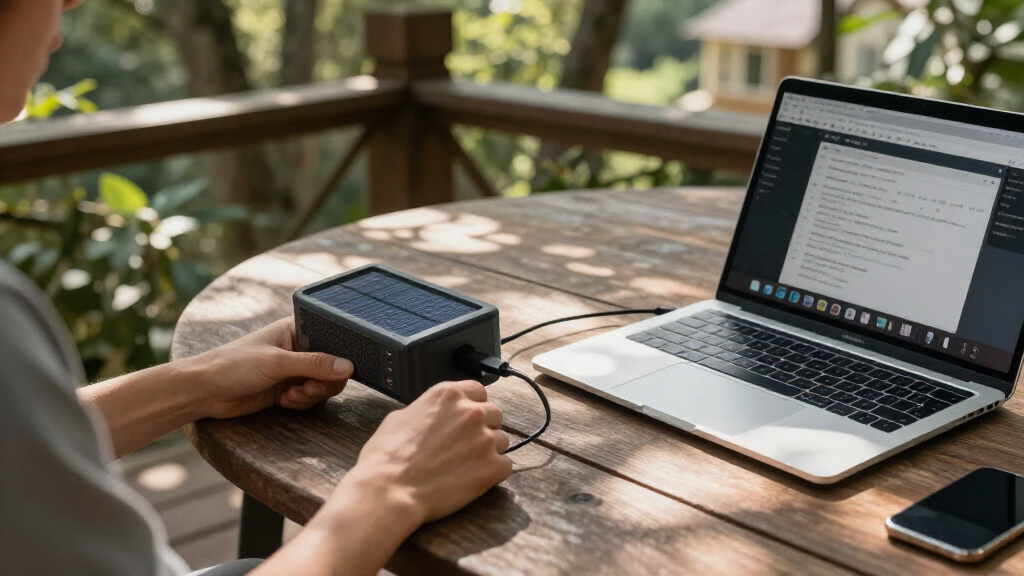

Solar-powered laptop chargers range from small 24,000mAh power banks with a single AC outlet to 300W portable power stations paired with dedicated solar panels, and the right choice depends on how many laptop charges you need and how fast you can recharge off-grid. The SinKeu 24000mAh Portable Power Bank with AC Outlet earns the best overall spot for balancing laptop-grade capacity, genuine solar input, and a carry-friendly size. If you need full off-grid self-sufficiency, the Takki Solar Generator with 21W Panel and the Portable Solar Generator 300W with 60W Solar Panel bundle everything you need in one purchase. The main tradeoff in this category is portability versus capacity: bundles with panels are heavier and pricier, while panel-free power stations are lighter but depend on wall charging between trips. Read on for the full breakdown.
Complete the kit


Key Takeaways
- Only three products in this lineup (the Takki, the 60W bundle, and the 40W-panel station) include a solar panel in the box — the rest are solar-ready power banks that require a separate panel purchase.
- Watt-hours matter more than marketing wattage: the 280Wh and 300W stations deliver roughly three to four full laptop charges, while 24,000mAh units like the SinKeu and MARBERO deliver about one.
- The DaranEner and Daran LiFePO4 models stand out for battery chemistry — LiFePO4 cells last 3,000+ cycles versus roughly 500 for standard lithium-ion, making them the long-term value picks.
- AC outlet wattage is a hidden differentiator: 65W outlets can throttle or refuse larger laptops, while 100W+ outlets (DaranEner, MARBERO, 300W stations) handle most modern laptops without surging.
- Bundled panel wattage is often underpowered — the 60W bundle recharges its station far faster than the 21W Takki, which can take a full sunny day or more to refill its 88.8Wh battery.
| DaranEner Portable Power Station 100W, 89.6Wh LiFePO4 Solar Power Bank |  | Best Overall | Battery Capacity: 89.6Wh | Battery Cell Type: LiFePO4 | Maximum Output Power: 200W | VIEW LATEST PRICE | See Our Full Breakdown |
| Portable Solar Power Bank with AC Outlet 65W 110V |  | Best Value All-in-One | Battery Capacity: 24,000mAh | AC Output: 65W, 110V | Solar Panel: 30W (built-in) | VIEW LATEST PRICE | See Our Full Breakdown |
| Portable Power Station, 146Wh 100W Solar Powered Power Bank with AC Outlet | 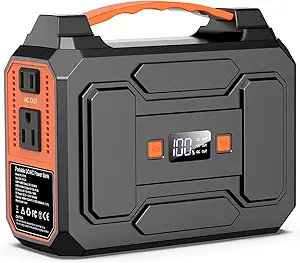 | Best for Multi-Device Campers | Battery Capacity: 146Wh (39,600mAh) | Output Wattage: 100W | Voltage: 110V | VIEW LATEST PRICE | See Our Full Breakdown |
| SinKeu 24000mAh Portable Power Bank with AC Outlet and Solar Charging |  | Best Compact Travel Pick | Battery Capacity: 24,000mAh | Voltage: 90V (110V AC outlet) | Power Output: 65W AC | VIEW LATEST PRICE | See Our Full Breakdown |
| Portable Power Station 300W, 110V Solar Generator 280Wh (Without Solar Panel) | 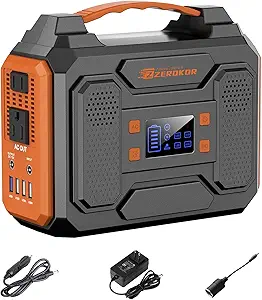 | Best for Emergencies and Long Trips | Power Output: 300W max | Battery Capacity: 280Wh | AC Outlets: 2 (110V) | VIEW LATEST PRICE | See Our Full Breakdown |
| Portable Power Station 300W, 220Wh Solar Generator Backup Battery Pack |  | Best for Multi-Device Charging | Power Output: 300W | Battery Capacity: 220Wh lithium-ion | Output Ports: 2x110V AC, 4 USB, 1 DC vehicle port | VIEW LATEST PRICE | See Our Full Breakdown |
| MARBERO Portable Power Station 88Wh, 120W Surge, Solar Generator 24,000mAh |  | Best Budget Starter Pick | Capacity: 88Wh / 24,000mAh | Surge Power: 120W | Outputs: 2 AC, 2 USB-A, 2 USB-C PD, 1 car DC, 1 cigarette lighter | VIEW LATEST PRICE | See Our Full Breakdown |
| Portable Solar Generator 300W with 60W Solar Panel | 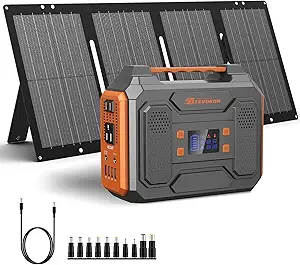 | Best Complete Solar Kit | Output Wattage: 300W | Included Panel: 60W foldable solar panel | Solar Efficiency: 20.5% conversion | VIEW LATEST PRICE | See Our Full Breakdown |
| Daran Portable Power Station 89.6Wh LiFePO4 Battery 100W Solar Power Bank |  | Best Battery Longevity | Battery Capacity: 89.6Wh LiFePO4 | Battery Lifespan: 3,500+ cycles | Output Power: 100W | VIEW LATEST PRICE | See Our Full Breakdown |
| Takki Solar Generator 120W Peak Portable Power Station with 21W Solar Panel and 88.8Wh Battery |  | Best Ultralight Solar Kit | Battery Capacity: 88.8Wh | Peak Power: 120W (80W running) | Included Panel: 21W foldable solar panel | VIEW LATEST PRICE | See Our Full Breakdown |
| Portable Power Station with 40W Solar Panel, 100W Solar Powered Generator |  | Best Complete Starter Kit | Battery Capacity: 100W power station | Solar Panel Power: 40W foldable panel (included) | AC Outlets: 2 x 100W MAX | VIEW LATEST PRICE | See Our Full Breakdown |
| solar-powered laptop charger | Battery Capacity | Weight |
|---|---|---|
| DaranEner Portable Power Stati | 89.6Wh | 2.54 lbs |
| Portable Solar Power Bank with | 24,000mAh | — |
| Portable Power Station | 146Wh (39,600mAh) | 3.3 lbs |
| SinKeu 24000mAh Portable Power | 24,000mAh | — |
| Portable Power Station 300W | 280Wh | about 5 lbs |
| Portable Power Station 300W | 220Wh lithium-ion | 5 lbs |
| MARBERO Portable Power Station | — | 3.2 lbs |
| Portable Solar Generator 300W | — | — |
| Daran Portable Power Station 8 | 89.6Wh LiFePO4 | 2.54 lbs |
| Takki Solar Generator 120W Pea | 88.8Wh | 2.29 lbs |
| Portable Power Station with 40 | 100W power station | — |
More Details on Our Top Picks
DaranEner Portable Power Station 100W, 89.6Wh LiFePO4 Solar Power Bank
This DaranEner model earns the top spot because it solves the problem most solar laptop chargers ignore: battery longevity. The LiFePO4 chemistry is rated for far more charge cycles than the standard lithium-ion cells found in the SinKeu or the 65W AC power bank, which means this unit will still hold a useful charge after years of seasonal use. At 2.54 lbs with seven ports, it strikes the best balance between portability and versatility in this lineup. Recharging from 0 to 80% in 1.5 hours also beats the wall-charging times of larger units like the 280Wh station. The tradeoff is honest: there’s no solar panel in the box, and 89.6Wh is roughly one and a half laptop recharges, so it’s a weekend workhorse, not an off-grid base camp.
Pros:- LiFePO4 battery chemistry offers dramatically longer lifespan than typical lithium-ion rivals
- Seven ports including two AC outlets and 45W USB-C PD cover nearly every laptop
- Fast 1.5-hour recharge to 80% minimizes downtime between outings
- At 2.54 lbs, it’s one of the lightest full-featured power stations available
Cons:- No solar panel or charging cables included, adding hidden cost
- 89.6Wh capacity caps you at roughly one to two full laptop charges
Best for: Remote workers and campers who want a durable, airline-friendly power station that lasts for years and charges a laptop plus accessories over a weekend
Not ideal for: Anyone expecting out-of-the-box solar charging — you must buy a panel separately, and multi-day off-grid users will find 89.6Wh limiting
- Battery Capacity:89.6Wh
- Battery Cell Type:LiFePO4
- Maximum Output Power:200W
- AC Outlets:2 (100W each)
- USB-C Ports:2 (45W PD / 15W)
- Fast Charging:0-80% in 1.5 hours
- Weight:2.54 lbs
- Dimensions:6.5 × 3.3 × 4 inches
Our verdict“Buy this if you want the most durable, well-rounded solar-ready laptop charger in the group and don’t mind pairing it with a separate panel.”
Portable Solar Power Bank with AC Outlet 65W 110V
This is the only product in the batch that actually ships with a solar panel attached, which changes the value math completely. While the DaranEner and the 146Wh station require you to buy a panel separately, this one folds out a 30W panel integrated right into the chassis — no extra purchases, no extra cables to lose. That makes it the cheapest path to genuinely solar-powered laptop charging here. Compared with the SinKeu 24,000mAh bank, which has nearly identical capacity and output but no panel, this model trades a sleeker form factor for true self-sufficiency. The compromises are real: the junction box isn’t waterproof, the AC outlet needs manual toggling, and 65W rules out gaming laptops or power-hungry workstations. For USB-C laptops under 65W, though, it delivers solar charging that just works.
Pros:- Built-in 30W folding solar panel means true solar charging out of the box
- Three recharge methods: solar, wall outlet, and car adapter
- Compact 6.89-inch frame slips into a backpack easily
- Built-in BMS protects against overcharge and short circuits
Cons:- Solar junction box is not waterproof, limiting wet-weather reliability
- 65W AC ceiling excludes many performance laptops and small appliances
Best for: Budget-minded hikers and day-trippers who want solar laptop charging in a single purchase without buying a separate panel
Not ideal for: Owners of high-wattage laptops or anyone caught in wet weather — 65W caps device compatibility and the solar junction box can’t handle rain
- Battery Capacity:24,000mAh
- AC Output:65W, 110V
- Solar Panel:30W (built-in)
- DC Output:9V–12.6V / 10A max
- USB Ports:5V/2.4A and Quick Charge 5V/3A, 9V/2A
- Dimensions:6.89 x 3.98 x 1.89 inches
- Folded Solar Panel Size:12.7 x 8.4 x 0.3 inches
Our verdict“The most complete solar charging package for the money, as long as your laptop draws under 65W and you keep it dry.”
Portable Power Station, 146Wh 100W Solar Powered Power Bank with AC Outlet
Slotting between the compact 24,000mAh banks and the bulkier 280Wh station, this 146Wh unit finds a sweet spot for group camping trips where one laptop isn’t the only device that matters. Seven outlets mean you can run a projector, charge camera batteries, and top up phones simultaneously — something the two-port SinKeu simply can’t manage. Compared with the 280Wh model below, you give up roughly half the runtime but save weight and space, landing at 3.3 lbs with a built-in LED flashlight for camp use. The 100W AC ceiling is the main constraint: standard ultrabooks and MacBooks are fine, but a 16-inch gaming rig will trip it instantly. And like several options here, the solar panel is sold separately, so budget for one if off-grid recharging is the plan.
Pros:- 146Wh capacity comfortably handles multiple devices across a weekend
- Seven output options let the whole camp share one station
- Charges via solar, AC, or car for flexible recharging
- Built-in LED flashlight and BMS add campsite utility and safety
Cons:- Solar panel not included, adding to the true cost
- 100W output limit excludes gaming and workstation laptops
Best for: Campers and van-lifers who need to charge a laptop plus cameras, phones, and a projector from one shared station
Not ideal for: Anyone with a power-hungry laptop over 100W, or buyers wanting solar charging included in the purchase price
- Battery Capacity:146Wh (39,600mAh)
- Output Wattage:100W
- Voltage:110V
- Number of Outlets:7
- Power Source:AC/DC/USB-C, solar (panel not included)
- Weight:3.3 lbs
- Additional Features:LED flashlight, BMS protection
Our verdict“A middleweight all-rounder that makes sense when one laptop charger isn’t enough and a full-size station is too much.”
SinKeu 24000mAh Portable Power Bank with AC Outlet and Solar Charging
Where most entries here are power stations first, the SinKeu is designed like an oversized travel power bank — flat, pocket-shaped, and shaped for carry-on bags rather than cargo totes. The OLED display is its standout differentiator: unlike the vague LED dots on the 65W AC power bank, you get an exact readout of remaining capacity, which matters when you’re rationing charge across a long travel day. Capacity and output match the 65W all-in-one model, but there’s no solar panel included, so it works best as a solar-fed reservoir rather than a self-charging unit. The 65W AC ceiling again rules out performance laptops, and recharging the bank itself via solar is slow given the small input. For a business traveler who tops up at the hotel and works from a café, though, this is the most travel-friendly shape in the roundup.
Pros:- Slim, flat form factor fits laptop bags better than boxy stations
- OLED display shows exact remaining charge, unlike vague LED indicators
- Five ports cover laptop, tablet, and phone simultaneously
- Built-in BMS keeps the AC outlet safe for sensitive electronics
Cons:- No solar panel included, limiting its usefulness for true off-grid charging
- 65W AC output won’t run high-wattage or gaming laptops
Best for: Business travelers and students who want laptop charging in a bag-friendly slab with a precise battery readout
Not ideal for: Off-grid users relying primarily on solar — with no included panel and slow solar input, it’s better recharged from the wall
- Battery Capacity:24,000mAh
- Voltage:90V (110V AC outlet)
- Power Output:65W AC
- Number of Ports:5
- Power Source:Solar, 110V wall, battery
- Compatible Devices:Laptops, tablets, smartphones
- Dimensions:6.8 x 3.8 x 1.78 inches
Our verdict“Pick this for travel-first laptop charging with solar as a backup option, not the other way around.”
Portable Power Station 300W, 110V Solar Generator 280Wh (Without Solar Panel)
When runtime matters more than packability, this 280Wh station is the heavyweight of the batch. Nearly double the capacity of the 146Wh model and triple the DaranEner, it can carry a laptop through several days of intermittent work or run small appliances during an outage — the 300W ceiling even handles some mini-fridges and fans that would trip every other unit here. The built-in handle and roughly 5 lbs weight keep it car-camping practical, though it’s far less bag-friendly than the SinKeu. The SOS-capable flashlight and full protection suite make it a genuine emergency-preparedness piece, not just a gadget. The honest downsides: no solar panel included, it needs regular top-ups to stay healthy in storage, and serious appliances beyond 300W are still off the table.
Pros:- 280Wh capacity roughly triples the runtime of compact rivals
- 300W output runs small appliances, not just laptops
- Charges via AC, solar, or car adapter for flexible replenishment
- Full protection stack plus LED flashlight with reading and SOS modes
Cons:- Solar panel sold separately, pushing total cost well above smaller bundles
- Requires regular recharging during storage to preserve battery health
- Heaviest option in this batch at about 5 lbs
Best for: Emergency preppers and base-camp car campers who prioritize maximum runtime and appliance flexibility over portability
Not ideal for: Backpackers and daily commuters — at 5 lbs with no included panel, it’s overkill and awkward to carry
- Power Output:300W max
- Battery Capacity:280Wh
- AC Outlets:2 (110V)
- USB Ports:3 standard, 1 Quick Charge
- DC Output:9V–12.6V / 10A max
- Charging Methods:AC, solar (sold separately), car adapter
- Weight:about 5 lbs
- Protection Features:Short circuit, over-current, over-voltage, overload
Our verdict“The right choice when multi-day runtime and emergency readiness outweigh every portability concern.”
Portable Power Station 300W, 220Wh Solar Generator Backup Battery Pack
Among the compact options in this lineup, this 300W/220Wh unit stands out for raw charging capacity. Where the MARBERO 88Wh can keep a laptop and phone alive overnight, this model has roughly 2.5x the stored energy, which translates to several full laptop recharges plus simultaneous power for phones, cameras, and lights across its seven output ports. At 5 lbs it’s heavier than the Daran, but still manageable for car camping or emergency home storage. The tradeoff is real, though: no solar panel is included, so buyers need to budget extra for one, and the 300W ceiling rules out anything with a heating element. For buyers who prioritize how many devices they can run at once over portability, this makes more sense than the smaller packs here.
Pros:- 220Wh capacity supports multiple full laptop recharges
- Charges up to 7 devices simultaneously
- Recharges via AC, car, or solar panel
- Built-in LED light doubles as emergency lighting
Cons:- 300W limit excludes power-hungry appliances like microwaves or refrigerators
- Solar panel sold separately, adding to total cost
- Warning indicator can flash during AC startup, which may alarm first-time users
Best for: Car campers and households who want to keep a laptop, phones, cameras, and lights powered through a weekend or an outage
Not ideal for: Backpackers and remote workers who move on foot — at 5 lbs with no included panel, it’s the heaviest small-format option here
- Power Output:300W
- Battery Capacity:220Wh lithium-ion
- Output Ports:2x110V AC, 4 USB, 1 DC vehicle port
- Recharge Methods:AC, car, solar
- Weight:5 lbs
- Dimensions:8.5 x 6.7 x 4.1 inches
Our verdict“Buy this if you need to run several devices at once from a single battery and don’t mind buying a panel separately.”
MARBERO Portable Power Station 88Wh, 120W Surge, Solar Generator 24,000mAh
The MARBERO is the easiest entry point into solar laptop charging in this roundup. Its 88Wh capacity lands in the same class as the Daran 89.6Wh, but what separates it is value and speed: a 0-to-80% recharge in about 2 hours means less downtime between outings, and the port selection (2 AC, 2 USB, 2 USB-C PD, car outputs) covers nearly every laptop connector without adapters. Compared with the Takki 88.8Wh kit, you give up the bundled solar panel but gain more output flexibility and a higher 120W surge rating. The honest limitation is runtime: one laptop charge plus a phone or two and the tank is empty, and there’s no wireless charging pad. This pick makes the most sense for first-time buyers testing the waters before committing to a bigger system.
Pros:- Fast 2-hour recharge to 80%
- Two USB-C PD ports fit modern laptops without adapters
- 3-level LED flashlight with SOS mode
- Solar-ready input for adding a panel later
Cons:- 88Wh capacity limits it to roughly one laptop charge plus accessories
- No wireless charging despite similar-priced rivals
- Cannot run appliances beyond small electronics
Best for: First-time buyers and weekend campers who want an affordable, fast-recharging unit for one laptop and a few small devices
Not ideal for: Anyone planning multi-day off-grid trips — 88Wh won’t sustain a laptop workload without frequent recharging
- Capacity:88Wh / 24,000mAh
- Surge Power:120W
- Outputs:2 AC, 2 USB-A, 2 USB-C PD, 1 car DC, 1 cigarette lighter
- Charging Time:2 hours to 80%
- Weight:3.2 lbs
- Dimensions:6.5 x 4.6 x 3.1 inches
Our verdict“A low-risk starter unit for buyers who want laptop backup power today and may add a solar panel later.”
Portable Solar Generator 300W with 60W Solar Panel
This is the only option in this batch that pairs a 300W power station with a 60W foldable panel in one box, and that changes the math entirely. Compared with the 220Wh unit above, buyers here get a genuinely usable solar input — 60W can meaningfully refill the battery during a sunny afternoon rather than trickle-feeding it like the Takki’s 21W panel. The panel’s 20.5% conversion efficiency is respectable for this price class, and built-in overload and short-circuit protection adds peace of mind for unattended charging. The compromises: the junction box isn’t waterproof, so the panel needs careful placement or dry storage in bad weather, and like every 300W unit here, it won’t run appliances. For buyers who want a true off-grid laptop setup out of the box, this is the strongest value in the lineup.
Pros:- 60W panel included, enough for meaningful daytime recharging
- 20.5% solar conversion efficiency
- Solar, AC, and carport recharge options
- Overload and short-circuit protection with cooling system
Cons:- Junction box is not waterproof, limiting wet-weather use
- Capacity degrades if the unit sits uncharged for long periods
- 300W ceiling excludes most kitchen appliances
Best for: Off-grid campers and van lifers who want a working solar charging system on day one without buying pieces separately
Not ideal for: Home-emergency-only buyers who’ll recharge from the wall anyway — the bundled panel adds cost and bulk they won’t use
- Output Wattage:300W
- Included Panel:60W foldable solar panel
- Solar Efficiency:20.5% conversion
- Recharge Methods:Solar, AC, carport
- Voltage:110V
- Safety Features:Overload protection, short circuit protection, cooling system
Our verdict“The most complete off-grid package here — best for buyers who plan to charge from sunlight regularly, not just occasionally.”
Daran Portable Power Station 89.6Wh LiFePO4 Battery 100W Solar Power Bank
The Daran’s advantage isn’t capacity — it matches the MARBERO at roughly 88-90Wh — it’s chemistry. The LiFePO4 battery rated for 3,500+ cycles should outlast the standard lithium-ion packs in the MARBERO and Takki by several years of regular use, which matters if this lives in a go-bag or gets cycled weekly. It’s also the lightest serious option here at 2.54 lbs, and a 1.2-hour full recharge beats every rival in the roundup. Twelve built-in safety protections and silent operation make it a good desk or bedside companion too. The tradeoffs are hard to ignore: output caps at 100W, too low for power-hungry laptops or multiple AC devices, and no solar panel ships with it. This model is better suited to buyers who value durability over sheer wattage.
Pros:- LiFePO4 chemistry rated for 3,500+ cycles
- 1.2-hour full recharge, fastest in this lineup
- Featherweight at 2.54 lbs with 7 outlets
- Whisper-quiet operation with 12 safety protections
Cons:- 100W output limit excludes power-hungry laptops
- Solar panel not included
- Capacity only supports one laptop charge per outing
Best for: Frequent users and emergency-prep buyers who want a battery that survives thousands of charge cycles and recharges fast
Not ideal for: Gaming-laptop owners or anyone running AC appliances — the 100W ceiling is the lowest among the full-size units here
- Battery Capacity:89.6Wh LiFePO4
- Battery Lifespan:3,500+ cycles
- Output Power:100W
- Outlets:7 total
- Charge Time:1.2 hours
- Recharge Methods:AC, USB-C PD, car, solar panel
- Weight:2.54 lbs
Our verdict“Pick this if you’ll recharge it constantly and want a battery that outlasts the competition by years rather than out-powering it today.”
Takki Solar Generator 120W Peak Portable Power Station with 21W Solar Panel and 88.8Wh Battery
The Takki is the lightest solar-included package in this roundup at 2.29 lbs, and that’s its whole argument. Compared with the 300W kit with 60W panel, it trades nearly all headroom for portability — the foldable 21W panel is small enough to strap to a backpack, letting hikers collect power while walking rather than staging a basecamp. But the numbers demand honesty: an 80W running limit means larger laptops simply won’t draw from it, and the 21W panel is a maintenance charger, not a recovery one — expect hours of sun for a partial refill. Unlike the MARBERO, which is faster to recharge but has no panel at all, the Takki gives you a closed off-grid loop. This option stands out for weight-conscious adventurers powering small devices, not laptop-heavy work sessions.
Pros:- Lightest kit in the roundup at 2.29 lbs total
- Foldable 21W panel included for charging while hiking
- AC, USB, and USB-C ports cover small devices
- LED flashlight with SOS mode for emergencies
Cons:- 80W running power excludes most full-size laptops
- 21W panel recharges slowly, often only maintaining charge
- Simultaneous charging and discharging can shorten battery lifespan
Best for: Hikers, cyclists, and ultralight travelers who mainly need to keep a small laptop, phone, GPS, or camera topped up on the move
Not ideal for: Remote workers with standard or gaming laptops — the 80W limit and 2-hour runtime disqualify it for real work sessions
- Battery Capacity:88.8Wh
- Peak Power:120W (80W running)
- Included Panel:21W foldable solar panel
- Outlets:2 total (AC, USB, USB-C)
- Runtime:Approximately 2 hours at high load
- Weight:2.29 lbs
Our verdict“A true ultralight solar loop for small-device adventurers — skip it if your laptop draws more than 80 watts or you work all day off-grid.”
Portable Power Station with 40W Solar Panel, 100W Solar Powered Generator
Most options in this roundup force a choice: you either buy a bare power station and hunt for a compatible panel later, or you get a small panel bundled with a tiny battery. This kit splits the difference by pairing a 100W power station with a genuinely useful 40W foldable solar panel, so you can actually recharge off-grid at a reasonable pace rather than trickle-feeding like the Takki 21W bundle. The MPPT charge controller squeezes more out of marginal sunlight than the cheaper kits here, and the triple-input design means you can top it up from a wall outlet before a trip. The catch is capacity: compared with the Portable Solar Generator 300W with 60W panel, this unit is limited to 100W output, so a power-hungry laptop under full load plus peripherals can bump against the ceiling. And the junction box isn’t waterproof, so the panel needs to come inside when weather turns.
Pros:- Complete kit with both a power station and a 40W foldable panel, no separate panel purchase needed
- MPPT solar charging recovers battery noticeably faster than basic PWM bundles at this price
- Four USB output types (including QC and USB-C) cover modern laptops and accessories without adapters
- Triple charging inputs — wall, car, and solar — make pre-trip prep simple
Cons:- 100W output ceiling rules out power tools, air compressors, or high-draw appliances
- Solar panel junction box is not waterproof, limiting set-and-forget outdoor use in rain
Best for: Campers and van-lifers who want a single affordable kit that covers both storage and solar generation for a laptop, phone, and small accessories without buying components separately
Not ideal for: Anyone running devices over 100W or charging a gaming laptop and multiple devices at once — the output cap and modest capacity will frustrate them
- Battery Capacity:100W power station
- Solar Panel Power:40W foldable panel (included)
- AC Outlets:2 x 100W MAX
- USB Outputs:USB1, USB2, QC USB, USB-C
- Charging Methods:Wall outlet, solar panel, carport
- Solar Charge Controller:MPPT
- Solar Cell Efficiency:22.8%
- Safety:Built-in BMS protection
Our verdict“The most sensible one-box entry point for laptop users going off-grid, as long as your total draw stays under 100W and you bring the panel in when it rains.”
How We Picked
I evaluated each product against four buyer-facing criteria. Capacity and laptop compatibility came first: I calculated how many real-world laptop charges each unit delivers from its watt-hour rating and whether its AC outlet can sustain a 45–65W laptop draw. Solar capability came second — whether a panel is included, its input wattage, and how many sunny hours a full recharge realistically takes. Portability and build covered weight, form factor, and battery chemistry, since LiFePO4 units outlast standard lithium-ion by several times in charge cycles. Value tied it together: what each dollar buys in usable capacity and included accessories.
The ranking logic favors completeness and honesty about tradeoffs. Bundles that include panels rank higher for off-grid buyers because they work out of the box, while panel-free stations are judged as expansion-ready cores. Products with inflated marketing numbers (peak watts presented as continuous output) were scored on their continuous ratings only. The result is an order that reflects distinct buyer situations rather than a simple price ladder.
Factors to Consider When Choosing Solar-powered Laptop Chargers
Before picking a specific model, it helps to understand the three big decisions that shape every purchase in this category: capacity, panel strategy, and outlet quality.Watt-Hours, Not mAh: Sizing Your Real Capacity
The single most common mistake buyers make is comparing mAh ratings across products. Because mAh varies with voltage, a 24,000mAh power bank and an 88Wh power station may sound similar but describe the same energy — roughly one laptop charge. Watt-hours is the honest unit, and once you convert, the category sorts itself quickly: under 100Wh gives you one laptop charge and fits airline carry-on rules, while 200–300Wh gives three to four charges but adds real weight. A good rule is to size for double your expected need, because battery degradation and inefficiency through the AC inverter (typically 15–20% loss) eat into rated capacity faster than most buyers expect. If you only need to top off during a day at a campsite, one charge is plenty; if you are working off-grid for a weekend, anything under 150Wh will leave you rationing.
Panel Included vs. Panel Separate: The Bundle Question
Most products marketed as solar-powered laptop chargers are actually just solar-ready — they have an input port but ship without a panel, which is why their prices look attractive. Buying the panel separately gives you flexibility to choose higher wattage later, but it also means your true cost is 40–80% higher than the sticker price. Bundles like the 60W or 40W panel stations remove that guesswork, though manufacturers sometimes pair generous batteries with underwhelming panels. Match the panel to the battery: a useful guideline is that panel wattage should be at least 25–30% of the battery’s watt-hours if you want a same-day recharge in good sun. A 21W panel refilling an 88Wh battery is a full-day affair; a 60W panel on a 296Wh station can do it in five to six peak sun hours.
AC Outlet Quality and Continuous vs. Peak Wattage
A product labeled “300W” may only sustain 300W for seconds before throttling — that is the peak surge rating, not what you should plan around. Laptops typically draw 45–100W while charging, so a 65W pure sine wave outlet covers ultrabooks but can struggle with gaming laptops or 16-inch machines under load. Check whether the outlet is pure sine wave (safe for all electronics) or modified sine wave, which can cause charger whine or long-term wear on some laptop power bricks. Also count the USB-C PD ports and their wattage: charging a laptop over a 60W or 100W PD port is more efficient than going through the AC inverter, stretching your battery noticeably further. The best configurations let you skip the inverter entirely for USB-C laptops.
Battery Chemistry and Long-Term Cost of Ownership
Standard lithium-ion power banks degrade after roughly 500 full cycles, while LiFePO4 units (like the DaranEner and Daran models here) are rated for 3,000+ cycles and tolerate heat better — a real factor if the unit sits in a hot car or tent. LiFePO4 also holds a safer failure profile, which matters for devices charging unattended in the sun. The tradeoff is energy density: LiFePO4 units are heavier per watt-hour, so you trade carry weight for years of extra lifespan. If you camp or work off-grid a few times a year, standard lithium-ion is fine and cheaper. If this is a weekly tool, the LiFePO4 premium pays for itself before the cheaper unit needs replacing.
Weight, Travel Rules, and Realistic Portability
Anything under 100Wh can fly in carry-on luggage (check airline specifics), which makes the small solar banks genuinely travel-friendly — the larger 280–300Wh stations cannot fly at all and belong in a car trunk or camper. Weight compounds fast once you add a folding panel: a 300Wh station plus a 60W panel can exceed 12 pounds combined, which is fine at a base camp but unpleasant on a hike. Think about your carrying scenario honestly: if the charger moves from a car to a picnic table, weight barely matters; if it goes in a backpack, every pound competes with water and gear. Some buyers end up with a two-unit strategy — a small bank for the trail, a big station for the vehicle — and that is often cheaper than one compromise product.
Common Mistakes That Waste Money
Beyond sizing errors, three mistakes recur in this category. First, buyers assume the attached small solar panel on budget power banks will meaningfully recharge the battery — a 5W embedded panel needs days of sun to refill 24,000mAh, so treat it as an emergency trickle, not a charging strategy. Second, people overlook input port limits: a station that accepts only 60W of solar input cannot use a 100W panel’s full output, wasting money on the upgrade. Third, many ignore pass-through charging behavior — some units cannot charge devices while being charged by a panel, which breaks the natural workflow of plugging your laptop in while the sun works. Read the manual on this point before buying, because it changes how you use the product every single day.
Frequently Asked Questions
Can a solar charger realistically run a laptop all day, or just recharge it?
For most setups, recharge is the honest expectation. A laptop drawing 45–65W would need a panel and battery system continuously supplying that draw, which means roughly a 100W panel under full sun with a compatible charge controller — beyond anything bundled in this lineup. What works well in practice is a battery-first workflow: the station charges from the panel during the day while you work off the battery, then the panel refills what you consumed. With a 280–300Wh station and a 60W panel, this loop sustains a full workday for a typical ultrabook. Small 24,000mAh units buy you a few extra hours, not a full day.
Is it better to buy a bundle with a panel or a power station and add a panel later?
Bundles win on convenience and often on price, since manufacturers discount the pairing — but check the panel wattage before assuming the bundle is a good deal. If the bundled panel is under 25% of the battery’s watt-hours, you are paying for a slow recharge and would be better off buying a stronger third-party panel separately. The separate route also lets you match the panel to your station’s maximum solar input rating; exceeding that rating wastes the panel’s extra capacity. My rule: buy the bundle if the included panel is genuinely sized for the battery, otherwise buy the station alone and invest the difference in a 60–100W folding panel that will outlast the station itself.
How many laptop charges will I actually get from these units?
Divide the watt-hour rating by your laptop’s battery size, then subtract about 20% for inverter and conversion losses. A 13-inch laptop with a 58Wh battery gets roughly one charge from the 88–90Wh units (DaranEner, MARBERO, Takki) and about three charges from the 220–300Wh stations. A 16-inch MacBook Pro with a 100Wh battery gets one solid partial charge from the small units and two charges from the big ones. USB-C PD charging instead of the AC outlet stretches those numbers 10–15% further because it skips the inverter entirely. Buyers who assume the marketing capacity translates one-to-one to laptop charges are the ones who end up disappointed.
Do the tiny built-in solar panels on power banks actually work?
They work technically but not practically. A small embedded panel typically produces 3–8W, meaning it would need roughly 15–30 hours of direct sunlight to refill a 24,000mAh bank — several sunny days, assuming you keep repositioning it toward the sun. Where they earn their place is as an emergency trickle: keeping a battery topped off in storage, or slowly recovering charge during a multi-day trip where every percent counts. If genuine solar recharging is your goal, the fold-out panels on the Takki (21W) or the dedicated 40–60W folding panels are the minimum I would treat as functional. Treat built-in panels as a bonus feature, never a buying reason.
Is LiFePO4 worth the extra weight and cost for a solar charger?
It depends entirely on how often you use the unit. LiFePO4 chemistry delivers 3,000+ charge cycles versus roughly 500 for standard lithium-ion, and it handles the heat of charging in direct sun far better — heat is a battery killer, and solar setups live in hot conditions by definition. The tradeoff is weight: LiFePO4 stores less energy per pound, which is why the DaranEner at 89.6Wh feels substantial for its capacity. For occasional campers, standard lithium-ion units cost less and will outlast their realistic usage. For anyone charging weekly or leaving the unit in a vehicle through summer, LiFePO4 pays back the premium within two or three years.
Conclusion
The right pick here depends less on specs and more on how you work off-grid. For the best overall balance, the SinKeu 24000mAh Portable Power Bank delivers a real laptop charge, genuine solar input, and grab-and-go portability at a fair price. For best value, the MARBERO 88Wh station undercuts similar-capacity rivals while keeping the 100W-plus outlet that laptops need. For best premium and full self-sufficiency, the Portable Solar Generator 300W with 60W Panel is the complete off-grid workstation — big battery, strong panel, nothing else to buy. For beginners, the Takki 120W bundle with its 21W panel is the gentlest entry point: everything in one box, simple workflow, and a forgiving price if solar charging turns out not to fit your routine. For long-term ownership, the DaranEner LiFePO4 is the pick I would point frequent users toward, since its battery chemistry will still be going strong when lithium-ion rivals have faded. Whatever you choose, size for double your expected need and verify the AC outlet wattage before you buy — those two checks prevent nearly every disappointment in this category.