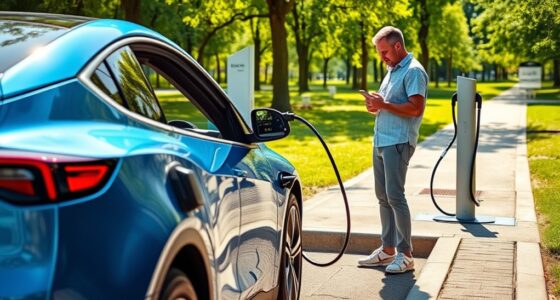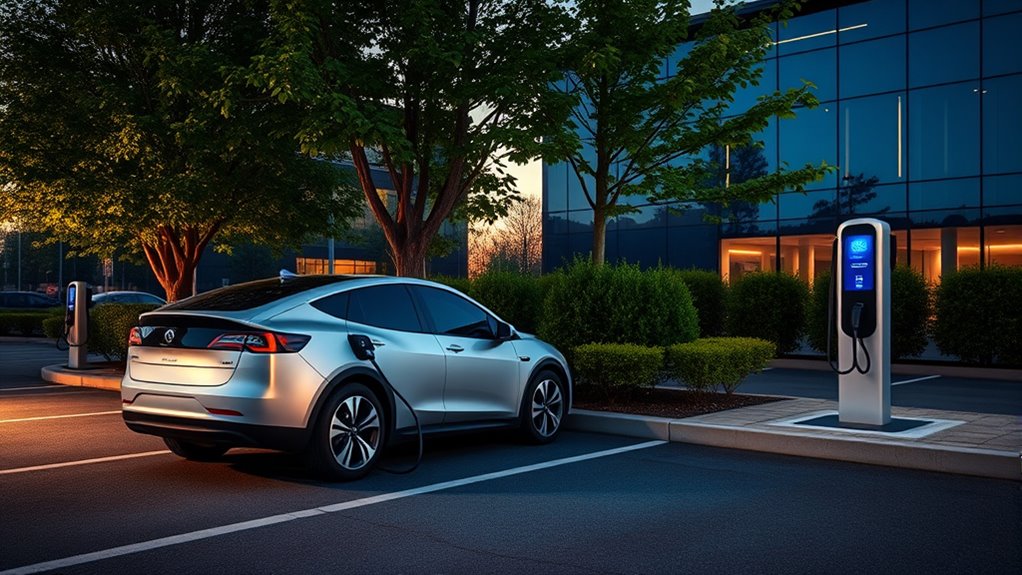

To make the most of workplace EV charging, understand your company’s infrastructure and policies. Use available chargers efficiently by charging during off-peak hours or scheduling your sessions. If no chargers are available, consider installing a home Level 2 charger or exploring nearby public stations. Communicate with your employer about expanding support and future-proofing infrastructure. Exploring these strategies can help you maximize convenience and reduce range anxiety—discover how many options can work for you as you continue.
Key Takeaways
- Communicate available charging options, policies, and schedules clearly to encourage efficient employee use.
- Implement demand management and scheduling to prevent overload during peak charging times.
- Offer incentives or financial support for home Level 2 charger installation to reduce reliance on workplace charging.
- If no workplace chargers are available, promote nearby public charging stations and flexible work arrangements like telecommuting.
- Design scalable, future-proof infrastructure with flexible charging solutions to accommodate growing EV adoption.
Understanding the Benefits of Workplace EV Charging

Workplace EV charging offers significant benefits for both employees and employers. It enhances employee satisfaction by providing convenient access to charging during work hours, making EV ownership easier. This perk can boost morale and loyalty, helping your organization attract and retain top talent. Offering charging stations demonstrates your commitment to sustainability, aligning with corporate social responsibility goals. It also supports broader environmental efforts by encouraging EV adoption, reducing greenhouse gas emissions. For employers, providing charging infrastructure can improve productivity, as employees spend less time seeking off-site charging. Additionally, workplace chargers can help manage energy loads efficiently, especially when paired with smart policies. Investing in European cloud innovation and energy-efficient infrastructure can further enhance your sustainability initiatives. Moreover, integrating advanced energy management systems can optimize charging times and reduce operational costs. Incorporating smart charging solutions allows for better load balancing and minimizes energy costs, making your investment even more impactful. Implementing future-proof infrastructure ensures your workplace remains adaptable to evolving EV technology and charging standards. Staying informed about innovative charging technologies can help you stay ahead in the rapidly evolving EV landscape. Overall, investing in workplace EV charging creates a win-win scenario, fostering a greener, more engaged workforce while advancing your company’s sustainability objectives.
Types of Charging Equipment and Their Efficiency
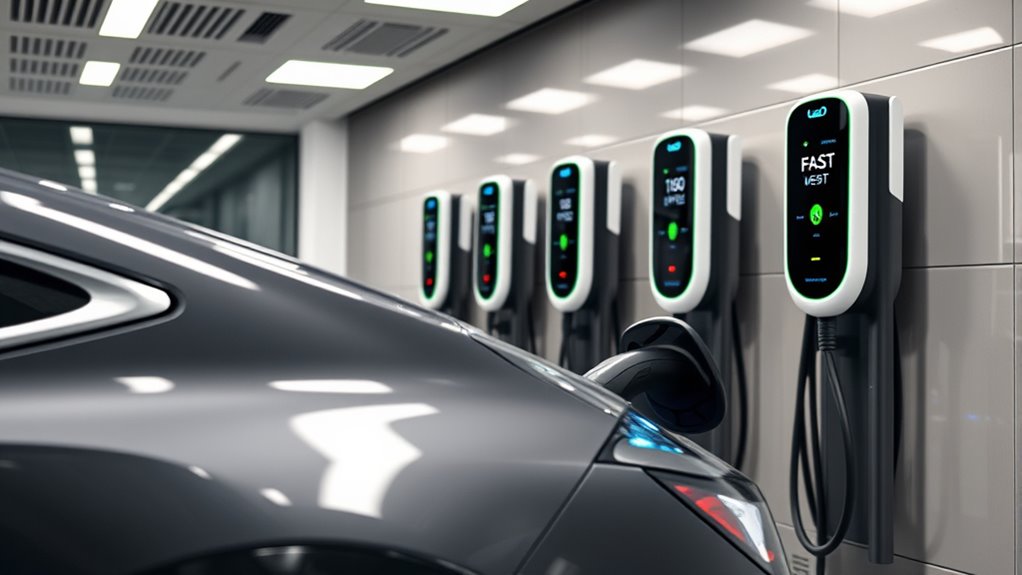
Charging equipment at workplaces varies in speed, efficiency, and suitability for different employee needs. Level 1 chargers use standard 120 V outlets, providing about 5 miles of range per hour, which is enough for roughly 40 miles during an 8-hour shift. Level 2 chargers deliver around 25 miles of range per hour, allowing up to 100 miles in just four hours, making them ideal for quick, multiple charges throughout the day. They also support more users per station due to faster recharge times. The energy consumption per session averages about 15 kWh. When planning workplace chargers, consider employee demand and telework patterns to ensure sufficient availability. Choosing the right equipment helps optimize charging efficiency and meets diverse usage needs effectively. Incorporating smart charging technology can further enhance energy management and user experience in a connected home gym environment. Additionally, understanding charger utilization patterns can help optimize the placement and number of stations to better serve all employees, especially when considering thermal behavior and load balancing to prevent energy waste. Monitoring energy consumption patterns can provide insights to improve overall efficiency and reduce operational costs. Implementing load management systems can also assist in balancing energy use during peak times, preventing overloads and ensuring reliable operation.
How Employee Behavior Influences Charging Patterns

You’ll notice most employees charge their EVs in the morning before 10 AM, which creates peak demand early in the day. Pricing policies, whether free or paid, also influence when and how often they use workplace chargers. Additionally, teleworking reduces on-site charging needs, shifting demand patterns and impacting infrastructure planning. Incorporating Free Floating concepts into workplace charging strategies can offer flexible and adaptive solutions for varying employee behaviors. Understanding demand management techniques can help optimize charger utilization and prevent overloads during peak times, especially when considering fluctuating patterns driven by external factors like grid capacity and energy costs. Implementing smart charging systems can further enhance efficiency by dynamically adjusting charging based on real-time data and user needs. Moreover, considering vetted solutions for wave and wind energy integration can provide sustainable options for powering workplace chargers.
Peak Charging Times
Have you ever wondered when employees are most likely to use workplace EV chargers? Peak charging times typically occur in the morning before 10 AM, as employees plug in upon arrival or during early breaks. Demand then drops during midday, with fewer sessions in the early afternoon. This pattern reflects employees’ work schedules and commuting habits, often charging just before starting the day or after returning home. The type of charger also influences timing; Level 2 chargers support quick top-ups, encouraging morning use, while Level 1 chargers may be used more flexibly throughout the day. Understanding these behaviors helps you plan charger deployment more effectively, ensuring availability during high-demand periods and reducing congestion during peak hours. Incorporating whole-house water filtration systems can also improve overall water quality for employees and staff, promoting healthier environments. Recognizing spiritual awakening patterns in user behavior can also inform strategies to optimize resource allocation and employee engagement, thereby enhancing workplace satisfaction. Additionally, analyzing charging patterns can reveal insights into employee routines and preferences, enabling more tailored infrastructure planning and supporting sustainable energy use initiatives.
Pricing Impact on Use
Pricing policies substantially influence how and when employees use workplace EV chargers. When charging is free, you’re more likely to plug in anytime, increasing peak usage and potentially causing congestion. Conversely, paid charging encourages more mindful use, spreading out demand throughout the day. Consider these effects:
- Free charging often leads to longer, more frequent sessions, especially during peak hours.
- Introducing fees can motivate employees to charge only when necessary, reducing congestion.
- Tiered pricing models may prioritize urgent charging needs and discourage unnecessary sessions.
- Clear communication about costs helps manage expectations and influences user behavior accordingly.
- Charging behavior can also be shaped by the availability of wellness tech that promotes mindful energy use.
- Implementing dynamic pricing based on demand patterns can further optimize infrastructure utilization and promote fair access across employees.
- Incorporating smart energy management systems can provide real-time feedback and incentives for efficient charging habits. Additionally, understanding load balancing techniques can help prevent grid overloads during peak times.
Ultimately, thoughtful pricing strategies can balance demand, optimize infrastructure use, and support equitable access across employees.
Telework and Demand
Employee behavior, particularly regarding telework, substantially shapes workplace EV charging demand. When employees work remotely more often, fewer use available chargers during traditional hours, reducing overall demand. Conversely, if telework policies shift toward hybrid schedules, charging patterns become more concentrated around specific days or times, increasing peak usage. This variability influences how many chargers are needed and when they’re most utilized. Employees who telecommute less frequently may use workplace chargers primarily on designated in-office days, creating predictable demand spikes. Understanding these patterns helps organizations optimize charger deployment, avoid under- or over-provisioning, and manage energy loads efficiently. Clear communication about policies and encouraging scheduled charging can further align employee behavior with infrastructure capacity, ensuring equitable and effective access. Additionally, the integration of best Dometic fridges for camping, which are known for rugged construction and portability, can support outdoor employees and remote workers who may need reliable cooling solutions for work-related equipment or personal use. Recognizing the impact of employee habits on charging patterns allows companies to better plan for future infrastructure needs and promote energy-efficient practices across the organization.
Developing Effective Workplace Charging Policies

Creating clear access and eligibility rules guarantees fair use of workplace chargers and prevents conflicts. Setting transparent cost and usage policies helps manage demand and encourages responsible charging habits. Regular maintenance and enforcement are essential to keep the infrastructure reliable and address misuse promptly.
Access and Eligibility Rules
Developing clear access and eligibility rules is essential for ensuring fair and efficient use of workplace charging stations. You want policies that prevent conflicts, promote equitable access, and encourage EV adoption. To do this, consider these key points:
- Define who is eligible—employees, contractors, or visitors—and specify any priority groups.
- Establish registration or verification processes to guarantee authorized use.
- Set time limits or usage caps to maximize availability during peak hours.
- Clarify whether charging is free or paid, and outline procedures for billing or reimbursements.
Cost and Usage Policies
Establishing clear cost and usage policies is essential for guaranteeing fair access and optimizing the benefits of workplace EV charging. You should define who pays for energy costs, whether charging is free or paid, and set pricing structures if applicable. Transparent policies help prevent conflicts and ensure equitable access, especially as demand grows. Decide if usage will be scheduled or first-come, first-served, and establish rules for peak times and maximum session durations. Communicate these policies clearly to employees, and consider implementing user registration or reservation systems to manage demand. Additionally, policies should address reimbursement procedures for paid charging and outline responsibilities for maintenance and troubleshooting. Well-defined policies foster trust, streamline operations, and support the overall success of your workplace charging program.
Maintenance and Enforcement
Effective maintenance and enforcement are crucial for ensuring workplace charging stations remain reliable, safe, and accessible. Without proper oversight, equipment can malfunction, and access issues may arise. To manage this effectively, consider these steps:
- Regular inspections to identify and fix hardware problems promptly.
- Clear usage guidelines to prevent misuse and ensure fair access for all employees.
- Monitoring systems that track charging sessions, energy use, and user behavior.
- Enforcement policies to address violations, such as unauthorized usage or overstay, with appropriate consequences.
Implementing these practices helps maintain trust in the charging program, minimizes downtime, and guarantees equitable access for all employees. Strong maintenance and enforcement are essential for maximizing workplace charging benefits.
Comparing Home Charging and Workplace Charging Access

Home charging remains the primary method for most EV owners because it offers convenience and daily reliability, with around 80% of charging occurring at private residences. This access allows you to plug in overnight, ensuring a full battery each morning without interrupting your day. It’s generally more cost-effective, especially if you have access to lower electricity rates at home. Workplace charging, while growing rapidly, supplements home charging by providing additional capacity, especially during work hours. It enhances convenience for longer commutes or busy schedules but isn’t a complete substitute for home access. Your ability to charge at home often depends on your residence type and infrastructure, making workplace charging a valuable, yet supplementary, option to support your EV lifestyle.
Strategies to Maximize On-Site Charging Utilization

To maximize on-site charging utilization, you need to implement strategies that encourage employees to use the available chargers efficiently and consistently. First, establish clear policies on charging time limits to prevent hogging. Second, communicate peak hours and best practices, such as charging during off-peak times or when the vehicle will be idle. Third, consider implementing a reservation system to manage demand and reduce wait times. Fourth, offer incentives for employees who charge during low-demand periods or use shared vehicles. These steps help optimize charger availability, reduce congestion, and support equitable access. By actively managing usage patterns, you guarantee the infrastructure meets employee needs and promotes sustainable EV adoption at your workplace.
Alternatives When Workplace Charging Is Not Available
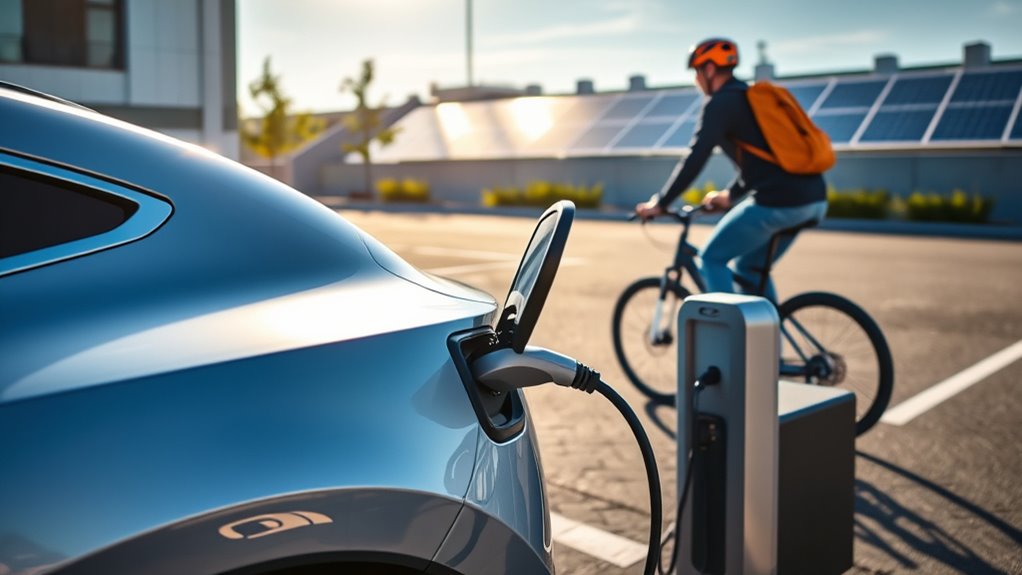
What options do you have if workplace charging isn’t available? You can install a Level 2 charger at home, supported by employer subsidies or incentives, ensuring you start each day with a full battery. Alternatively, use nearby public charging stations, which are increasingly accessible near workplaces and residential areas. To reduce charging needs during peak hours, consider flexible work schedules or telecommuting. Here’s a quick comparison:
| Option | Advantages | Limitations |
|---|---|---|
| Home Charging | Convenience, full daily charge | May require installation costs |
| Public Charging | Widely accessible, flexible | Possible wait times, costs |
| Telework or Flexible Hours | Reduces need for charging during peak hours | Not always feasible |
| Workplace Incentives | Encourages off-site solutions | Limited availability in some areas |
Planning for Future Growth in Workplace Charging Infrastructure
Effective planning is key to accommodating the rapid growth of workplace EV charging infrastructure. To stay ahead of demand, you should consider these steps:
- Assess employee needs by surveying current and future EV ownership and telework patterns.
- Determine charger types and quantities based on usage trends, ensuring a mix of Level 1 and Level 2 chargers for flexibility.
- Prioritize equitable access by creating policies that address usage, costs, and reserved spaces for different employee groups.
- Plan for scalability by designing infrastructure that can expand easily as adoption increases, including space, power capacity, and future-proofing technology.
Proactive planning guarantees your workplace remains competitive, supports EV adoption, and maximizes infrastructure investment.
Supporting Employees in Transition to Electric Vehicles
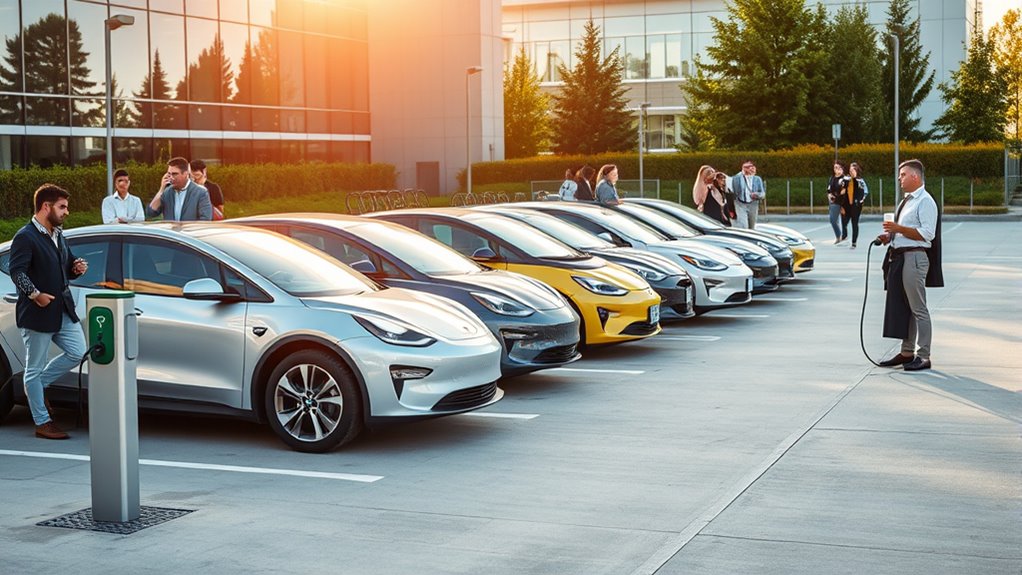
Supporting employees in their shift to electric vehicles requires proactive strategies that address their needs and remove barriers. Start by providing clear information about available charging options, including home charging subsidies or organizational support. Encourage employees to install Level 2 chargers at home, possibly offering financial assistance or incentives. Promote awareness of nearby public charging networks for those without access at home or workplace. Implement flexible work schedules or telecommuting to reduce charging demand during peak hours. Establish policies that clarify access rules, costs, and responsibilities for workplace charging. Communicate the environmental and financial benefits of EVs to motivate adoption. By actively supporting this progression, you help employees overcome logistical hurdles and foster a smoother, more equitable shift to electric mobility.
Frequently Asked Questions
How Can Organizations Ensure Equitable Access to Workplace Charging?
You can guarantee equitable access by developing clear policies on charging usage, prioritizing employees with longer commutes or limited home charging options. Implement reservation systems to prevent congestion, and monitor usage patterns to adjust charger allocations. Consider offering subsidized home chargers or off-site charging options for those unable to access workplace chargers. Promoting fair access helps support all employees’ EV needs and encourages widespread adoption.
What Are the Liability Considerations for Workplace EV Charging Programs?
You should be aware that nearly 60% of workplace charging programs face liability concerns, especially around accidents or damage. To mitigate this, establish clear policies on usage, safety protocols, and liability waivers. Regular maintenance and safety inspections are essential. By proactively addressing these issues, you reduce risks for your organization and employees, creating a secure environment that encourages EV adoption while minimizing legal exposure.
How Do Pricing Policies Impact Employee Charging Behavior and Energy Use?
Pricing policies greatly influence how you and your colleagues use workplace charging and manage energy consumption. Free charging encourages more frequent and longer sessions, risking congestion and higher energy loads. Paid options, especially if priced appropriately, can regulate demand, promote efficient use, and reduce strain on infrastructure. Clear policies help set expectations, ensure fair access, and optimize energy use, balancing employee needs with sustainability and operational costs.
What Incentives Are Available for Installing Workplace Charging Stations?
You can access various incentives for installing workplace charging stations, including federal tax credits, state rebates, and local grants. These incentives help offset installation costs and encourage businesses to provide EV charging. Additionally, some utility companies offer rebates or special rates for EV infrastructure. Check with local and federal agencies to identify available programs, and consider partnering with organizations that support sustainable transportation to maximize your incentives.
How Can Companies Integrate Workplace Charging With Overall Sustainability Goals?
You can integrate workplace charging into your sustainability goals by making it a core part of your environmental strategy. Promote clean energy use for chargers, set targets for employee EV adoption, and track emissions reductions. Encourage policies that support renewable energy sourcing and leverage incentives for green infrastructure. While it’s ironic that EV charging is becoming expected at work, aligning it with broader sustainability efforts guarantees your company leads in responsible innovation.
Conclusion
By understanding the benefits and strategies for workplace EV charging, you can make the most of your electric vehicle experience. Whether you’re maximizing on-site charging or exploring alternatives, taking proactive steps benefits everyone. Isn’t it time you started leveraging your workplace for a greener, more convenient commute? With the right approach, you can guarantee your EV charging needs are met today and into the future. Ready to charge ahead?