When towing with your EV, know your vehicle’s max capacity, as it varies widely. Towing reduces your range by up to 50% and impacts performance, so plan routes with charging stations and avoid steep inclines. confirm proper load distribution, use safety features, and verify trailer braking and hitch setup. Understanding these basics helps you tow safely and efficiently—continue here to explore expert tips on staying charged and handling your EV trailer confidently.
Key Takeaways
- Always check your EV’s towing capacity and ensure trailer weight and load distribution stay within manufacturer limits.
- Expect a 30-50% reduction in range when towing; plan routes with available charging stations accordingly.
- Properly secure and balance your trailer to maintain vehicle stability and prevent sway or rollover risks.
- Verify compatibility of your EV with towing equipment and consider professional installation for hitches and wiring.
- Plan for longer stops to recharge, especially on extended trips, and carry portable chargers or adapters if needed.
Understanding Your EV’s Towing Capabilities

Understanding your EV’s towing capabilities is essential before hauling any trailers. You need to know how much weight your vehicle can safely tow to avoid damage and ensure safety. Towing capacity varies widely among models, from around 300 kg to over 2,500 kg for high-capacity SUVs and sedans. Electric trucks can tow even more, with some exceeding 11,000 pounds. Always check your owner’s manual or certification labels for exact figures. Remember, these capacities are based on braked trailers, which have their own braking systems, and unbraked trailers are considerably lower. Towing capacity depends heavily on the vehicle’s design and technology, and understanding these limits is crucial for safe towing. Overloading can compromise vehicle stability, braking, and battery life. Knowing your specific EV’s limits helps you plan your trips better and prevents dangerous situations on the road. Innovative European Cloud Servers are supporting the development of energy-efficient and sustainable vehicle technologies, including EVs with higher towing capacities. Additionally, proper piercing care and hygiene can help prevent infections that might impair your vehicle’s electrical systems over time. Incorporating advanced cooling systems can also improve your vehicle’s performance during heavy towing, ensuring optimal operation and longevity. Proper maintenance and understanding of your vehicle’s towing limits are key to safe and efficient towing experiences.
How Towing Affects Range and Performance

When you tow with your EV, expect your range to drop considerably, often by 30-50%, depending on the load and terrain. The added weight increases power drain, making your vehicle work harder and reducing efficiency. Towing also impacts handling and stability, requiring careful driving to maintain safety and control. Additionally, incorporating smart appliances and connected systems can help optimize energy use and monitor performance during towing. Using travel tech & electronics can further enhance your ability to track battery health and plan charging stops effectively during long trips. Being aware of battery management strategies can help mitigate some of the efficiency losses during towing and ensure safer, more reliable trips. Understanding how efficiency optimization techniques can be applied during towing can significantly improve your overall experience.
Range Reduction Factors
Towing considerably impacts your electric vehicle’s range and overall performance, primarily due to the added weight and increased aerodynamic drag. The heavier trailer requires more energy to move, which directly reduces your driving distance. Aerodynamic drag from the trailer and altered airflow around the vehicle also increases energy consumption. These factors combine to shorten your range by 30-50%, depending on load, terrain, and driving style. For example, towing a heavy trailer greatly drains the battery faster, leading to more frequent charging stops. Hills, wind, and stop-and-go traffic further amplify energy use. It’s vital to account for these range reduction factors when planning trips, especially long ones, to avoid running out of charge unexpectedly. Proper route planning and awareness of towing impacts help ensure safe, efficient journeys. Additionally, understanding how air quality can be affected by driving conditions may help you make more informed choices during your trips. Being aware of energy efficiency considerations during towing can further optimize your driving experience and minimize environmental impact. Recognizing battery management strategies can also help extend your vehicle’s range during demanding trips, especially when combined with efficient driving techniques. Moreover, familiarizing yourself with vehicle specifications related to towing capacity ensures safe and effective use of your EV.
Power Drain Dynamics
Ever wonder how towing impacts your electric vehicle’s power consumption? Towing increases the workload on your EV’s motor, leading to higher energy use. The extra weight and aerodynamic drag create resistance, causing the motor to work harder and draw more power. This increased demand results in accelerated battery depletion, reducing your driving range markedly. You’ll notice that hills and headwinds compound this effect, as they require even more energy to overcome resistance. Instant torque delivery from electric motors can help with acceleration, but it also consumes more power when towing. As a result, your EV’s battery drains faster, and charging becomes more frequent. Planning routes with charging stations along the way is vital to manage power drain effectively during towing.
Handling and Stability
Adding a trailer to your electric vehicle substantially impacts handling and stability, affecting both safety and performance. Towing shifts weight distribution, increases braking distance, and raises the risk of sway or rollover. Proper load balancing and weight distribution are essential to maintain control. Heavier trailers lower acceleration and can cause your EV to feel sluggish. Instability issues may arise on sharp turns or uneven surfaces. To help visualize, consider this:
| Aspect | Effect | Tips |
|---|---|---|
| Handling | Reduced maneuverability | Drive slowly, avoid sharp turns |
| Stability | Increased sway risk | Use sway control systems |
| Braking | Longer stopping distances | Maintain good brake health |
| Load Distribution | Affects control and safety | Balance trailer weight properly |
Additionally, understanding load capacity and adhering to manufacturer guidelines can help prevent accidents and ensure a safe towing experience. Being aware of vehicle specifications is crucial for safe towing, as exceeding these limits can compromise performance and safety. Regularly inspecting your trailer hitch and connections can also prevent unexpected detachment or failure during transit. Properly securing the trailer with safety chains adds an extra layer of security during travel. Knowing how weight distribution impacts overall stability can further enhance your towing safety.
Key Technical Factors Influencing Towing Limits
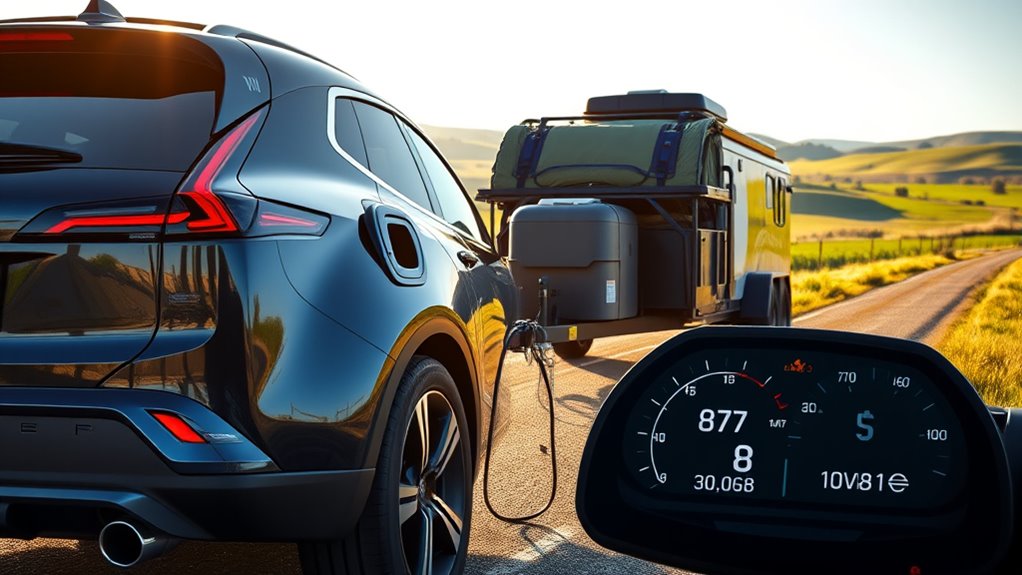
The key technical factors that determine an electric vehicle’s towing limits hinge on its structural strength, power output, and suspension design. Your vehicle’s frame must withstand the added stress of towing, ensuring it won’t bend or crack under load. Power output is essential; higher horsepower and torque allow for better acceleration and control when hauling heavy trailers. Suspension design influences stability and ride quality—stiffer, reinforced suspensions can handle greater loads safely. Battery placement and capacity also matter, as they affect weight distribution and energy reserves during towing. Additionally, the braking system and tongue weight calculations impact safety and performance. Understanding these factors helps you gauge your EV’s true towing capacity and avoid overstressing components, ensuring safe and reliable towing operations. Proper file management can assist in organizing your vehicle’s maintenance and performance data to support towing activities, especially when considering battery capacity and its impact on overall vehicle performance during heavy loads. To optimize towing, it’s also important to consider thermal management systems, which help maintain battery and motor performance under heavy loads.
Safety Guidelines for Towing With Electric Vehicles
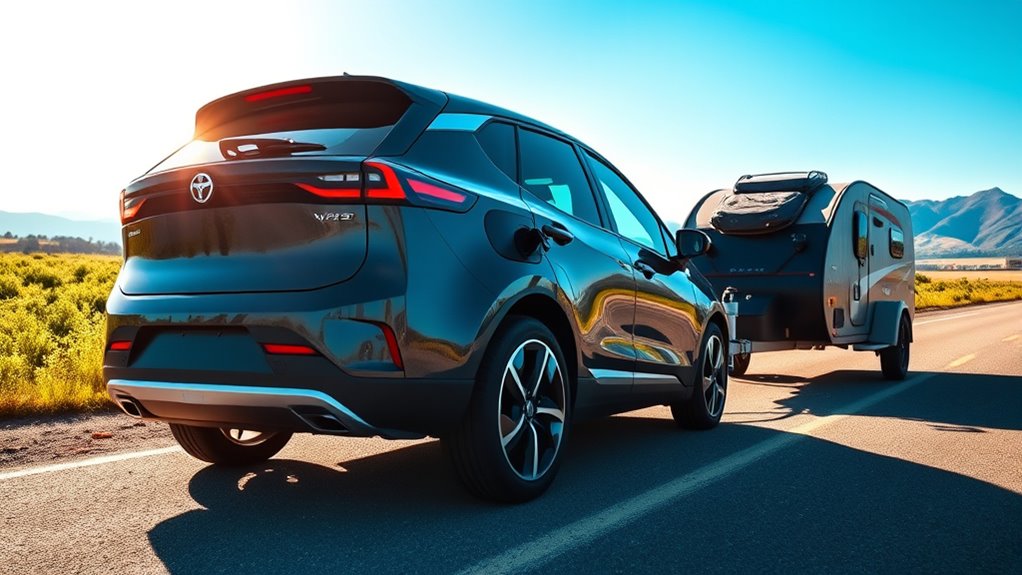
Safety should always be your top priority when towing with an electric vehicle, as the added weight and altered dynamics can introduce new risks. Always follow the manufacturer’s towing capacity guidelines, never exceeding recommended limits. Verify your trailer has appropriate brakes and that the tongue weight is properly distributed to maintain stability. Use the vehicle’s safety features, like roll-assist systems, and double-check load balance before setting off. Regularly inspect your brakes, tires, and electrical connections to prevent failures. Plan routes carefully, considering charging station locations and terrain. Avoid sudden maneuvers and excessive speeds, especially on inclines or curves. Being aware of electric vehicle towing limitations and how they affect handling is essential to protect your vehicle and ensure safe handling throughout your journey. Staying within the recommended towing parameters is essential to protect your vehicle and ensure safe handling throughout your journey. Additionally, understanding the impact of additional weight on your EV’s battery range can help you plan for charging stops and prevent unexpected power loss. Consider proper load distribution to optimize safety and efficiency during your trip.
Differentiating Braked and Unbraked Trailer Towing

Knowing the difference between braked and unbraked trailers is vital for safe towing with your EV. Braked trailers have their own braking systems, allowing you to tow heavier loads, while unbraked trailers rely solely on your vehicle’s brakes, limiting the weight you can carry. Understanding these limits helps prevent damage to your vehicle and guarantees a safer towing experience.
Braked Capacity Limits
Have you ever wondered why braked trailer capacity is usually higher than unbraked capacity when towing with an electric vehicle? The main reason is that trailers with their own braking systems reduce the load on your vehicle’s brakes, making towing safer and more manageable. Braked trailers distribute stopping forces, allowing your EV to handle heavier loads without overtaxing its braking system. In contrast, unbraked trailers rely solely on your vehicle’s brakes, limiting their maximum weight—often to around 750 kg or less—due to safety concerns and brake wear. Always check your vehicle’s specific braked capacity, which can be markedly higher than unbraked limits. Properly equipped trailers and adherence to capacity limits ensure safer towing and better control, especially when driving downhill or in emergency situations.
Unbraked Trailer Risks
Towing unbraked trailers with an electric vehicle can pose significant risks because your vehicle’s braking system must handle the entire stopping force alone. Unbraked trailers lack their own braking system, meaning all deceleration effort falls on your EV’s brakes. This increases wear and raises the risk of brake overheating, especially during sudden stops or downhill descents. Without proper brake assistance, your vehicle’s stopping distance extends considerably, which can lead to accidents or loss of control. Additionally, unbraked trailers are more susceptible to sway, making your vehicle harder to stabilize. Because of these dangers, many manufacturers impose strict limits on unbraked trailer weight—often between 300 and 750 kg—so it’s essential to adhere to these restrictions for safe towing. Always double-check your vehicle’s specifications before towing an unbraked trailer.
Preparing Your EV and Trailer for Towing

Before hitting the road, it’s essential to properly prepare your EV and trailer to guarantee safe and efficient towing. Check your vehicle’s towing capacity and ensure your trailer’s weight doesn’t exceed it, including the tongue load. Inspect your trailer’s brakes, lights, and tires, making sure they’re in good condition. Confirm your trailer is properly hitched and balanced, with the load evenly distributed. Adjust your tire pressure and suspension if needed, since towing can affect handling. Test your trailer’s wiring and signals to ensure proper communication with your EV’s lighting system. Review your owner’s manual for specific weight limits and safety guidelines. In conclusion, plan your route, considering charging stations and terrain, so you’re prepared for the journey ahead.
Planning Routes and Managing Charging Needs

When planning your route, you need to consider charging station locations and how they align with your towing needs. Managing charging stops becomes essential since towing reduces your EV’s range considerably, especially on long trips. To stay on track, you should identify suitable charging points ahead of time and understand your vehicle’s load and towing limits.
Route Selection Strategies
Planning your route is essential when towing with an electric vehicle, as reduced range and limited charging infrastructure demand careful consideration. Start by mapping out charging stations along your journey, prioritizing those with high-capacity chargers compatible with your EV. Avoid routes with steep inclines or heavy traffic, which can increase energy consumption and extend charging times. Consider terrain, elevation changes, and weather conditions, as these factors influence your EV’s efficiency. Allocate extra time for charging breaks, especially if towing heavy loads. Use navigation apps designed for EVs that highlight charging points and provide real-time availability updates. Always have backup options in case chargers are busy or out of service. Proper route planning minimizes surprises, ensures safety, and keeps your towing operation smooth.
Charging Station Planning
Effective charging station planning is essential for towing with an electric vehicle, especially given the limited availability of suitable chargers along many routes. You need to identify charging stations compatible with your EV and trailer, focusing on fast chargers to minimize downtime. Map out charging points ahead of time, considering the increased energy consumption when towing, which can reduce range by up to 50%. Always plan for extra charging stops, especially on longer trips, and factor in potential wait times or station availability. Keep a backup plan in case chargers are busy or out of service. Using navigation apps with real-time charging info helps avoid surprises. Proper planning ensures you stay on schedule, reduces range anxiety, and keeps towing safe and efficient.
Load and Towing Limits
Managing load and towing limits requires careful route planning and precise management of your vehicle’s capabilities. You need to be aware of your EV’s maximum towing capacity, which varies by model. Exceeding this limit can compromise safety and cause damage. Always check your owner’s manual for official ratings. Keep in mind that towing reduces your range substantially—sometimes by half—so plan for extra charging stops.
| Towing Capacity | Typical Range Reduction |
|---|---|
| Up to 2,500 kg | 30-50% drop in range |
| Over 5,000 kg | Considerable range loss, longer charging |
Understanding these limits helps you avoid overloading and ensures safe, efficient towing. Proper load management and route planning are essential for a smooth journey.
Installing or Retrofitting Towbars on Your EV
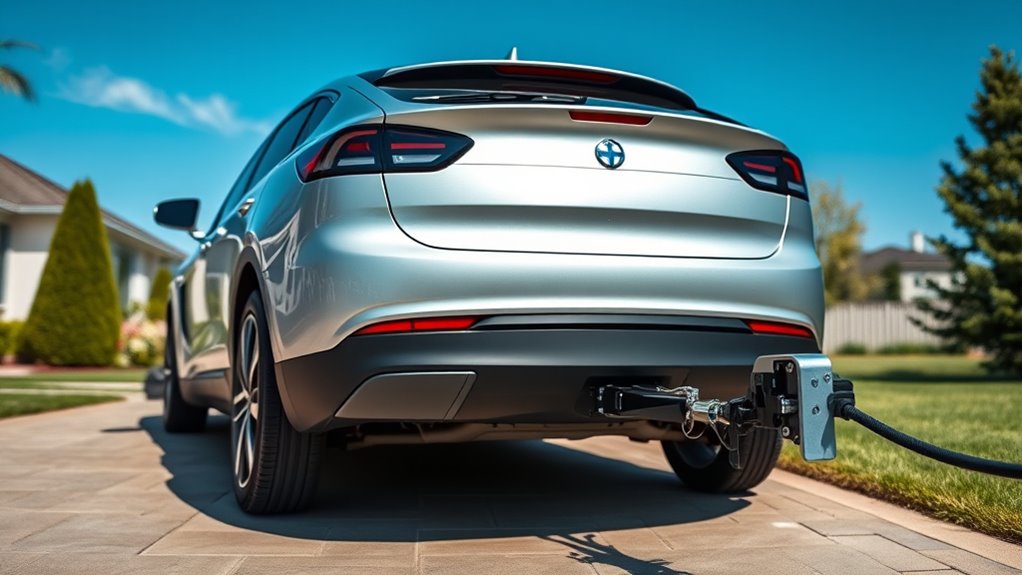
Installing or retrofitting a towbar on your electric vehicle can be a straightforward process, but it requires careful attention to compatibility and safety standards. Start by verifying that your EV model supports a towbar, either through the manufacturer or a qualified dealer. Not all EVs are pre-wired or designed for towing, so you may need a custom retrofit kit. Ensure the towbar meets industry safety standards and is rated for your intended load. Professional installation is recommended to guarantee proper wiring, electrical connections, and secure mounting. Check your owner’s manual for specific guidelines and weight limits. Proper installation helps maintain vehicle stability and safety, preventing damage and ensuring reliable towing performance.
Load Distribution and Weight Management Tips
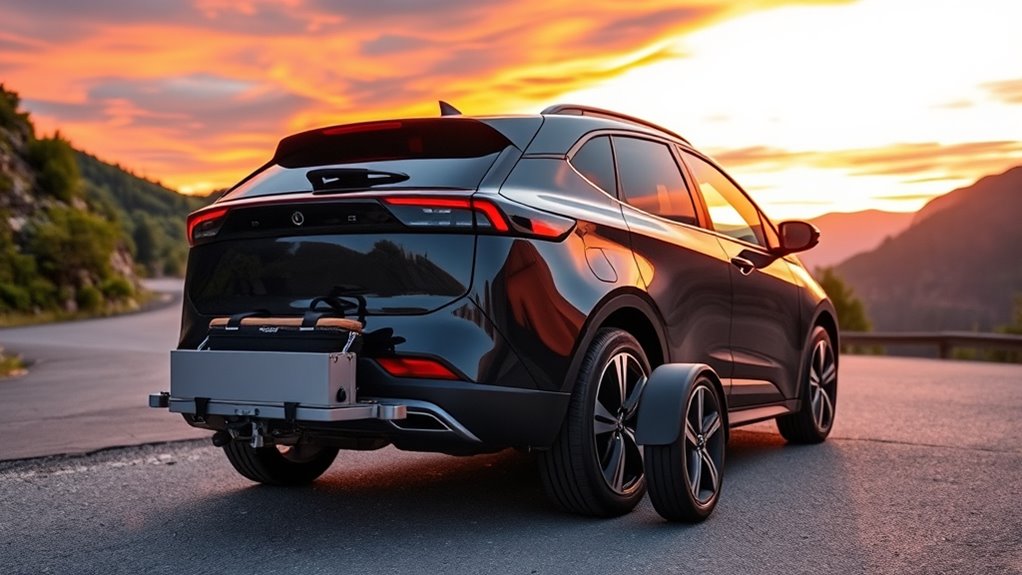
Proper load distribution and weight management are essential for safe and stable towing with your electric vehicle. Start by ensuring the trailer’s weight is evenly spread across its axles to prevent sway and uneven tire wear. Keep the load centered and avoid placing heavy items at the rear, which can cause instability. Always adhere to your vehicle’s maximum towing capacity and account for tongue weight—roughly 10-15% of the trailer’s total weight—so the load doesn’t overload the hitch or rear suspension. Distribute weight to maintain a balanced center of gravity, reducing strain on your EV’s suspension and braking system. Use load straps or nets to secure cargo tightly, preventing shifting during transit. Proper weight management enhances safety, improves handling, and helps preserve your EV’s battery life.
Navigating Infrastructure Challenges for Towing
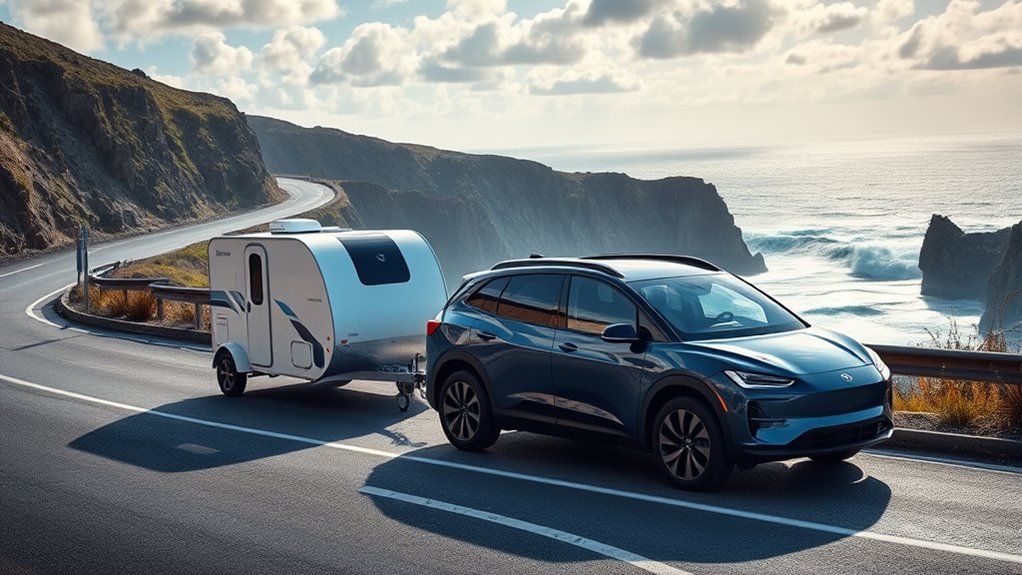
Managing infrastructure challenges for towing with an electric vehicle requires careful planning due to limited charging options and uneven network coverage. You’ll need to map out your route carefully, identifying charging stations that support higher power levels and trailer-compatible connectors. Since towing reduces your range considerably, plan for longer stops and avoid routes with sparse charging infrastructure. It’s wise to carry a portable charger or adapters compatible with different charging stations, just in case. Keep in mind that not all chargers are equipped for heavy loads or fast charging, which can extend your wait time. Use EV charging apps to locate and verify station availability before your trip. Proper planning minimizes surprises, ensures safety, and keeps your towing experience smooth despite infrastructure limitations.
Frequently Asked Questions
Can I Tow With an EV That Isn’T Rated for Heavy Loads?
You shouldn’t tow with an EV that isn’t rated for heavy loads. Doing so risks damaging the vehicle, voiding warranties, and causing safety issues. Always check the manufacturer’s towing capacity and follow their guidelines. Towing beyond the recommended limit can impair handling, reduce range considerably, and increase brake and suspension wear. For safe towing, make certain your EV is rated for the load, and use proper equipment and load distribution techniques.
How Do I Calculate the Safe Towing Capacity for My Specific EV Model?
To calculate your EV’s safe towing capacity, start by checking the manufacturer’s specifications in your owner’s manual or certification labels. Deduct about 15% of the trailer weight for tongue load, and never exceed 80-85% of the maximum towing capacity. Consider your vehicle’s structural limits, suspension, and braking system. Always plan routes carefully, account for reduced range, and make certain your trailer has proper braking if needed.
Are There Special Considerations for Towing Trailers With Electric Trucks Versus Sedans?
You should consider that electric trucks generally have higher towing capacities and better stability due to their design, battery placement, and stronger structural components. Unlike sedans, trucks handle heavier loads more efficiently, but you still need to monitor range reduction, braking, and weight distribution carefully. Always check your vehicle’s towing limits, use proper trailer brakes, and plan routes with adequate charging options to guarantee safe, effective towing with your electric truck.
What Are the Legal Requirements for Towing Trailers With an Electric Vehicle?
You need to follow specific legal requirements when towing trailers with your EV. Always check your vehicle’s maximum towing capacity and make certain your trailer’s weight doesn’t surpass it, including tongue weight. Use properly rated brakes if your trailer is heavy, and secure the load correctly. Maintain compliance with local regulations, including licensing, registration, and safety equipment standards, to guarantee safe and legal towing.
How Does Weather or Terrain Impact Towing Performance With an EV?
Weather and terrain substantially impact your EV’s towing performance. In cold conditions, battery efficiency drops, reducing range, while hot weather can lead to overheating, affecting motor performance. Hilly or rugged terrain demands more power, decreasing your range faster and stressing the vehicle’s systems. You’ll need to plan routes carefully, factor in additional charging stops, and adjust driving style to maintain safety and efficiency when towing in challenging weather or terrain.
Conclusion
Now that you know the essentials of towing with your EV, you’ll be better prepared to hit the road without a hitch. Remember, even as you channel your inner modern-day Robin Hood, don’t forget to plan your routes, check your vehicle’s limits, and prioritize safety. Towing may be new territory, but with a little preparation, you’ll handle it like a seasoned knight—ready to conquer any journey, just like a trusty steed of yore.