
To save money charging your EV, take advantage of off-peak hours when rates are lower, using smart chargers to schedule your charging times automatically. Switch to EV-specific tariffs that cut costs further, especially when combined with solar panels to use renewable energy. Match your charging speed to your needs, and explore incentives from employers or governments. Keep your schedule optimized, and you’ll find simple ways to lower your electric bill—discover how to maximize these strategies.
Key Takeaways
- Charge during off-peak hours using smart scheduling to benefit from lower electricity rates.
- Utilize EV-specific tariffs and energy management tools to maximize cost savings.
- Sync charging sessions with solar energy production to reduce reliance on grid power.
- Use Level 1 chargers for short trips and reserve fast chargers for emergencies to optimize costs.
- Limit charging to 80-90% and avoid charging during peak demand times for better battery health and savings.
Take Advantage of Off-Peak Charging Hours
Taking advantage of off-peak charging hours can substantially cut your EV charging costs. During these times, electricity rates are considerably lower—often by 60–70%—compared to peak hours. Many utility providers offer special EV tariffs that encourage charging overnight or early mornings, helping you save money without changing your routine. By charging your vehicle during these windows, you avoid the higher rates that apply during peak demand periods, which typically occur in the late afternoon and evening. Setting your charger to operate during off-peak hours is simple with smart chargers or scheduling features. This approach not only reduces your bills but also lessens strain on the grid during busy times, making your charging more efficient and cost-effective. Incorporating energy-efficient cloud solutions into your energy management can further optimize your overall electricity use and savings. Additionally, utilizing smart energy management tools allows for better scheduling and control of your charging times, maximizing savings and efficiency. Using load calculations to determine your home’s capacity can help you avoid overloading circuits and ensure your charging is both safe and economical. Moreover, understanding the demand response programs available in your area can provide additional incentives for off-peak charging. Implementing dynamic pricing strategies can also help you take full advantage of fluctuating electricity rates to optimize your costs.
Use Smart Charging Apps and Technology
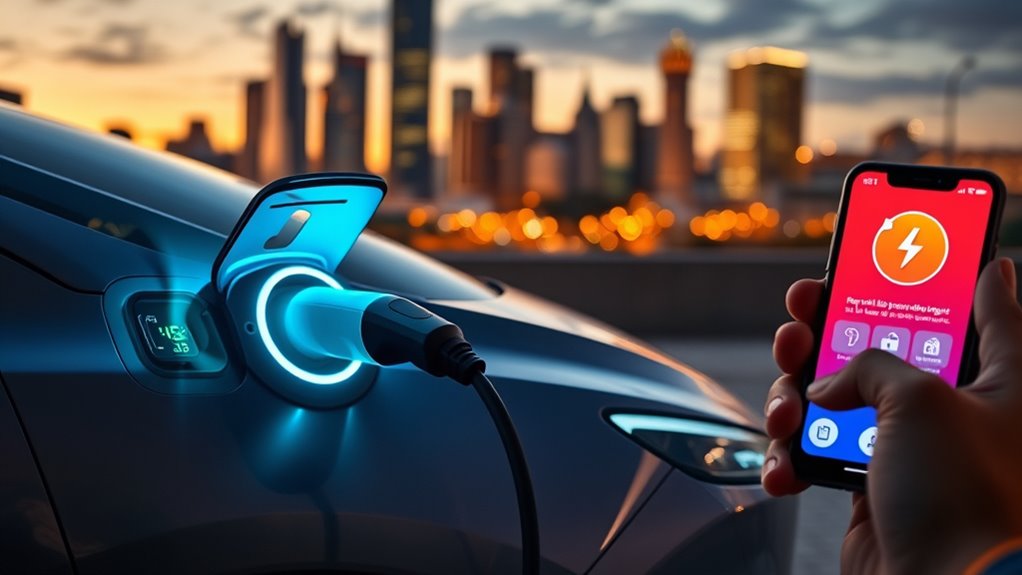
Smart charging apps and technology make it easier to maximize your savings and guarantee your EV is ready when you need it. These tools give you insights into your energy use, allowing you to schedule charging during the cheapest periods. You can set ideal start times, control charge levels, and monitor sessions remotely, avoiding unnecessary costs. Notifications alert you to the best times to charge and real-time pricing updates help you adapt instantly. Automation features, like MCE Sync, handle timing without manual input. Additionally, understanding your truck bed’s potential can help you optimize your setup for energy efficiency and cost savings. Integrating these systems with local automation can further enhance your home energy management, making your EV charging even more efficient and cost-effective. Leveraging smart grid integration can also provide additional opportunities for savings by utilizing grid demand response programs.
Switch to an EV-Specific Energy Tariff
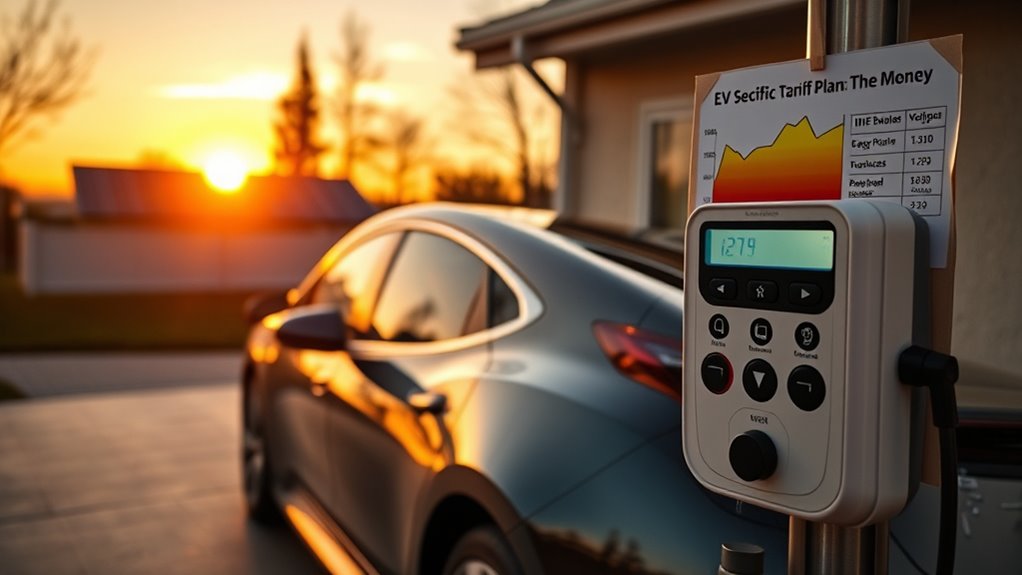
Switching to an EV-specific energy tariff can substantially cut your charging costs, sometimes by up to two-thirds. These tariffs often offer lower rates during off-peak hours, saving you money and benefiting your household energy use. By choosing the right plan, you can maximize savings while making your home more energy-efficient. Additionally, understanding smart energy management can help you optimize your overall energy consumption and further reduce costs. Being aware of affiliate disclosure policies can also make you more informed about potential recommendations and savings opportunities. Implementing energy-saving tips can further enhance your savings during charging and everyday energy use. For example, selecting a provider with a trusted reputation in Gold IRA Markets may also offer insights into reliable service options. Incorporating renewable energy sources into your home can further lower your electricity expenses and reduce your carbon footprint.
Lower Charging Costs
Choosing an EV-specific energy tariff can substantially lower your charging costs by up to two-thirds compared to standard rates. These tariffs are designed to incentivize off-peak charging, often offering much lower rates during nighttime hours when demand is low. By switching, you can take advantage of prices as low as 7p per kWh, compared to typical residential rates of around 30p. This means charging your 60kWh battery could cost just £4.50 instead of £15. Many providers offer plans tailored for EV owners that include benefits for your entire household. To maximize savings, compare regional options and select a tariff that aligns with your charging habits, especially if you frequently charge overnight. Implementing Free Floating energy options can provide flexible and cost-effective solutions for your charging needs. Understanding energy consumption patterns can help you optimize your overall electricity use and further reduce costs. Additionally, monitoring your electricity usage can reveal opportunities to shift more of your charging to off-peak times, boosting savings even further. Recognizing demand response programs can also help you participate in grid balancing efforts and save money. This simple switch can lead to significant reductions in your overall electric bill.
Household Energy Benefits
Opting for an EV-specific energy tariff not only lowers your charging costs but also offers benefits that extend beyond your vehicle. These tariffs often feature lower rates during off-peak hours, helping you save on your entire household energy bill. With a dedicated EV plan, you can charge your car overnight or during low-demand periods, reducing overall energy expenses. Many providers include additional perks, like smarter billing or tailored energy management tools, making it easier to monitor and control your usage. Switching to an EV-specific tariff also encourages more efficient energy habits, which benefits the environment and your wallet. Additionally, understanding plant properties and how they can be harnessed in energy management can lead to smarter choices for sustainable living. Incorporating technology integration into your home can further optimize energy consumption and enhance the benefits of your EV tariff. Utilizing renewable energy sources can significantly amplify your savings and reduce your carbon footprint. Leveraging electric vehicle charging infrastructure can improve your overall energy efficiency and convenience. Making informed decisions about energy storage solutions can help you maximize the benefits of your EV charging strategy. Overall, this choice maximizes savings, optimizes household energy use, and aligns your electricity plan with your EV charging needs.
Integrate Solar Panels With Your Charging Routine
You can substantially cut your charging costs by syncing your EV with your solar panels’ production. Smart chargers can prioritize solar energy and pause grid charging when sunlight is insufficient. By maximizing your solar use, you’ll reduce reliance on the grid and enjoy cheaper, greener charging. Incorporating battery technologies into your energy setup can further enhance efficiency and storage capabilities. Additionally, integrating renewable energy sources can optimize overall energy management and savings. Leveraging advanced energy management systems can help monitor and control your energy flow more effectively to maximize savings, especially when paired with smart grid integration that allows for dynamic energy distribution.
Synchronize Charging With Solar
Integrating your solar panels with your EV charging routine can considerably cut your electricity costs and reduce your carbon footprint. By timing your charging sessions to align with peak solar production, you use cleaner energy directly from your panels. Smart chargers can automatically pause charging when solar output drops and resume when sunlight is abundant, avoiding grid reliance. Charging during sunny midday hours maximizes solar use and minimizes grid electricity, especially if you have battery storage to store excess energy. This approach not only saves money but also makes your EV charging more sustainable. Keep an eye on your solar production and adjust your charging schedule accordingly. Over time, you’ll notice lower energy bills and a smaller environmental impact, making solar integration a smart choice.
Maximize Solar Energy Use
Maximizing solar energy use during your EV charging sessions helps you save money and reduce your carbon footprint. To do this, sync your charging times with peak solar production, usually mid-morning to early afternoon. Use a smart charger that can prioritize solar power and pause charging when sunlight is insufficient. This way, your vehicle relies more on free solar energy instead of grid electricity, lowering costs markedly. If you have battery storage, you can store excess solar energy for nighttime charging, further reducing reliance on the grid. Many solar panel owners report weeks of free EV charging during summer months. Additionally, look into government incentives or tax credits for integrating solar with your EV charging setup, maximizing your savings and environmental benefits.
Match Charging Speed and Habits to Your Needs
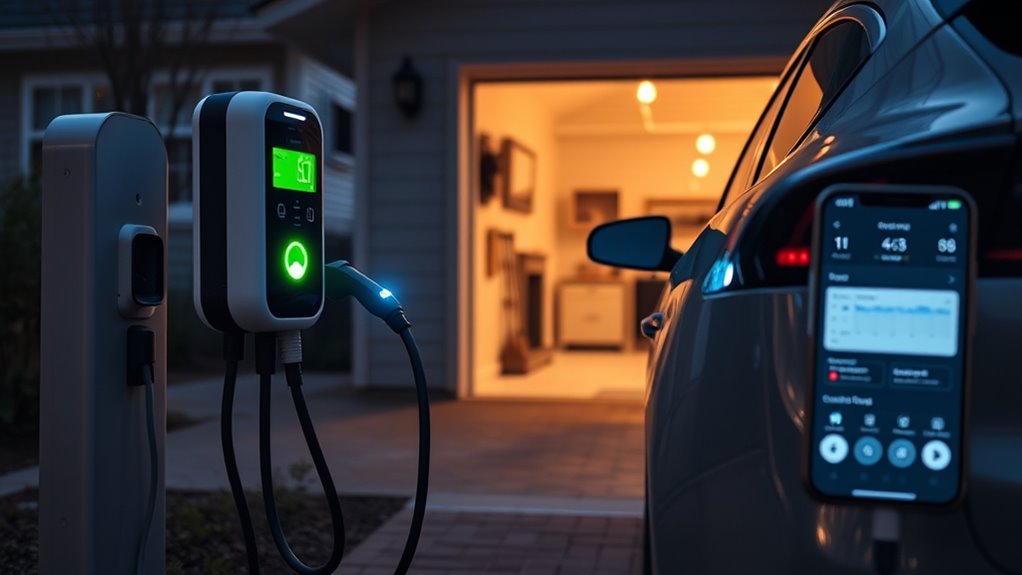
Matching your charging speed and habits to your daily needs can substantially reduce costs and extend battery life. If you mainly use your EV for short trips, a Level 1 charger is enough and costs less to operate. For regular commuting, a Level 2 charger offers faster charging without unnecessary expense. Reserve rapid charging for emergencies or long trips, as it’s more costly per kWh and accelerates battery wear. Avoid charging to 100% every day; partial charges preserve battery health and reduce electricity use. Additionally, consider scheduling your charging during off-peak hours to capitalize on lower rates and avoid unnecessary energy costs.
- Use smart chargers to automate off-peak charging
- Limit charging to 80–90% unless needed
- Opt for overnight charging when rates are lowest
- Match charging speed to your daily driving pattern
Explore Employer and Government Incentives
Many employers and governments now offer incentives that can substantially reduce your EV charging costs. Some employers provide reimbursements or subsidies for installing home chargers, lowering your upfront expenses and ongoing costs. Others include EV charging benefits as part of employee perks, which can offset your daily commuting charges. Governments in many countries also offer grants, tax credits, or rebates for purchasing and installing EV chargers, making it more affordable to set up home charging stations. These incentives can greatly cut your overall expenses, especially when combined with off-peak charging strategies. Be sure to research local programs and eligibility requirements to maximize your savings. Taking advantage of these incentives not only reduces your costs but also supports your efforts to charge more affordably.
Optimize Your Charging Schedule for Maximum Savings
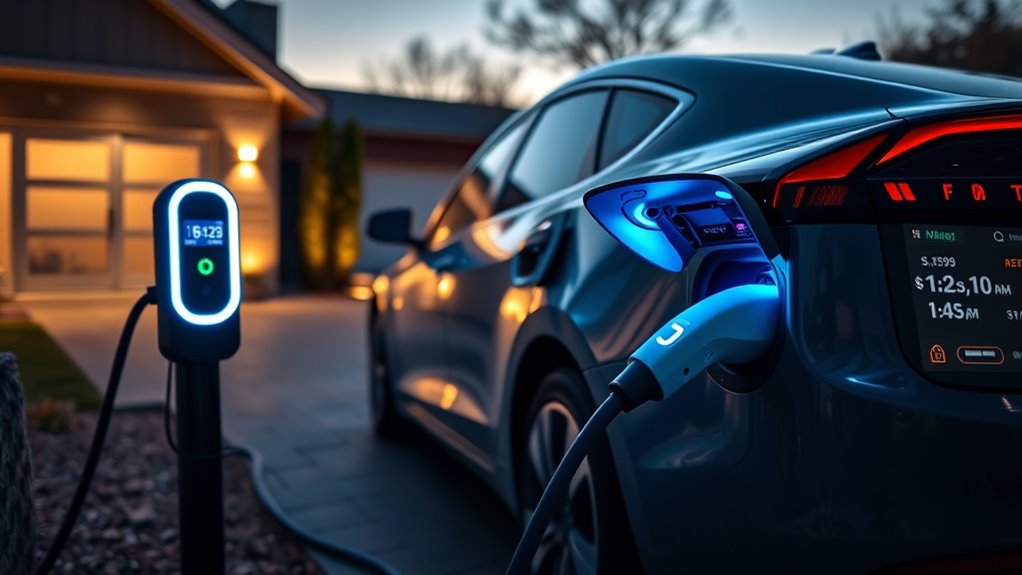
To save the most on your EV charging costs, scheduling your charging sessions during off-peak hours is essential. Off-peak times, usually overnight or early morning, feature lower electricity rates, helping you cut costs considerably. Use smart chargers or apps to automatically align charging with these windows. This way, you avoid high-demand periods and maximize savings. Consider switching to a time-of-use (TOU) plan, which offers discounted rates during off-peak hours. Additionally, monitor real-time pricing alerts to start charging when rates are lowest. Combining these strategies ensures you’re charging efficiently and economically.
- Schedule charging during off-peak hours using smart technology
- Opt for EV-specific or TOU tariffs with lower rates
- Use apps to receive real-time rate notifications
- Automate charging to maximize cost savings
Frequently Asked Questions
Can Off-Peak Rates Vary by Utility Provider or Region?
Yes, off-peak rates can vary by utility provider and region. You should check with your local utility to see if they offer off-peak or EV-specific tariffs, as prices differ widely. Some regions have lower rates during nighttime, while others may have different off-peak hours. Using smart charging apps can help you take advantage of these variations, ensuring you charge your EV when rates are at their lowest.
Are There Any Hidden Fees With Ev-Specific Tariffs?
Watch out, because some EV-specific tariffs can have hidden fees that catch you off guard. You might see low rates but end up paying extra for peak-time surcharges, connection fees, or minimum usage charges. Always read the fine print and ask your provider about any additional costs. Don’t let these sneaky fees eat into your savings—know what you’re signing up for before committing to a plan.
How Do Smart Chargers Adapt to Changing Energy Prices?
Smart chargers automatically adjust your charging schedule based on real-time energy prices, helping you save money. They monitor electricity rates and pause or start charging during the cheapest periods, like off-peak hours or when solar production is high. With automation, you don’t have to manually track price changes; your charger handles it for you, ensuring you always charge at the most cost-effective times, maximizing savings effortlessly.
What Are the Best Ways to Maximize Solar Energy for EV Charging?
A penny saved is a penny earned, so maximize your solar energy for EV charging by syncing your charging times with peak solar production, usually midday. Use smart chargers to prioritize solar power and pause grid reliance when sunlight is abundant. Consider installing battery storage to store excess solar energy for later use. This way, you reduce costs and make the most of your solar investment, keeping your energy bills low.
Do Government Incentives Cover All Types of EV Chargers?
No, government incentives don’t cover all types of EV chargers. They typically focus on home installation of Level 2 chargers and sometimes on public charging infrastructure. You might qualify for grants, rebates, or tax credits, but coverage varies by region and charger type. Always check local programs to see what specific chargers are eligible, and consider applying for incentives that match your needs to maximize savings.
Conclusion
By implementing these smart strategies, you’re already saving money—yet, the real savings await when you open the full potential of your EV charging routine. Are you ready to take control and discover the hidden opportunities that could dramatically cut your costs? Don’t settle for just good enough; the most efficient, cost-effective charging experience is just one decision away. The question is, are you prepared to make that leap and see how much more you can save?