Electric vehicles are perfect for city driving and short trips because they handle stop-and-go traffic efficiently, and you won’t need to worry about running out of fuel. Charging stations are easy to find at workplaces, shopping centers, and on streets, allowing quick top-ups during errands. Modern batteries last longer with frequent short use, reducing maintenance costs. If you explore further, you’ll discover how technology and infrastructure continue to make EVs even more convenient for urban lifestyles.
Key Takeaways
- EVs are optimized for short city trips, handling frequent stops and starts efficiently.
- Extensive charging infrastructure enables quick recharges during brief breaks.
- Modern batteries are durable and maintain efficiency with frequent short trips.
- Reduced maintenance costs and battery longevity make EVs cost-effective for city driving.
- Advanced technology and urban investments ensure seamless, convenient charging options.
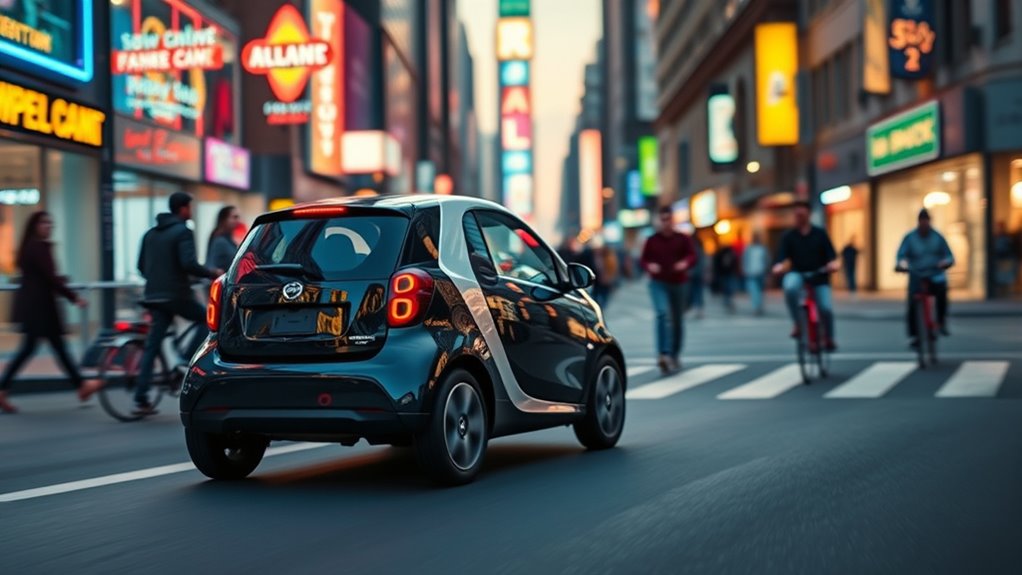
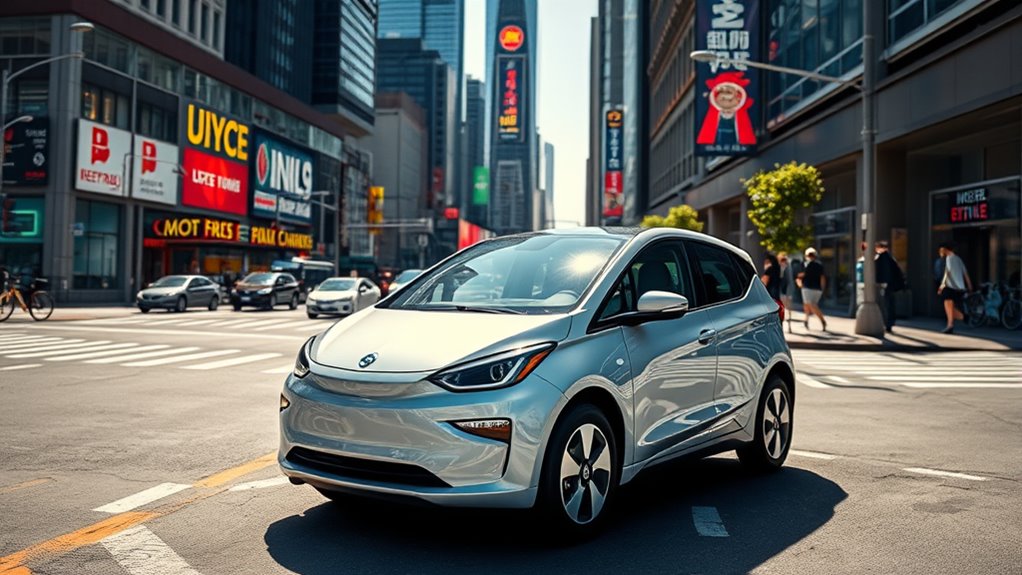
Electric vehicles (EVs) are increasingly becoming the ideal choice for short trips, thanks to their efficiency and convenience. When you’re navigating city streets, EVs shine because they’re designed to handle frequent stops and starts without breaking a sweat. Plus, with a well-developed charging infrastructure, you can recharge quickly during short breaks, making daily commutes or errands hassle-free. No more worrying about running out of fuel or finding a gas station—your EV’s charging options are often available at your workplace, shopping centers, or even on the street, ensuring you stay powered up without disrupting your day.
One of the key advantages for city drivers is the way EVs maximize battery longevity. Modern EV batteries are built to withstand frequent use, and manufacturers have made impressive strides in extending their lifespan. That means you can enjoy years of reliable service without worrying about costly battery replacements. Since short trips typically involve less strain on the battery compared to long-distance driving, your EV remains healthy and efficient over time. This durability translates into lower maintenance costs and a more sustainable choice for your daily routines.
Modern EV batteries last longer with frequent short trips, reducing maintenance costs and enhancing sustainability.
Charging infrastructure plays a vital role in making EVs practical for city dwellers. More public charging stations are popping up everywhere, from parking garages to roadside kiosks, so you don’t have to plan your trips around charging needs. Fast chargers can top up your battery in less than 30 minutes, which is perfect for quick errands or a lunch break. Additionally, many cities are investing heavily in expanding their charging networks, making it even easier for you to find a station nearby. This widespread availability ensures that your EV fits seamlessly into your busy urban lifestyle, removing one of the main barriers to EV adoption. Moreover, advances in battery thermal management help maintain optimal performance and extend the lifespan of EV batteries, further supporting city drivers in making a sustainable choice.

DARAN Portable Power Station 89.6Wh LiFePO4 Battery 100W(200W Peak) Solar Power Bank, Portable Charger Small Generator with AC Outlets & PD Fast Charging for Home/Laptop/Camping(Solar Panel Optional)
- Compact and Lightweight: Size of a smartphone, weighs 2.54 lbs
- Portable Design: Ergonomic soft handle for easy carrying
- Multiple Output Ports: 7 ports including AC, USB-C, USB-A, DC
As an affiliate, we earn on qualifying purchases.
Frequently Asked Questions
How Do EVS Handle Frequent Stop-And-Go City Traffic?
You’ll find that EVs handle stop-and-go city traffic smoothly because their regenerative braking recaptures energy during deceleration, extending your range and improving efficiency. Plus, advanced battery thermal management keeps the battery cool during frequent stops, ensuring consistent performance without overheating. These features make EVs ideal for city driving, providing a comfortable, efficient, and reliable experience even in heavy traffic.
What Is the Impact of Short Trips on EV Battery Lifespan?
Sure, short trips might seem harmless, but they actually give your battery degradation a little extra boost—like a spa day for wear and tear. Frequent charging cycles from short trips accelerate battery aging, meaning your EV’s range might shrink faster than you’d like. So, if you’re a city dweller, enjoy your short hops, but remember, each quick stop chips away at your battery’s long-term health.
Are There Any Charging Station Considerations for City Dwellers?
You should consider the charging infrastructure and parking accessibility in your city. Look for areas with ample charging stations nearby, ideally with fast-charging options, so you can top up easily during errands or work breaks. Parking spots with integrated charging ports are a bonus, making it simple to charge your EV without hassle. Prioritizing locations with good parking accessibility guarantees you won’t struggle to keep your vehicle charged and ready to go.
How Do EVS Compare to Hybrids for Urban Commuting?
You’ll find EVs better suited for urban commuting than hybrids because they offer quieter rides, reducing urban noise pollution. Plus, their compact size makes parking more convenient in crowded city spots. You can enjoy instant torque and smooth acceleration, perfect for stop-and-go traffic. Unlike hybrids, EVs don’t require oil changes or engine maintenance, saving you time and money. Overall, EVs streamline city driving, making your daily commute more efficient and enjoyable.
What Maintenance Differences Do EVS Have for Short-Distance Driving?
When you drive an EV short distances, you’ll notice less routine maintenance. You need to regularly check battery calibration to guarantee peak performance, especially after frequent short trips. Tire wear tends to be even because of smooth, stop-and-go city driving, but monitor tire pressure often. Unlike gas cars, EVs don’t require oil changes or exhaust system repairs, making maintenance simpler and more cost-effective for your urban commutes.

Takki Solar Generator 120W Peak Portable Power Station with 21W Solar Panel 88.8Wh Battery Power Bank with 110V AC Outlet for Camping RV Tent Home Outages Emergency
- Lightweight and Compact: Weighs only 2.29 lbs, fits in backpack
- Fast Charging: Charges from 0% to 80% in 2 hours
- Includes Solar Panel: Foldable 21W high-efficiency solar panel
As an affiliate, we earn on qualifying purchases.
Conclusion
So, next time you’re steering city streets, why not consider an EV? With their quick acceleration, zero emissions, and efficiency on short trips, they’re perfectly suited for urban life. Imagine zipping through traffic effortlessly, knowing you’re doing your part for the environment. Isn’t it time you embraced the future of city driving? An electric car isn’t just a vehicle — it’s a smarter, cleaner way to get around every day.

Portable Power Station with 40W Solar Panel, 100W Solar Powered Generator
- Solar Power Bank Kit: Includes 100W battery and 40W solar panel
- Multiple Charging Outputs: AC, USB, QC, and USB-C ports
- Powerful Emergency Tool: Flashlight with SOS mode included
As an affiliate, we earn on qualifying purchases.

Jackery Explorer 300 Portable Power Station,292Wh
- Lightweight Design: Only 7.5 lbs with 292Wh capacity
- Multiple Device Compatibility: Power for laptops, drones, cameras, and more
- Versatile Charging Ports: 2 AC outlets, USB-C, USB-A, car port
As an affiliate, we earn on qualifying purchases.