
Owning an EV without a home charger is doable by planning your charging around public stations. Use apps to find available chargers nearby, and schedule your stops to top up when needed. Practice good charging etiquette, unplug promptly, and keep an eye on your battery’s health by avoiding deep discharges and fast chargers when possible. With smart planning and responsible use, you can maintain your EV smoothly—discover how to optimize your experience further.
Key Takeaways
- Plan your routes and charging stops ahead using apps to ensure access to available public stations.
- Use Level 2 chargers for slower, less stressful charging sessions that better protect your battery health.
- Keep your battery charge between 20% and 80% to maximize battery longevity and reduce degradation.
- Follow proper charging etiquette: unplug promptly, avoid hogging stations, and check station availability before parking.
- Consider joining EV owner communities for tips, shared resources, and updated information on nearby public charging options.

As electric vehicles (EVs) become increasingly popular, the availability of public charging stations has become indispensable for drivers to confidently make longer trips and reduce range anxiety. Without a home charger, you rely entirely on these public stations to keep your EV running smoothly. To maximize your driving experience, it’s important to understand how to maintain battery longevity and practice proper charging etiquette at these stations.
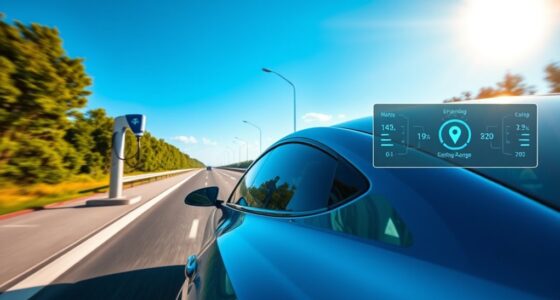
Battery longevity is a key consideration when using public chargers frequently. Fast chargers, while convenient, can generate more heat and stress on your battery, potentially accelerating degradation over time. To preserve your EV’s battery health, it’s best to avoid consistently charging to 100%, especially if you don’t need a full range. Instead, aim to keep your battery between 20% and 80% for daily use. When possible, use Level 2 chargers for slower, gentler charging that’s less taxing on the battery. Also, try to minimize frequent deep discharges; keeping your battery within ideal charge levels helps extend its lifespan, which is especially important when you depend solely on public stations. Additionally, understanding battery degradation can help you make smarter charging decisions that prolong your EV’s overall health.
To extend battery life, avoid frequent full charges and keep levels between 20% and 80% during regular use.
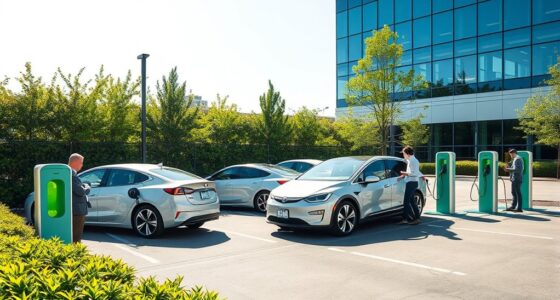
Charging etiquette is equally vital for a smooth experience at shared stations. Always take a moment to read any posted instructions and follow them carefully. When you arrive at a charging station, check if someone else is actively charging before plugging in, and be mindful of time. Many stations don’t have strict time limits, but it’s courteous to move your car once your EV is sufficiently charged, especially during busy hours. If you notice others waiting, don’t linger unnecessarily, and consider unplugging your vehicle if you’ve reached your desired charge level. Keep the area tidy by avoiding parking in spots designated for specific needs, such as handicapped or reserved spaces, unless you’re authorized. Respect other drivers’ time and space, and don’t leave your vehicle plugged in longer than needed, as it can block access for someone else.
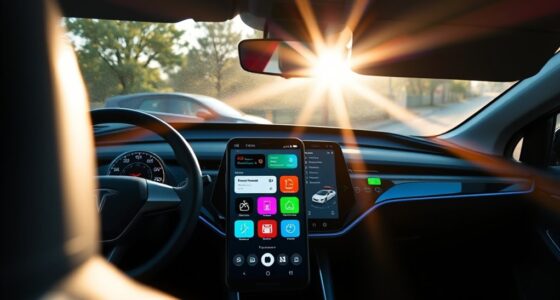
In addition, use the charging station efficiently by pre-planning your stops and monitoring your battery levels. Apps and station networks often provide real-time information about charger availability, helping you avoid unnecessary delays. Remember, practicing good charging etiquette not only keeps the stations available for everyone but also helps you build a positive relationship with the EV community. By balancing proper charging habits with mindful use of public stations, you’ll ensure your EV remains reliable and in good condition, even without a home charger. Ultimately, your respectful approach and attention to battery health will make your EV ownership experience smoother and more enjoyable.
Frequently Asked Questions
Can I Charge My EV at Any Public Station?
Yes, you can charge your EV at most public stations, but you should follow charging etiquette and public charger etiquette. Always be considerate by unplugging once your vehicle is charged, avoid occupying chargers longer than necessary, and respect others waiting. Using charging stations responsibly helps make sure everyone benefits. Keep an eye out for station-specific rules, and remember, courteous behavior makes public charging a smoother experience for all EV owners.
What Payment Methods Are Accepted at Public Chargers?
Public chargers accept various payment options, including credit and debit cards, mobile payment apps, and membership cards. Before you start charging, check the station’s card compatibility to guarantee your card works smoothly. Some stations also offer app-based payments or RFID memberships. Always have multiple payment methods ready, so you won’t get stranded if one option doesn’t work. Staying prepared makes charging hassle-free and keeps your EV ready to go.
How Long Does a Typical Public Charging Session Take?
A typical public charging session lasts around 30 minutes to an hour, depending on your EV’s charging speed and the station’s power level. Faster chargers, like DC fast chargers, can give you 80% charge in about 20-30 minutes, while Level 2 chargers take longer. Keep in mind station availability might affect your wait time, so plan your charging stops accordingly to avoid delays.
Are There Membership Programs for Discounted Public Charging?
You can definitely find membership programs for discounted public charging. Many networks offer charging memberships that give you access to membership discounts, reducing your overall costs. These charging memberships often include perks like faster charging and priority access, making your EV ownership more convenient. Signing up for a membership program is a smart move, especially if you rely solely on public stations, helping you save money and charge efficiently wherever you go.
What Should I Do if a Public Charger Is Out of Service?
If a public charger is out of service, you should quickly find an alternative station nearby, using apps or navigation tools that show real-time status. Consider ev home alternatives like portable chargers or adapters for faster access. Stay informed about charging station maintenance schedules in your area to avoid future issues. Always have a backup plan, and keep a list of multiple stations to ensure your EV stays charged without inconvenience.
Conclusion
Even without a home charger, you hold the key to your EV’s journey. Public stations are like guiding lanterns lighting your path through the dark, unfamiliar road. Each charge becomes a step forward, a symbol of your independence and adaptability. Embrace the rhythm of the open road, knowing that with patience and planning, you can navigate any distance. Your EV adventure is a voyage of discovery—where every station is a beacon leading you toward new horizons.