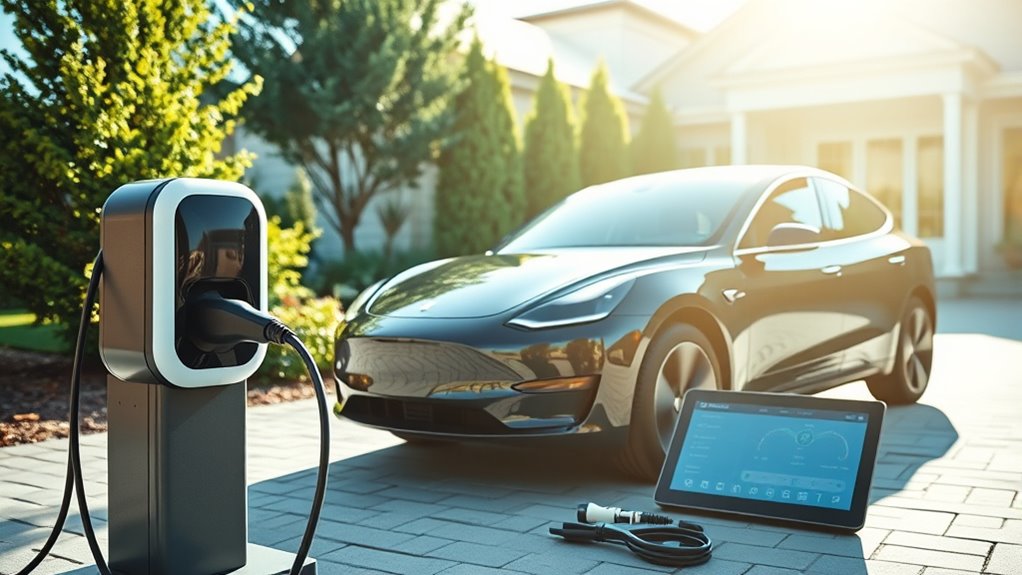
After buying a new EV, start by verifying your vehicle’s documentation, including warranty and registration. Inspect the exterior for damage, check tire condition and pressure, and test all lights and electronic systems. Take a short test drive to spot noises or vibrations, then complete your registration and secure insurance. Learn best battery care and charging habits to maximize range, and schedule routine maintenance. Keep improving your driving habits to get the most out of your EV—there’s more to discover ahead.
Key Takeaways
- Verify vehicle documentation, registration, insurance, and explore EV-specific tax credits and incentives.
- Conduct a thorough exterior inspection, checking for damage, tire condition, and proper tire pressure.
- Test all electronic systems, including lights, sensors, and firmware, ensuring safety and proper operation.
- Set up home and public charging stations, monitor battery health, and adopt optimal charging and driving habits.
- Schedule routine maintenance, update vehicle software, and familiarize yourself with vehicle features for long-term efficiency.
Verify Vehicle Documentation and Certification
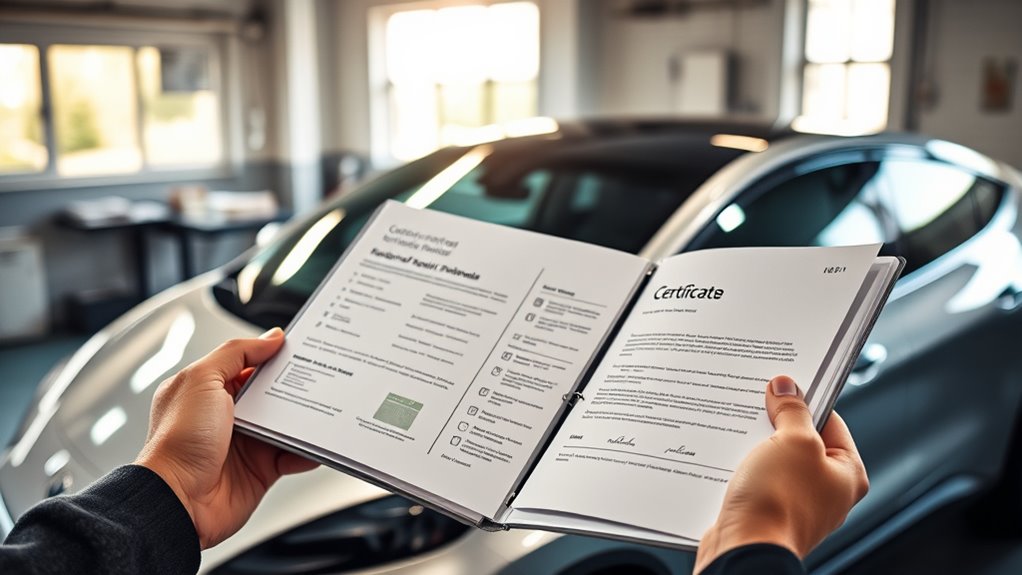
Before taking your new electric vehicle for a drive, it’s essential to verify all the documentation and certification. Start by checking the Certificate of Conformity to confirm your vehicle meets safety and environmental standards. Make sure the build date matches the purchase records, which can impact warranty coverage. Review the warranty documentation carefully to understand what’s covered and for how long. Keep your registration details up to date with your local DMV or transport authority. Ensure your insurance policy specifically covers electric vehicles and is active. If applicable, verify that you’ve filed for any available EV tax credits or incentives. Storing all purchase receipts, warranty papers, and manuals in a safe place helps streamline future service or claims. Confirming vehicle compliance ensures your EV is aligned with regulatory standards and properly documented from the start. Additionally, understanding battery warranty coverage can prevent surprises if issues arise with your EV’s power source. To further safeguard your investment, consider reviewing charger compatibility and installation requirements to avoid any future charging issues. Exploring charging station options in your area can also help plan for convenient charging locations.
Conduct a Visual Inspection for Damage and Defects
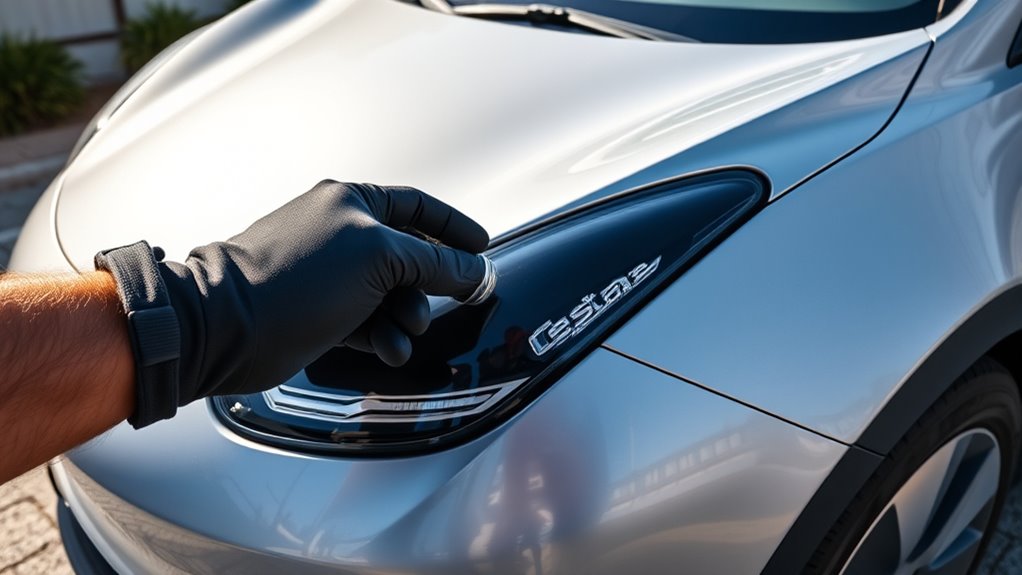
After verifying your vehicle’s documentation, give the exterior a thorough visual check. Inspect the body panels for dents, scratches, or paint imperfections that may have occurred during transit or delivery. Look closely at the doors, hood, trunk, and roof for any signs of damage. Check the windows and mirrors for cracks or chips. Examine the headlights, taillights, and signals to ensure they’re free of cracks and properly aligned. Pay attention to the wheels and rims for dents or corrosion. Confirm that all exterior badges and decals are intact. If you notice any damage or defects, document them immediately and inform your dealer before driving off. A careful visual inspection helps ensure your new EV is in perfect condition and ready for safe driving. Additionally, understanding European cloud innovation can help you stay informed about emerging technologies that promote sustainability and security in connected vehicle systems. Conducting a visual inspection may also help identify early signs of wear that could affect your vehicle’s efficiency over time, especially since vehicle maintenance plays a crucial role in long-term performance. Performing a comprehensive check can further ensure all components are functioning properly and prevent future issues. Regularly inspecting your vehicle’s exterior can also help detect early signs of corrosion, which is important for maintaining your EV’s structural integrity over the years.
Assess Tire Condition, Tread, and Pressure
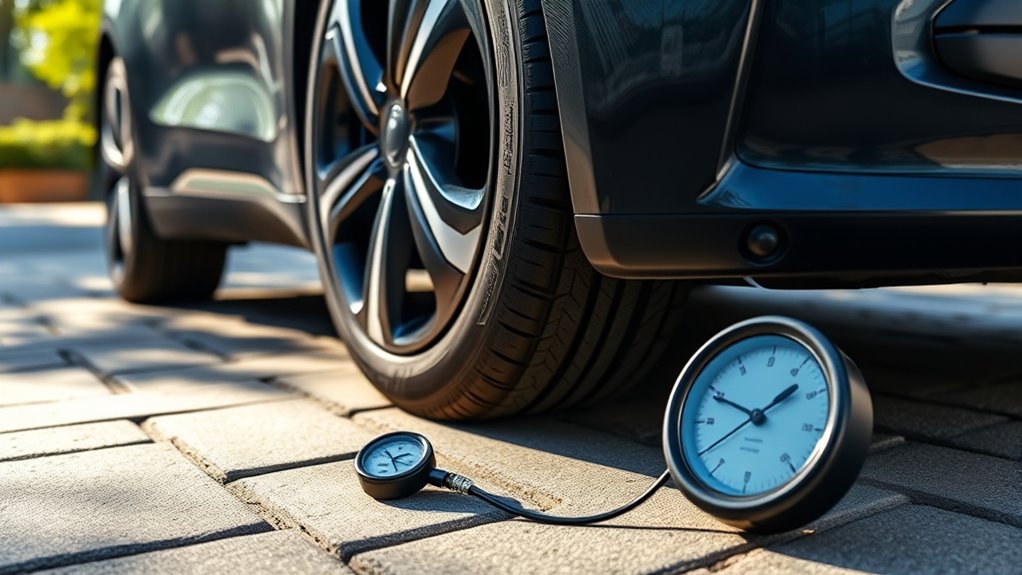
Make sure to check your tire tread depth regularly to guarantee it’s within safe limits. Keep an eye on tire pressure and adjust it to the manufacturer’s recommended levels for ideal performance. Also, inspect for visible damage like cuts or bulges that could compromise your tires’ safety. Regularly monitoring tire condition helps prevent potential issues on the road. Additionally, maintaining proper tire inflation can improve vehicle efficiency and extend tire life. For optimal safety, consider using a tire pressure gauge to ensure accurate readings during your checks. Properly checking tire wear is essential for ensuring your EV’s safety and longevity on the road. Staying informed about tire maintenance best practices ensures your EV remains safe and efficient on the road.
Check Tread Depth Regularly
Regularly inspecting your tire tread depth is essential to guarantee safe and efficient driving with your EV. Proper tread depth helps maintain traction, especially in wet or slippery conditions, reducing the risk of hydroplaning. Use a simple tread depth gauge or the penny test—insert a penny into the tire’s tread with Lincoln’s head upside down. If you can see the top of Lincoln’s head, it’s time to replace the tires. Check for uneven wear patterns, which may indicate alignment or suspension issues. Maintaining adequate tread depth also ensures suitable energy efficiency and handling. Don’t forget to measure regularly, especially before long trips or seasonal changes. Keeping your tires in top condition prolongs their lifespan and keeps you safe on the road.
Maintain Proper Tire Pressure
Maintaining proper tire pressure is vital for safe, efficient EV operation. Correct pressure improves handling, extends tire life, and optimizes range. Regularly assess your tires to catch issues early. Using tire pressure gauges regularly can help ensure accuracy in your measurements. Here’s what you should do:
- Check tire pressure monthly using a reliable gauge, ensuring it matches your vehicle’s recommended PSI.
- Inspect tire condition for cracks, bulges, or uneven wear that could indicate alignment issues. Staying aware of market trends and insights can help anticipate any external factors affecting tire wear.
- Examine tread depth to ensure sufficient grip; replace tires if the tread is worn below safety levels.
Keep a tire pressure gauge handy and schedule regular inspections. Properly inflated tires contribute to safer driving, better energy efficiency, and longer tire lifespan.
Inspect for Visible Damage
To guarantee your EV remains safe and efficient on the road, it’s essential to inspect your tires for visible damage regularly. Check for cuts, punctures, cracks, or bulges on the sidewalls and tread area. Look for uneven wear patterns that could indicate alignment issues or suspension problems. Ensure the tread depth is sufficient—at least 2/32 of an inch—and replace tires if they’re worn down. Also, verify your tire pressure matches the recommended levels, as under- or over-inflation can affect handling and range. Use a reliable tire pressure gauge for accuracy. Regular inspections help catch potential issues early, preventing blowouts or unsafe driving conditions. Keep your tires in top shape to maximize safety, performance, and your EV’s longevity.
Test All Lights, Signals, and Electronic Systems
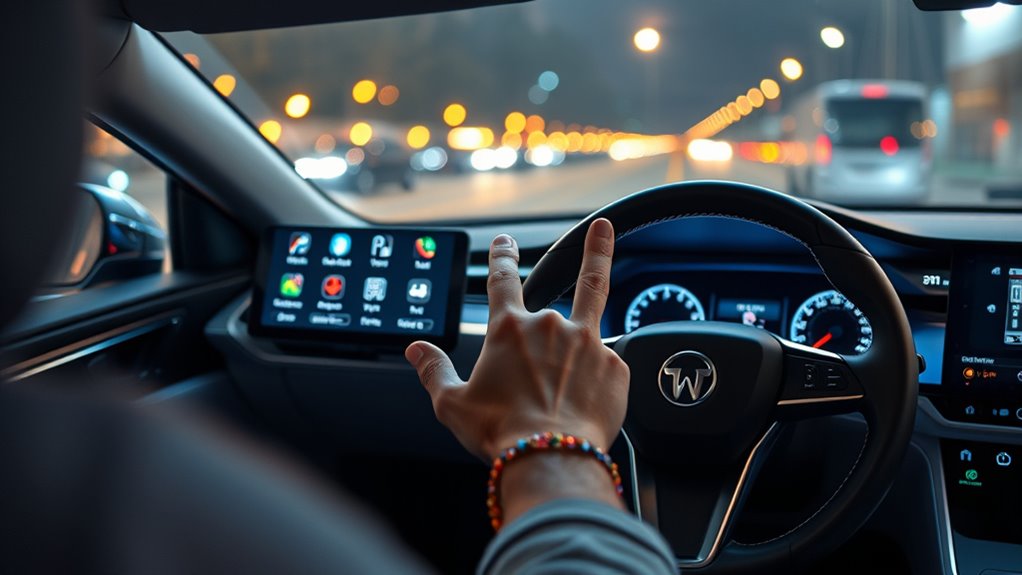
Before hitting the road, it’s essential to verify that all lights, signals, and electronic systems are functioning correctly. Proper lighting ensures safety and legal compliance. To check,:
- Turn on headlights, brake lights, and taillights to confirm they illuminate clearly.
- Activate turn signals and hazard lights to ensure they blink properly and the indicator lights on the dashboard work.
- Test electronic features like the rearview camera, parking sensors, and any driver-assist systems to verify they respond correctly.
- Confirm that modern ceiling fans and other electrical components in your vehicle are operating as intended, ensuring overall safety and performance.
- Additionally, inspect your vehicle’s electronic control systems to ensure firmware updates are current and functioning properly.
- Don’t forget to verify that the connected vehicle systems are syncing correctly with your mobile apps for seamless operation.
Perform a Short Test Drive to Check for Noises and Vibrations
Taking your EV for a short test drive is essential to identify any unusual noises or vibrations that could indicate underlying issues. Pay attention to sounds like grinding, squealing, or rattling during acceleration, deceleration, and braking. Notice if vibrations occur at specific speeds or when turning—these could signal suspension or wheel alignment problems. Keep the drive smooth and listen carefully, especially when applying gentle throttle or brakes. Check for any irregular handling or wobbling, which might point to tire or suspension issues. If you notice anything abnormal, note it and consider having a mechanic inspect the vehicle. A quick test drive helps ensure your EV runs quietly and smoothly, giving you peace of mind in your new investment. Additionally, being aware of Luggage & Bags and proper packing techniques can help keep your belongings secure during the drive. Being familiar with vehicle features can also assist in identifying potential issues early on. Regularly inspecting your EV’s wiring basics can prevent electrical problems and enhance safety. Moreover, understanding cable connections and ensuring that all electrical connections are secure can further improve your vehicle’s reliability.
Confirm Charging Station Compatibility and Setup
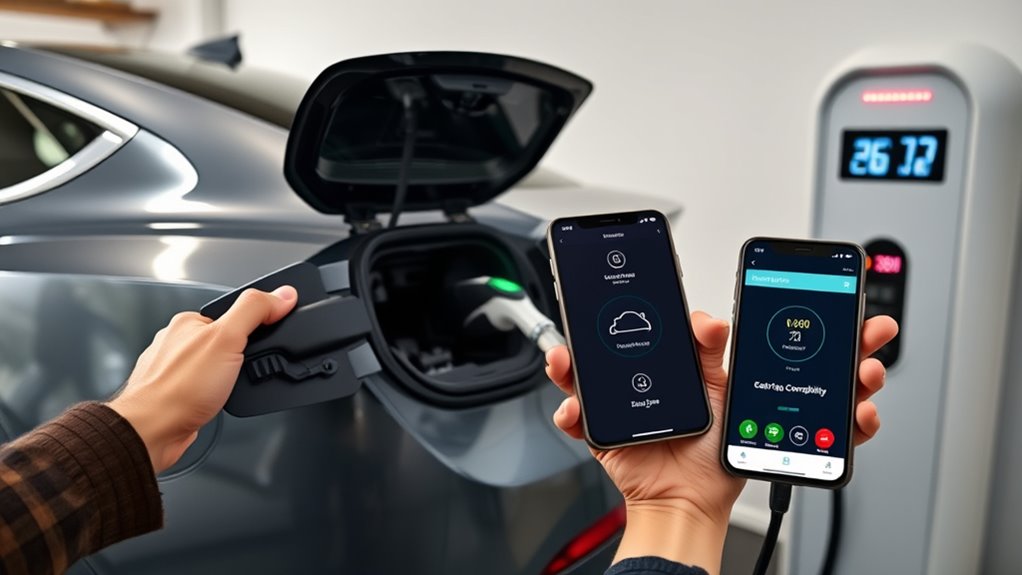
First, verify that your home charging station is compatible with your EV model to guarantee safe and efficient charging. Next, if you don’t already have a Level 2 charger, schedule its installation and confirm your electrical panel can handle the additional load. Finally, locate nearby public charging stations and check their access to keep your vehicle ready for longer trips. Additionally, ensure your home wiring is up to current safety standards to prevent potential electrical issues. Understanding load calculations can help you determine if your existing system can support new charging equipment safely, especially when considering electrical capacity and future expansion needs.
Compatibility Verification Process
Ensuring your home charging station is compatible with your electric vehicle is a crucial step in setting up a reliable and efficient charging process. To verify compatibility, start by checking your EV’s charging port type and compare it with your station’s connector. Next, confirm that your electrical system supports the station’s power requirements, including voltage and amperage. Finally, test the charging cable and port to guarantee they connect securely and operate properly.
Here’s what to do:
- Verify the connector type matches your EV (e.g., Type 1, Type 2, CCS).
- Confirm your electrical panel can handle the station’s load.
- Test the cable and port for a secure fit and proper charging function.
Installing Home Charger
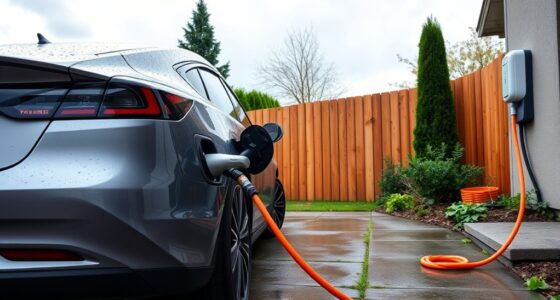
Before installing your home charger, it’s essential to verify that the station is compatible with your electric vehicle. Check your EV’s specifications to ensure the charger’s power output and connector type match. Confirm that your electrical panel can support the additional load, especially if installing a Level 2 charger, which requires a dedicated circuit. If you’re unsure, consult an electrician to evaluate your home’s wiring and capacity. Test the charging cable and port for a secure fit, making sure they operate smoothly. Once compatibility is verified, schedule professional installation if needed. Proper setup ensures safe, efficient charging and prevents potential electrical issues. Taking these steps helps you enjoy your new EV without surprises or delays.
Public Charging Access
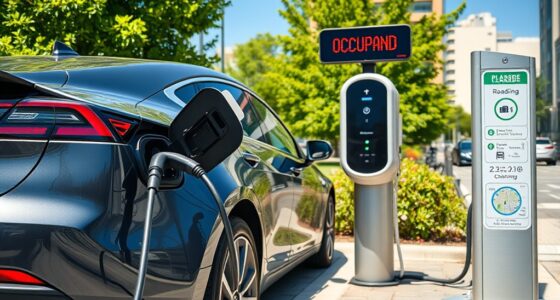
To make the most of public charging stations, you should verify that they’re compatible with your EV’s connector type and power requirements. This guarantees you can charge efficiently without issues. Here are three key steps:
- Check the connector type (e.g., CCS, CHAdeMO, Tesla) at each station to match your vehicle’s port.
- Confirm the station’s power output (Level 2 or DC fast charging) suits your EV’s charging capacity.
- Test access points by locating nearby stations, verifying access requirements like memberships or apps.
Doing this prevents delays and ensures smooth charging sessions. Always carry a compatible charging cable if your station requires one, and familiarize yourself with any station-specific instructions for quick, hassle-free charging on the go.
Register Your Vehicle and Secure Insurance Coverage
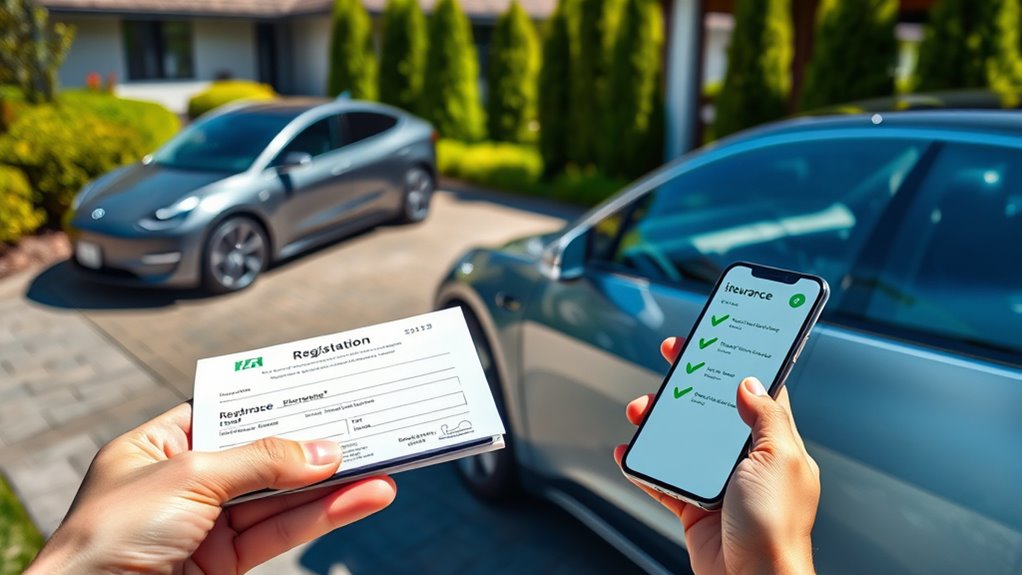
Registering your electric vehicle is a crucial step to make it legally roadworthy and protect yourself financially. Visit your local DMV or transportation authority to complete the registration process, ensuring your vehicle is officially recorded in your name. You’ll need to provide proof of ownership, insurance, and possibly emissions or compliance certificates. Securing insurance coverage specific to electric vehicles is essential—shop around for policies that offer extensive protection, including coverage for charging equipment and battery issues. Don’t forget to update your address and contact details with the manufacturer and dealer if necessary. Additionally, explore any available EV tax credits or government incentives to maximize savings. Proper registration and insurance keep you compliant and safeguard your investment on the road.
Learn Battery Care, Charging Practices, and Range Expectations
To keep your battery healthy and maximize range, you need to adopt good charging habits and understand your vehicle’s limits. Monitoring battery health helps prevent issues and guarantees longevity, while knowing real-world range sets accurate expectations. By following best practices, you can enjoy reliable performance and avoid surprises on the road.
Optimal Charging Habits
Understanding and adopting ideal charging habits is essential for maintaining your EV’s battery health and maximizing range. Proper practices help prevent battery degradation and ensure reliable performance.
Here are key habits to follow:
- Avoid charging to 100% regularly — keep the charge between 20% and 80% for daily use to prolong battery life.
- Use Level 2 chargers whenever possible — they charge faster and are gentler on the battery compared to rapid charging.
- Plan your charging schedule — charge overnight at home or during off-peak hours to maintain consistent battery health and optimize energy costs.
Battery Health Monitoring
Monitoring your EV’s battery health is essential to guarantee it performs reliably over time. Regularly check your vehicle’s battery status through the onboard display or dedicated apps. Learn your manufacturer’s recommended charging practices, such as avoiding frequent 100% charges and keeping the state of charge within ideal ranges. Keep an eye on your battery’s temperature, especially during fast charging or hot weather, to prevent overheating. Track energy consumption and note any sudden drops in range, which could indicate issues. Maintaining good charging habits, like using Level 2 chargers and not overcharging, helps prolong battery life. Staying informed about your battery’s condition ensures you get the most out of your EV’s range and longevity, saving you money and hassle long-term.
Real-World Range Tips
Getting the most out of your EV’s range requires adopting smart battery care and charging habits. To maximize efficiency and avoid range anxiety, consider these tips:
- Maintain moderate charge levels – avoid consistently charging to 100%, and try to keep your battery between 20% and 80% for daily use. This helps prolong battery life and maintains consistent range.
- Use fast charging sparingly – frequent rapid charges can stress the battery and reduce capacity over time. Reserve fast chargers for long trips, and rely on Level 2 or home charging for regular topping up.
- Plan routes with charging stops – know where public chargers are located along your regular routes. This prevents unexpected range drops and ensures you arrive comfortably at your destination.
Schedule Routine Maintenance and Service Appointments

Scheduling routine maintenance and service appointments is essential to keep your electric vehicle running smoothly and reliably. Regular checkups help catch potential issues early, ensuring your EV stays in top condition. Follow your manufacturer’s recommended service intervals for brake fluid, coolant, tire rotations, and cabin air filter replacements. Keep track of software updates and remote diagnostics to optimize performance and security. Don’t forget to verify your warranty coverage for the battery and drivetrain, and schedule your first service appointment as soon as possible. Staying proactive with maintenance prevents costly repairs down the line and prolongs your vehicle’s lifespan. Use your dealership or trusted EV specialists to handle routine work, and always confirm appointments ahead of time to avoid delays.
Adapt Driving Habits and Explore EV Management Apps
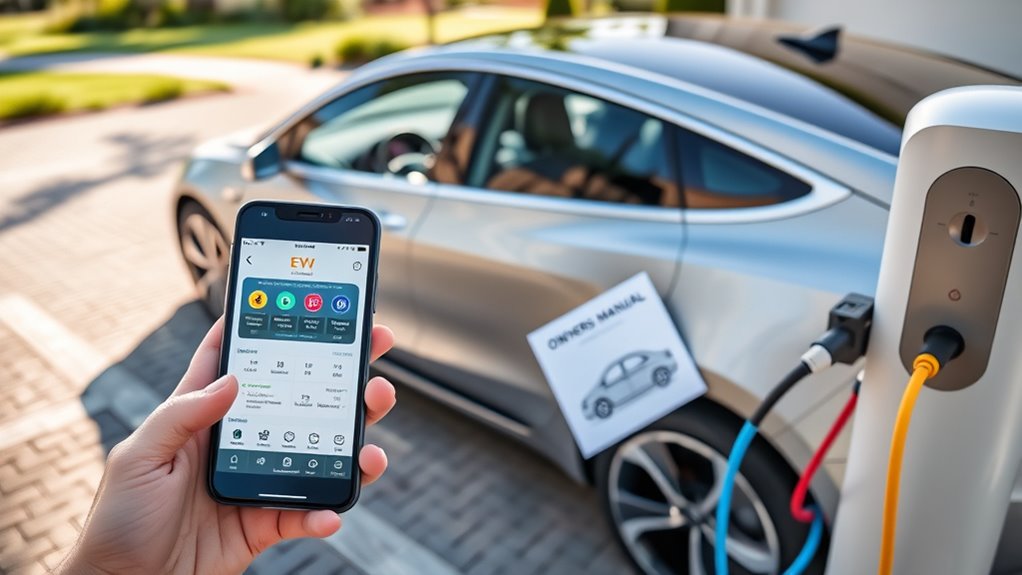
Have you considered how your driving style impacts your EV’s efficiency and battery life? Your habits directly affect range and longevity. To optimize performance:
- Practice smooth acceleration and deceleration to maximize regenerative braking and conserve energy.
- Maintain steady speeds and avoid sudden stops to reduce power drain.
- Use EV management apps to monitor battery health, set charging limits, and track energy usage.
Exploring these apps helps you stay informed about your vehicle’s status and suggests ways to improve efficiency. Many apps also provide navigation with charging station locations, so you can plan longer trips without worry. Adjusting your driving style and leveraging technology ensures you get the most out of your electric vehicle, extending its lifespan and saving you money in the long run.
Frequently Asked Questions
How Do I Properly Dispose of or Recycle Old EV Batteries?
You should contact certified recycling facilities or your EV dealer for proper disposal of old batteries. Avoid throwing them in regular trash, as they contain hazardous materials. Many manufacturers offer take-back programs, and some local recycling centers accept EV batteries for safe recycling. Make sure to follow all safety guidelines when handling. By properly recycling, you protect the environment and comply with local regulations.
What Should I Do if My Ev’s Range Drops Significantly?
When your EV’s range drops considerably, you should first check the battery’s health and monitor your driving habits, recognizing the difference between normal wear and potential issues. Then, consult your vehicle’s manual or contact a professional for a diagnostic test. While technology evolves, understanding your car’s limits ensures you stay prepared. If needed, schedule a service appointment to address any underlying battery or system concerns, maintaining peak performance.
Are There Specific Roadside Assistance Services for Electric Vehicles?
Yes, there are roadside assistance services tailored for electric vehicles. Many providers, like AAA and manufacturer-specific programs, offer EV-specific roadside help, including charging support, battery jump-starts, and towing to charging stations or repair shops. You should check your coverage options, keep emergency contacts handy, and guarantee your roadside assistance plan includes EV services. This way, you’re prepared for any unexpected issues on the road.
How Can I Optimize Charging Times to Save Energy and Costs?
You can optimize charging times by charging during off-peak hours when electricity rates are lower, often overnight or late evenings. Use your EV’s app to schedule charging sessions and monitor energy consumption. Additionally, set your charging limits to avoid 100%, which saves energy and extends battery life. Consider installing a smart charger that automatically adjusts based on energy prices and your daily schedule for maximum savings.
What Are the Best Practices for Maintaining the Ev’s Cooling System?
To maintain your EV’s cooling system, regularly check coolant levels and top off if needed, following your manufacturer’s guidelines. Keep an eye on cooling fans and inspect for debris or blockages. Schedule scheduled coolant flushes and system checks during your routine maintenance. Guarantee the cooling system operates smoothly, especially before long trips or hot weather. Proper care prevents overheating, extends component lifespan, and keeps your EV running efficiently.
Conclusion
Now that you’ve completed these essential steps, you’re ready to enjoy your new electric vehicle confidently. Staying proactive with maintenance and understanding your car’s features guarantees a smooth, efficient ride. Are you prepared to maximize your EV experience and make the most of its benefits? Embrace these habits, and you’ll not only extend your vehicle’s lifespan but also contribute to a greener planet with every charge. Happy driving!