When planning an off-grid EV trip through remote areas with few charging stations, you should thoroughly research and identify all available chargers along your route beforehand. Maximize your battery life by adopting energy-efficient driving techniques, preconditioning your battery, and carrying portable chargers or backup power sources. Set realistic travel goals based on terrain and away-from-grid challenges. For safer, confident off-road adventures, you’ll find essential tips and strategies in the upcoming guidance.
Key Takeaways
- Identify and verify charging station locations and compatibility before departure, especially in remote areas.
- Optimize battery life by preconditioning, adopting energy-efficient driving, and utilizing regenerative braking.
- Plan routes with realistic distance goals, accounting for terrain and potential energy consumption increases.
- Carry backup power sources like portable chargers and solar panels to extend off-grid capabilities.
- Maintain flexibility with backup charging options and utilize cloud support for remote assistance during the trip.
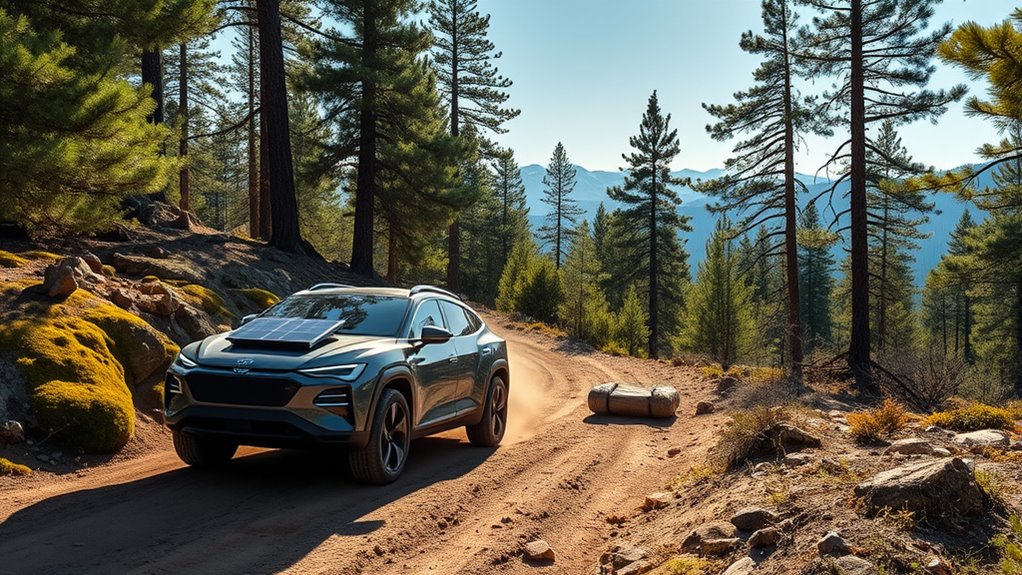
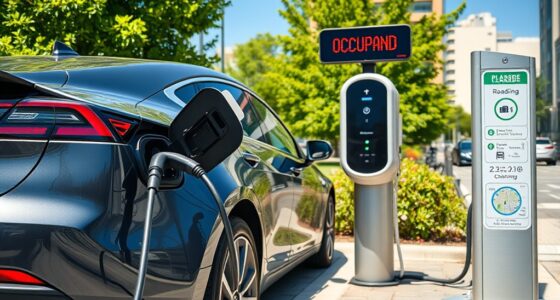
Off-roading with electric vehicles offers a thrilling way to explore rugged terrains while reducing your environmental impact. However, venturing into areas with few charging stations demands careful planning, especially when it comes to charging station accessibility and EV battery management. Before you hit the trail, research the routes thoroughly to identify available charging points, even if they’re sparse. Remote areas often have limited charging station accessibility, so knowing where chargers are located can make the difference between a smooth trip and a stranded adventure. Apps and online maps dedicated to EV charging stations are invaluable tools—they can help you pinpoint the nearest chargers and verify their operational status. Keep in mind that some chargers may be incompatible with your specific EV model, so understanding the types of connectors and charging speeds available along your route is essential.
Effective EV battery management becomes even more critical when off the grid. Since you’ll likely be far from quick-charging stations, conserving battery life must be a priority. Start by preconditioning your vehicle’s battery while still plugged in at your starting point; this optimizes battery temperature for maximum efficiency. During your trip, adopt energy-saving driving techniques—accelerate gradually, maintain steady speeds, and avoid excessive idling or aggressive maneuvers. Reducing auxiliary power consumption, like cabin heating or cooling, can also extend your range. Carrying a portable charger or power bank compatible with your EV’s charging port can provide a backup if you find yourself low on power. Some advanced EVs offer features like regenerative braking, which helps recharge the battery during downhill driving or deceleration, further stretching your range. Additionally, understanding the European cloud infrastructure and utilizing it for route planning can enhance your connectivity and access to support services in remote areas.
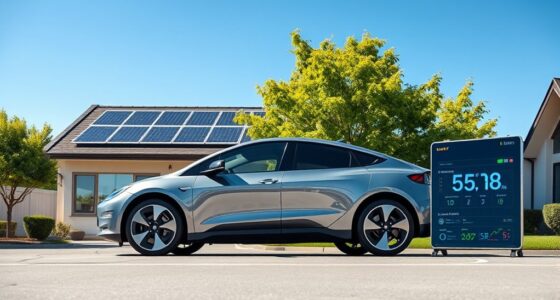
Planning for off-grid charging is about more than just knowing where to plug in. It’s about understanding your vehicle’s battery capacity and how to best manage it throughout your journey. Always start with a full charge, and set realistic goals for daily distances based on your vehicle’s range and terrain conditions. If your route involves steep inclines or rough terrain, expect higher energy consumption, so plan for extra buffer time and energy reserves. Carrying essential gear, like portable solar panels or backup batteries, can offer additional peace of mind. Ultimately, successful off-road EV trips hinge on meticulous planning—balancing charging station accessibility with savvy battery management will keep you exploring rugged landscapes without worry.
Frequently Asked Questions
How Do I Find Hidden or Unofficial Charging Spots?
You can find hidden chargers and unofficial stations by exploring EV forums, social media groups, and apps like PlugShare or ChargePoint that include user-reported locations. Sometimes, local businesses or farms host unofficial stations, so calling ahead or checking community boards can reveal hidden chargers. Also, ask fellow off-roaders or local residents—they often know about unofficial charging spots that aren’t widely advertised online.
What Should I Do if My EV Battery Fails Off-Grid?
If your EV battery fails off-grid, don’t panic—think of it as an adventure, not a disaster. Prioritize emergency preparedness by carrying a portable charger or backup power source. Practice charging etiquette by politely asking for help if you find a charger. Stay calm, conserve energy, and assess your options—maybe even walk to find assistance. Remember, patience and a good attitude are your best tools in this electric wilderness.
Are There Any Special EV Accessories for Remote Areas?
Yes, you can enhance your off-road adventures with special EV accessories like portable charging units and rugged off-road accessories. Portable chargers let you recharge your EV in remote areas, ensuring you’re never stranded. Off-road accessories, such as reinforced bumpers or all-terrain tires, improve your vehicle’s durability and traction on rough terrains. These accessories make off-grid trips safer and more manageable, giving you peace of mind during your remote explorations.
How Do Weather Conditions Affect EV Range Off-Road?
Weather conditions, especially solar weather and temperature impact, considerably affect your EV’s off-road range. Hot or cold temperatures can reduce battery efficiency, making your vehicle use more energy. Solar weather, like storms or high radiation, may impact charging options or battery performance. To minimize these effects, plan your trip for moderate weather, use thermal management systems, and carry extra charge or backup plans to guarantee you stay powered in remote areas.
Can I Upgrade My Ev’s Battery for Longer Trips?
Imagine your EV’s battery glowing brighter, ready to extend your adventures. Yes, you can upgrade your EV’s battery for longer trips, enabling a range extension that keeps you exploring off the beaten path. Many models offer battery upgrade options or aftermarket solutions that boost capacity. Just check compatibility and professional installation. With a battery upgrade, you’ll confidently take on remote terrains, knowing your ride’s range is optimized for every rugged mile.
Conclusion
Beginning off-road EV adventures isn’t just about reaching your destination; it’s about embracing the challenge that tests your ingenuity and resilience. With careful planning and a pioneering spirit, you’ll discover that the journey itself becomes a proof to your resourcefulness. Remember, the road less traveled often leads to the most unforgettable experiences—proving that even in the wild, innovation lights the way. So, go ahead—venture off the grid and let your adventure redefine what’s possible.