To avoid running out of power during your road trip, always have a Backup Charging Strategy. Carry multiple high-capacity portable chargers and familiarize yourself with nearby charging stations using apps or GPS updates. Regularly check your vehicle and device batteries, and plan stops around charging spots to stay connected and safe. Being prepared with extra chargers and knowledge of options helps you stay in control. Keep exploring to discover more tips on maintaining power on the go.
Key Takeaways
- Carry multiple high-capacity portable chargers to ensure devices stay powered during unexpected power outages.
- Familiarize yourself with nearby charging station locations and use real-time apps to plan stops effectively.
- Regularly monitor vehicle and device battery levels, charging early before they become critically low.
- Incorporate portable chargers into your main plan as a reliable backup when primary charging options fail.
- Maintain flexibility and preparedness to adapt your charging strategy, preventing being stranded without power.
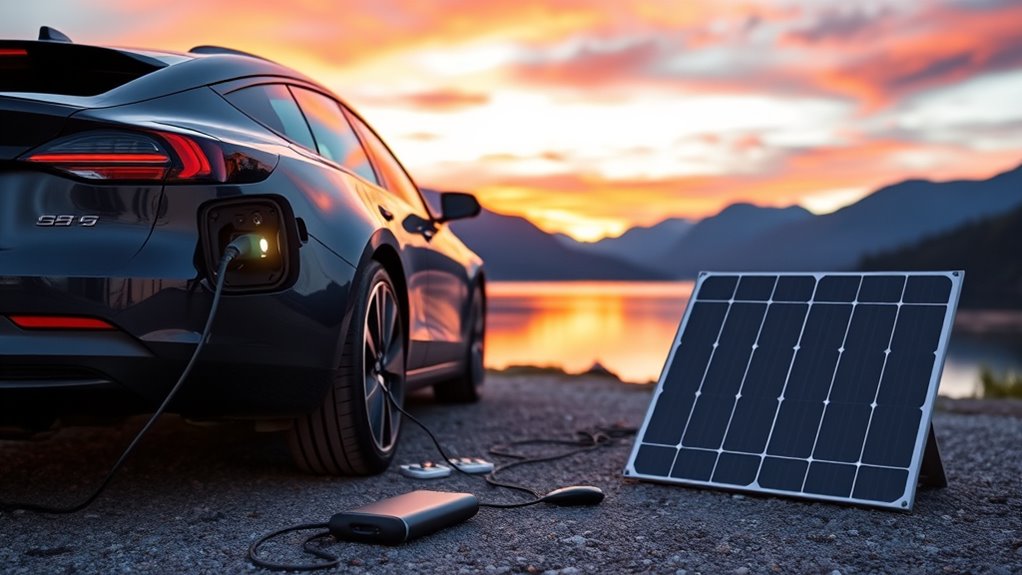
When the primary charging strategy falls short, implementing a Charging Plan B becomes essential. On a road trip, your main plan might involve relying on your vehicle’s built-in charging system or a few designated charging stations along your route. However, unexpected delays, sparse charging station locations, or equipment failures can leave you stranded without power. That’s when having a backup plan, like portable chargers and knowing where to find additional charging stations, makes all the difference. Portable chargers are compact, versatile, and can be lifesavers when your car’s battery or main charging options aren’t enough. They allow you to keep your devices charged, guaranteeing you stay connected, navigate efficiently, and access emergency contacts if needed. Carrying a few high-capacity portable chargers means you won’t be left scrambling for power while on the go.
Having portable chargers and charging station knowledge ensures you stay powered and connected during your road trip.
In addition to portable chargers, familiarizing yourself with the locations of nearby charging stations along your route is vital. Many apps and GPS services now highlight charging station locations, their availability, and real-time status updates. By planning your stops around these stations, you minimize the risk of running out of power in remote or poorly serviced areas. When you approach a charging station, confirm your vehicle is compatible with the available chargers—some stations have fast chargers, while others may only offer standard charging options. Having this knowledge beforehand allows you to optimize your stops and avoid unnecessary delays. Understanding charging station options is an important part of maintaining your Charging Plan B.
Your Charging Plan B also involves keeping a close eye on your vehicle’s battery level, especially if you’re relying on portable chargers for your devices. Make it a habit to monitor your battery status regularly. If you notice it’s running low, locate the nearest charging station or switch to a portable charger for your devices. It’s wise to pack multiple portable chargers, each fully charged, so you always have backup power when needed. In unfamiliar areas, don’t hesitate to ask locals or staff at rest stops about the nearest charging options—they often have helpful insights that might not be listed online.
Ultimately, a successful road trip depends on your ability to adapt and prepare. When your primary charging method falters, a well-thought-out Charging Plan B involving portable chargers and knowledge of charging stations guarantees you stay powered up, connected, and in control. With these strategies in place, you can navigate unexpected challenges confidently, making your journey smoother and more enjoyable from start to finish.
Frequently Asked Questions
What Is the Best Portable Charger for Long Road Trips?
The best portable charger for long road trips depends on your needs, but look for one with high battery capacity—at least 20,000mAh—to keep your devices powered. Make certain it’s compatible with your devices, whether smartphones, tablets, or GPS units. Opt for a charger with fast-charging features and multiple ports, so you can recharge several devices simultaneously. This way, you stay connected and avoid running out of power during your trip.
How Do I Find Charging Stations in Remote Areas?
Imagine exploring through a vast, quiet landscape where charging station maps become your guiding stars. To find remote area charging stations, use apps like PlugShare or ChargePoint, which highlight hidden chargers off the beaten path. Download offline maps beforehand, and keep a portable charger handy. This way, you’re prepared to fuel up confidently, even in the most secluded spots, turning potential dead zones into charging opportunities.
Can Solar Chargers Fully Power My Electric Vehicle?
Solar chargers can’t fully power your electric vehicle on their own because of limited solar power and battery capacity. While they can supplement charging, they typically won’t meet your vehicle’s full energy needs, especially during short daylight hours or cloudy days. To guarantee reliable charging, use solar power as a backup or supplemental option, and always keep a backup charging strategy in mind for remote or extended trips.
What Safety Precautions Should I Take With Backup Chargers?
Think of your backup charger as a trusted lighthouse guiding your journey’s stormy nights. To keep it shining bright, you must perform regular power bank maintenance and verify charger compatibility with your vehicle. Always inspect cables and connectors for wear, avoid overcharging, and store it in a cool, dry place. These precautions safeguard your backup power source, ensuring it’s ready to light your way when you need it most.
How Often Should I Test My Backup Charging Devices?
You should test your backup charging devices at least once every three to six months to guarantee they’re reliable. Regular battery maintenance and checking charging frequency help prevent surprises during road trips. Plug in your backup chargers, verify they power up correctly, and monitor their performance. This way, you stay confident your backup devices will work when you need them most, avoiding potential dead batteries mid-journey.
Conclusion
Think of your charging plan as a trusty compass on your road trip journey. Always have a backup strategy tucked in your pocket, ready to steer you clear of dead ends and empty batteries. With a solid plan B, you’re like a seasoned sailor steering through unpredictable waters—confident and in control. So, keep your chargers close and your mind sharp, ensuring your adventure flows smoothly, no matter what surprises the road has in store.