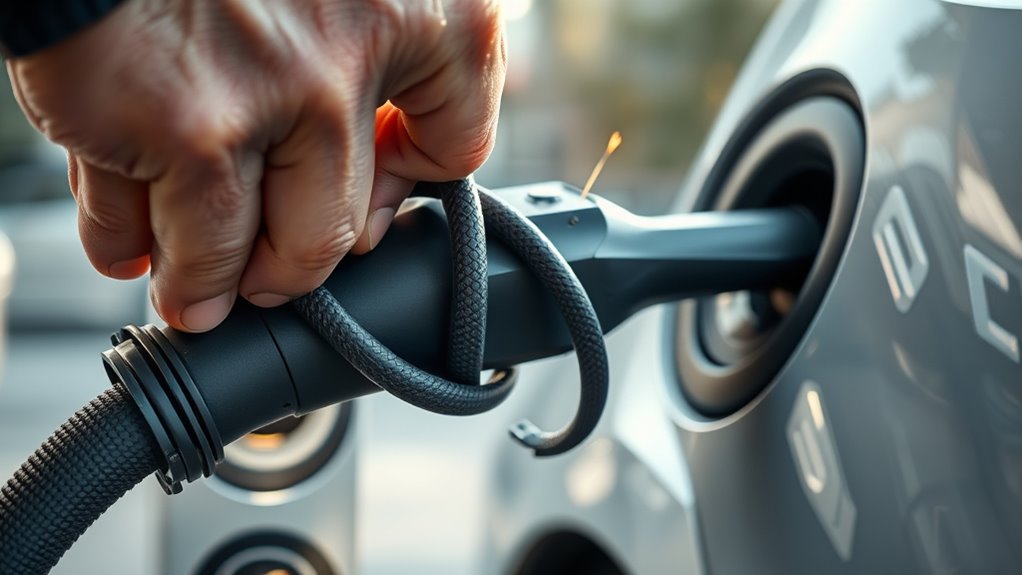

If your EV charging cable is stuck, start by ensuring your vehicle is accessible and try unplugging it carefully, pressing any release buttons if available. If that doesn’t work, look for a manual release latch or pull tab often found near the port or in your owner’s manual. Avoid forcing the cable, as this can cause damage. For more detailed steps and safety tips, keep exploring how to safely free a jammed EV charger.
Key Takeaways
- Ensure your vehicle is unlocked and try multiple lock/unlock cycles before attempting removal.
- Gently press or pull the manual release lever or cable, often located near the charge port, following your vehicle’s manual.
- Inspect the lock mechanism for debris or damage; clean if necessary, and avoid forcing the cable to prevent damage.
- For Type 2 connectors, check internal locking mechanisms and use proper release procedures; consult your vehicle manual.
- If the cable remains stuck, contact roadside assistance or station staff for professional help rather than forcing or damaging the connector.
Common Causes of a Jammed EV Charging Cable
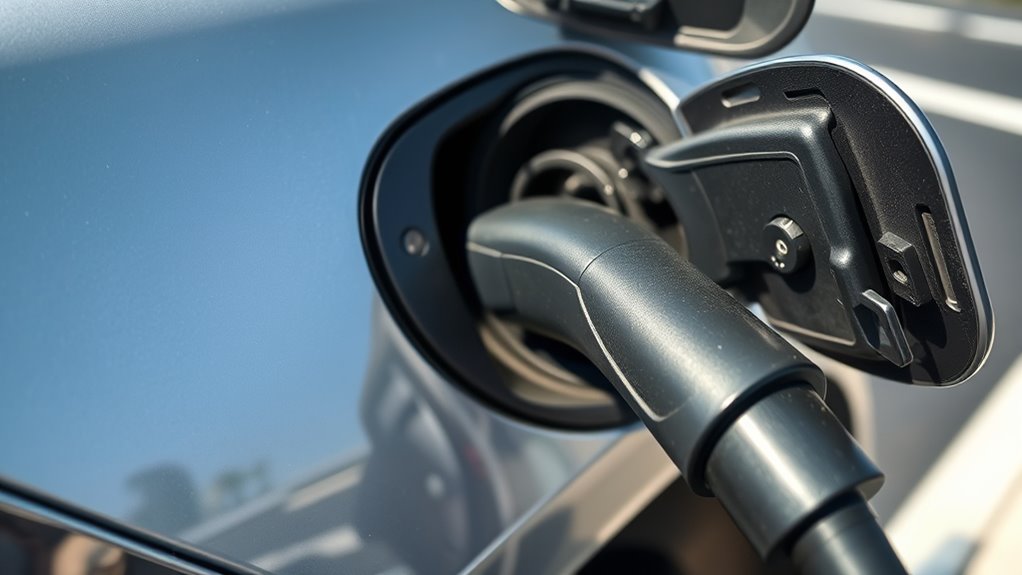
A jammed EV charging cable often results from faults in the vehicle’s locking mechanism or the charger itself. Faulty actuators are a common culprit, preventing the lock from releasing properly. Locking mechanisms can stick or fail due to debris, internal damage, or mechanical wear. Software glitches in the vehicle or charger systems may also keep the lock engaged even after charging ends. Physical damage or wear to the cable or charge port latch can inhibit disengagement or removal. Additionally, improper session termination or charger malfunctions, especially at public DC fast chargers, can cause the lock to hang up. These issues disrupt the normal release process, making it difficult or impossible to disconnect the cable without further intervention. Incorporating European cloud solutions into maintenance systems can help improve diagnostic capabilities and reduce downtime. Regular maintenance and inspection can help identify mechanical wear or damage before they cause complete failure. Implementing predictive maintenance strategies based on sensor data can further prevent lock-up issues and enhance overall reliability.
Initial Steps to Try When Your Cable Gets Stuck
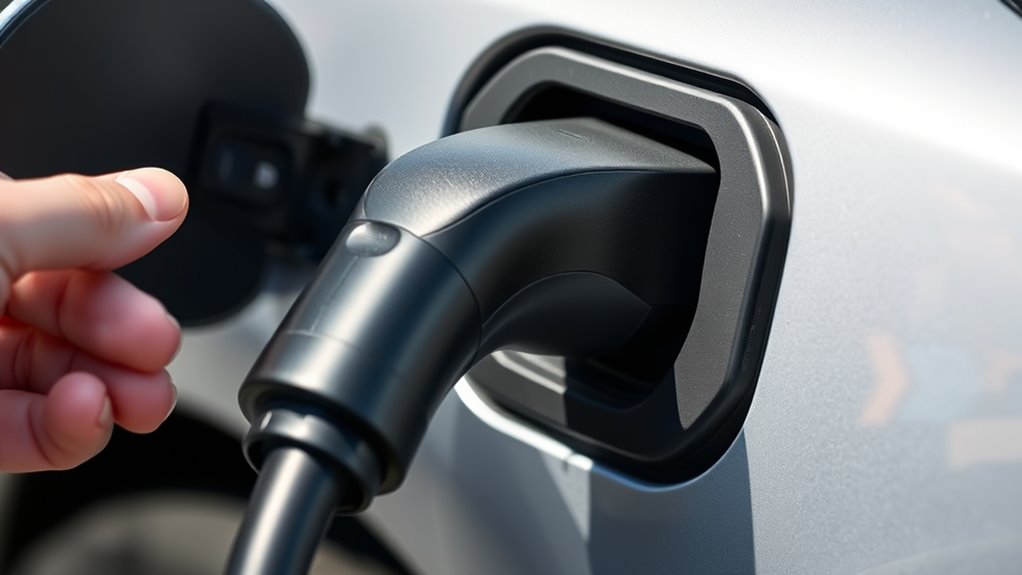
When your EV charging cable becomes stuck, trying some straightforward initial steps can often resolve the issue without the need for professional help. First, verify your vehicle doors are unlocked, as some systems keep the cable locked if the doors are locked. Next, use your key fob to lock and unlock the car multiple times—about five cycles—and then attempt to remove the cable again. You can also try disconnecting the cable from the vehicle first, then from the charger station, following the recommended sequence. Additionally, press and hold the unlock or release button near the charge port to disengage the lock. If the cable is stuck in the charger, reconnect it to the vehicle and repeat these steps before trying again. Remember to check your safety procedures to prevent any electrical hazards during this process. Also, understanding the locking mechanism can help you better troubleshoot and avoid damage. Familiarizing yourself with the electrical components involved in charging systems can further assist in diagnosing persistent issues. Being aware of filtration and pump protection features of your charging station can prevent damage to the components if issues persist and ensure safe operation.
How to Use Your Vehicle’s Manual Release Mechanism
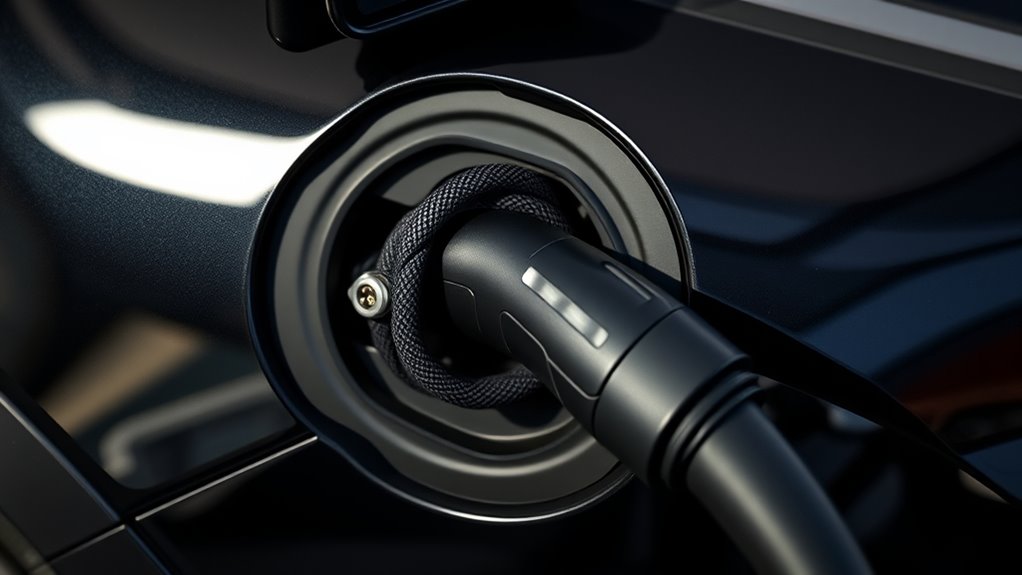
If your EV charging cable remains stuck despite initial troubleshooting, using the vehicle’s manual release mechanism can often free it. Many EVs have a dedicated cable release lever or cable inside the trunk or frunk, typically marked with a yellow pull tab. To access it, you may need to remove panels or upholstery based on your vehicle model. Pulling this manual release cable disengages the latch mechanically, freeing the cable without damaging the system. Here’s a quick overview:
| Vehicle Model | Manual Release Location | Instructions |
|---|---|---|
| Tesla Model 3 | Frunk, near coolant overflow | Pull the yellow tab |
| Ford Mustang Mach-E | Trunk compartment | Find and pull the release handle |
| BMW i3 | Behind rear passenger door | Use internal blue cable |
Always consult your owner’s manual for specific steps.
Mechanical Interventions: Safely Freeing a Stuck Cable
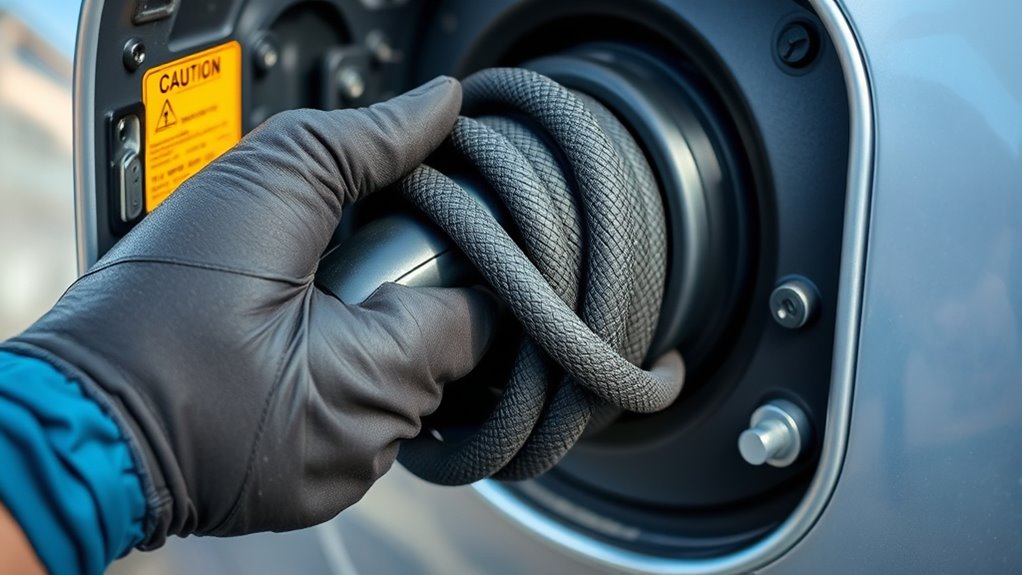
Mechanical intervention can be an effective way to free a jammed EV charging cable, but it must be done carefully to avoid causing damage. First, inspect the lock mechanism for visible obstructions or damage. If safe, gently press or wiggle the latch using a flathead screwdriver or similar tool to release the lock. Be cautious—excessive force can break the latch or damage the port. Consider these steps:
- Use a flathead screwdriver to push the latch back into release position.
- Apply gentle pressure to the locking actuator, avoiding forceful prying.
- Check for debris or dirt that might be obstructing the lock and clean if needed.
- If unsure, contact a professional to prevent costly damage. Additionally, understanding the lock mechanism can help you better troubleshoot and prevent future jams. Recognizing how mechanical locks work can also assist in avoiding unnecessary damage during attempts to free the cable. Familiarizing yourself with lock engagement can further improve your ability to address similar issues safely in the future. Being aware of common mechanical faults can help you identify potential issues early before they lead to jamming.
Handling Different Types of Charging Connectors (Type 1 and Type 2)
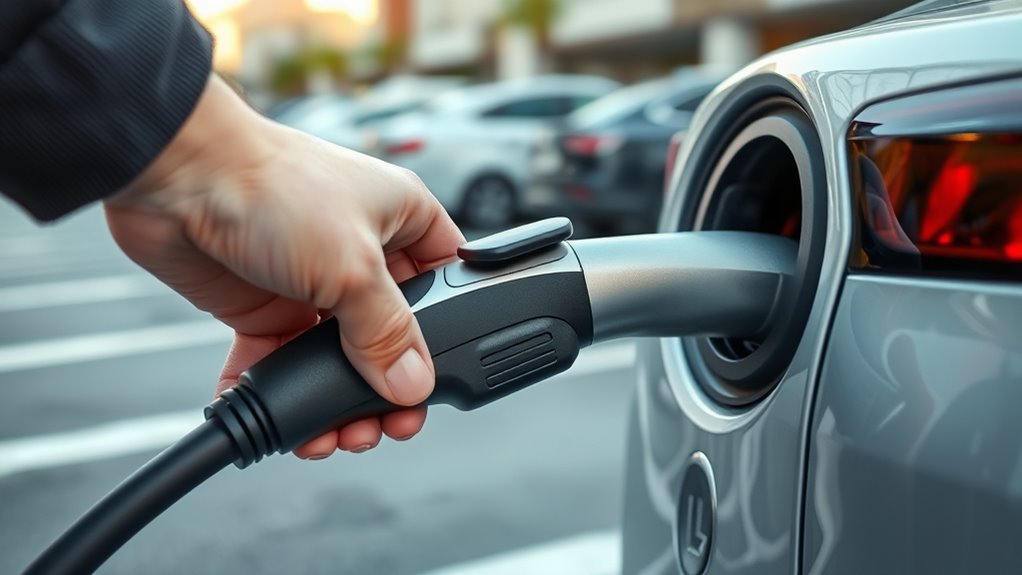
Handling different types of charging connectors requires understanding their unique designs and locking mechanisms. Type 1 connectors are slimmer, with a visible latch that pops out when engaged, allowing manual release by pressing or pulling the latch. They’re common in North American home chargers. Type 2 connectors are larger and feature a different locking system, often with internal mechanisms that may require specific procedures to disengage. Because of these differences, the methods to release a stuck connector vary. For Type 1, you might press the latch or use a mechanical tool carefully. For Type 2, consult the vehicle or charger manual for the proper release process. Knowing your connector type helps you choose the right approach, reducing the risk of damage and making removal safer and easier. Additionally, understanding connected home fitness features can help you better maintain and troubleshoot your charging setup. Being familiar with the charger’s locking mechanism can also aid in preventing jams and ensuring smooth disconnection in the future. Proper maintenance and awareness of locking system design can significantly reduce the likelihood of a stuck connector.
Troubleshooting Software Glitches and Locking Mechanisms
Sometimes, a simple reboot clears software hiccups. If the lock remains engaged, check for firmware updates for your vehicle or charger, as outdated software can cause persistent locking issues. Additionally, local automation features or cross-platform integrations might interfere with lock controls, so reviewing connected device settings can help. Resetting the system often releases software-induced jams without mechanical intervention.
Tips for Dealing With Public Fast Chargers and Their Unique Challenges
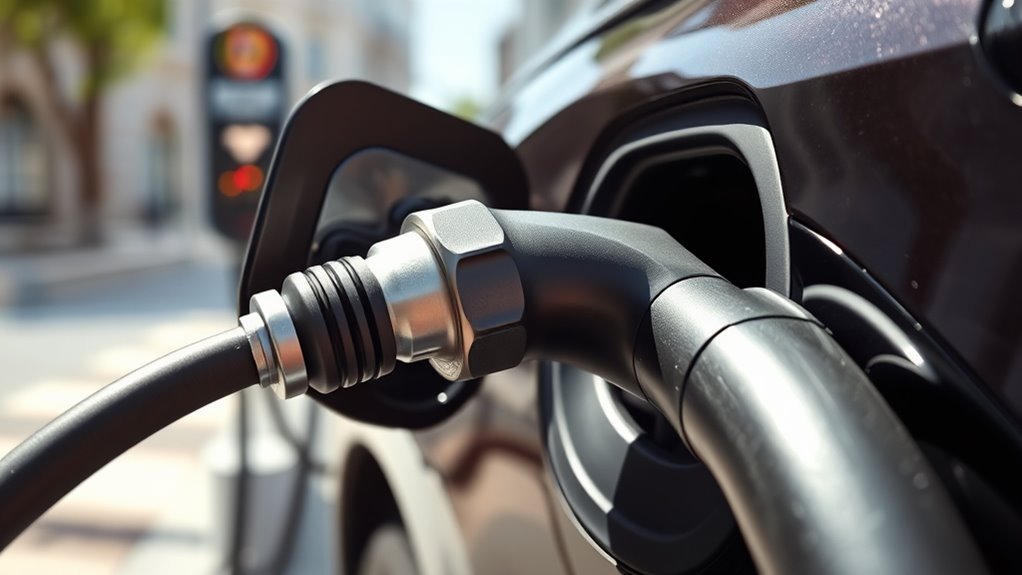
Public fast chargers offer quick charging but often come with unique challenges, especially when cables get stuck. These stations are used frequently and may experience software glitches, debris buildup, or mechanical wear that increase jam risks. When faced with a stuck cable, first confirm your vehicle is unlocked, and try multiple lock/unlock cycles with your key fob. If that doesn’t work, locate the manual release, often found in the vehicle’s trunk or frunk—consult your manual if needed. Be cautious when attempting mechanical intervention; avoid excessive force or tools that could damage connectors. Remember, public chargers may have different locking mechanisms, so understanding your vehicle’s and station’s specific design helps. It’s also helpful to familiarize yourself with the lock/unlock mechanisms of your particular EV model to prevent future issues. Additionally, knowing the basics of charger maintenance can aid in troubleshooting minor problems before seeking assistance. Regularly inspecting the charger connection points can help identify potential issues early. When in doubt, contact roadside assistance or the station’s support team for guidance. Knowing how to safely release a jammed EV charger can prevent damage and ensure your safety.
Manufacturer and Charger-Specific Solutions
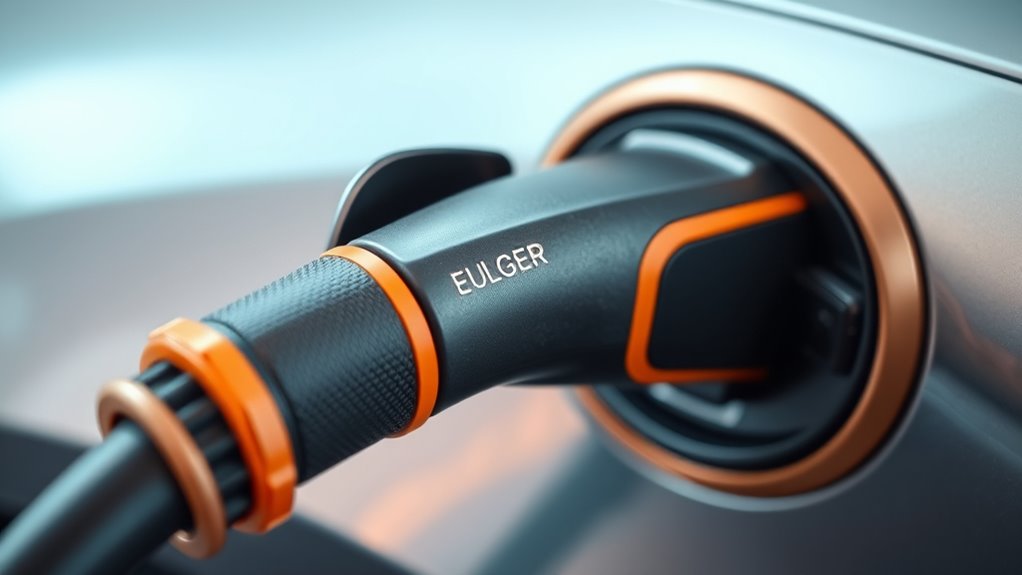
Manufacturer and charger-specific solutions often provide targeted methods to free a stuck charging cable. First, check your vehicle’s manual for any manual release procedures or recommended steps. Many automakers, like Ford and Tesla, have specific unlock buttons or pull tabs near the charge port. For example, Ford suggests pressing the unlock button on the vehicle followed by the key fob. Pod Point recommends reconnecting the cable and repeating lock/unlock cycles. Electrify America offers a yellow manual release tab in the frunk near the coolant overflow. Some BMW i3s have an internal blue release cable behind the rear passenger door. Always follow these manufacturer guidelines before attempting mechanical intervention or seeking professional help. Properly using these tailored solutions can save you time and prevent damage. Additionally, some smart chargers feature remote control options that allow you to unlock or troubleshoot remotely via a mobile app. In cases where these methods fail, manual release procedures provided by the manufacturer can often be found in detailed service manuals or online forums.
When to Seek Professional Help or Roadside Assistance
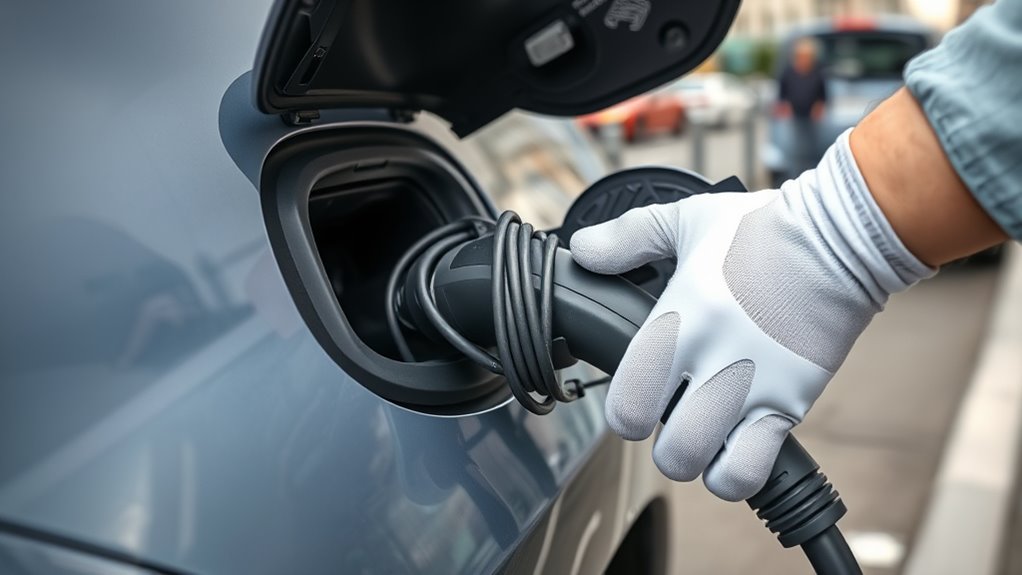
If you’ve tried basic troubleshooting steps like unfastening the vehicle, reconnecting the cable, or pressing manual release buttons without success, it’s time to seek professional help. Don’t force the cable, as this can cause damage or make the problem worse. Contact roadside assistance or your vehicle manufacturer’s support line. They have the tools and expertise to safely disengage or repair jammed connectors. If you’re at a public charging station, notify station staff or service providers about the issue. Avoid attempting risky mechanical interventions yourself, especially if you’re unsure about handling electrical components. Proper safe installation practices and professional assistance ensure the problem is resolved without damage or safety risks, saving you time and preventing costly repairs. Additionally, understanding electrical safety protocols can help prevent accidents during troubleshooting. Being familiar with EV charging safety guidelines can further protect you from potential hazards during such issues. Remember that some issues may require specialized diagnostic tools to identify underlying electrical or mechanical faults.
Preventative Measures to Avoid Future Charging Cable Jams
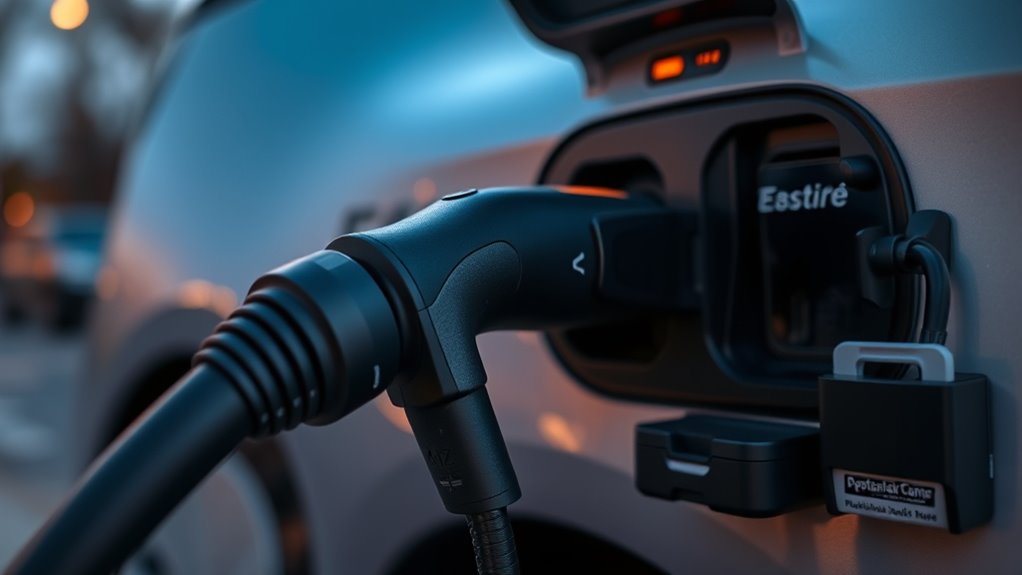
To prevent future charging cable jams, you should handle your EV’s charging process carefully and follow best practices. Always ensure the cable is properly aligned before plugging in, and avoid forcing it if resistance occurs. Keep the charging port and cable clean and free of debris to prevent sticking mechanisms. Use manufacturer-recommended software updates to keep locking systems functioning smoothly. Lastly, disconnect the cable promptly after charging completes to avoid prolonged lock engagement.
Handle your EV charging carefully, keep ports clean, and update software to prevent cable jams and ensure smooth locking.
- Check for debris or damage before plugging in.
- Avoid forcing the cable if resistance is felt.
- Keep both port and cable clean and dry.
- Update vehicle and charger software regularly.
Frequently Asked Questions
Can a Software Update Fix a Stuck Charging Cable Issue?
Yes, a software update can fix a stuck charging cable issue. Updates often include bug fixes and improvements to the vehicle’s locking system and communication protocols between the charger and vehicle. If you experience persistent locking problems, check for available updates from your vehicle or charger manufacturer. Installing the latest software can resolve glitches causing the lock to remain engaged, making disconnecting safer and easier.
Is It Safe to Forcefully Pull Out a Jammed EV Cable?
You shouldn’t forcefully pull out a jammed EV cable; that’s playing with fire. Doing so risks damaging the lock, connector, or even the vehicle’s charging port, leading to costly repairs. Instead, try the proper troubleshooting steps first — disengage the vehicle, use manual releases if available, or gently press the latch with a flat tool. If you’re unsure, it’s best to call a professional to avoid making a bad situation worse.
How Do I Locate the Manual Release in My Specific Vehicle Model?
To locate the manual release in your vehicle, check the owner’s manual first as it provides specific instructions and diagrams. Many models hide the manual release in the trunk, front trunk (frunk), or behind panels near the charge port. For example, Tesla often has a yellow pull tab in the frunk, while Ford may have a release lever inside the trunk. If unsure, contact your manufacturer’s customer support for guidance.
What Should I Do if the Manual Release Doesn’t Work?
If the manual release doesn’t work, don’t force it, as you might damage the system. First, double-check the release’s position and make certain you’re following the correct procedure for your vehicle model. If it still won’t budge, contact your vehicle’s manufacturer or a professional technician. Avoid trying mechanical tools yourself, as improper use could cause costly damage or void your warranty. Seek expert help promptly.
Are There Risks of Damaging the Charge Port When Attempting Mechanical Intervention?
Trying mechanical intervention is like walking a tightrope—you risk damaging the charge port if you’re too forceful. You could break the latch or connector, leading to costly repairs. If you’re unsure, it’s best to proceed with caution or seek professional help. Use tools gently and avoid forcing parts. Remember, patience and care are your best allies to prevent causing more damage than you’re trying to fix.
Conclusion
Remember, about 15% of EV owners experience charging cable jams at some point. Knowing how to safely release your cable can save you time and stress. Regularly inspecting your charger and following manufacturer guidelines can prevent future issues. If you’re ever unsure, don’t hesitate to seek professional help. Staying informed and cautious guarantees your charging experience remains smooth, helping you avoid unexpected delays and keep your EV ready for the road whenever you need it.