
To prepare your EV for winter, start by maintaining a charge level between 20% and 80%, avoiding full charges or discharges. Use preconditioning to warm up the battery before driving, and add insulation or thermal wraps to retain heat. Park in sheltered areas when possible and keep an eye on weather forecasts. Regular maintenance and smart charging help protect your battery from cold damage, and you’ll find more tips if you explore further.
Key Takeaways
- Keep your battery charge between 20% and 80% to prevent cold-related damage.
- Use preconditioning features to warm the battery before driving in cold weather.
- Insulate your battery with thermal wraps or blankets to retain heat.
- Park in sheltered or garage areas to protect the battery from extreme cold exposure.
- Regularly check and maintain your charging habits to ensure optimal battery health during winter.
Understanding How Cold Weather Affects Your EV Battery
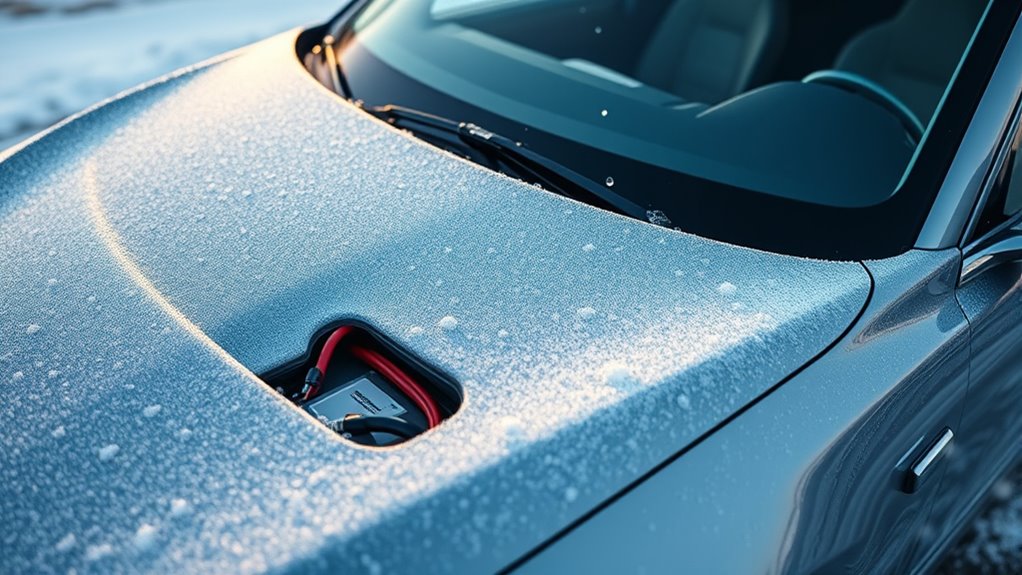
Cold weather can markedly impact your EV battery’s performance, causing it to lose capacity and reduce range. When temperatures drop, your battery experiences increased battery degradation, which accelerates wear over time. Cold conditions also hinder chemical reactions inside the battery, decreasing its ability to hold and deliver charge efficiently. To combat this, thermal management systems work to keep the battery at an ideal temperature. Without proper thermal regulation, your battery may become too cold, impairing its performance and accelerating degradation. This process not only shortens your vehicle’s range but also affects long-term health. Recognizing how cold weather influences your battery underscores the importance of understanding thermal management and how it can help maintain your EV’s efficiency during winter months. Proper ventilation and maintenance can also play a role in supporting your vehicle’s overall battery health in cold conditions. Additionally, advanced thermal regulation technologies are increasingly being integrated into newer EV models to better withstand winter climates.
Pre-Winter Battery Charging and Maintenance Strategies
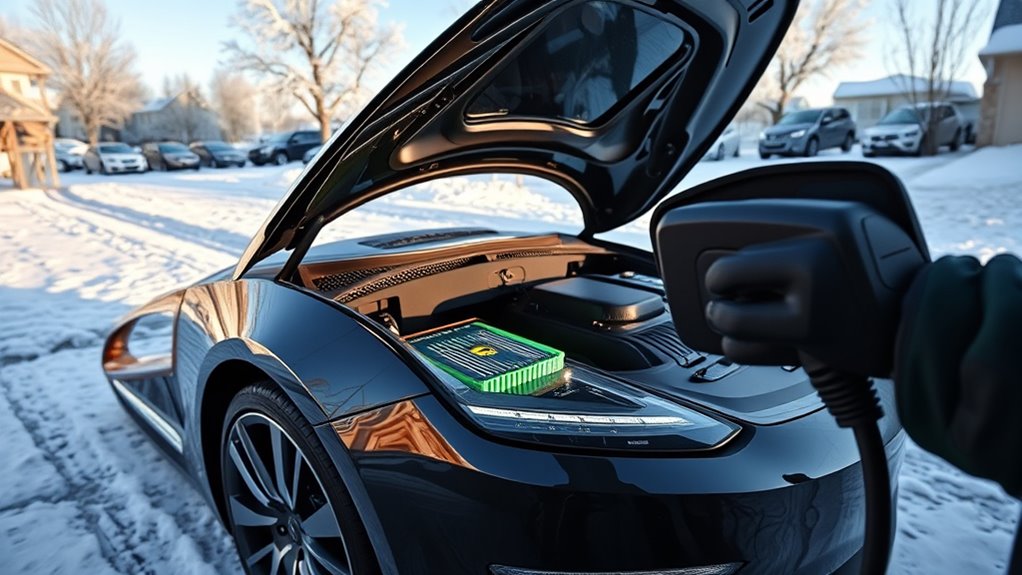
To guarantee your EV performs at its best during winter, it’s essential to prioritize proper battery charging and maintenance before the cold sets in. Follow good charging etiquette—avoid frequent rapid charges and aim for a steady, moderate level to protect your battery’s lifespan. Keep your battery adequately charged, ideally between 20% and 80%, to prevent deep discharges that can harm it in cold weather. Regularly check your charging habits and ensure your charging station is functioning correctly. Proper pre-winter care minimizes the risk of reduced range and keeps your battery healthy through the season. Additionally, understanding safety considerations and proper fuel-storage checklists can help you prepare for any unforeseen winter emergencies. Maintaining optimal air quality around your vehicle can also help prevent issues caused by moisture buildup and corrosion during winter months. Ensuring proper battery insulation can further protect your EV’s power source from extreme cold temperatures. Incorporating temperature regulation strategies can also help maintain consistent battery performance in cold climates. Implementing preventative maintenance routines can extend your battery’s lifespan and improve winter performance.
Tips for Optimizing Battery Performance in Low Temperatures

Wondering how to keep your EV’s battery performing ideally in low temperatures? Your charging habits play a big role. Try to keep your battery’s charge level between 20% and 80%, avoiding full charges or complete discharges that can stress the battery in cold weather. Using a preconditioning feature, if available, warms the battery before driving, improving performance. Additionally, consider adding battery insulation, like thermal wraps or blankets, to help retain heat and protect against cold exposure. These measures reduce the impact of low temperatures on battery chemistry, maintaining efficiency and range. Be aware of Free Floating conditions which can influence thermal management and overall battery health during winter. Understanding local weather forecasts can help you plan charging and insulation strategies more effectively. Regularly monitoring your battery’s state of charge and understanding your vehicle’s load calculations can also help prevent unnecessary strain. Proper thermal management, including battery heaters and insulation, is essential for optimal winter performance. Remember, consistent, mindful charging habits combined with proper insulation can markedly optimize your EV’s battery performance during winter months.
Practical Steps to Protect Your Battery During Winter Drives

Protecting your EV’s battery during winter drives requires taking practical steps to minimize cold-related performance issues. Start by ensuring your vehicle’s battery insulation is intact; adding supplementary insulation can help retain heat and shield against frigid temperatures. Utilize your vehicle’s thermal management system if available, as it actively regulates battery temperature, keeping it within ideal ranges. Preconditioning your EV before departure warms the battery, reducing the impact of low temperatures during the drive. Whenever possible, park in a garage or sheltered area to shield your vehicle from the cold. Additionally, avoid exposing your car to extreme cold for extended periods. Properly maintaining your vehicle’s connectivity and system settings can also optimize battery performance in cold weather. Being aware of battery thermal management systems and how they function can further help you maintain optimal performance. Understanding how thermal regulation works in your vehicle can help you better manage its cold-weather behavior. Regularly inspecting and maintaining your vehicle’s filtering systems can prevent potential blockages that impair thermal regulation, ensuring consistent temperature control. Also, keeping your vehicle’s software updates current can improve the effectiveness of thermal management features. These simple measures help maintain battery efficiency, extend range, and prevent cold-related performance drops during winter driving.
Long-Term Battery Care and Storage Tips for Cold Seasons
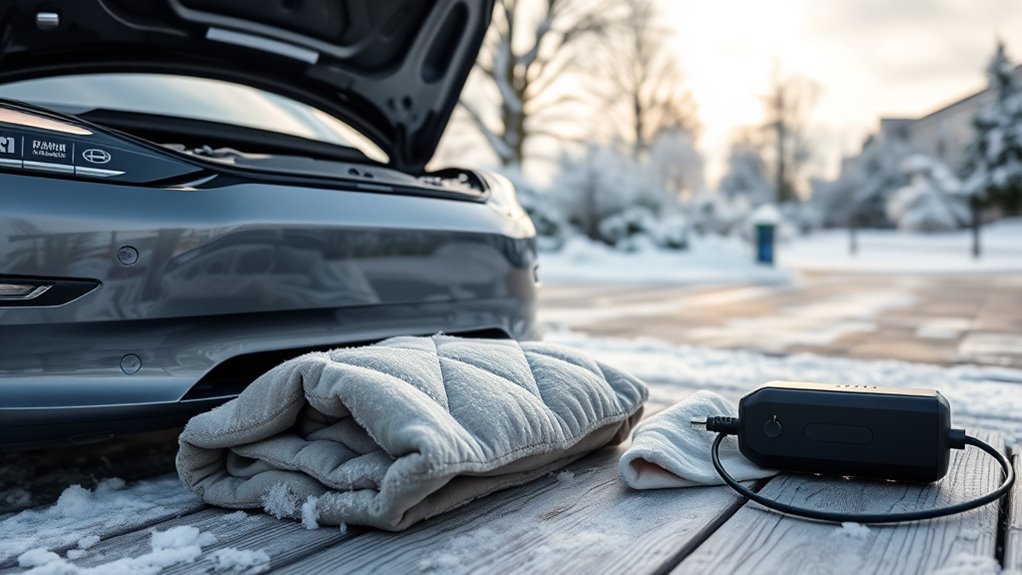
Maintaining your EV’s battery during long-term storage in cold seasons requires careful planning and proper techniques. To maximize battery longevity, keep the battery charge level between 50% and 70%. Avoid fully charging or completely draining it, as extreme states can harm the cells over time. Store your vehicle in a cool, dry place, ideally in a garage, to prevent temperature fluctuations that can reduce charging efficiency. If possible, connect the battery to a trickle charger or maintain a regular, partial charge every few weeks to prevent it from dropping too low. Regularly check for corrosion or leaks, and follow manufacturer guidelines for storage. Incorporating connected fitness technology like monitoring devices can help you track your EV’s battery health remotely. To ensure optimal performance, understanding robotic maintenance tips and proper storage practices can be beneficial. Additionally, staying informed about battery chemistry can help you make better decisions regarding charging and storage procedures. Employing smart charging techniques can also optimize battery health during periods of inactivity. These steps help ensure your battery remains healthy, retains ideal charging efficiency, and performs reliably when you’re ready to hit the road again.
Frequently Asked Questions
How Often Should I Check My EV Battery’s Health During Winter?
You should check your EV battery’s health at least once a month during winter. Regular battery diagnostics help identify issues early and guarantee peak performance. Incorporate maintenance routines like inspecting for corrosion and monitoring charge levels to extend battery life. Staying proactive prevents unexpected problems and keeps your EV running smoothly in cold weather. Consistent checks give you peace of mind and help you address potential issues before they become costly.
Are There Specific Types of Chargers Better for Cold Weather?
In freezing weather, you’ll want chargers that are ultra-compatible with your EV’s system, avoiding the nightmare of incompatible connectors. Opt for fast chargers with built-in cold weather adaptations—these can heat your battery while charging, preventing freezing damage. Always check charger compatibility and locate charging stations with winter-friendly features. This way, your EV stays cozy and ready, even in the harshest cold snaps, keeping your journeys smooth and stress-free.
Can Using Seat Heaters Impact My EV Battery Life?
Using seat heaters can impact your EV battery life because they increase overall power consumption, which can slightly affect the battery temperature and efficiency. While seat heater usage mainly warms you comfortably, it draws additional energy from the battery, especially in cold weather. To minimize impact, use seat heaters judiciously and guarantee your vehicle’s battery temperature remains within ideal ranges for better performance and longevity.
What’s the Best Way to Warm up My EV Battery Before Driving?
Did you know that preconditioning can boost your EV’s range by up to 20% in winter? To warm up your battery before driving, use built-in preconditioning methods or activate your car’s climate control while still plugged in. Battery insulation also helps retain heat. These techniques guarantee your battery stays warm, improves efficiency, and reduces strain on the battery during cold starts. Always precondition your EV for ideal winter performance.
How Do Winter Conditions Affect My Ev’s Charging Speed?
Winter conditions slow down your EV’s charging speed because cold temperatures reduce charging efficiency. You might notice longer charging times or less range, as cold weather accelerates battery degradation and hampers performance. To minimize this, keep your battery warm using preconditioning features and park in sheltered spots. Staying proactive ensures your EV maintains ideal charging speeds and reduces long-term battery wear during winter months.
Conclusion
So, embrace winter’s chill and keep your EV happy—like a cozy snowman in a heated room. With these tips, you’ll dodge icy surprises and keep your battery humming through snowstorms. Think of your battery as a delicate snowflake—fragile but resilient with a little care. Ignore these tips, and your EV might just turn into a frozen pumpkin. Stay warm, stay savvy, and enjoy the winter ride without turning into a battery-powered icicle!