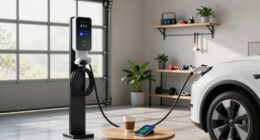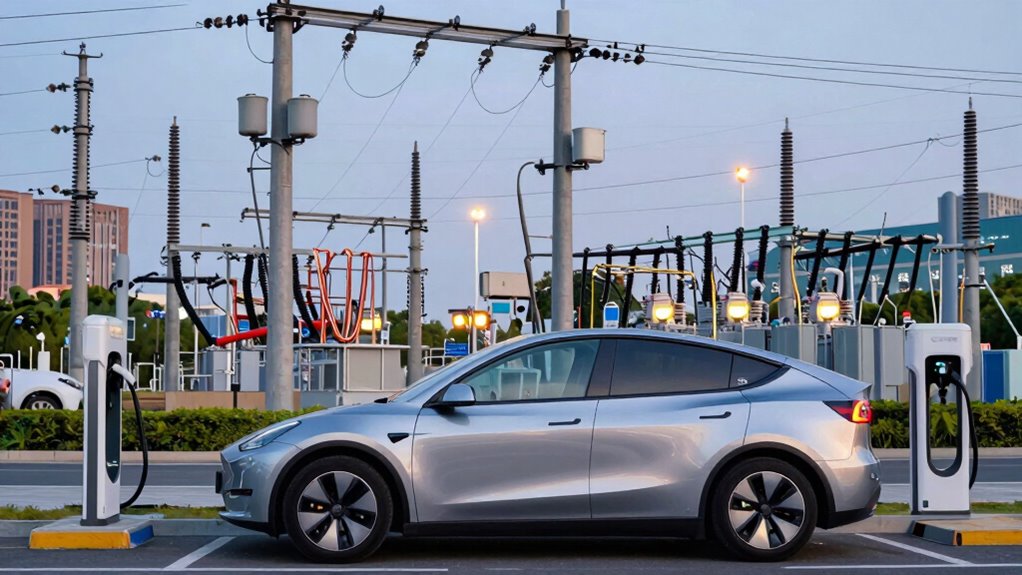

Your utility company plays a vital role in powering your EVs efficiently and sustainably. They integrate renewable energy sources like solar and wind to guarantee cleaner charging, modernize the grid with smart tech for more reliable service, and support infrastructure investments for fast and future-ready charging stations. By managing local energy resources and strengthening the grid, they help reduce emissions and improve resilience. If you stay tuned, you’ll see how they truly keep your EV journey green and dependable.
Key Takeaways
- Utility companies facilitate renewable energy integration, ensuring cleaner, greener electricity for EV charging.
- They modernize the grid with smart technology to deliver reliable, efficient power for EVs.
- Utility firms invest in infrastructure like fast chargers and vehicle-to-grid systems for seamless EV adoption.
- They incorporate local renewable resources, reducing transmission losses and boosting energy resilience.
- Utility companies support sustainability and grid resilience, enabling environmentally friendly and reliable EV charging experiences.
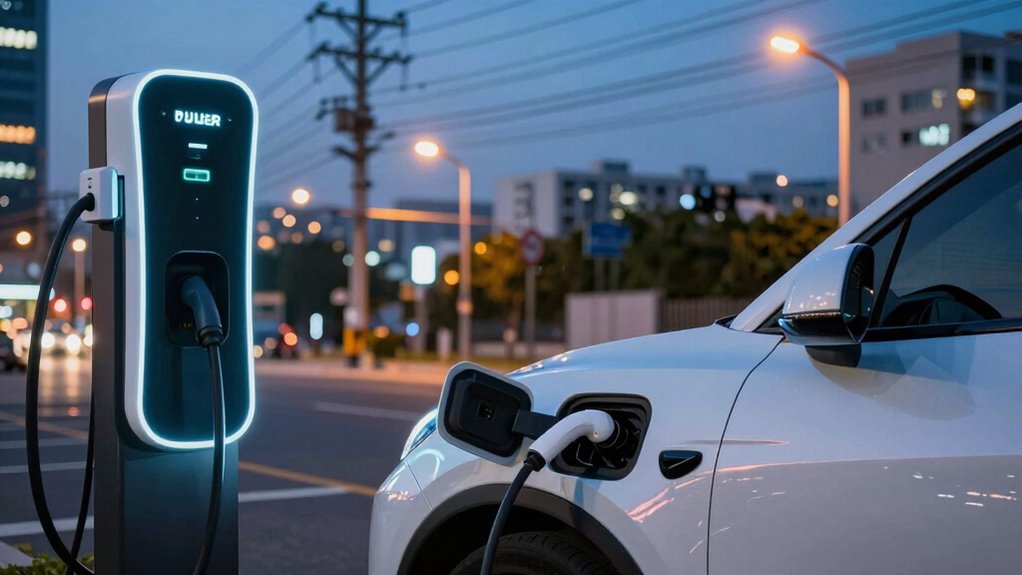
As electric vehicles become more popular, utility companies are playing an essential role in supporting the infrastructure needed for widespread EV charging. Your utility provider isn’t just delivering power; it’s actively shaping how clean, reliable energy supports your daily driving. One of the key ways they’re doing this is through renewable integration, which involves blending renewable energy sources like wind and solar into the grid. This integration ensures that as more EVs hit the road, the electricity powering them comes from greener sources, reducing your carbon footprint. It’s a critical step toward making electric transportation truly sustainable.
Utility companies are integrating wind and solar to power your EVs with cleaner, greener energy.
In addition, your utility company is spearheading grid modernization efforts. This isn’t just about upgrading wires and transformers; it’s about creating a smarter, more responsive grid that can handle the increased demand from EV charging stations. Modernization involves deploying advanced technology such as smart meters and real-time data analytics, which allow for better management of energy flow. When you plug in your EV, the grid can optimize power delivery, prevent overloads, and reduce outages. It also enables time-of-use pricing, encouraging you to charge during off-peak hours, easing stress on the system and lowering costs for everyone.
Grid modernization also enhances the ability to incorporate distributed energy resources. This means your utility can leverage local solar panels or small-scale renewables to supply power directly to your community, making the grid more resilient and less dependent on distant power plants. This decentralization helps in reducing transmission losses and supports a more sustainable energy ecosystem. Additionally, the integration of advanced energy management systems improves overall grid stability and efficiency, ensuring your EV charging experience becomes more reliable and environmentally friendly, since the energy infrastructure is designed to adapt and grow with the increased demand. Understanding nail biology can remind us how different systems work together seamlessly—just like an efficient energy grid.
The role of utility companies in these areas isn’t just technical; it’s strategic. They’re investing in infrastructure that supports fast-charging stations, enabling you to recharge your EV quickly and conveniently. These investments also lay the groundwork for future innovations, like vehicle-to-grid technology, which allows EV batteries to serve as energy storage units that feed power back into the grid when needed. This creates a symbiotic relationship between your vehicle and the broader energy system. Recognizing the importance of grid resilience helps us appreciate how robust infrastructure ensures continuous power supply even during disruptions. Moreover, the integration of renewable sources is vital for long-term sustainability, ensuring that the environmental benefits of EVs are fully realized.

Commercial EV Charging Station – OCPP-Compliant, Revenue-Generating Charger with Driver Pay App – Powered by EV Range Software
Earn Revenue with Every Charge: Set custom pricing and idle fees. Monthly payouts and usage reports included.
As an affiliate, we earn on qualifying purchases.
As an affiliate, we earn on qualifying purchases.
Frequently Asked Questions
How Do Utility Companies Set EV Charging Rates?
Utility companies set EV charging rates based on their rate structures, which can include time-of-use pricing or flat rates, influencing when and how much you pay. They also offer customer programs, like incentives or special plans, to encourage EV adoption. By understanding these rates, you can choose the best plan for your charging habits, helping you save money while supporting a more sustainable energy system.
Can Utility Companies Influence EV Adoption Policies?
Utility companies can influence EV adoption policies by engaging in consumer advocacy and promoting grid modernization. Your utility might lobby for incentives, support infrastructure investments, or work with regulators to shape policies favoring electric vehicles. By doing so, they help create a supportive environment for EVs, making charging more accessible and affordable. Your utility’s proactive stance directly impacts how quickly and smoothly EV adoption progresses in your community.
What Incentives Do Utility Companies Offer for EV Charging?
Utility companies often offer customer incentives like rebates or discounted rates to encourage EV charging, making it more affordable. They also promote grid modernization efforts, which improve infrastructure to support more charging stations and reduce strain. By participating in these programs, you benefit from cost savings and contribute to a more reliable, sustainable energy grid, ultimately easing your shift to electric driving while helping the environment.
How Reliable Is Utility Company Infrastructure for EV Charging?
Your utility company’s infrastructure for EV charging is generally reliable, thanks to ongoing grid resilience efforts and infrastructure upgrades. These upgrades help prevent outages and maintain steady power flow, even during high demand. Utility companies prioritize modernizing their systems to support increased EV adoption, so you can count on consistent charging availability. While occasional outages can happen, the focus on strengthening the grid means reliability is continually improving for EV owners like you.
Do Utility Companies Invest in Renewable Energy for EV Charging?
Ever wonder if utility companies are serious about renewable energy for EV charging? They are increasingly investing in renewable projects, driven by policy influence and market demand. These investments help lower the carbon footprint of EVs and guarantee cleaner energy sources. Utility companies recognize the importance of sustainable energy, which not only benefits the environment but also supports long-term infrastructure growth for EV charging. So, yes, they’re making significant strides in renewables.

Autel Home Smart Electric Vehicle (EV) Charger up to 50Amp, 240V, Indoor/Outdoor Car Charging Station with Level 2, Wi-Fi and Bluetooth Enabled EVSE, Hardwired,25-Foot Cable,Sierra Blue
Trusted Brand: Autel has been making automotive intelligent diagnostic, inspection, and analysis products since 2004. The MaxiCharger AC…
As an affiliate, we earn on qualifying purchases.
As an affiliate, we earn on qualifying purchases.
Conclusion
So, next time you plug in your EV, remember your utility company isn’t just some faceless entity—they’re your co-pilot in this green journey. Without their infrastructure and support, charging your car would be as tricky as sailing uncharted waters without a compass. Think of them like the trusty steed from old tales, quietly powering your ride and making sure you stay on the right path to a cleaner, smarter future. Your utility company truly matters more than you think.
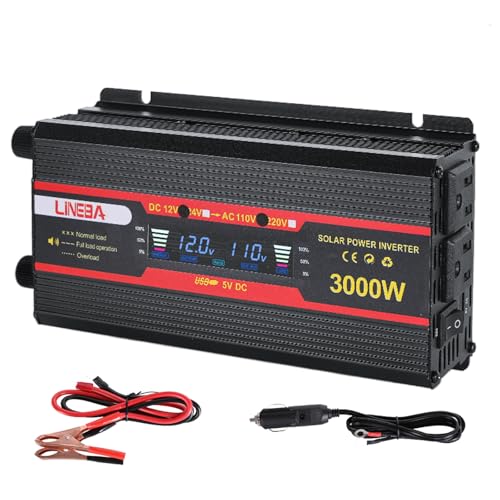
Lineba 3000 Watt Power Inverter with LED Display,Dual AC Outlets,USB Port, 12V DC to 110V AC Converter Car Power Inverter for Vehicles, Car, RV, Truck, Off Grid Solar System, Outdoor Camping
Modified Sine Wave: Lineba modified sine wave DC to AC power inverter converts your vehicle’s DC power into…
As an affiliate, we earn on qualifying purchases.
As an affiliate, we earn on qualifying purchases.

Build a solar-powered EV charger: A step-by-step guide to harnessing rooftop solar panels for charging your electric vehicle at home
As an affiliate, we earn on qualifying purchases.
As an affiliate, we earn on qualifying purchases.