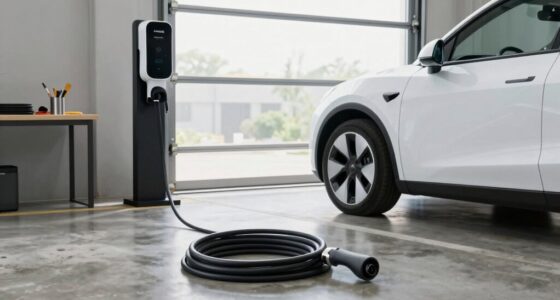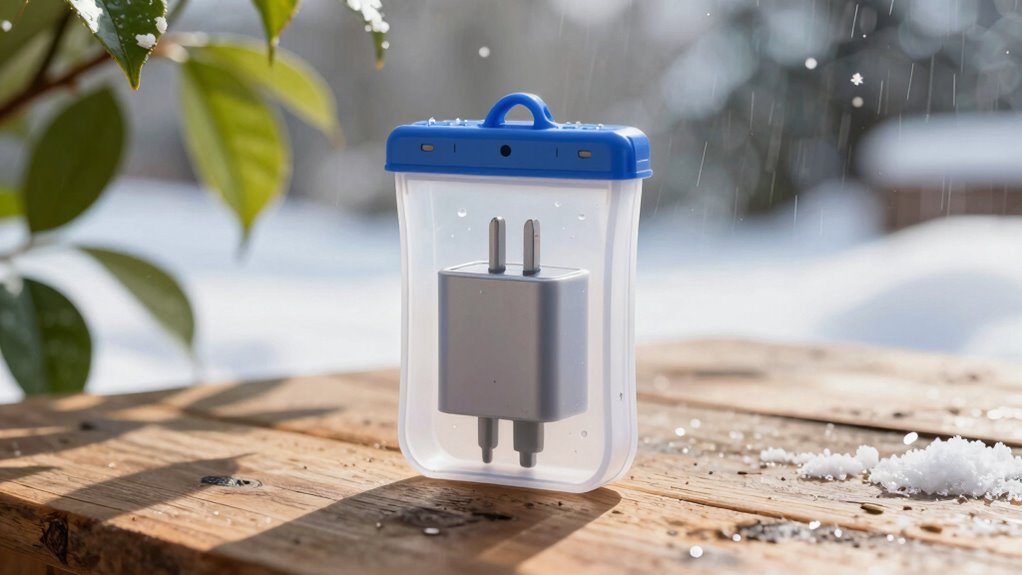

To safeguard your charger from sun, rain, and snow, keep it in a dry, cool place away from direct sunlight and extreme cold. Use weatherproof cases or covers to shield it from moisture, spills, and dust. Avoid using chargers outdoors in wet or snowy conditions, and store power banks in well-ventilated areas when not in use. Proper care can extend your device’s lifespan and ensure it works reliably over time. Learn more tips to keep your charger safe and functional.

Get backup power and energy gear delivered free with Prime
- Fast, free delivery on millions of items
- Prime Video, Amazon Music and more included
- Member-only deals all year
Key Takeaways
- Store chargers in cool, dry, and shaded areas away from direct sunlight and extreme temperatures.
- Use weatherproof or water-resistant cases to shield chargers from rain and snow exposure.
- Avoid outdoor use during stormy or snowy weather to prevent moisture and environmental damage.
- Keep chargers away from moisture, humidity, and wet environments to prevent corrosion and short circuits.
- Regularly inspect protective covers and storage conditions to ensure ongoing safety and device longevity.
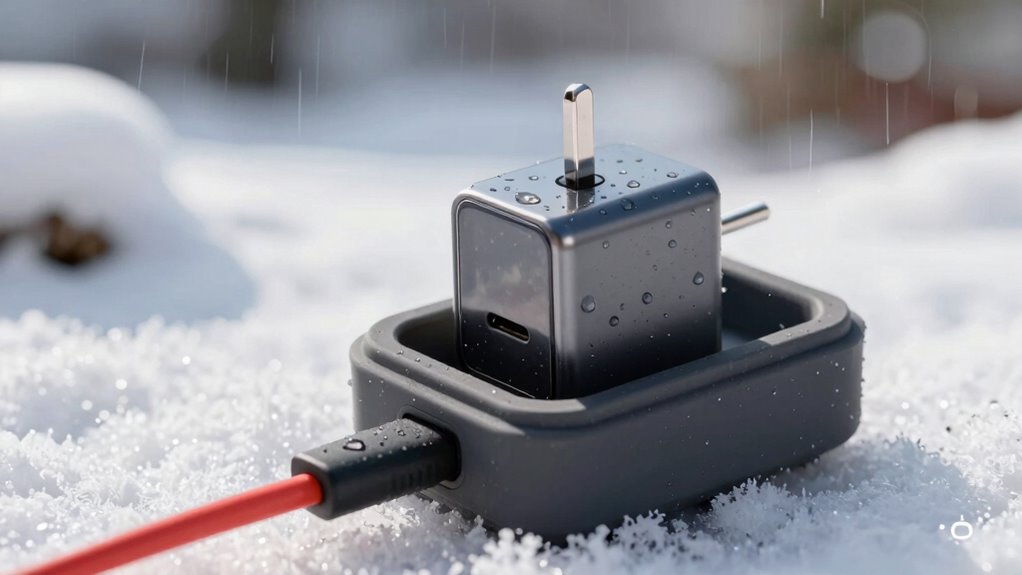
Your charger is an essential everyday device, but exposure to the sun, rain, and snow can quickly damage it and reduce its lifespan. To keep it functioning smoothly, you need to take proactive steps to protect it from the elements. When it comes to wireless charging, avoid leaving your charger or wireless charging pads outdoors or in humid environments. Moisture can cause corrosion and short-circuiting, which compromises not only your charger but also the safety of your device. Always place your wireless charger in a dry, cool spot, and use protective cases or covers to shield it from accidental spills or weather exposure. Proper device protection is crucial in maintaining optimal performance. Power bank safety is another critical aspect of protecting your chargers. If you’re using a portable power bank, make sure it’s stored properly when not in use. Keep it away from direct sunlight, as excessive heat can damage the internal battery, leading to potential malfunctions or even safety hazards. When charging your power bank, do so in a well-ventilated area and avoid overcharging, which can generate heat and degrade the battery over time. If you’re caught in rain or snow, resist the urge to use your power bank or any charging device in these conditions. Water contact can cause short circuits or permanent damage, and it also increases the risk of electric shock. Use a waterproof bag or pouch to carry your power bank in stormy weather, and only operate it when you’re in a safe, dry environment. Storing your chargers properly is key to extending their life. Keep them in a cool, dry place, away from direct sunlight or freezing cold, which can affect their internal components. Additionally, understanding temperature effects on batteries can help you better maintain your chargers in various environments. Investing in weatherproof or water-resistant cases can provide extra protection during outdoor use, especially in unpredictable weather. Be aware that outdoor conditions such as wind and dust can also impact your devices and should be considered when choosing protective gear. Ultimately, safeguarding your charger from sun, rain, and snow requires diligence and the right protective measures. Be mindful of where and how you use your wireless charging pads and power banks. Prioritize power bank safety by avoiding moisture, heat, and rough handling. With these precautions, you’ll extend the lifespan of your chargers, maintain their efficiency, and avoid costly replacements. Proper care and storage are simple steps that go a long way in ensuring your devices stay safe and functional, no matter the weather.
As an affiliate, we earn on qualifying purchases.
Frequently Asked Questions
Can Exposing My Charger to Extreme Cold Damage It?
Exposing your charger to extreme cold can damage it, especially if the charger material isn’t designed for low temperatures. Cold temperatures can cause the internal components to become brittle or crack, reducing its lifespan. To keep your charger safe, avoid leaving it in extremely cold environments and store it in a warm, dry place. Proper care guarantees your charger stays functional and lasts longer, even in chilly conditions.
Are There Specific Covers Recommended for Outdoor Chargers?
Think of your outdoor charger like a delicate plant needing shelter. Yes, there are outdoor covers designed with weatherproof materials that protect against rain, snow, and sun. I once used a heavy-duty outdoor cover on my charger, and it kept it dry during a surprise storm. Look for covers specifically made for outdoor use, ensuring they’re crafted from durable, weatherproof materials. These will extend your charger’s lifespan and keep it working smoothly.
How Often Should I Inspect My Charger for Damage?
You should inspect your charger at least once every three to six months to guarantee it’s in good condition. Regular inspection helps extend its lifespan by catching damage early, such as frayed cords or corrosion. If you notice any issues during your inspection, address them promptly to prevent further damage. Keeping a consistent inspection schedule allows you to maintain your charger’s performance and longevity effectively.
Does Using a Charger Outdoors Affect Its Warranty?
Using your charger outdoors might be a bit like testing its limits, and it can impact your warranty terms. Manufacturers often specify indoor use, and outdoor exposure could be seen as misuse, potentially voiding your warranty. To stay protected, always check your warranty terms and avoid outdoor usage unless explicitly recommended. This way, you keep your charger in top shape and avoid unexpected costs if issues arise.
Can Moisture From Snow Cause Internal Corrosion?
Moisture from snow can definitely cause internal corrosion in your charger. When moisture builds up inside, it accelerates corrosion, damaging delicate components. To prevent this, you should focus on corrosion prevention by keeping your charger dry and stored properly. Avoid exposing it to snow and moisture for extended periods, and consider using protective covers or storing it indoors. Regularly inspecting and drying your charger helps guarantee it stays in good working condition.
As an affiliate, we earn on qualifying purchases.
Conclusion
By shielding your charger from the relentless sun, pouring rain, and stubborn snow, you create a cozy sanctuary for it to stay safe and functional. Imagine your charger nestled in a little weather-proof haven, untouched by the stormy skies or scorching rays. With simple precautions, you guarantee it’s always ready to power your devices, no matter what the weather throws your way. Keep it protected, and your charger will thank you with reliable performance every time.
outdoor wireless charger protection
As an affiliate, we earn on qualifying purchases.
As an affiliate, we earn on qualifying purchases.
As an affiliate, we earn on qualifying purchases.
Fall Picks
fall essentials
As an affiliate, we earn on qualifying purchases.