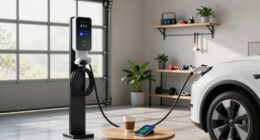
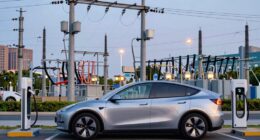
To decide between convenience and maximum charging speed, consider your daily driving needs and how often you’re willing to wait or seek faster chargers. If you drive short distances, slower charges may suffice and help preserve battery health. But if quick top-ups fit your busy schedule, fast chargers are ideal—just remember they can cause heat stress over time. By understanding your routine and infrastructure access, you can balance avoiding damage with staying powered up; there’s more to uncover if you keep exploring.
Key Takeaways
- Assess your daily driving distance to determine if slower charging suffices or fast charging is necessary.
- Consider your schedule and whether quick turnaround times justify prioritizing fast charging.
- Evaluate the impact of fast charging on battery longevity and balance it with your need for speed.
- Check the availability of charging infrastructure to support either quick top-ups or longer sessions.
- Match your vehicle’s cooling and battery management features with your preferred charging speed to optimize battery health.
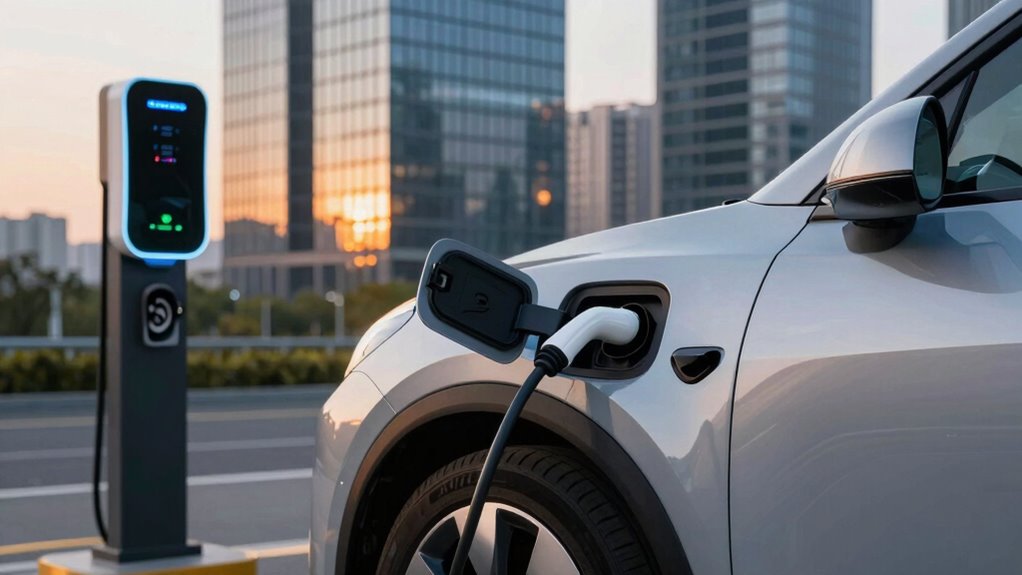
Choosing between convenience and maximum charging speed depends on your daily routine and driving needs. If you have a busy schedule that requires quick turns around your day, you’ll likely prioritize charging speed. On the other hand, if you mostly drive short distances and have plenty of time to recharge, convenience might be more appealing. It’s essential to consider how each factor impacts your vehicle’s battery longevity. Fast charging, while incredibly convenient, can generate more heat and stress the battery, potentially leading to faster degradation over time. Conversely, slower charging methods tend to be gentler on your battery, helping it last longer and maintain ideal performance. Your choice should balance your immediate needs with long-term battery health, especially as you evaluate the charging infrastructure available in your area. Understanding the cybersecurity tactics involved in managing EV charging networks can also help protect your vehicle and personal data from potential vulnerabilities. Additionally, the charging station accessibility in your region can significantly influence your decision, impacting how often you can conveniently charge your vehicle. Charging infrastructure plays a significant role in this decision. If high-speed chargers are widespread and accessible, you might lean toward maximizing charging speed without too much worry about battery wear. Many fast chargers are designed with advanced cooling systems to mitigate heat and reduce long-term damage, making them a practical option for quick top-ups. Moreover, advancements in battery management systems are helping to better regulate charging cycles and heat, further supporting the use of fast chargers when needed. However, if the charging infrastructure is limited or relies mainly on slower Level 2 chargers, convenience becomes more relevant. In such cases, having reliable access to a charging station nearby, even if it takes a few hours to fully recharge, can make your daily routine smoother. You’ll want to consider whether your typical driving pattern aligns better with fast charging or if you’re comfortable planning around longer charging times. Additionally, understanding the battery degradation process can help you make more informed decisions about charging habits. For example, some EVs are equipped with battery management systems that optimize charging cycles and mitigate heat buildup, which is crucial when considering high-speed charging options. Ultimately, your decision hinges on how you weigh the importance of quick recharge times against the potential impact on your battery’s lifespan. Factoring in your daily driving habits, the availability of charging stations, and your willingness to plan charging sessions can help you find the right balance. Remember, the goal is to match your vehicle’s charging needs with your lifestyle — ensuring convenience without sacrificing the long-term health of your battery.

AIMILER Level 2 Electric Vehicle (EV) Charger(WIFI APP/Plug-play), 32A, 25ft Cable ETL Certified, 220V-240V NEMA 14-50P Plug EVSE w/ J1772 Connector, Portable EV Car Charging Stations for Home Level 2
❤ [Equipped with Nema 14-50 plug 240V, Compatible with 110-120V Nema 5-15p to 14-50r EV Adapter(Not packaged) or…
As an affiliate, we earn on qualifying purchases.
As an affiliate, we earn on qualifying purchases.
Frequently Asked Questions
Are Faster Chargers Safer for My Device Long-Term?
Faster chargers can be safe for your device long-term if you guarantee proper charging compatibility and monitor battery health. Modern devices are designed to handle rapid charging without harming the battery, but consistently using high-speed chargers may degrade battery health over time. To protect your device, use chargers recommended by the manufacturer, avoid frequent rapid charging, and keep an eye on battery performance to maintain peak longevity.
How Does Charging Speed Affect Battery Lifespan?
Think of your battery like a sponge; the more you squeeze it quickly, the more it wears out. Faster charging speeds accelerate battery degradation by increasing heat and stress, which reduces overall lifespan. Each charging cycle slightly diminishes your battery’s capacity, especially with rapid charges. To extend your battery’s health, opt for slower charging when possible, as it minimizes stress and helps preserve its longevity over time.
Can I Use a High-Speed Charger on Any Device?
You can’t use a high-speed charger on any device without checking compatibility. Some devices support fast charging, while others might not, and using the wrong charger can damage your battery. Wireless charging and portable power banks are convenient options, but they often don’t support maximum speeds. Always verify your device’s specifications before using high-speed chargers to guarantee safety and peak performance.
What Are the Costs Associated With Fast Charging Setups?
The costs of fast charging setups can catch you off guard. A charging station with higher power output often means a bigger investment upfront, including the charger itself and potential installation fees. You might also face higher electricity bills if you frequently use high-power chargers. Consider your usage habits carefully—sometimes, the convenience of rapid charging isn’t worth the added expenses, especially if your device doesn’t require it regularly.
Do Fast Chargers Work Internationally?
Fast chargers do work internationally, but you need to take into account global compatibility and power standards. Different countries have varying voltage levels, plug types, and charging protocols, so ensure your charger supports international power standards. Some chargers are universal and compatible worldwide, while others may require adapters or converters. Always check the charger’s specifications and compatibility with local power standards to guarantee safe, efficient charging wherever you travel.

ChargePoint HomeFlex Level 2 EV Charger J1772 – Fast Smart Battery Power Charging at Home for Electric Automobile Vehicles – Hardwired for Electric Car
Charge with Confidence: ChargePoint builds reliable, flexible EV charging stations for home, business, and fleets. Get 24/7 support…
As an affiliate, we earn on qualifying purchases.
As an affiliate, we earn on qualifying purchases.
Conclusion
Ultimately, choosing between convenience and maximum charging speed depends on your daily needs. Did you know that only 20% of electric vehicle owners charge their cars at fast-charging stations regularly? If you’re always on the go, fast chargers save time but may cost more or be less accessible. Conversely, for everyday charging, convenience and cost-effectiveness might be better. Assess your routines, and you’ll find the perfect balance that keeps your EV ready without hassle.

Commercial EV Charging Station – OCPP-Compliant, Revenue-Generating Charger with Driver Pay App – Powered by EV Range Software
Earn Revenue with Every Charge: Set custom pricing and idle fees. Monthly payouts and usage reports included.
As an affiliate, we earn on qualifying purchases.
As an affiliate, we earn on qualifying purchases.

EVDANCE Level 1&2 EV Charger, Electric Vehicle Portable Charger with 25FT Cable, Home EV Charging Station for J1772 Electric Cars, 12A 120V/16A 240V, NEMA 5-15 & NEMA 6-20 Plug
Flex Level 1 EV Charger – The EVDANCE Level 1 electric car charger is compatible with J1772 electric…
As an affiliate, we earn on qualifying purchases.
As an affiliate, we earn on qualifying purchases.