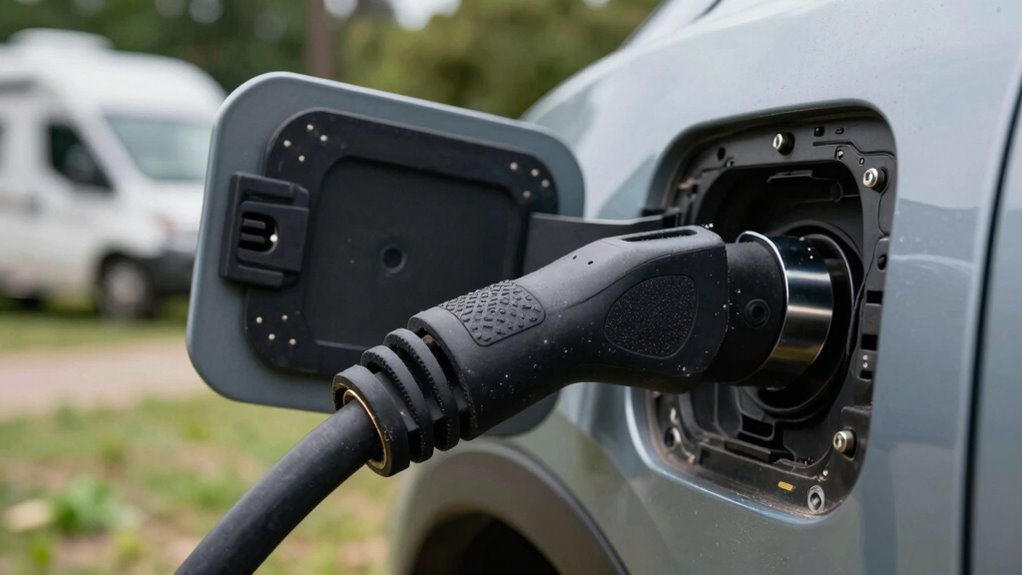

Before using RV adapters for EV charging, you should verify that your system is compatible with your solar power setup and the adapter’s voltage and current ratings. Confirm the adapter meets safety standards, is properly insulated, and is in good condition. Avoid overloading your electrical system and monitor for any irregularities during charging. Staying cautious and thorough helps prevent damage or hazards. Keep exploring to discover more ways to charge your EV safely and efficiently.

Get backup power and energy gear delivered free — and shop member deals
- Fast, free delivery on millions of items
- Access to Prime Big Deal Days deals on October 6–7
- Prime Video, Amazon Music and more included
Key Takeaways
- Ensure the RV adapter is compatible with your EV’s charging port and power requirements.
- Verify the adapter meets safety standards and has proper insulation and grounding.
- Confirm the adapter supports your solar system’s voltage and current for efficient charging.
- Avoid overloading your RV’s electrical system; monitor for overheating or electrical issues.
- Regularly inspect and test adapters and connections to maintain safety and performance.
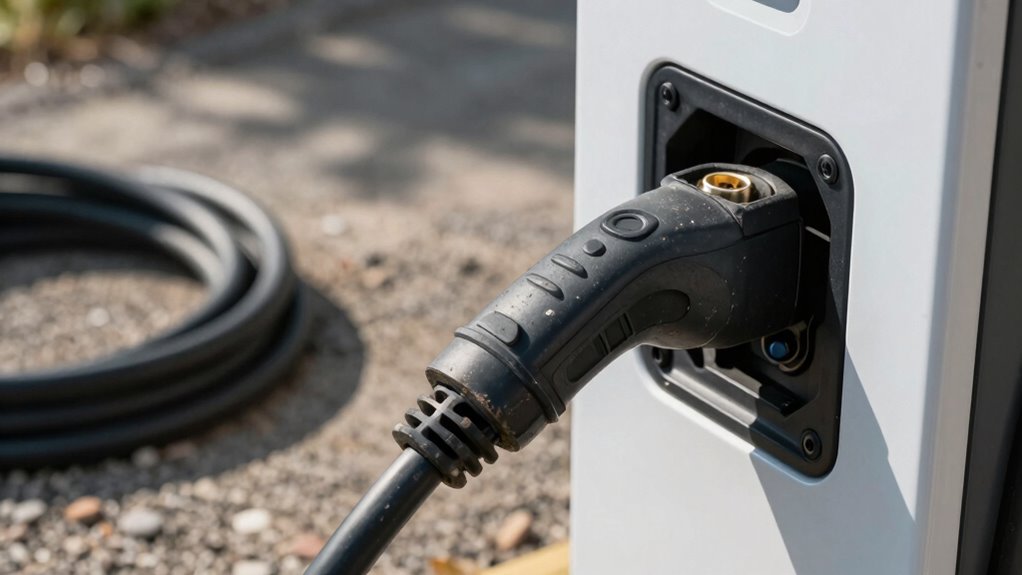
As electric vehicle (EV) adoption grows, many RV owners are looking for ways to charge their vehicles conveniently during trips. Using RV adapters for EV charging can be an effective solution, but it’s vital to understand some key factors before plugging in. One of the first things to evaluate is solar compatibility. If your RV has a solar power system or if you plan to add one, you’ll want to verify that the EV charging setup can integrate smoothly with your existing solar setup. Not all adapters work seamlessly with solar-influenced power sources, and mismatched systems could lead to inefficient charging or potential damage. Checking whether the adapter supports your solar system’s voltage and current output helps you avoid these issues and guarantees you’re making the most of your renewable energy sources.
Safety considerations are equally important when using RV adapters for EV charging. Different adapters can vary widely in their build quality and safety features, so it’s vital to select one that meets recognized safety standards. Poor-quality or incompatible adapters may cause electrical shorts, overheating, or fire hazards. Always verify that the adapter has adequate insulation, proper grounding, and a reliable connection mechanism. Before plugging in, inspect the adapter and your RV’s power outlet for any damage or signs of wear. Never force a connection that doesn’t fit naturally, as this can compromise safety. When charging, avoid overloading your RV’s electrical system, and stay close enough to monitor for any irregularities such as sparks, unusual smells, or overheating. Proper understanding of electrical capacity and ensuring your system can handle the load can prevent many common issues. Additionally, understanding the contrast ratio of your power sources and equipment can help you evaluate the clarity and safety of your electrical signals, ensuring a stable and reliable charging process. Incorporating electrical safety standards can further help in selecting the right equipment and avoiding hazards. Being aware of power quality and fluctuations can also prevent potential damage to your EV or RV electronics. Regularly testing your system with voltage testing tools can help maintain safe and reliable operation over time.
RV compatible EV charging adapter
As an affiliate, we earn on qualifying purchases.
As an affiliate, we earn on qualifying purchases.
Frequently Asked Questions
Can RV Adapters Handle Fast EV Charging Speeds?
RV adapters generally can’t handle fast EV charging speeds because the charging infrastructure and design prioritize compatibility over high power transfer. They often lack the necessary power efficiency and robust wiring to support rapid charging, which can lead to overheating or damage. For safe, efficient fast charging, use dedicated EV chargers designed for high wattages. Relying on RV adapters for quick charging isn’t recommended, as it can compromise your vehicle’s battery health and safety.
Are RV Adapters Compatible With All Electric Vehicle Models?
You might be surprised to learn that only about 30% of electric vehicle models are compatible with RV adapters. RV compatibility varies widely, as not all adapters fit every EV model due to different charging port designs. Adapter limitations can prevent you from connecting to some vehicles, so always check your EV’s charging port and the adapter specifications. This guarantees safe, effective charging without risking damage or incompatibility.
What Safety Precautions Should I Take When Using RV Adapters?
When using RV adapters, you should always check adapter compatibility with your EV to guarantee proper fit and function. Prioritize voltage safety by verifying the voltage ratings and avoiding overloads. Keep your hands dry and inspect the adapter and cords for damage before use. Never force connections, and unplug equipment carefully. Following these precautions helps prevent electrical hazards, guaranteeing a safe and efficient charging experience.
How Long Does It Take to Charge an EV With an RV Adapter?
Charging your EV with an RV adapter typically takes several hours, depending on your vehicle’s battery size and the power capacity of the charging cable. A standard RV adapter usually provides a lower power output, so expect longer charging times compared to dedicated EV chargers. To get the best results, confirm your power capacity matches your EV’s requirements and use a compatible, high-quality charging cable for safe, efficient charging.
Are There Legal Restrictions on Using RV Adapters for EV Charging?
You can’t just wing it when it comes to legal restrictions on RV adapters for EV charging. Laws vary by location, and there are specific adapter regulations you must follow. In some areas, using an RV adapter without proper approvals can land you in hot water. Always check local laws and verify your equipment meets safety standards. Staying informed keeps you on the right side of the law and helps avoid costly issues.
safety certified EV charging adapter
As an affiliate, we earn on qualifying purchases.
As an affiliate, we earn on qualifying purchases.
Conclusion
Just like a seasoned traveler checks their map before hitting the road, understanding RV adapters guarantees your EV charging journey is smooth and safe. I once met a family stranded because they overlooked compatibility, turning their trip into a frustrating detour. Remember, a little prep goes a long way—knowing the ins and outs of your adapters can prevent unexpected stops and keep your adventure on track. Stay informed, stay charged, and enjoy the ride!
solar compatible EV charging cable
As an affiliate, we earn on qualifying purchases.
As an affiliate, we earn on qualifying purchases.
RV electrical system overload tester
As an affiliate, we earn on qualifying purchases.
As an affiliate, we earn on qualifying purchases.
Halloween Picks
halloween
As an affiliate, we earn on qualifying purchases.