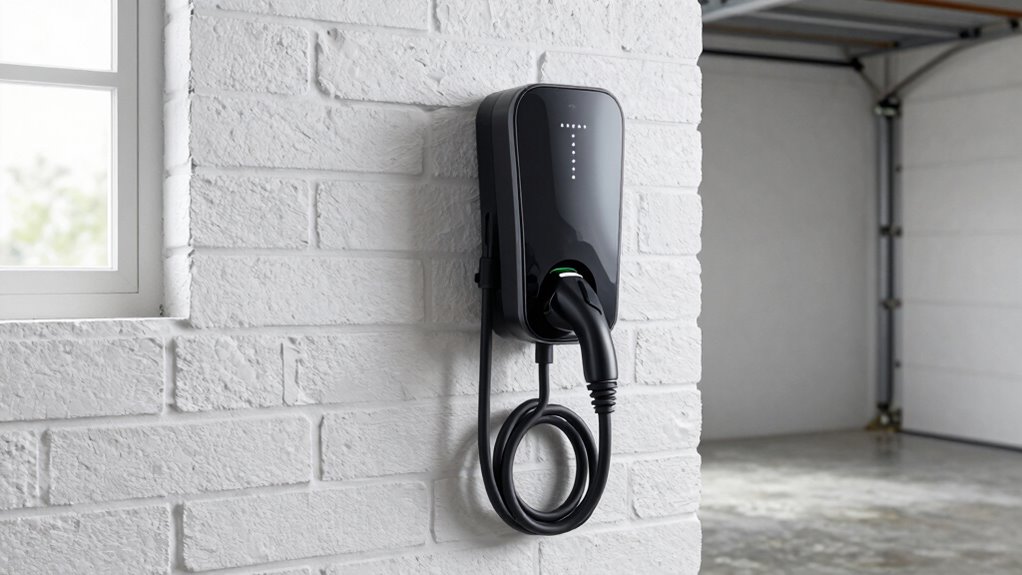
When choosing a home charger for a long driveway or tight garage, consider the size, installation space, and cable length, especially if you need to reach farther or save space. Match the charger’s capacity to your vehicle’s needs and check if your electrical system can support faster chargers, which might require upgrades. Compatibility with solar panels can boost energy efficiency. Want a smarter, tailored charging solution? Keep exploring for more helpful tips.
Key Takeaways
- Assess available space and choose a compact or long-cable charger based on driveway length or garage size.
- Match charger capacity with your vehicle’s charging needs and home electrical system capabilities.
- Ensure electrical system can support higher wattage chargers, considering necessary upgrades or dedicated circuits.
- Opt for solar-compatible chargers to maximize renewable energy use and reduce electricity costs.
- Stay updated on technological trends for innovative, space-efficient, and future-proof charging solutions.
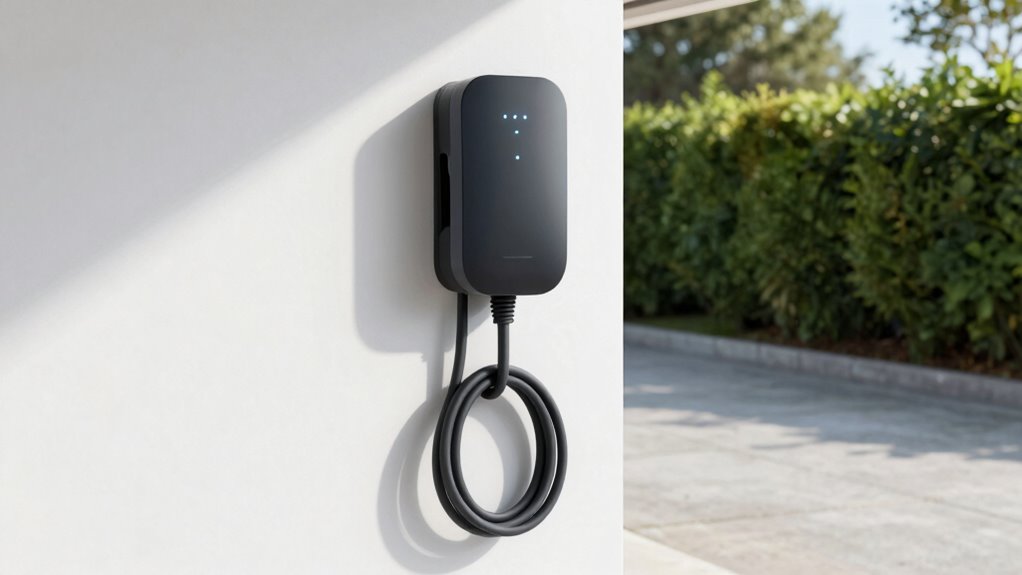
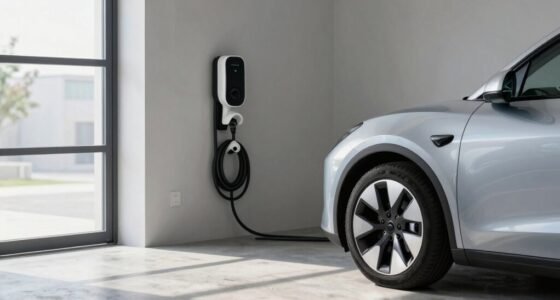
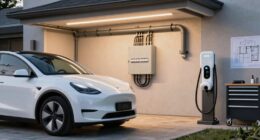
Are you unsure how to pick the right home charger for your electric vehicle? If you have a long driveway or a tight garage, choosing a charger that fits your space and meets your needs can feel overwhelming. The first thing to prioritize is the charger’s size and how easily it can be installed in your available space. For long driveways, you’ll want a charger with a longer cable length so you can comfortably reach your vehicle from a distance without stretching or repositioning. In a tight garage, compact chargers that mount flush against the wall are ideal, helping you save space and avoid clutter.
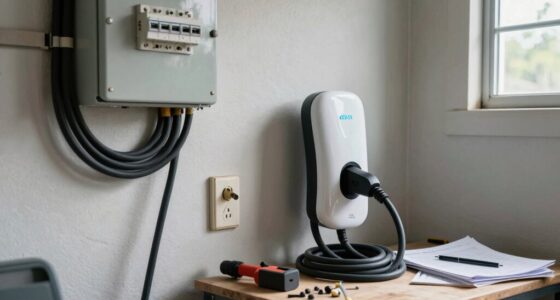
Next, think about your vehicle’s charging capacity and how quickly you want to recharge. If you frequently take long drives, opting for a higher wattage charger can cut down your charging time considerably. However, make certain your home’s electrical system can support this higher capacity. This brings us to installation requirements. Some chargers need dedicated circuits or upgrades to your existing electrical panel, which can influence your overall setup costs and complexity. It’s important to evaluate whether your home is ready for the installation or if you’ll need some electrical work beforehand. A professional assessment can help clarify these requirements and avoid surprises down the line.
Higher wattage chargers charge faster but may require electrical upgrades; a professional assessment ensures proper installation.
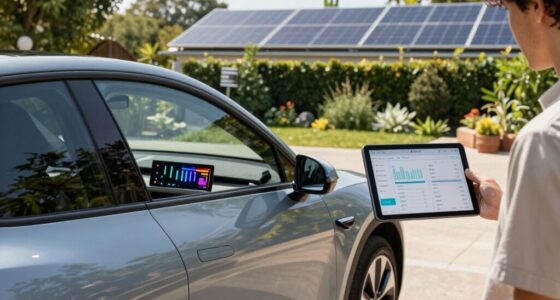
Another important factor is solar compatibility. If you have or plan to install solar panels, look for a charger that’s compatible with your solar system. Solar-compatible chargers can optimize your energy use by syncing with your panels, allowing you to charge your vehicle using renewable energy and potentially lowering your electricity bills. This integration is especially beneficial if you’re worried about environmental impact or want to maximize the efficiency of your solar setup. Additionally, understanding the emerging trends in digital publishing can help you stay informed about innovative charging solutions and new technological developments in the EV space. Moreover, considering space constraints and how they influence installation options can be crucial in deciding the best charger for your specific environment.

VDLPOWERVP Level 1&2 EV Charger, Electric Vehicle Portable Charger with 20FT Cable, 3.5KW 16Amp Home EV Car Charging Station, 110V-240V NEMA 6-20 & NEMA 5-15 Plug Adapter, for All SAE J1772
【Efficient Charging】VDLPOWERVP level 2/level 1 EV charger is equipped with NEMA 6-20 Plug(220V/240V), it offers 16A current and…
As an affiliate, we earn on qualifying purchases.
As an affiliate, we earn on qualifying purchases.
Frequently Asked Questions
Can I Install a Home Charger Myself?
You can attempt DIY installation of a home charger, but it’s essential to prioritize safety precautions. Make certain you understand the electrical requirements and local codes, and turn off the power before starting. If you’re comfortable with electrical work, follow the manufacturer’s instructions carefully. However, if you’re unsure, it’s better to hire a licensed electrician to guarantee safe and proper installation, especially in tight spaces or long driveways.
What Is the Cost Difference Between Level 1 and Level 2 Chargers?
Cost comparison comes first—Level 1 chargers are cheap, costing around $300 or less, while Level 2 chargers range from $500 to $2,000. Charging speed notably differs: Level 1 provides slow, steady power, ideal for overnight charging, whereas Level 2 delivers fast, efficient energy, perfect for quick top-ups. For long drives or tight garages, consider your budget and speed needs to choose the best balance of budget-friendly or blazing-fast charging.
How Long Does Professional Installation Take?
Professional installation typically takes about 4 to 8 hours, depending on your home’s electrical system and the charger type. During the installation process, a technician assesses your setup, routes wiring, and guarantees safety standards are met. The charging speed might influence the complexity of the installation, especially for Level 2 chargers, which generally offer faster charging but require more extensive wiring. You should plan for some time to complete the process smoothly.
Are Portable Chargers Suitable for Long Drives?
Portable chargers are generally suitable for long drives, offering convenience and quick recharging options. They’re designed to be lightweight and easy to carry, making them perfect for extended trips where access to charging stations might be limited. However, make certain your portable charger has enough capacity and fast-charging capabilities to meet your needs. Keep an eye on battery life and compatibility with your device to stay powered throughout your long drives.
Will My Home’s Electrical System Need Upgrades?
Your home’s electrical system might need upgrades if your electrical panel has limited circuit capacity or if you’re adding a high-capacity charger. You should evaluate your electrical panel’s capacity, make sure it can handle the additional load, and consider upgrading it if necessary. Upgrading the electrical system ensures safe, reliable charging while preventing overloads. Consult a professional to assess your circuit capacity and determine if any upgrades are needed for your specific setup.

EVIQO Level 2 EV Charger, 40-48 Amp, J1772 for Non-Tesla EVs, 25ft Cable, WiFi (2.4GHz) Smart App, Weatherproof Indoor/Outdoor (IP66, NEMA 4), UL & ETL Certified, Hardwired 240V, 11.5kW
WAKE UP FULLY CHARGED: EVIQO Level 2 EV charger with an output of 40A – 48A (11.5 kW)…
As an affiliate, we earn on qualifying purchases.
As an affiliate, we earn on qualifying purchases.
Conclusion
So, next time you’re faced with a long driveway or a snug garage, remember: the perfect home charger isn’t just about speed or size, but about how much you enjoy wrestling with your wires. After all, who needs convenience when you can turn charging into a daily workout? Choose wisely, or you might just find yourself more familiar with your charger than your own driveway. Happy charging—if you survive the adventure!

ELECQ Smart Level 2 EV Charger, Active Load Management, Solar EV Charging Mode, Wi-Fi Enabled, OCPP Compatible & Future-Proof, 40A NEMA 14-50 Plug-in EV Charger for Home with J1772 Connector
【Charge 7x Faster with ELECQ EV Charger】The ELECQ Home Level 2 Charger with a NEMA 14-50 plug delivers…
As an affiliate, we earn on qualifying purchases.
As an affiliate, we earn on qualifying purchases.

EVIQO Level 2 EV Charger, 40 Amp, J1772 for Non-Tesla EVs, 25ft Cable, WiFi (2.4GHz) Smart App, Weatherproof Indoor/Outdoor (IP66, NEMA 4), UL & ETL Certified, NEMA 14-50 Plug-in 240V, 9.6kW
WAKE UP FULLY CHARGED: EVIQO Level 2 EV charger with a max output of 40A (9.6 kW) fully…
As an affiliate, we earn on qualifying purchases.
As an affiliate, we earn on qualifying purchases.