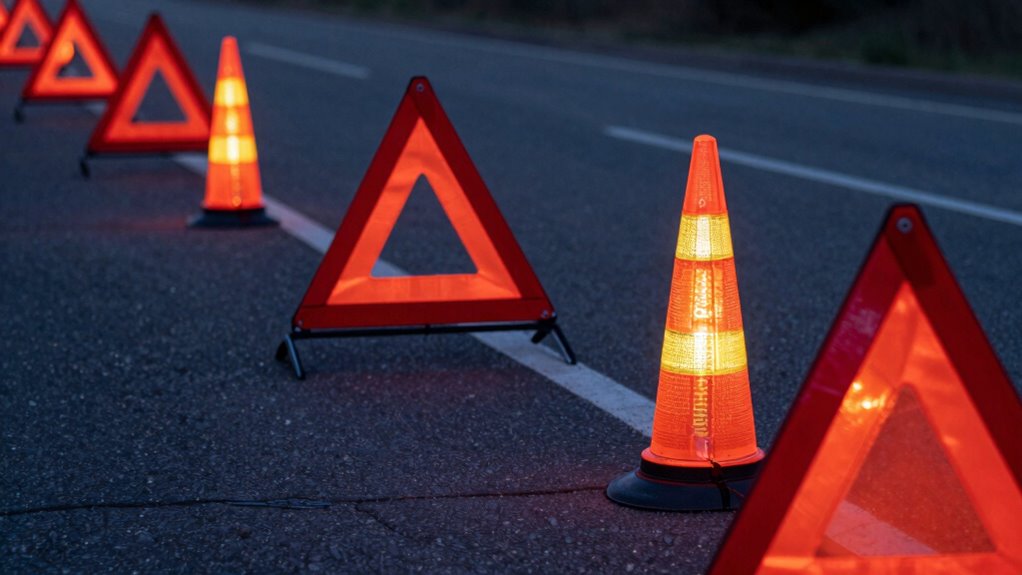
Reflective triangles and road flares improve your roadside visibility by providing bright, attention-grabbing signals that warn approaching drivers of your presence. Reflective triangles catch headlights from a distance, making your vehicle easily seen, while flares emit bright, flickering lights that stand out even in poor weather conditions. Properly placing these devices behind your vehicle helps prevent accidents and keeps everyone safe. If you keep exploring, you’ll find more tips to stay secure in roadside emergencies.
Key Takeaways
- Reflective triangles catch headlights, making a vehicle visible from a distance, especially in low-light conditions.
- Road flares emit bright, flickering light that signals danger regardless of vehicle power or weather conditions.
- Proper placement of both devices behind the vehicle alerts approaching drivers to the hazard early.
- Reflective surfaces enhance visibility during nighttime or foggy weather, reducing collision risks.
- Combining triangles and flares creates a clear, unmistakable warning to improve overall roadside safety.
When you’re stranded on the side of the road, visibility is essential for your safety. You need to alert other drivers to your presence quickly and effectively to prevent accidents. That’s where emergency signaling devices like reflective triangles and road flares come into play. These tools are designed to enhance your visibility, especially in low-light conditions or at night, giving you a better chance of being seen from a distance. Using them correctly can greatly reduce the risk of collisions, ensuring you and your passengers stay safe while waiting for help.
Reflective triangles are a popular choice because they are easy to set up and highly visible. Their reflective surface catches the headlights of approaching vehicles, making them stand out even from afar. When placed behind your vehicle, they create a clear visual warning for drivers to slow down or change lanes. The triangular shape also helps convey an immediate warning, signaling that there’s a hazard ahead. You should position the triangle at a safe distance—typically about 10 to 30 meters behind your vehicle—so drivers have adequate warning time. Proper placement and clear visibility are fundamental components of effective emergency signaling, and reflective triangles excel in that regard. Additionally, the visual warning provided by these devices is crucial in low-light or adverse weather conditions, where other signals might not be as effective. Being aware of microplastics in dust can also be useful in understanding environmental impacts that can affect visibility and safety, especially in urban areas with high pollution levels. Recognizing the environmental factors influencing visibility can help you better prepare for different roadside scenarios.
Reflective triangles are easy to set up and highly visible, providing clear warnings to approaching drivers.
Road flares are another essential tool for visibility enhancement. They emit a bright, often flickering, light that can be seen from a considerable distance. Unlike reflective triangles, flares work independently of vehicle headlights and are especially useful in poor weather conditions such as fog, rain, or snow, when reflective surfaces might not be enough. When you light a flare, it creates an unmistakable warning, signaling to other drivers that there’s a roadside emergency or hazard ahead. Be cautious when handling flares—they produce heat and sparks—so always follow safety instructions. Place them in a safe, stable spot away from your vehicle, ideally on the ground and in a location where the light can be seen clearly from approaching traffic.
Together, emergency signaling devices like reflective triangles and road flares serve as essential tools for roadside safety. They greatly improve your visibility, alerting other drivers to your presence and the potential hazard. In doing so, they help prevent further accidents and keep you safe until help arrives. Remember, the key to effective roadside safety isn’t just having these devices but using them correctly—placing them at the right distance, in the right locations, and ensuring they’re in good condition. Proper use of reflective triangles and road flares is a simple yet fundamental step toward protecting yourself and others during roadside emergencies.

WORKKOOL 3 Pack Foldable Warning Reflective Triangles with Carrying Case, Heavy Base Roadside Triangles for Vehicles Breakdown, Safty Reflector DOT Approved(Sand Filled)…
- Durable Material: Made of high-quality, waterproof plastic
- Enhanced Visibility: Large reflective surface for high visibility
- Portable Design: Compact, lightweight with carrying case
As an affiliate, we earn on qualifying purchases.
As an affiliate, we earn on qualifying purchases.
Frequently Asked Questions
How Long Do Reflective Triangles and Road Flares Typically Last?
Reflective triangles usually last about 5 to 10 years, depending on battery lifespan and material durability. Road flares tend to burn for around 30 to 60 minutes, with some rechargeable options lasting longer with proper care. You should regularly check the condition of both, replacing batteries and flares when they show signs of wear or decreased effectiveness to guarantee they provide maximum roadside visibility in emergencies.
Are Reflective Triangles and Road Flares Legal Everywhere?
Reflective triangles and road flares are generally legal when used according to safety standards, but legal regulations vary by location. You need to check local laws before placing them on the roadside, as some areas have specific rules about their use and placement. Always make certain your safety standards are met, use them properly, and keep updated with regional regulations to avoid any legal issues during emergencies.
Can Reflective Triangles Be Reused After Deployment?
Yes, reflective triangles are reusable after deployment, thanks to their durable materials that offer reusable durability. You can typically fold and store them back in your vehicle for future use. Just make certain to follow disposal regulations when you’re finished with them, especially if they become damaged or worn. Properly maintaining and disposing of reflective triangles ensures they stay effective and safe for roadside emergencies.
What Is the Best Placement Distance for Roadside Safety Devices?
You should place roadside safety devices at a distance that’s about 10 to 30 feet behind your vehicle for emergency signaling and vehicle safety. This distance guarantees that other drivers see your signals early enough to react safely, especially at night or in poor weather. Proper placement is essential to prevent accidents, making your roadside safety measures as effective as a lighthouse guiding ships through stormy seas.
How Do Weather Conditions Affect Their Visibility?
Weather impact can considerably reduce the visibility of roadside safety devices like triangles and flares. Fog, rain, snow, and heavy clouds create visibility challenges by diffusing light and obscuring reflective surfaces. As a result, you might struggle to see these devices from a distance or notice their reflection. To counteract this, make sure your safety devices are in good condition, positioned properly, and use high-visibility or illuminated options to enhance their effectiveness in poor weather.

ORION Safety Products – 15 Minute Road Flares (1 Pack of 3 Flares) – 2 Pack
- Package Includes: 3 spikeless waxed road flares
- Enhanced Packaging: Resealable bag with moisture protection
- Safety Warning: Produces hot flame, keep away from hazards
As an affiliate, we earn on qualifying purchases.
As an affiliate, we earn on qualifying purchases.
Conclusion
Now that you understand how reflective triangles and road flares boost roadside visibility, imagine what could happen if you’re caught unprepared during an emergency. Will your caution be enough to keep you safe? The next time you’re stranded, these simple tools might just be the difference between being seen and going unnoticed. Don’t wait until it’s too late—arm yourself with these safety essentials and stay one step ahead of danger. The road’s surprises await.

WORKKOOL Safety Triangles DOT Approved, Standard Warning Triangles Enmergency Reflector, Emergency Triangles for Vehicles with Carry Case(3 Pack,Without Sand)
- Durable Material: Made of high-quality, waterproof plastic
- Enhanced Visibility: Large reflective surface for high visibility
- Portable Design: Compact, lightweight with carrying case
As an affiliate, we earn on qualifying purchases.
As an affiliate, we earn on qualifying purchases.

CARTMAN 3PK DOT Approved Foldable Road Safety Warning Triangles
- Reflective DOT Approved: Meets U.S. safety standards
- High Visibility Design: 17×17 inch reflective and fluorescent panels
- Emergency Warning Tool: Alerts drivers to roadside trouble
As an affiliate, we earn on qualifying purchases.
As an affiliate, we earn on qualifying purchases.