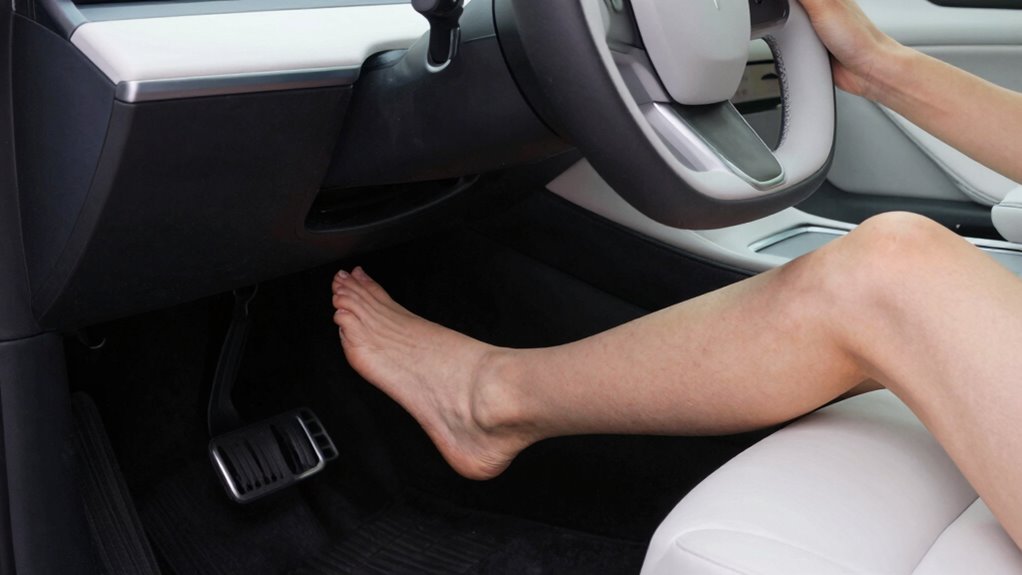

When you first try one-pedal driving, it feels strange because you’re used to separately pressing the gas and brake pedals. Initially, controlling speed relies mostly on easing off the accelerator, which can feel unnatural or uncomfortable. Your brain needs time to adapt, especially because regenerative braking takes over deceleration, making your driving smoother over time. Keep exploring, and you’ll discover how this intuitive system becomes easier and more enjoyable with practice.
Get ready for Prime Big Deal Days — try Prime free
Exclusive member deals on October 6–7, plus fast free delivery. Cancel anytime.
As an affiliate, we earn on qualifying purchases.
Key Takeaways
- Initial unfamiliarity with controlling speed solely through accelerator adjustments causes discomfort.
- Regenerative braking feels different from traditional braking, leading to a perception of unnatural deceleration.
- Pedal sensitivity variations can make smooth driving challenging at first.
- Muscle memory has to adapt from using separate pedals for acceleration and braking.
- The brain needs time to get used to the seamless deceleration without pressing a dedicated brake.
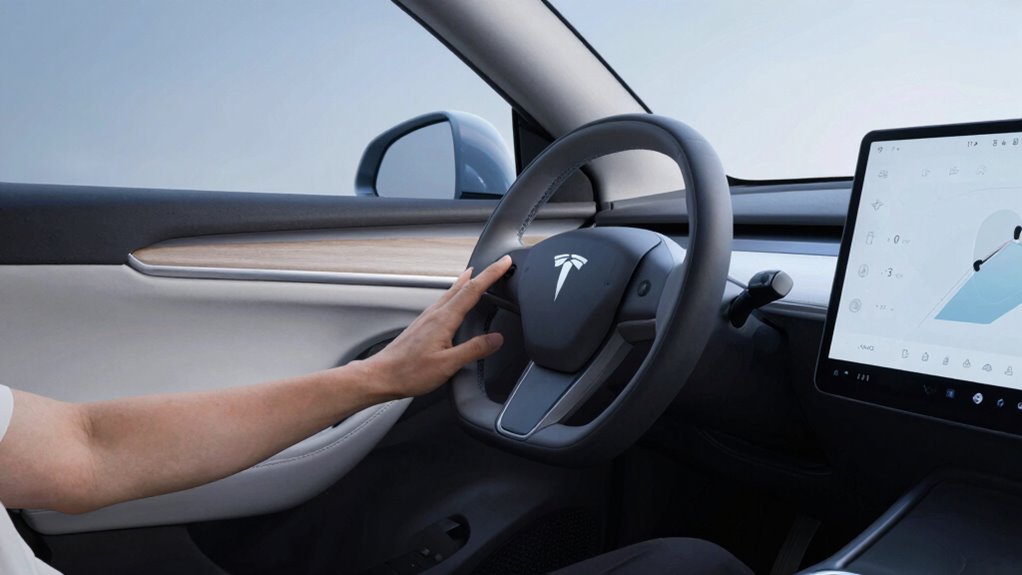
If you’ve recently tried one-pedal driving, it might feel strange or even uncomfortable at first. That’s completely normal. This driving style relies heavily on regenerative braking, which captures energy when you lift off the accelerator, slowing the car down without using the traditional brake pedal. Instead of switching between accelerator and brake, you primarily control your speed with just one pedal. At first, this can feel unnatural because your brain is used to the clear separation of acceleration and braking actions. Your instinct might lead you to press the brake pedal when you want to slow down, but with one-pedal driving, easing off the accelerator accomplishes much of that deceleration.
One of the key factors that affects your experience is pedal sensitivity. Many electric vehicles equipped with one-pedal driving have adjustable settings for pedal response. If the pedal feels overly sensitive, small movements can cause rapid deceleration, making it harder to modulate your speed smoothly. Conversely, if it’s too insensitive, you might find it difficult to slow down as quickly as you want, which can be frustrating and sometimes unsafe in traffic. Finding the right balance through customizable sensitivity settings helps you gain confidence and makes the shift smoother. With practice, you’ll learn to anticipate the vehicle’s response and adjust your foot pressure accordingly, making the experience more intuitive. Pedal response can also influence how natural the transition feels, emphasizing the importance of familiarizing yourself with your specific vehicle’s settings.
Initially, your muscle memory might fight against this new control scheme. You might instinctively reach for the brake pedal or feel unsure about how much pressure to apply with the accelerator. But as you spend more time behind the wheel, your brain adapts. You start to understand how the car responds to your inputs, and the sensation of seamlessly decelerating with just your foot off the accelerator becomes more natural. It’s also important to remember that regenerative braking isn’t just about slowing down; it’s about recapturing energy that can help extend your driving range. Regenerative braking is a key feature that encourages eco-friendly driving habits and can be a pleasant surprise once you get used to how it feels. Incorporating refrigerants and smart controls, as promoted by eco-friendly HVAC guidance, can further enhance your overall vehicle’s energy efficiency and sustainability. Additionally, pedal sensitivity plays a crucial role in making this transition smooth and intuitive. Understanding how vehicle energy management works can also help you optimize your driving style for better efficiency.
In the beginning, one-pedal driving might seem awkward, but with patience, you’ll discover that controlling your vehicle with just one pedal can be both smooth and efficient. The key is to give yourself time to adjust to the pedal sensitivity and to understand how regenerative braking works in your specific car. Eventually, it becomes a seamless part of your driving routine, making your trips more comfortable, efficient, and environmentally friendly.
electric vehicle one-pedal driving system
As an affiliate, we earn on qualifying purchases.
As an affiliate, we earn on qualifying purchases.
Frequently Asked Questions
How Does One-Pedal Driving Impact Battery Life?
One-pedal driving can positively impact your battery life by enhancing battery optimization through regenerative braking. When you lift off the accelerator, the system recovers energy via energy recovery, slowing the vehicle and recharging the battery. This process reduces reliance on external charging and maximizes range. Over time, it helps you conserve battery power, making your electric driving more efficient and extending your vehicle’s overall battery health.
Can One-Pedal Driving Be Used in All Weather Conditions?
You can use one-pedal driving in most weather conditions, but adapting your technique is key. In rain or snow, you might need to ease off the pedal more gradually to maintain control, enhancing driving comfort. Think of it like dancing with different partners—adjust your moves to match the conditions. While it works well generally, always exercise caution and adjust your approach to stay safe on slippery surfaces.
Is One-Pedal Driving Safe for New EV Drivers?
Yes, one-pedal driving can be safe for new EV drivers if you undergo proper driver training. It helps you control the vehicle smoothly with one pedal, but you should also learn emergency procedures, like how to quickly switch to traditional braking if needed. Practice in safe environments first, and stay alert to make certain you’re comfortable and confident managing the car in various situations.
How Does One-Pedal Driving Affect Tire Wear?
Ever wondered how one-pedal driving impacts your tires? It can cause uneven tire wear because you mainly use the rear tires for deceleration, which may lead to faster wear on those tires. To keep grip and performance, you should regularly perform tire rotation and check tire pressure. Proper grip maintenance guarantees your tires last longer and maintain safety, even with the extra stress from one-pedal driving.
Are There Any Legal Restrictions on One-Pedal Driving?
There are generally no specific traffic laws or licensing regulations that prohibit one-pedal driving. However, you must adhere to local traffic laws, which require safe and controlled driving. Since one-pedal driving involves using the brake pedal extensively, make sure you’re comfortable and confident. Always stay attentive to road conditions and obey speed limits, as some regions might have unique rules. It’s best to confirm local regulations to avoid any legal issues.
As an affiliate, we earn on qualifying purchases.
Conclusion
At first, one-pedal driving feels like learning to dance with a partner who leads unexpectedly; your foot hesitates, unsure of the rhythm. But as you embrace the flow, it becomes a gentle current carrying you effortlessly forward, transforming unfamiliarity into harmony. Like a painter’s brushstroke, the sensation evolves from strange to smooth, revealing that sometimes, trusting the process turns a tentative step into a confident stride—your driving rhythm finally finds its own song.
adjustable pedal sensitivity electric vehicle
As an affiliate, we earn on qualifying purchases.
As an affiliate, we earn on qualifying purchases.
As an affiliate, we earn on qualifying purchases.
Fall Picks
fall essentials
As an affiliate, we earn on qualifying purchases.