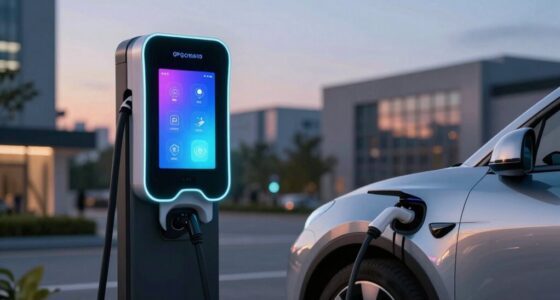

To track your EV charging costs simply, record the cost per kWh from your utility bills or online sources and note each session’s consumption and cost using a notebook or app. Focus on key factors like utility rates, station prices, and battery health, and log data weekly or after big charges. Using spreadsheets or apps helps keep everything organized without overcomplicating. If you want straightforward tips to save money and extend your battery’s life, keep exploring.
Key Takeaways
- Record each charging session’s kWh and cost using a simple app or notebook.
- Focus on tracking utility rates, station costs, and battery health for essential insights.
- Use spreadsheets or apps to consolidate data weekly or monthly, avoiding daily tracking.
- Compare charging station prices during different times to find cost-effective options.
- Maintain consistent logging to identify patterns and optimize your charging routine.
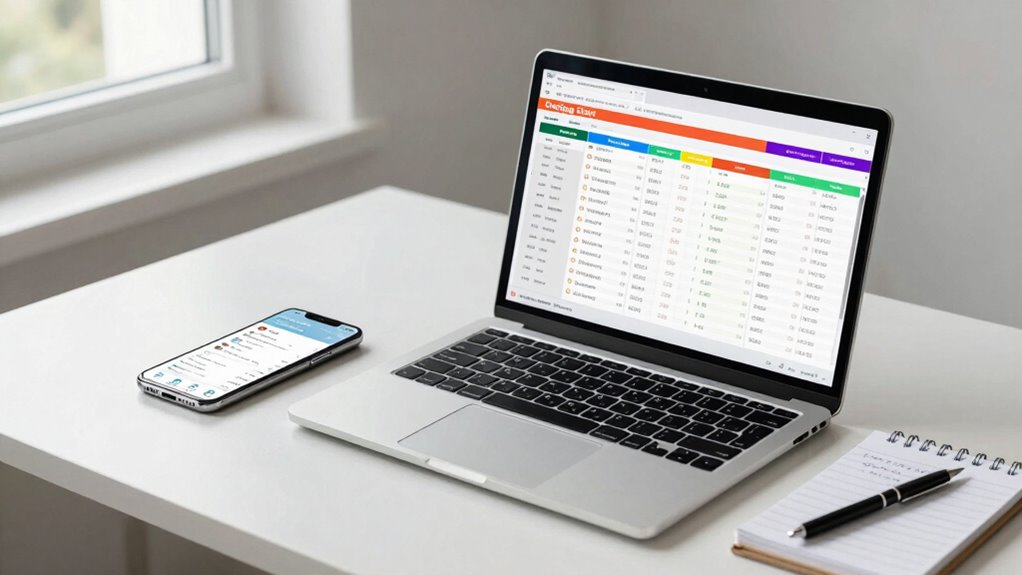
Tracking your charging costs is essential to understanding how much you spend on powering your electric vehicle or devices. It helps you manage expenses and identify ways to save money. To keep it simple, start by noting the cost per kilowatt-hour (kWh) that your utility charges. Many utilities provide this information on bills, or you can find it online. Keep a small notebook or use a smartphone app to record each charging session’s kWh consumption and the cost. Doing this over a month gives you a clear picture of your average charging expense.
Track your charging costs monthly to better manage expenses and identify savings opportunities.
When it comes to your electric vehicle, proper battery maintenance plays a key role in controlling costs. If you regularly monitor your battery’s health, you can avoid costly replacements and optimize charging habits. For instance, avoiding frequent deep discharges and not overcharging helps prolong battery life, which can save you money in the long run. Many EVs have built-in tools that display battery health and efficiency, so use these features to stay informed. This way, you won’t just track costs but also ensure your vehicle’s battery remains in good condition, preventing unnecessary expenses. Incorporating battery health monitoring into your routine can further help you manage long-term costs effectively and improve overall efficiency.
Another way to simplify tracking is by comparing different charging stations. Not all stations cost the same, and some might offer cheaper rates during off-peak hours. When you visit a public charging station, note the price per kWh and the charging speed. Over time, you’ll learn which stations are more economical and convenient, helping you plan your routes better. Many charging station comparison apps are available that show real-time prices and availability. Using these tools can save you money and time, especially if you frequently charge away from home. Just remember to keep a record of these costs alongside your utility charges to see the full picture.
To avoid overcomplication, set a routine for tracking. For example, log your charges weekly or after each significant session. Use a spreadsheet or an app that consolidates all data, so you don’t have to sift through multiple sources. This way, you maintain a straightforward overview without feeling overwhelmed. Remember, the goal isn’t to obsess over every cent but to get a general understanding of your expenses. By focusing on key factors—utility rates, battery health, and station comparison—you can keep your tracking process simple yet effective.
In the end, staying consistent in your tracking helps you identify patterns and opportunities to cut costs. Whether it’s choosing the right charging station, maintaining your battery properly, or simply being aware of your energy use, these small steps make a big difference without overcomplicating your routine. Additionally, understanding energy consumption patterns can help you optimize your charging schedule for maximum savings.
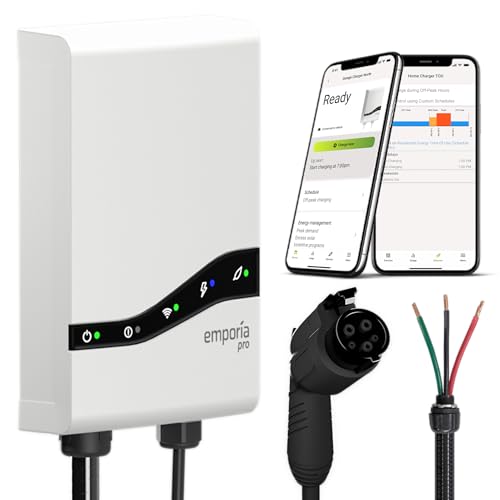
EMPORIA Pro Level 2 EV Charger with PowerSmart – 48 amp Fast EV Charger for Home with Hardwire and J1772 Connector – 240v Electric Vehicle Charging Station and 25' EV Charging Cable
Fast Charging Without Upgrades: Overcome limited electricity service and charge at the maximum speed possible, without upgrading your…
As an affiliate, we earn on qualifying purchases.
As an affiliate, we earn on qualifying purchases.
Frequently Asked Questions
Can I Track Charging Costs Using My Vehicle’s Built-In System?
Yes, you can track charging costs using your vehicle’s built-in system, which often provides data on energy consumption. This helps with battery maintenance and guarantees you follow proper charging etiquette. By monitoring these figures regularly, you can understand your charging habits, estimate costs, and maintain your battery’s health. Just remember to keep an eye on the system’s readings and adjust your charging routine accordingly for ideal performance.
How Often Should I Update My Charging Cost Records?
You should update your charging cost records after every charge or at least weekly, depending on your charging frequency. Regular updates help you maintain accurate cost estimation and identify patterns. If you charge frequently, daily or weekly updates work best. For less frequent charging, bi-weekly or monthly checks suffice. Consistent record-keeping guarantees you stay informed about your expenses without overcomplicating the process, making budgeting easier.
Are There Apps That Automatically Track Charging Expenses?
Did you know that over 60% of EV owners use apps to track their charging expenses? Yes, there are apps that automatically monitor your charging station fees and electricity rates, making it easier to stay within budget. These apps sync with your charging stations, providing real-time data on costs, so you don’t have to manually record expenses. They simplify tracking, saving you time and helping you manage your EV charging costs more efficiently.
Does Charging at Different Locations Affect My Overall Costs?
Charging at different locations can affect your overall costs due to varying charging station fees and electricity rate fluctuations. Some stations charge extra fees, increasing your expenses, while others may use different electricity rates that fluctuate throughout the day. To keep track, note where you charge and monitor rate changes. This way, you can optimize your charging habits and save money, even with diverse charging locations.
How Do I Compare Costs Between Different EV Charging Stations?
Imagine each charging station as a different flavor of ice cream—some cost more, some cost less. To compare costs, look at charging station fees and consider each station’s energy efficiency. A station with a lower fee but poor energy efficiency might end up costing more in the long run. Check the price per kWh and efficiency ratings to find the best value, like choosing the tastiest scoop for your money.

Digital Electric Sub Meters for Landlords, 120/240V Single Phase, Electricity Usage Meter, Power Energy Meter, kWh Sub Meter, ANSI Form 2S Plug-in Electric Submeters for RV Power, Rental Units
Easy Installation: This digital energy meter is designed for simple installation in standard Form 2S socket bases, making…
As an affiliate, we earn on qualifying purchases.
As an affiliate, we earn on qualifying purchases.
Conclusion
Tracking your charging costs is like keeping a simple map—you don’t need a GPS to find your way, just a few clear markers. By noting down your energy rates and charging habits, you’ll easily see where your money goes. This straightforward approach helps you stay in control without overcomplicating things. Soon, managing your EV expenses will feel as natural as cruising down a familiar road, making savings effortless and stress-free.

EVOA EV Battery Health OBD2 Scanner
EV Battery Analysis OBD2 Scanner
As an affiliate, we earn on qualifying purchases.
As an affiliate, we earn on qualifying purchases.

Commercial EV Charging Station – OCPP-Compliant, Revenue-Generating Charger with Driver Pay App – Powered by EV Range Software
Earn Revenue with Every Charge: Set custom pricing and idle fees. Monthly payouts and usage reports included.
As an affiliate, we earn on qualifying purchases.
As an affiliate, we earn on qualifying purchases.