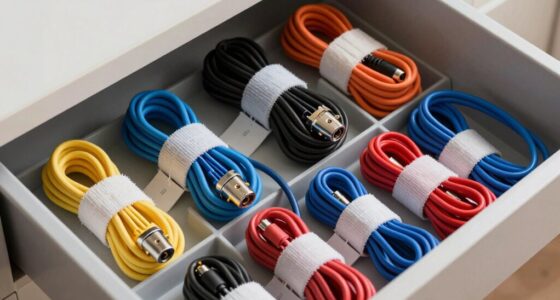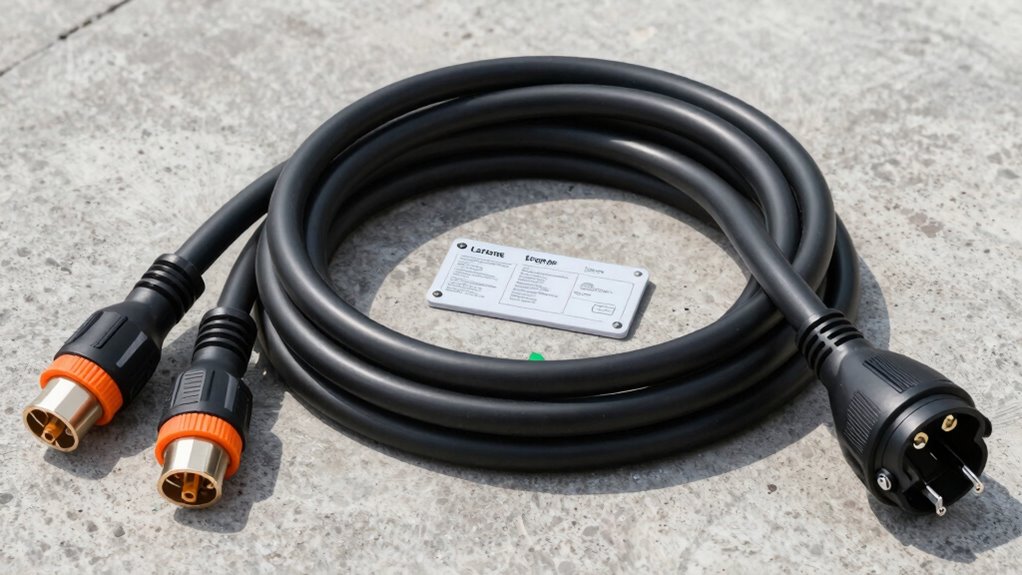
To avoid buying the wrong EV charging extension gear, first make sure it’s rated specifically for high-current use and check for safety features like insulation and moisture resistance. Match the extension’s plug type, voltage, and amperage to your vehicle’s requirements, and prioritize certified, reputable brands. Avoid cheap or generic options, and always verify specifications before purchasing. Proper selection and safety checks can prevent hazards, and if you keep exploring, you’ll uncover more tips for safe charging.

Get backup power and energy gear delivered free with Prime
- Fast, free delivery on millions of items
- Prime Video, Amazon Music and more included
- Member-only deals all year
Key Takeaways
- Verify the extension cord’s voltage, amperage, and plug type match your EV charger’s specifications.
- Choose certified, reputable brands with safety marks like UL or CE.
- Use the shortest possible cord to minimize resistance and voltage drops.
- Regularly inspect for damage, wear, or overheating before each use.
- Consult manufacturer guidelines to ensure compatibility and safe electrical practices.
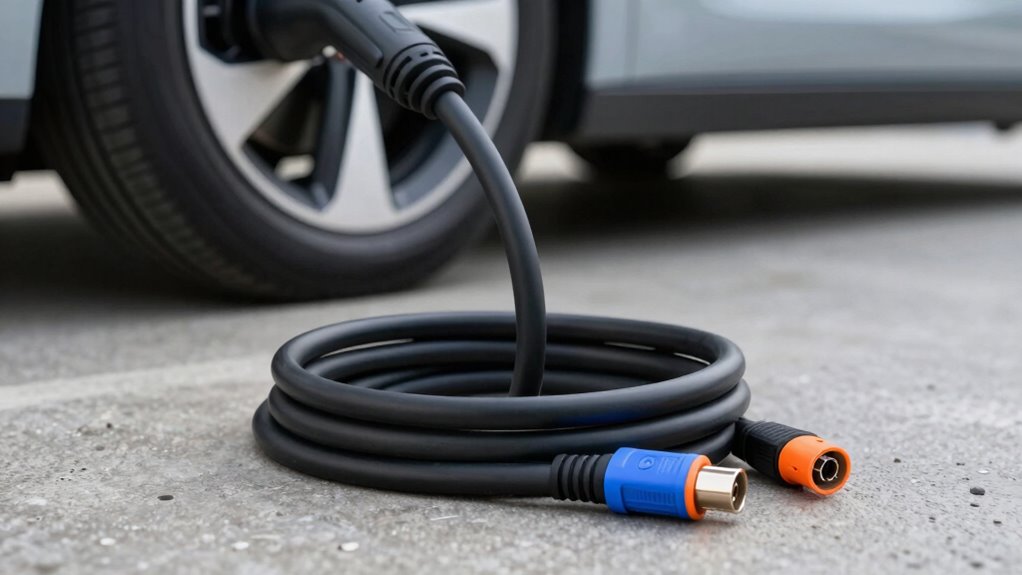
Choosing the right EV charging extension gear can be tricky, especially with so many options available. You want to guarantee that your setup is safe, reliable, and compatible with your vehicle and charging station. One of the most critical considerations is charging safety. Using an extension cord that isn’t rated for EV charging can lead to overheating, sparks, or even fires. Always check the specifications and look for extension cords designed specifically for EV charging or high-current applications. Avoid generic or low-quality cords that might not handle the electrical load safely. Properly rated extension gear includes features like insulation, moisture resistance, and protective grounding, all of which are essential for safe operation.
Choose EV extension cords rated for safety, insulation, and high-current use to prevent overheating and ensure reliable charging.
Compatibility issues are another common pitfall. Not all extension cords or adapters fit every EV charger or vehicle model. Before making a purchase, verify that the extension gear matches your charger’s plug type and power requirements. Some EVs and charging stations operate at different voltage levels and amperages, so using the wrong extension can cause damage to either the vehicle or the charging station. Check the maximum current rating of the extension cord—if it’s lower than your charger’s output, it could lead to overheating or failure. Reading the manufacturer’s guidelines and consulting your vehicle’s user manual can help you identify the correct specifications and avoid compatibility issues.
Another way to prevent mistakes is to avoid impulse buys. It’s tempting to pick up the cheapest extension cord available, but sacrificing quality for price can compromise safety and compatibility. Instead, invest in high-quality, certified extension gear from reputable brands. Certification marks like UL or CE indicate that the product has been tested for safety standards. Additionally, consider the length of the extension cord—longer cords tend to have higher resistance, which can impact charging efficiency and safety. Use the shortest length necessary to reach your charging point, reducing the risk of voltage drops and potential hazards. Being aware of electrical basics can help you understand how resistance and current ratings affect safe operation. Furthermore, understanding synthetic lubricants can help you maintain your charging equipment and ensure it operates smoothly over time. Incorporating proper electrical practices can also help prevent issues and prolong the lifespan of your equipment. To enhance safety, it’s also beneficial to familiarize yourself with cable safety guidelines to avoid common hazards associated with electrical cords.
Finally, don’t forget to regularly inspect your extension gear for signs of wear or damage. Frayed cords, exposed wires, or scorch marks are red flags that you should replace the extension gear immediately. Proper maintenance and cautious selection are key to avoiding dangerous situations and ensuring your EV charging experience remains safe, efficient, and hassle-free. By paying close attention to charging safety, compatibility issues, and quality, you’ll be well-equipped to choose the right extension gear and keep your charging routine smooth and secure.
EV charging extension cord rated for high current
As an affiliate, we earn on qualifying purchases.
As an affiliate, we earn on qualifying purchases.
Frequently Asked Questions
Are There Specific Brands Known for Reliable EV Extension Cords?
You should look for brands with a strong reputation for reliability, like ChargePoint, ClipperCreek, or EVannex. Check user reviews to see how these brands perform in real-world situations. Reliable EV extension cords come from trusted manufacturers that prioritize safety and durability. By researching brand reputation and reading user reviews, you guarantee you’re investing in a product that won’t fail when you need it most, giving you peace of mind during charging.
How Do I Verify an Extension Cord’s Compatibility With My EV Charger?
Don’t leave things to chance; check your extension cord’s plug compatibility and cable gauge to guarantee safety. Confirm that the plug fits your EV charger’s socket snugly and securely. Look for a cord with a gauge that matches or exceeds your charger’s power requirements—thicker wire handles higher currents better. Always verify specifications from the manufacturer to prevent mishaps and keep your charging sessions smooth and safe.
Can I Use a Standard Extension Cord for EV Charging Safely?
You shouldn’t use a standard extension cord for EV charging safely. Portable adapters or extension cords with appropriate power ratings are designed specifically for high-current use, unlike regular cords. Using a standard cord risks overheating, damage, or even fire. Always opt for heavy-duty extension cords rated for the power your charger needs, and check compatibility to guarantee safe, reliable charging without hazards.
What Safety Certifications Should I Look for in EV Extension Gear?
Think of electrical safety as your shield and compatibility standards as your map. Look for certifications like UL, ETL, or CE on EV extension gear—these confirm your equipment meets strict safety and electrical safety standards. Trusted certifications guarantee the gear’s compatibility with your EV charger, preventing hazards. Always choose gear with proper safety labels, so you avoid risks and keep your charging experience safe and reliable.
How Long Can I Safely Extend My EV Charging Cable?
You can safely extend your EV charging cable up to 25 feet, but it’s vital to prioritize extension cord safety. Longer lengths may cause voltage drops and overheating, risking damage or safety hazards. Always use a high-quality extension cord rated for EV charging, and avoid daisy-chaining multiple cords. Check your vehicle’s manual and manufacturer recommendations to verify the chosen charging cable length meets safety standards and maintains efficient charging.
As an affiliate, we earn on qualifying purchases.
Conclusion
To avoid buying the wrong EV charging extension gear, you need to check compatibility, compare specifications, and verify safety ratings. You must understand your charging needs, assess the gear’s capacity, and prioritize safety features. You should research brands, read reviews, and consult experts. By doing these, you can guarantee a safe, reliable, and efficient charging experience, matching your needs with the right gear, avoiding risks, and gaining confidence in your electric vehicle journey.
As an affiliate, we earn on qualifying purchases.
reliable EV charging extension cord
As an affiliate, we earn on qualifying purchases.
As an affiliate, we earn on qualifying purchases.
Fall Picks
fall essentials
As an affiliate, we earn on qualifying purchases.