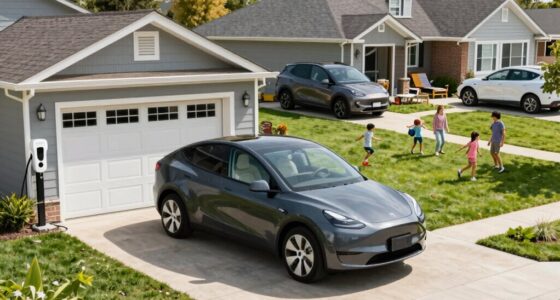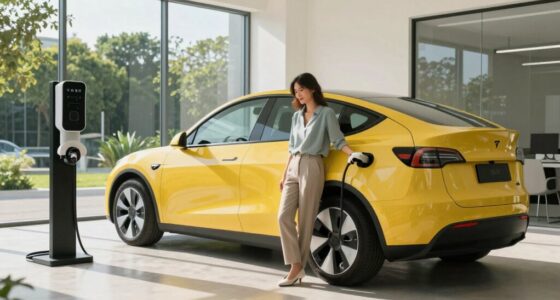
Home charging is the ultimate upgrade for your EV lifestyle because it offers unmatched convenience, allowing you to charge overnight and start every day with a full battery. It gives you control over your energy use and reduces reliance on public stations, saving you time and stress. Plus, you can harness renewable energy, lowering costs and your carbon footprint. Keep exploring to discover how this simple shift can transform your everyday driving experience.

Get backup power and energy gear delivered free with Prime
- Fast, free delivery on millions of items
- Prime Video, Amazon Music and more included
- Member-only deals all year
Key Takeaways
- Provides overnight, hassle-free charging, eliminating reliance on public stations and reducing commute disruptions.
- Enhances energy independence by controlling your charging schedule and utilizing renewable energy sources.
- Lowers overall costs through efficient at-home charging and supports eco-friendly, sustainable living.
- Ensures vehicle readiness for long trips, boosting travel confidence and reducing public charging dependence.
- Offers smart monitoring features for better energy management, prolonging battery life and reducing operational expenses.
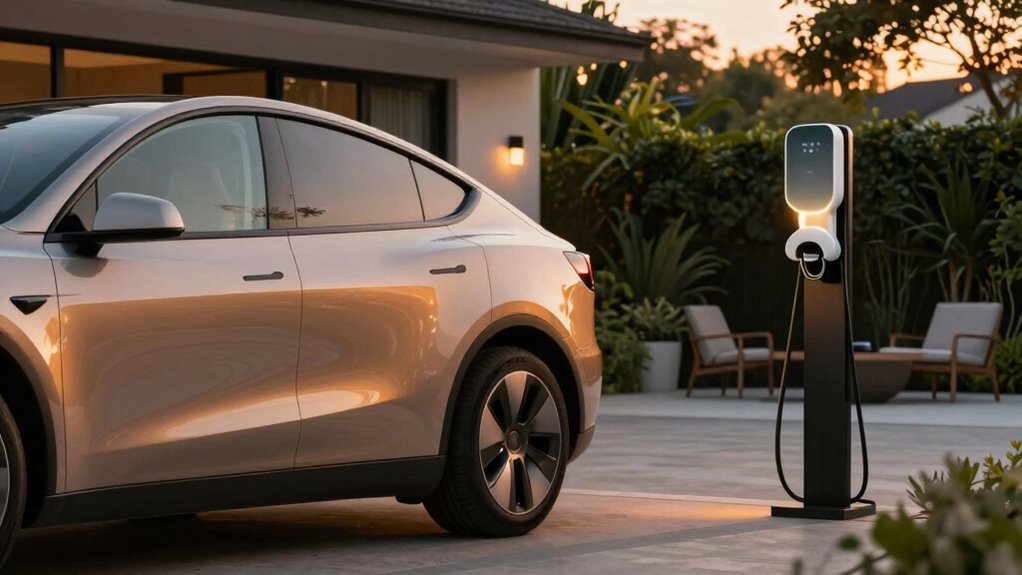
Owning an electric vehicle can transform your daily routine, especially when you upgrade your lifestyle with home charging. Instead of planning your day around public charging stations or waiting in line at a charging hub, you gain the convenience of charging your EV right at home. This simple change streamlines your schedule and eliminates the stress of finding available charging points, making your commute smoother and more predictable. With a dedicated home charging station, you can top off your battery overnight, ensuring your vehicle is ready to go each morning. This level of convenience encourages you to use your EV more often and embrace its benefits without the hassle of long stops or limited infrastructure.
Investing in home charging also enhances your sense of energy independence. You’re no longer reliant on external charging infrastructure, which can be inconsistent or limited in certain areas. Instead, you control your energy flow and charging schedule. This independence means less concern about parking in specific zones or waiting for a charger to become available. It also allows you to maximize your energy use, especially if you have solar panels installed. You can directly harness renewable energy to power your vehicle, reducing your carbon footprint and reliance on the grid. In doing so, you not only save money but also contribute to a more sustainable lifestyle, aligning with your values of environmental responsibility.
The presence of reliable charging infrastructure at home means you can plan longer trips without the anxiety of running low on battery. You’ll appreciate knowing that your vehicle is always charged and ready, even after extended travel. Home charging stations come with smart features that let you monitor and manage your energy consumption, providing real-time insights into your usage. Over time, this creates a more efficient, cost-effective way to operate your vehicle. Plus, the convenience of having your charger integrated into your household reduces wear and tear on your vehicle’s battery by encouraging consistent, ideal charging habits. Additionally, expanding emerging trends in digital publishing can help you stay informed about innovations that further enhance your EV charging experience.
As an affiliate, we earn on qualifying purchases.
Frequently Asked Questions
How Much Does Installing a Home Charger Typically Cost?
Installing a home charger typically costs between $500 and $2,500, depending on your charging speed and power compatibility needs. If you want faster charging, you’ll need a higher-capacity unit, which can increase costs. Keep in mind, professional installation might add to the expense, but it guarantees safety and proper setup. Overall, investing in a home charger offers convenience and supports your EV lifestyle effectively.
Are There Any Government Incentives for Home EV Chargers?
Yes, you can benefit from government rebates and utility programs that help cover the costs of installing a home EV charger. These incentives aim to encourage electric vehicle adoption by reducing upfront expenses. Check your local, state, or federal programs for specific offers. By taking advantage of these rebates and utility incentives, you make your EV ownership more affordable and enjoy the convenience of charging at home.
What’s the Best Type of Charger for Residential Use?
The best charger for residential use is a Level 2 charger, offering faster charging times and greater convenience. Charger types vary from portable units to fixed installations, and a Level 2 charger provides consistent, powerful performance. The installation process is straightforward—typically involving a dedicated circuit and professional setup—making it an efficient choice for everyday charging needs. This upgrade simplifies your routine, boosts your EV experience, and enhances your lifestyle.
How Long Does It Take to Install a Home Charging Station?
It typically takes about a day or two to install a home charging station, depending on your home’s electrical setup. The installation process involves evaluating your electrical system, wiring, and possibly upgrading your circuit breaker for ideal charging speed. Once installed, you’ll enjoy faster charging speeds right at home, making your EV ownership more convenient and efficient. You’ll appreciate the seamless, hassle-free experience of charging overnight or during your downtime.
Can I Use My Existing Electrical System for a Home Charger?
Yes, you can usually use your existing electrical system for a home charger, but you’ll need to check its electrical capacity and circuit compatibility first. Your current breaker might need upgrading to handle the charger’s power demands safely. It’s best to consult a licensed electrician who can assess your system, verify it meets safety standards, and determine if any upgrades are necessary for effective and safe EV charging at home.
As an affiliate, we earn on qualifying purchases.
Conclusion
Charging your EV at home truly transforms your daily routine, making it more convenient and stress-free. Did you know that 80% of EV owners prefer home charging because it saves time and fits seamlessly into their lives? By upgrading to a home charger, you’re not just adopting cleaner transportation—you’re embracing a smarter, more effortless lifestyle. It’s a small change that makes a big impact, turning your daily commute into a simple, hassle-free experience.
smart EV charger with energy monitoring
As an affiliate, we earn on qualifying purchases.
As an affiliate, we earn on qualifying purchases.
As an affiliate, we earn on qualifying purchases.
Halloween Picks
halloween
As an affiliate, we earn on qualifying purchases.