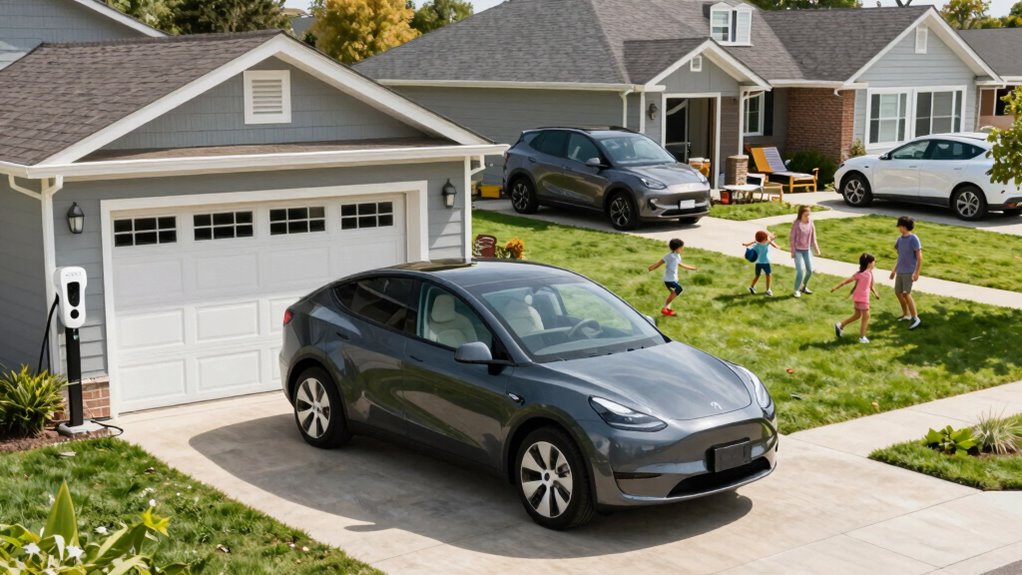

In a small household, you likely have simpler charging needs, with fewer drivers relying mainly on overnight home charging, which is convenient and cost-effective. For big families, coordinating multiple users’ charging schedules and possibly installing faster chargers is essential to avoid disruptions. You should evaluate your household’s electric capacity and plan for regional infrastructure, especially if you travel often. To guarantee everything runs smoothly, understanding these differences can help you optimize your EV setup—more details await if you keep exploring.
Key Takeaways
- Small households typically have simpler charging needs and fewer drivers, making home charging more straightforward and cost-effective.
- Big families may require multiple charging stations, faster chargers, or coordinated scheduling to meet higher collective driving demands.
- Household size influences daily driving patterns, with larger families often needing more frequent or faster charging options.
- Regional charging infrastructure and trip planning become more critical for big families to avoid range anxiety during long trips.
- Proper assessment of household electrical capacity ensures safe, efficient EV charging for both small households and big families.
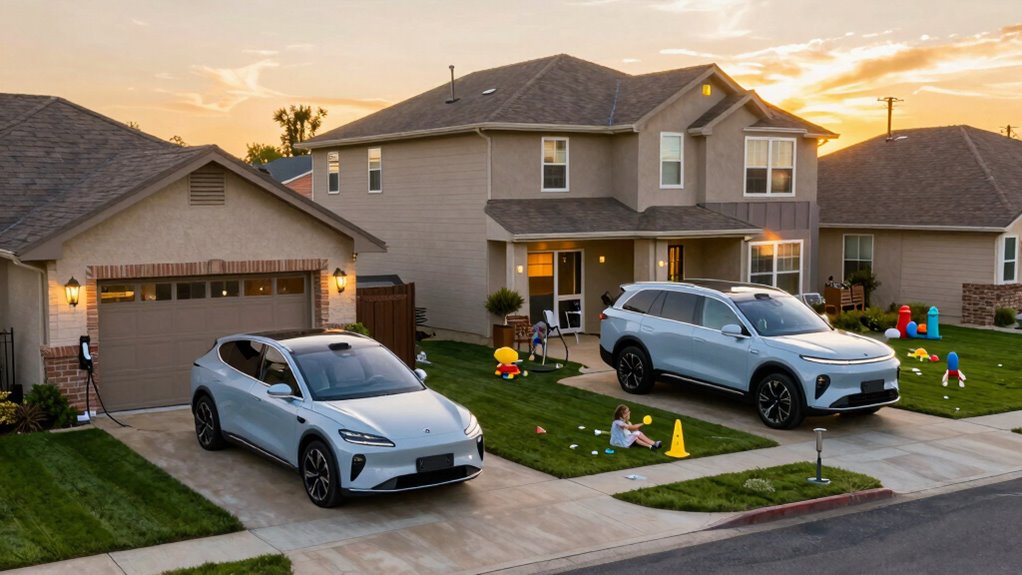
Owning an electric vehicle (EV) can markedly impact your household’s daily routines, but how you experience this depends largely on whether you’re in a small household or a big family. If you’re part of a small household, your charging needs are likely simpler. You may have a dedicated garage or driveway, making it easier to install a reliable charging infrastructure. With just one or two drivers, you might only need to charge the vehicle overnight or during off-peak hours, which can be quite convenient. Since EVs generally have lower maintenance costs compared to traditional vehicles, you’ll save money over time, but it’s still worth contemplating the initial setup. A home charging station might require an upfront investment, but it offers the flexibility of charging conveniently at home, saving trips to public chargers. Your household’s smaller size also means fewer driving demands, so your EV’s range might be sufficient for your daily errands and weekly outings, reducing the need for frequent top-ups. Additionally, understanding your household’s charging requirements can help optimize your setup and ensure reliable power for your EV. Properly assessing your household’s electric capacity can prevent unexpected electrical upgrades and ensure safe charging practices.
Furthermore, being aware of regional charging infrastructure can help you plan longer trips more effectively, especially in rural areas or regions with fewer charging stations. Managing the charging infrastructure for a big family involves extra coordination, but it can be highly efficient once set up properly. You’ll need to think about your household’s driving patterns, the availability of public chargers, and the potential need for fast chargers to keep everyone moving smoothly.
home EV charging station for small household
As an affiliate, we earn on qualifying purchases.
As an affiliate, we earn on qualifying purchases.
Frequently Asked Questions
How Does Household Size Affect EV Charging Habits?
Household size influences your EV charging habits considerably. With a small household, you might rely on a dedicated charging station at home, managing energy consumption easily. In larger families, you’ll need robust charging infrastructure and plan charging times carefully to avoid energy spikes. More family members mean increased energy consumption, so balancing charging schedules and infrastructure becomes essential to guarantee everyone stays powered efficiently.
Are EV Maintenance Costs Different for Small Households Versus Large Families?
Ever wondered if EV maintenance costs differ between small households and large families? They can, mostly due to usage patterns. Large families might see higher costs from frequent charging and more wear and tear, impacting insurance premiums and parking arrangements. Small households typically have fewer charging needs, leading to lower costs. Consider your household size and habits to predict maintenance expenses better and plan your EV budget accordingly.
What Safety Concerns Are Unique to Families With Children and EVS?
You should be aware of childproofing risks with EVs, such as securing charging ports and battery compartments to prevent accidental access or injury. Family carpooling increases the likelihood of children being around the vehicle frequently, so always supervise and educate them about EV safety. Keep charging cords out of reach and make sure doors and windows are child-proofed. These precautions help protect your children while enjoying the benefits of your electric vehicle.
How Does Vehicle Sharing Impact EV Battery Longevity?
Sharing an EV can impact battery longevity by increasing cycle counts, which may accelerate battery degradation over time. Frequent charging accessibility during shared use can also lead to more rapid wear if not managed properly. To protect your battery, avoid deep discharges and optimize charging schedules. Regular maintenance and mindful use help maintain battery health, ensuring your shared EV stays reliable and efficient for everyone in your household.
Can Multiple EVS Be Efficiently Managed in a Big Household?
Yes, managing multiple EVs in a big household can be efficient if you have a robust charging infrastructure. You’ll need enough chargers to prevent bottlenecks and optimize energy consumption. Smart chargers help coordinate charging times, reducing strain on your power system. Planning your energy use during off-peak hours also minimizes costs. With the right setup, your household can seamlessly support several EVs without overwhelming your energy system.
fast charger for EV for large family
As an affiliate, we earn on qualifying purchases.
As an affiliate, we earn on qualifying purchases.
Conclusion
Think of your household as a garden—small or big, it needs the right care. Running an EV in a small household is like tending a delicate bonsai, requiring careful watering and attention to its unique needs. In a big family, it’s more like nurturing a lively tree, where everyone’s needs must be balanced. No matter the size, understanding your household’s rhythm helps you grow a smooth, sustainable journey with your EV.
multi-vehicle EV charging station
As an affiliate, we earn on qualifying purchases.
As an affiliate, we earn on qualifying purchases.
As an affiliate, we earn on qualifying purchases.