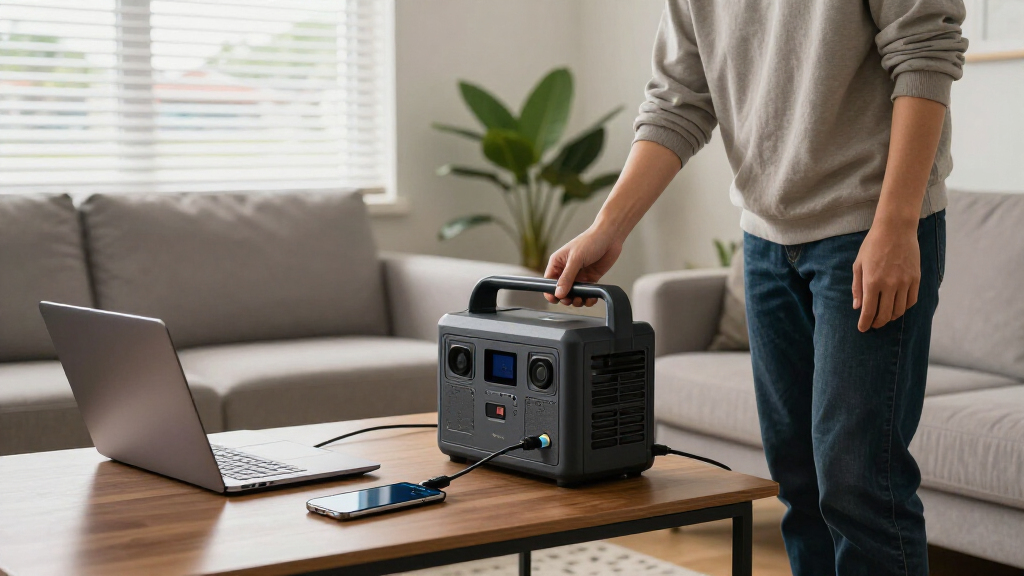

The best home backup power station for most people is the Jackery HomePower 3600 Plus, thanks to its combination of 3600W output, a 3584Wh LFP battery, and expansion up to 21kWh — enough to run refrigerators, medical devices, and HVAC circuits through extended outages. Two alternatives stand out for different budgets: the BLUETTI Elite 400 delivers big-battery capacity at a lower price per watt-hour, while the Anker SOLIX C1000 Gen 2 keeps things affordable and compact for apartment dwellers who only need essentials covered. The main tradeoff in this category is capacity versus cost: small 1000Wh units cost far less but can’t run a whole home, while 3kWh-plus stations handle real outages but demand a serious investment. Battery chemistry matters too — every top-ranked model here uses LiFePO4, which lasts thousands of cycles versus the shorter lifespan of older lithium-ion packs. Keep reading for the full breakdown of all 12 models and which one fits your home, budget, and outage risk.

Get backup power and energy gear delivered free with Prime
- Fast, free delivery on millions of items
- Prime Video, Amazon Music and more included
- Member-only deals all year
Key Takeaways
- The Jackery HomePower 3600 Plus earned the top spot because it’s the only mid-priced model that pairs whole-home-class 3600W output with expansion to 21kWh, letting buyers start small and scale up.
- Capacity tiers formed three clear groups in this comparison: ~300Wh emergency-only units, ~1kWh essentials-covering models, and 3–4kWh whole-home stations — and picking the wrong tier is the most common (and expensive) mistake.
- The BLUETTI Elite 400 and ABOK Ark3600 delivered the best watt-hours-per-dollar among the large stations, beating better-known brands on raw capacity value despite weaker app ecosystems.
- Every 3000W-plus model in this lineup uses LiFePO4 chemistry, while smaller budget options cut costs with lower cycle-life cells — a hidden longevity difference worth hundreds of dollars over the product’s life.
- The 1000Wh class (Anker C1000, EcoFlow Delta 3 Classic, Jackery Explorer 1000 v2) is the most crowded tier, and the differentiators came down to inverter headroom and recharge speed rather than capacity.


| home backup power station | Capacity | Battery Type | Weight | Dimensions |
|---|---|---|---|---|
| 1000W Portable Power Station 1 | 1024Wh | LiFePO4 | 27.73 lbs | — |
| BLUETTI Elite 400 Portable Pow | 3840Wh | LiFePO4 | 86 lbs | 17"L x 11"W x 41"H |
| EnginStar Solar Generator | 296Wh | — | 6.5 lbs | 9"L x 5.5"W x 7.5"H |
| Jackery HomePower 3000 Portabl | 3072Wh | LiFePO4, 4,000 cycles to 70% | — | — |
| Jackery Explorer 1000 v2 Porta | 1070Wh | LFP, 10+ year lifespan | 23.8 lbs | 12.87"L x 8.82"W x 9.72"H |
| PECRON Portable Power Station | 3072Wh | LiFePO4 | — | — |
| Anker SOLIX C1000 Gen 2 Portab | 1024Wh | — | 11.3 kg (24.9 lbs) | 15.1 x 8.2 x 9.6 inches |
| Jackery HomePower 3600 Plus Po | 3584Wh | LFP | 77.2 lbs | 15.2 x 12.2 x 19.3 inches |
| Anker SOLIX S2000 Portable Pow | 2010Wh | LiFePO4 (LFP) | 35.7 lbs | 8.2 x 11.1 x 12.7 inches |
| ABOK Ark3600 Portable Power St | 3840Wh (expandable to 11520Wh) | LiFePO4 | — | — |
| BLUETTI AC180 Portable Power S | — | LiFePO4 | — | — |
| EF ECOFLOW Portable Power Stat | 1024Wh | LiFePO4 | — | — |
More Details on Our Top Picks
1000W Portable Power Station 1024Wh LiFePO4 for Outdoor & Home
This option stands out as the most affordable path into the 1kWh LiFePO4 class, which is where backup power starts feeling genuinely useful rather than toy-like. Its 1024Wh capacity and 1000W output can run a fridge, lights, and chargers through a short outage, and the battery chemistry matches what Jackery and Anker use at nearly double the price. The tradeoff is raw speed: compared with the Anker SOLIX C1000 Gen 2 at the same capacity, its 1000W inverter is half the power, and its 300W solar ceiling recharges far slower than premium rivals. For buyers who want honest emergency coverage without brand-name pricing, those limits are acceptable. For anyone running power-hungry appliances like microwaves or hair dryers, this model is better skipped in favor of the Jackery Explorer 1000 v2.
Pros:- LiFePO4 chemistry at a budget price, matching premium brands’ battery lifespan
- 1024Wh capacity is enough for a full day of essential devices during an outage
- Solar input up to 300W allows off-grid recharging
- Non-slip handle and sub-30-pound weight make it manageable for one person
Cons:- 1000W output is noticeably weaker than similarly sized rivals like the Anker C1000’s 2000W
- 300W solar input cap means slow off-grid recharges compared with faster-charging competitors
Best for: Budget-conscious households that want fridge-and-essentials outage coverage without paying premium brand prices
Not ideal for: Buyers who need to run 1500W+ appliances — the 1000W inverter ceiling rules out microwaves and most kitchen gear
- Power Output:1000W continuous
- Capacity:1024Wh
- Battery Type:LiFePO4
- Outlets:2×110V AC, 1×60W PD USB-C, 2×USB-A
- Solar Input:Max 300W
- Weight:27.73 lbs
Our verdict“A sensible entry point for essential-only backup coverage, provided you accept slower charging and a lower power ceiling than pricier 1kWh rivals.”
BLUETTI Elite 400 Portable Power Station 3840Wh LiFePO4 Battery 2600W
When an outage stretches past a few hours, capacity is everything, and the Elite 400’s 3840Wh battery is the largest in this lineup. This model is better suited to buyers treating a power station as a semi-permanent home backup appliance than a camping companion — the 86-pound weight makes that clear, though the built-in trolley system softens the burden compared with the similarly sized Jackery HomePower 3000, which you carry by hand. Its party trick is charging speed: 80% in 70 minutes means you can top up between storm bands rather than waiting half a day. Compared with the Jackery, you get more stored energy but 1000W less inverter output, so the Elite 400 favors longer runtimes over driving high-wattage appliances simultaneously. The price is the real barrier, and solar expansion details are thinner than competitors’.
Pros:- 3840Wh capacity delivers multi-day runtime for fridges, medical devices, and networking gear
- 70-minute charge to 80% is among the fastest in this class
- Integrated trolley system makes an 86-pound unit realistically movable
- Nine outlets let you run an entire essential-circuit setup at once
Cons:- Premium price that approaches the cost of entry-level fixed generator installations
- 2600W inverter is 1000W weaker than the Jackery HomePower 3000 despite the higher price
Best for: Homeowners in outage-prone areas who want multi-day coverage of essential circuits without installing a fixed generator
Not ideal for: Campers and RV users — at 86 pounds and 41 inches tall, it’s a wheeled appliance, not a grab-and-go unit like the EnginStar 300W
- Capacity:3840Wh
- Battery Type:LiFePO4
- Continuous Power:2600W
- Surge Power:3900W
- Outlets:9
- Charge Time:70 minutes to 80%
- Weight:86 lbs
- Dimensions:17″L x 11″W x 41″H
Our verdict“The pick for buyers who prioritize stored energy and recharge speed over portability, and who can stomach the premium price.”
EnginStar Solar Generator, 300W Portable Power Station, 296Wh Lithium Battery Backup
Not everyone needs to run a refrigerator — some buyers just want phones, a radio, a CPAP for a night, and a light when the grid flickers. That’s exactly the job this 6.5-pound unit does well, and its low price makes it an easy add to an emergency kit or car trunk. Compared with everything else here, it’s the only genuinely one-handed option — even the Jackery Explorer 1000 v2 weighs nearly four times as much. The compromises are obvious and worth stating plainly: 296Wh and 300W means no kitchen appliances, no space heaters, and no multi-day outages. Unlike the budget 1024Wh unit from the top of this list, this one uses standard lithium rather than LiFePO4, so it won’t age as gracefully over years of storage and cycling. As a first power station or a bedside backup, though, it’s hard to argue with.
Pros:- 6.5-pound, carry-anywhere size that no other pick here matches
- Three recharge paths — AC, solar, and car — for flexible emergencies
- Pure sine wave outlets that are safe for sensitive electronics
- Full suite of protections including overload, short circuit, and overheating safeguards
Cons:- Standard lithium battery lacks the long cycle life of the LiFePO4 chemistry in pricier picks
- Solar panel sold separately, adding to the true cost of off-grid use
Best for: First-time buyers, apartment dwellers, and emergency-preparedness builders who need device-level backup, not appliance power
Not ideal for: Anyone expecting fridge or microwave coverage — 296Wh runs a mini fridge for only a few hours and 300W can’t start many compressors
- Capacity:296Wh
- Output:300W, pure sine wave
- Outlets:2×110V AC plus USB ports
- Recharging:AC, solar, or car socket
- Safety:Overload, short circuit, overcharge, and overheating protection
- Weight:6.5 lbs
- Dimensions:9″L x 5.5″W x 7.5″H
Our verdict“A low-cost, low-commitment entry point for device backup — just don’t expect it to carry a household through an outage.”
Jackery HomePower 3000 Portable Power Station, 3072Wh, 3600W AC Output
This is the model I’d point most households toward, because it nails the balance the whole category struggles with: 3600W of inverter power is enough to run a microwave alongside a fridge and furnace blower, while 3072Wh keeps essentials alive through a long evening and into the next day. Compared with the BLUETTI Elite 400, you trade 768Wh of capacity for 1000W more output and a significantly lighter, more compact body — a better trade for most homes, since running out of outlets matters more than a few extra hours of fridge time. The UPS function means it can sit between the wall and your devices full-time, switching over automatically when power drops, which cheaper units like the EnginStar can’t do. The 4,000-cycle LiFePO4 battery should outlast a decade of occasional use. It’s expensive and still not light, but for real home backup, it earns the top spot.
Pros:- 3600W output with 7200W surge runs high-draw appliances other stations choke on
- UPS pass-through function switches to battery automatically during outages
- Hybrid charging hits full recharge in 1.7 hours
- 4,000-cycle LiFePO4 battery rated for roughly a decade of use
Cons:- Premium price point well above mid-size picks like the Anker SOLIX C1000
- Meaningful weight despite being smaller than comparable 3kWh units — not a spontaneous-trip device
Best for: Suburban households that want automatic, appliance-level backup for outages lasting a day or more
Not ideal for: Casual campers and buyers on tight budgets — the capacity and price are overkill if you only need phones and lights
- Capacity:3072Wh
- AC Output:3600W (7200W surge)
- Battery Type:LiFePO4, 4,000 cycles to 70%
- Charge Time:1.7 hrs hybrid AC/DC, 2.2 hrs AC
- Ports:10, including USB-C, USB-A, DC, and RV
- Key Feature:UPS function for automatic emergency switchover
Our verdict“The most complete home-backup package in this roundup for households that need real appliance power with automatic switchover.”
Jackery Explorer 1000 v2 Portable Power Station, 1070Wh, 1500W
This pick makes the most sense for buyers who can’t decide between home backup and outdoor use. At 23.8 pounds with a briefcase-style footprint, it’s the largest unit here you’d actually carry to a campsite, yet its 1500W output handles kettles, blenders, and power tools — things the budget 1024Wh station at 1000W simply can’t start. Compared with the Anker SOLIX C1000 Gen 2, its closest rival in capacity, the Jackery counters Anker’s higher 2000W surge with a faster one-hour recharge and a more travel-friendly shape. The catch: that headline 42-minute runtime at full load is the honest math of 1070Wh, so it’s a bridging solution, not a multi-day one. If your outages typically last an evening, or you want one device that does tailgates and storm season equally well, this is the sweet spot. Whole-home buyers should step up to the HomePower 3000.
Pros:- 1500W output runs small kitchen appliances and tools that 1000W-class units refuse
- One-hour full recharge is faster than nearly everything at this capacity
- 23.8-pound, compact body is genuinely portable unlike the 3kWh giants
- LFP battery rated for over ten years of service
Cons:- Only compatible with Jackery solar panels, locking you into one ecosystem
- App setup is needed to unlock the fastest charging configuration
Best for: Buyers splitting time between camping trips and short home outages who want one device that does both well
Not ideal for: Households facing multi-day outages — 1070Wh drains in under an hour at full load and can’t carry a fridge overnight
- Capacity:1070Wh
- AC Output:1500W (3000W surge)
- Battery Type:LFP, 10+ year lifespan
- Charge Time:Approx. 1 hour full recharge
- Outlets:7 total
- Weight:23.8 lbs
- Dimensions:12.87″L x 8.82″W x 9.72″H
Our verdict“The best single-device compromise between portability and real power, ideal for weekend adventurers who also want storm-night peace of mind.”
PECRON Portable Power Station F3000LFP, 3072Wh Solar Generator, 3600W
The PECRON F3000LFP stands out for its two-hour full recharge, which is faster than anything else in this capacity class — the Jackery HomePower 3600 Plus offers similar output but can’t match this turnaround when the grid comes back after a storm. A 3600W pure sine wave inverter running off a 3072Wh LiFePO4 battery means most kitchen appliances, power tools, and medical devices run without strain, and UPS pass-through keeps sensitive electronics alive through the switchover. Thirteen outlets beat the Jackery’s two by a wide margin. The tradeoff: expanding capacity requires a proprietary cascade cable sold separately, an annoying extra purchase, and the unit is genuinely heavy despite the ‘portable’ label.
Pros:- Two-hour full recharge is best-in-class for this capacity
- 3600W output with 13 outlets runs multiple heavy appliances at once
- UPS mode protects sensitive electronics like computers and CPAP machines
- 1600W max solar input supports serious off-grid recharging
Cons:- Battery expansion requires a separately sold cascade cable
- Heavy and awkward for any portable use
Best for: Homeowners in outage-prone areas who want a large station that recharges fast between blackouts and powers heavy appliances
Not ideal for: Campers and RV users who frequently move the unit — the weight makes it a lift-for-two proposition
- Capacity:3072Wh
- Output Power:3600W pure sine wave
- Charging Time:2 hours (0-100%)
- Battery Type:LiFePO4
- Max Solar Input:1600W
- Number of Outlets:13
- Charging Options:AC, solar, car
- Warranty:2+3 years
Our verdict“Buy this if fast recharge cycles and UPS protection matter more than portability; skip it if you need a station you’ll actually carry.”
Anker SOLIX C1000 Gen 2 Portable Power Station, 1024Wh, 2000W
For buyers who find the big 3kWh stations excessive, the Anker SOLIX C1000 Gen 2 hits a sweet spot: 1024Wh of capacity and 2000W of continuous output at a size and price closer to the Jackery Explorer 1000 v2, but with double the running wattage. The headline feature is HyperFlash recharging in 49 minutes, meaning a lunchtime grid session restores the whole battery — faster than the similarly sized EcoFlow Delta 3 Classic. This is enough power for a fridge, lights, router, and phone charging through a typical overnight outage. The compromises are real: only nine outlets fills up quickly in a whole-house scenario, and some advanced settings live behind Anker’s app, which frustrates less tech-inclined users.
Pros:- 49-minute full recharge via HyperFlash beats most rivals in this class
- 2000W continuous output handles surge-heavy appliances despite midsize capacity
- Smaller and lighter than comparable 1kWh competitors
- Supports solar, AC, and UPS backup operation
Cons:- Only 9 outlets, limiting whole-home coverage
- Advanced features require the companion app
Best for: Apartment dwellers and small households who need fridge-and-essentials backup without the cost and bulk of a 3kWh station
Not ideal for: Families running well pumps, electric kettles, and multiple appliances simultaneously — 1024Wh drains fast under that load
- Capacity:1024Wh
- Continuous Output:2000W
- Peak/Surge Output:3000W
- Recharge Time:49 minutes
- Total Outlets:9
- Weight:11.3 kg (24.9 lbs)
- Dimensions:15.1 x 8.2 x 9.6 inches
- Power Source:Battery (AC, solar rechargeable)
Our verdict“The smart pick for essential-appliance backup on a budget, as long as your outage needs stay modest.”
Jackery HomePower 3600 Plus Portable Power Station, 3600W, 3584Wh
The Jackery HomePower 3600 Plus earns its place for scalability: starting at 3584Wh, it grows to 21kWh — enough for multi-day whole-home coverage that fixed-size rivals like the PECRON F3000LFP can’t reach without add-on batteries anyway. The luggage-style design with wheels is genuinely thoughtful for a 77-pound unit, and unlike the PECRON it supports both 120V and 240V output in parallel configurations, opening the door to well pumps and dryers. Where it stumbles is outlet count: just two AC outlets on the base unit means you’ll want a surge-protected power strip as a permanent companion. Compared with the ABOK Ark3600’s 15 ports, this feels stingy for a home-focused machine, and reaching max capacity means buying multiple units.
Pros:- Expandable to 21kWh for multi-day outages
- 120V and 240V output in parallel supports heavy appliances like well pumps
- Luggage-style wheels and handle make 77 pounds manageable
- LFP battery chemistry for long cycle life
Cons:- Only 2 AC outlets on the base unit
- Full expansion requires purchasing multiple units, raising total cost considerably
Best for: Homeowners planning to build a scalable backup system over time, including 240V appliance coverage
Not ideal for: Anyone wanting plug-and-play simplicity — two outlets and multi-unit expansion demand planning and accessories
- Capacity:3584Wh
- Expandable Capacity:Up to 21kWh
- AC Output:3600W
- Voltage:120V & 240V (parallel)
- Battery Type:LFP
- Weight:77.2 lbs
- Dimensions:15.2 x 12.2 x 19.3 inches
- Number of Outlets:2
Our verdict“Choose this if you view backup power as a system you’ll grow; choose the PECRON if you want maximum capability in one box today.”
Anker SOLIX S2000 Portable Power Station, 2010Wh, 3000W Peak
At 35.7 pounds, the Anker SOLIX S2000 is the easiest big-battery station here to move between rooms or load into a car — try that with the 77-pound Jackery HomePower 3600 Plus. Its LFP battery rated for 10,000 cycles is the standout durability claim in this lineup, outlasting the ABOK Ark3600’s 4,000-cycle rating by a wide margin, which matters if you’re cycling it weekly off-grid. With 2010Wh it sits comfortably above the Anker C1000 for runtime while staying genuinely portable. The limitations shape who it suits: 1500W continuous output rules out kettles, microwaves, and hair dryers despite the 3000W peak, and the absence of a 12V DC port is a real annoyance for car-fridge owners and campervan setups.
Pros:- 35.7 lbs is remarkably light for 2010Wh of capacity
- 10,000-cycle LFP battery offers exceptional long-term lifespan
- Solar input up to 400W supports off-grid recharging
- 3000W peak handles motor-start surges like refrigerators
Cons:- 1500W continuous output limits which appliances you can run
- No 12V DC port excludes car fridges and 12V accessories
Best for: Campervan owners and renters who want meaningful runtime they can still carry alone
Not ideal for: Households running heating or kitchen appliances — the 1500W continuous ceiling is too low for cooking gear
- Capacity:2010Wh
- Continuous Output:1500W
- Peak Power:3000W
- Battery Type:LiFePO4 (LFP)
- Cycle Life:10,000 cycles
- Solar Input:Up to 400W
- Weight:35.7 lbs
- Dimensions:8.2 x 11.1 x 12.7 inches
Our verdict“The pick for portability-first buyers who need runtime more than raw wattage; power-hungry households should look at the 3600W-class units.”
ABOK Ark3600 Portable Power Station 3600W, 3840Wh LiFePO4
If the Jackery HomePower 3600 Plus frustrates you with its two outlets, the ABOK Ark3600 is the counterargument: 15 output ports covering AC, USB-A, USB-C, DC, XT60, and a cigarette lighter socket, so everything from power tools to drones plugs in directly. Its 3840Wh capacity (expandable to 11520Wh) edges out both the PECRON and Jackery in base storage, and 2000W of solar input leads this lineup for off-grid recharging speed. The wheeled, extendable-handle design is a practical answer to what is still a bulky machine — this is not something you lift into a trunk solo. Its 4,000-cycle battery lifespan trails the Anker S2000’s 10,000-cycle rating, and as a newer brand it lacks the track record of Anker or Jackery, which gives some buyers pause on long-term support.
Pros:- 15 output ports including USB-C, XT60, and cigarette lighter cover nearly any device
- 3840Wh base capacity expandable to 11520Wh
- 2000W solar input is the highest in this batch for off-grid charging
- Wheels and extendable handle make the bulk manageable
Cons:- Heavy and bulky despite the rolling design
- Newer brand with a shorter support track record than Anker or Jackery
Best for: Tinkerers and off-grid users who want every port type available and strong solar throughput without adapters
Not ideal for: Buyers prioritizing brand track record and established warranty support over spec-sheet value
- Capacity:3840Wh (expandable to 11520Wh)
- Rated Output:3600W
- Peak Power:4500W
- Battery Type:LiFePO4
- Cycle Life:Over 4,000 cycles (up to 10 years)
- Solar Input:2000W
- AC Charging Power:1500W
- Output Ports:15 (AC, USB-A, USB-C, DC, XT60, cigarette lighter)
- Design:Wheels, extendable handle, Bluetooth app
Our verdict“The most connector-flexible high-capacity option here — a strong value pick if you’re comfortable with a less established brand.”
BLUETTI AC180 Portable Power Station 1152Wh 1800W LiFePO4 Solar Generator
The BLUETTI AC180 stands out for one thing most rivals can’t match: a full AC recharge in about an hour. Compare that to the Jackery Explorer 1000 v2 or the Anker SOLIX C1000 Gen 2, and the AC180’s 1440W AC input makes recovery between outages far less painful — you’re not waiting half a day for a top-up. Its 1800W output, boostable to 2700W via the app, gives it headroom for a microwave or hair dryer that would trip lesser units. The built-in UPS function makes it genuinely useful for keeping a fridge or router alive without babysitting it. The tradeoff is capacity: at 1152Wh it’s a bridge-the-gap unit, not a whole-home solution like the PECRON F3000LFP, and at this weight it’s a ‘roll it to the deck’ portable, not a backpack one.
Pros:- Full AC recharge in roughly 1 hour, among the fastest in this class
- 1800W output expandable to 2700W through the app for demanding appliances
- True UPS pass-through for seamless switchover during outages
- 500W solar input refills the battery in under 3.3 hours of good sun
Cons:- Mid-tier capacity won’t carry a household through extended outages
- Heavy and bulky compared with genuinely portable rivals like the EnginStar 300W
Best for: Suburban homeowners who want quick overnight-style recharges and enough power to run a fridge, TV, and router through a short outage
Not ideal for: Anyone expecting multi-day whole-home backup — 1152Wh runs out fast under heavy loads, and bigger units like the Jackery HomePower 3600 Plus serve that job better
- Battery Capacity:1152Wh
- Battery Type:LiFePO4
- AC Output:1800W (expandable to 2700W)
- AC Input:1440W
- Solar Input:500W
- AC Charging Time:~1 hour
- Solar Charging Time:2.8–3.3 hours
- UPS Function:Yes
Our verdict“Buy this if rapid recharging and UPS backup for essentials matter more than raw capacity.”
EF ECOFLOW Portable Power Station Delta 3 Classic, 1024Wh, 1800W AC
The EcoFlow DELTA 3 Classic earns its slot as the approachable entry point into home backup. Its headline trick is speed: 0–80% in 45 minutes, which beats the BLUETTI AC180 on partial charges even though the AC180 edges it on a full refill. A 3600W surge rating means stubborn motor-driven appliances — fridges, pumps — start without tripping breakers, something the lighter-duty Jackery Explorer 1000 v2 handles less gracefully at 1500W. The UPS mode protects sensitive electronics, and EcoFlow claims 10+ years of battery life from the LiFePO4 cells. Where it falls short is flexibility: unlike the expandable Jackery HomePower 3600 Plus or PECRON F3000LFP, you can’t grow this into a larger system later, and it’s picky about compatible extra batteries and charging accessories.
Pros:- 0–80% recharge in 45 minutes for quick turnaround between uses
- 3600W surge capacity handles motor startup on fridges and pumps
- UPS protection keeps computers and networking gear safe during switchover
- LiFePO4 chemistry rated for 10+ years of service
Cons:- No expansion path to extra batteries unlike several larger rivals
- Limited to specific EcoFlow charging accessories
- 1024Wh capacity is modest for anything beyond essential loads
Best for: First-time buyers or apartment dwellers who want fridge-and-essentials coverage during short outages without a four-figure investment
Not ideal for: Preppers planning to expand a system over time — the closed ecosystem and fixed 1024Wh ceiling cap its growth
- Capacity:1024Wh
- Battery Type:LiFePO4
- AC Output:1800W
- Surge Power:3600W
- AC Fast Charging:0–80% in 45 minutes
- Solar Recharge:2.5 hours with 500W panel
- Battery Life:10+ years
- UPS Function:Yes
Our verdict“A smart first power station for short-outage essentials, as long as you accept it won’t scale up later.”
How We Picked
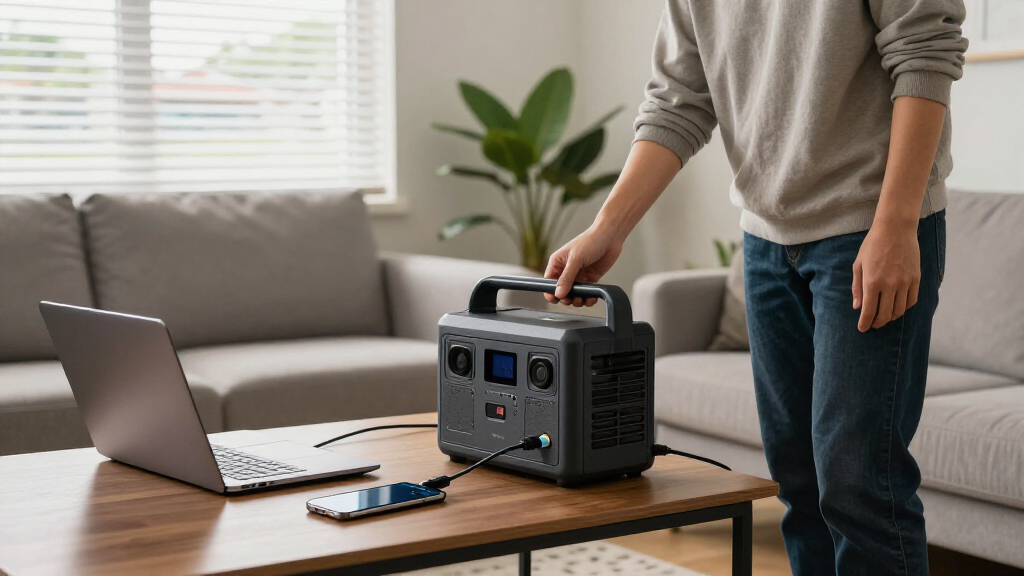
I evaluated these 12 power stations through the lens of home backup first — camping and RV versatility mattered, but every model was judged on whether it can keep a household running during an outage. The core criteria were usable capacity in watt-hours, continuous AC output (whether it can run a refrigerator, microwave, or space heater simultaneously), battery chemistry and rated cycle life, recharge speed from wall and solar, and expandability for buyers who want to build a larger system over time. I also weighed real usability factors: outlet variety, UPS-style pass-through behavior, app controls, and warranty length.
The ranking logic follows a simple principle: dollars per usable watt-hour, adjusted for output and lifespan. A 3840Wh station with 3600W output and 3000-plus cycle LiFePO4 cells ranks above a cheaper 1000Wh model because it solves the actual problem a home backup buyer faces — multi-day outages. Small units like the EnginStar 296Wh earned lower placements not because they’re bad products, but because they’re emergency kits rather than home backup systems, a distinction this guide makes repeatedly.
| home backup power station | Battery Type |
|---|---|
| 1000W Portable Power Station 1 | LiFePO4 |
| BLUETTI Elite 400 Portable Pow | LiFePO4 |
| EnginStar Solar Generator | — |
| Jackery HomePower 3000 Portabl | LiFePO4, 4,000 cycles to 70% |
| Jackery Explorer 1000 v2 Porta | LFP, 10+ year lifespan |
| PECRON Portable Power Station | LiFePO4 |
| Anker SOLIX C1000 Gen 2 Portab | — |
| Jackery HomePower 3600 Plus Po | LFP |
| Anker SOLIX S2000 Portable Pow | LiFePO4 (LFP) |
| ABOK Ark3600 Portable Power St | LiFePO4 |
| BLUETTI AC180 Portable Power S | LiFePO4 |
| EF ECOFLOW Portable Power Stat | LiFePO4 |
Factors to Consider When Choosing Home Backup Power Stations
Before spending anywhere from $200 to $3,000 on a backup power station, it helps to understand what actually separates a purchase you’ll regret from one that carries your household through a blackout. These are the factors I weighed most heavily, plus the mistakes I see buyers make most often.Size for the Outage You Actually Face
The most common mistake in this category is buying capacity based on price rather than runtime math. A refrigerator draws roughly 600Wh per day, a CPAP machine around 400Wh overnight, and a space heater can burn 1500Wh in a single hour — so a 300Wh station covers one phone-and-flashlight scenario, a 1000Wh unit handles two days of essentials, and a 3kWh-plus system is where genuine whole-home backup begins. Match the purchase to your realistic outage length: suburban grid failures often resolve in hours, while hurricane- and wildfire-prone regions regularly see multi-day blackouts. Run the numbers on your must-run devices before comparing watt-hour specs, because marketing capacity and usable capacity differ once you account for inverter losses. Buyers who skip this step almost always end up either overspending on capacity they never use or stranded with a unit that dies before the power comes back.
Inverter Output: The Spec People Forget
Capacity gets all the attention, but continuous wattage determines what you can plug in at all. A 2000W inverter runs a refrigerator and a microwave but not simultaneously with a hair dryer or portable heater; 3600W is the threshold where most 120V household loads become fair game. Surge rating matters just as much — refrigerators and well pumps draw two to three times their running wattage at startup, and an undersized inverter will trip offline the moment the compressor kicks in. This is why the 3600W-class models in this lineup ranked so high for home backup despite their price: they remove the constant mental arithmetic of load management during an already stressful outage. Check the starting wattage of your biggest appliance and buy an inverter with at least 50% headroom above it.
Battery Chemistry and Cycle Life
LiFePO4 (LFP) chemistry has become the standard in this category for good reason: 3000-plus rated cycles versus roughly 500–800 for older NMC lithium cells means the battery outlasts the warranty by years rather than months. For a device that mostly sits idle between emergencies, calendar aging and cycle aging both matter — LFP degrades more slowly on both fronts and is also more thermally stable when stored fully charged, which is exactly how most people store a backup unit. The budget models in this comparison that use older chemistry aren’t dishonest about it, but the real cost shows up in year three or four when capacity has faded. If you expect to keep the station for a decade or cycle it daily with solar, treat chemistry as non-negotiable. For a rarely-used emergency box, the calculus softens somewhat.
Recharge Speed and Solar Input
How fast a station refills determines whether it’s a one-shot battery or a renewable power source during a prolonged outage. Wall recharge times in this roundup range from under two hours for the fast-charging 1000Wh models to several hours for the big stations — relevant if you only have a brief window of grid power between storms. Solar input ceiling matters even more for extended emergencies: the 3600W-class units here accept 1000W or more of panel input, meaning a modest rooftop or ground array can keep a household running indefinitely, while small units accepting 60–100W of solar can barely offset a refrigerator’s draw. Budget for panels separately, since almost every station here ships without them, and verify the solar input rating before assuming compatibility with existing panels.
Expandability: Buying Your System in Stages
One pattern that emerged clearly in this comparison: the highest-ranked large stations let you add battery modules later, while budget models are sealed units with fixed capacity. Expansion support changes the entire purchase psychology — instead of gambling on a 7kWh system upfront, a buyer can start with a 3.6kWh core and add modules as budget allows or as outage history justifies it. The tradeoff is that expansion batteries are brand-locked and rarely discounted, so the lifetime cost of a modular system often exceeds a single large unit bought outright. If your outage risk is steady and known, buy the full capacity once. If it’s uncertain or your budget is tight now, modular designs like the Jackery 3600 Plus’s 21kWh ceiling buy you flexibility at a modest premium.
Warranty, App Quality, and the Hidden Costs
A power station is a five-to-ten-year appliance, so warranty length is a direct proxy for manufacturer confidence — the leaders in this space back their LFP models with five-year coverage, while budget brands often stop at two. App quality is easy to dismiss until you’re trying to monitor remaining runtime during a storm, and the gap between polished apps (Anker, EcoFlow, Jackery) and bare-bones ones is wide enough to affect daily use. Also watch for accessories that aren’t included: solar panels, transfer switches for hardwired home integration, and extra battery modules can add 30–50% to the sticker price. Finally, verify pass-through charging and UPS functionality if you plan to run sensitive or critical devices — not every model supports it, and discovering the gap mid-outage is a bad time to learn your station’s limitations.
Frequently Asked Questions
How large a power station do I need to run my refrigerator during an outage?
A typical modern refrigerator consumes 1–2 kWh per day depending on size, efficiency, and how often the door opens, so even a 1000Wh-class station like the Anker SOLIX C1000 Gen 2 or EcoFlow Delta 3 Classic can keep one running for roughly a day. The catch is surge wattage: compressors spike to 800–1200W at startup, so a station rated below roughly 1500W continuous may trip despite having plenty of stored energy. For multi-day outages, a 3kWh-plus model such as the PECRON F3000LFP or Jackery HomePower 3600 Plus gives you two to three days of refrigeration plus lights and device charging, or unlimited runtime when paired with 400W or more of solar panels. My advice is to measure your actual fridge with a plug-in power meter — the $25 meter costs far less than the capacity you might otherwise overbuy.
Is a portable power station actually a viable alternative to a whole-home generator?
For many households, yes — with honest caveats. A battery station needs no fuel, no professional installation, no ventilation, and produces zero fumes or noise, which makes it usable indoors and in apartments or HOA-restricted properties where generators are prohibited. The limitation is runtime on heavy loads: a 3600W station like the BLUETTI Elite 400 can run a 1500W space heater for only about two hours on internal capacity, while a fuel generator runs as long as you feed it. Battery systems also can’t power 240V appliances like well pumps, central AC, or electric ranges without additional equipment. The households where stations replace generators best are those with modest loads, solar panels for replenishment, or outages that are frequent but short. If you need days of high-wattage runtime in a storm-prone region, a generator or hybrid setup still wins.
Why does battery chemistry matter so much for a device that mostly sits in storage?
LiFePO4 batteries tolerate being held at full charge far better than the NMC chemistry used in older and cheaper stations, and since a backup unit spends 99% of its life plugged in and full, that storage behavior matters more than cycle count. LFP cells are rated for 3000-plus cycles to 80% capacity versus 500–800 for NMC, and they’re chemically more stable, which reduces fire risk for a device that lives in your garage or hallway. Calendar aging is the silent factor: an NMC pack stored fully charged can lose meaningful capacity in three to four years even if it’s rarely cycled. Every large model in this roundup uses LFP, which is part of why they ranked above cheaper sealed units. If you’re buying a station you expect to rely on a decade from now, chemistry is where the real value hides.
Can I connect a power station to my home’s electrical panel?
Directly plugging a portable station into your panel requires either a transfer switch installed by an electrician or an interlock kit on the breaker, and both typically cost $300–$800 installed — but this setup is what turns a portable battery into true home backup, letting you power specific circuits through existing outlets and switches. What you should never do is backfeed a dryer or range outlet, which is dangerous and illegal in most jurisdictions because it can energize grid lines and injure utility workers. The simpler alternative used by most owners is an extension-cord approach: run dedicated heavy-gauge cords from the station to the fridge, a lamp, and a power strip, which covers the majority of household needs without any installation. Models with higher output like the Jackery HomePower 3600 Plus and ABOK Ark3600 are the ones worth hardwiring, since a small unit limits you to cord-and-outlet use anyway. Check whether the manufacturer offers a branded transfer switch or panel adapter before buying, because compatibility varies.
Is it worth paying extra for expandability if I don’t need the capacity now?
It depends on how confident you are about your future needs, and both choices are defensible. Expansion-capable systems like the Jackery 3600 Plus let you start at around 3.6kWh and grow toward 21kWh, which spreads the cost over years and lets your system scale with your outage history — attractive if you’re new to an area and unsure what storm season brings. The counterargument is arithmetic: expansion batteries carry a premium per watt-hour, and buying two add-on modules later often costs more than a single larger competing unit bought outright, as the value-focused BLUETTI and ABOK models in this lineup demonstrate. Expansion also has a window — manufacturers typically support add-on batteries for only a few years after a product launches, so waiting too long can leave you stranded. If you can accurately forecast your needs today, buy the right capacity once. If you genuinely can’t, modular designs are insurance worth paying for.
Conclusion
After comparing all 12 models, the right choice comes down to matching capacity tier to your actual outage risk. Best overall goes to the Jackery HomePower 3600 Plus — its 3600W output, 3584Wh LFP battery, and 21kWh expansion ceiling make it the most complete home backup platform in this lineup. Best value is the BLUETTI Elite 400, which delivers near-flagship capacity and output for noticeably less, with the ABOK Ark3600 as the raw watt-hours-per-dollar champion if app polish matters less to you. Best premium pick is the Jackery HomePower 3000 for buyers who want proven whole-home performance in a slightly more compact package. Best for beginners is the Anker SOLIX C1000 Gen 2: it’s affordable, fast-charging, and simple enough to learn on before committing thousands to a larger system. For apartment and essentials-only backup, the EcoFlow Delta 3 Classic or BLUETTI AC180 cover refrigerators and devices without wasted capacity, while the PECRON F3000LFP suits solar-focused buyers planning indefinite off-grid runtime. Skip the sub-300Wh units for home backup — they’re fine camping kits, but they aren’t what this purchase is for.
Halloween Picks
halloween
As an affiliate, we earn on qualifying purchases.