
To store your EV for weeks safely, charge it to 50-70% and avoid full 100% or complete discharge. Keep it in a cool, dry place away from sunlight, and use breathable covers if outside. Avoid leaving it plugged in at full charge and check the battery periodically, topping it off if needed. Monitor the vehicle’s condition regularly to catch issues early. For more detailed tips, you’ll discover additional strategies to keep your EV in top shape during storage.

Get backup power and energy gear delivered free with Prime
- Fast, free delivery on millions of items
- Prime Video, Amazon Music and more included
- Member-only deals all year
Key Takeaways
- Charge the EV to 50-70% before storage and avoid full 100% or complete discharge.
- Store the vehicle in a cool, dry place away from extreme temperatures and direct sunlight.
- Do not leave the EV plugged in continuously at 100%; periodically top off if battery drops.
- Use breathable covers and proper tire inflation to protect the vehicle during storage.
- Monitor battery levels remotely and perform maintenance checks periodically to prevent issues.
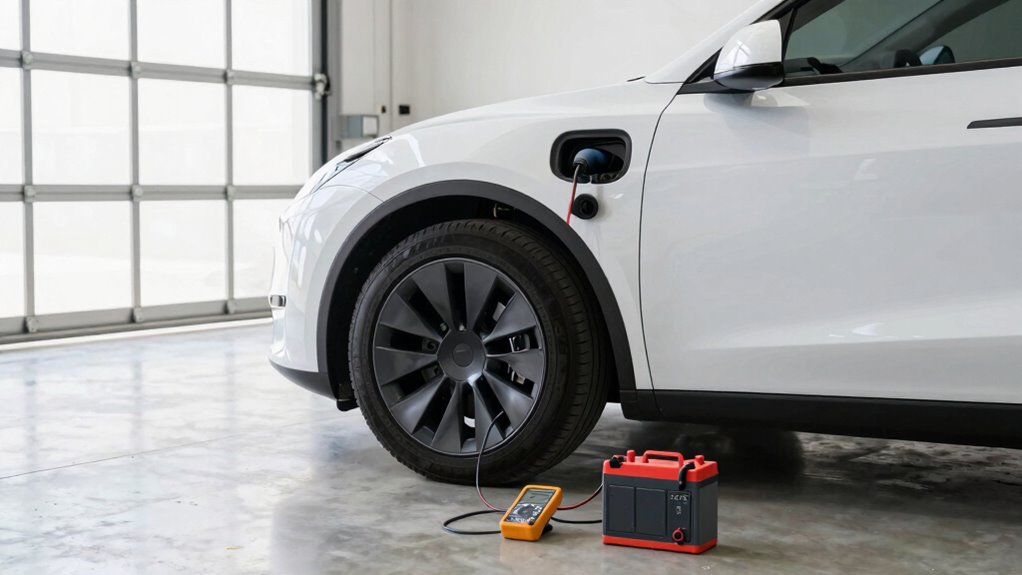
Wondering how to keep your electric vehicle in perfect shape during extended periods of inactivity? Proper storage is crucial to prevent battery degradation and guarantee your EV remains ready to go when you need it again. The key lies in proper battery maintenance and establishing effective charging routines. You want to avoid letting the battery discharge completely or sit at full charge for too long, as both can harm its longevity. Ideally, you should charge your EV to around 50-70% before storing it. This level minimizes stress on the battery and reduces the risk of capacity loss over time. If your vehicle has a scheduled charging feature, set it to maintain this charge level during storage to keep the battery healthy.
Charge your EV to 50-70% before long-term storage to protect the battery’s health and longevity.
Next, consider your charging routines. If you’re planning to store the vehicle for several weeks, avoid leaving it plugged in continuously at 100% charge, as this can accelerate battery aging. Instead, plug in the vehicle periodically to top off the charge if it drops below your pre-set level. Many EVs have maintenance or trickle charging modes that keep the battery at an ideal charge without overcharging. Check your owner’s manual for specific recommendations, as some models have built-in features to help maintain battery health during long-term storage. Additionally, understanding the battery health factors can help you optimize your storage practices for longevity, especially considering how temperature fluctuations impact battery capacity over time. Properly managing thermal conditions is also important, as extreme heat or cold can significantly affect battery longevity. Incorporating temperature management strategies can further preserve your EV’s battery during storage. Being aware of battery chemistry can also help you make informed decisions about storage conditions to prevent degradation.
In addition to managing the battery, take steps to prepare the vehicle itself. Clean the exterior to prevent corrosion and make sure the tires are properly inflated, as underinflated tires can develop flat spots during long periods of inactivity. If possible, park your EV in a cool, dry place away from direct sunlight. Extreme temperatures can speed up battery degradation and cause other issues. If you’re storing the vehicle outdoors, consider using a breathable cover to protect it from dust and debris, but avoid airtight covers that could trap moisture.
Periodically, you should check on your EV during storage to ensure everything remains in good condition. If your vehicle has a remote monitoring app, use it to keep an eye on the battery status. If the battery level drops dramatically, give it a quick charge to bring it back to the recommended level. This proactive approach helps prevent long-term issues. By following proper battery maintenance and establishing thoughtful charging routines, you keep your EV in top condition, ready to hit the road again when you return from your extended storage period.
As an affiliate, we earn on qualifying purchases.
Frequently Asked Questions
Should I Disconnect the Ev’s 12V Battery Before Storage?
Yes, you should disconnect the EV’s 12V battery before storage to prevent drainage and potential damage. Proper battery maintenance involves fully charging it beforehand and storing it in a cool, dry location. Choose a storage location that minimizes temperature fluctuations and humidity, which can affect the battery’s health. Disconnecting the battery helps preserve its lifespan, ensuring your EV remains in good condition when you’re ready to use it again.
How Often Should I Check the Tire Pressure During Storage?
You should check your tire pressure at least once every month during storage. Many worry about battery maintenance, but maintaining proper tire pressure prevents flat spots and uneven wear. Don’t wait until you’re ready to use your EV again; regular checks guarantee safety and efficiency. Keep a tire pressure gauge handy, and if you notice pressure drops, inflate the tires to recommended levels. This simple step helps preserve your vehicle’s condition during long-term storage.
Is It Necessary to Use a Battery Tender or Maintainer?
Yes, using a battery tender or maintainer is crucial for vehicle protection during long-term storage. It keeps the battery charged, preventing it from draining and potentially damaging the vehicle’s electrical system. Proper battery maintenance ensures your EV remains ready to drive when you return, avoiding costly replacements. By maintaining the battery, you protect your vehicle’s overall health, extending its lifespan and ensuring peak performance after storage.
Can I Store an EV Outdoors Without Damage?
Storing your EV outdoors can be okay if you consider weather and charging schedules. You should regularly check the battery’s charge level and keep it topped off, especially during extreme weather. Protect your vehicle from harsh conditions like snow or intense sun by parking in a shaded, sheltered spot. Adjust your charging schedule based on weather to prevent battery damage, and use a cover if possible to shield it from elements.
What Are the Risks of Leaving the Ev’s Charge Level Too High or Low?
Have you ever wondered if leaving your EV’s charge too high or low causes harm? If you do, you’re right to be cautious. Keeping the battery fully charged or too low accelerates battery degradation and shortens its lifespan. Frequent deep charge cycles or maintaining a charge level outside the recommended range can damage the battery. To protect it, aim to keep the charge between 20% and 80% during storage.
As an affiliate, we earn on qualifying purchases.
Conclusion
Storing your EV properly for weeks guarantees it stays in top shape and ready to hit the road. Remember, keeping the battery charged to around 50% and storing it in a cool, dry place can extend its lifespan considerably. Did you know that improper storage can reduce battery capacity by up to 20%? By following these tips, you’ll prevent issues and keep your EV in great condition, so it’s always ready when you need it.
As an affiliate, we earn on qualifying purchases.
As an affiliate, we earn on qualifying purchases.
Halloween Picks
halloween
As an affiliate, we earn on qualifying purchases.