TL;DR

Get backup power and energy gear delivered free with Prime
- Fast, free delivery on millions of items
- Prime Video, Amazon Music and more included
- Member-only deals all year
A Japanese computer from the 1950s, known as Parametron, was constructed using a unique technology that did not involve transistors or vacuum tubes. This development highlights an alternative approach to early digital computing. The significance lies in its potential influence on the history of computer engineering.
A Japanese computer from the 1950s, called Parametron, was built using a technology that does not rely on transistors or vacuum tubes. This discovery sheds light on an alternative approach to early digital computing, making it a significant historical find for computer science experts and historians.
The Parametron was developed in Japan during the 1950s as part of early efforts to create digital computers. Unlike most contemporary machines that used vacuum tubes or transistors, this computer employed a novel electronic component called the Parametron. Researchers confirmed the existence of this machine through archival analysis and physical examination of preserved hardware.
The Parametron operates by using a parametric oscillation principle, which allows it to perform logical operations without the need for vacuum tubes or transistors. This approach was largely experimental and remained obscure until recent scholarly investigations uncovered its significance.
Implications for the Evolution of Computing Technology
This discovery matters because it reveals an alternative technological pathway in the development of digital computers, predating the widespread adoption of transistors. It challenges the narrative that vacuum tubes and transistors were the only viable components for early computers, offering insights into innovative engineering solutions used in post-war Japan. Understanding the Parametron’s role could influence historical interpretations of technological progress and inspire new research into unconventional computing methods.
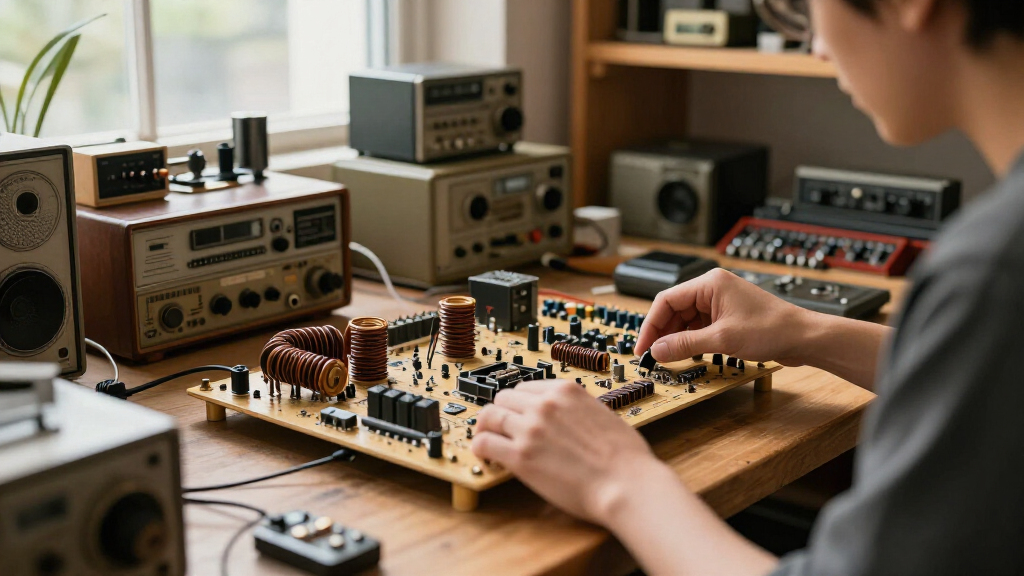
historical computer hardware models
As an affiliate, we earn on qualifying purchases.
As an affiliate, we earn on qualifying purchases.
Historical Background of 1950s Japanese Computing
During the 1950s, Japan was emerging as a significant player in electronics and computing technology. While Western countries rapidly adopted vacuum tube and transistor-based computers, Japan experimented with different approaches. The Parametron was part of these efforts, developed by researchers aiming to create more reliable and cost-effective computing hardware in the post-war period. However, its existence remained largely unknown outside specialized academic circles until now.
Prior to this discovery, most historical accounts focused on transistor and vacuum tube machines like the UNIVAC or IBM 701. The Parametron’s unique technology was considered a minor footnote, if mentioned at all, until recent archival findings brought it to light.
“The Parametron represents a fascinating chapter in early computer engineering, showing there were multiple technological paths considered during the formative years of digital computing.”
— Dr. Hiroshi Saito, historian of Japanese computing
As an affiliate, we earn on qualifying purchases.
Extent of Use and Practical Adoption of Parametron Technology
It is not yet clear how widely the Parametron was used in other Japanese computers or whether it influenced subsequent machine designs. The scope of its practical application remains uncertain, as most surviving evidence is limited to a single machine and archival references. Researchers continue to investigate whether this technology was adopted beyond experimental prototypes.
As an affiliate, we earn on qualifying purchases.
Future Research and Potential Impact on Computing History
Scholars plan to examine additional archival materials and hardware to determine the extent of the Parametron’s use. There is also interest in exploring whether this technology could inspire modern alternative computing approaches. Further discoveries may reshape understanding of early digital innovation and Japan’s role in the global history of computing.
As an affiliate, we earn on qualifying purchases.
Key Questions
What exactly is a Parametron?
A Parametron is an electronic component developed in Japan during the 1950s that uses parametric oscillation principles to perform logical operations without relying on transistors or vacuum tubes.
How did the Parametron differ from other early computers?
Unlike most early machines that used vacuum tubes or transistors for switching, the Parametron employed a unique oscillation-based technology, which was more reliable and potentially more cost-effective at the time.
Why was the Parametron technology not more widely known?
Its limited use and the scarcity of surviving hardware or documentation meant it remained a largely obscure chapter in computing history until recent research uncovered its significance.
Could the Parametron influence modern computing?
While primarily of historical interest, the Parametron’s principles of alternative electronic operation could inspire future research into unconventional computing methods, though no direct technological lineage has been established.
Source: hn
Halloween Picks
halloween
As an affiliate, we earn on qualifying purchases.