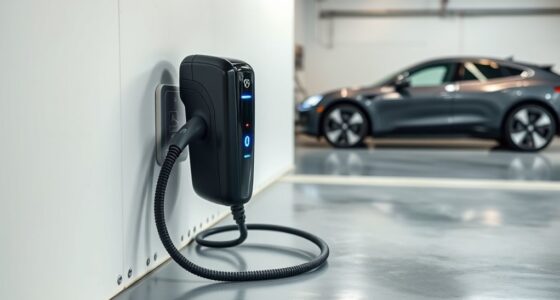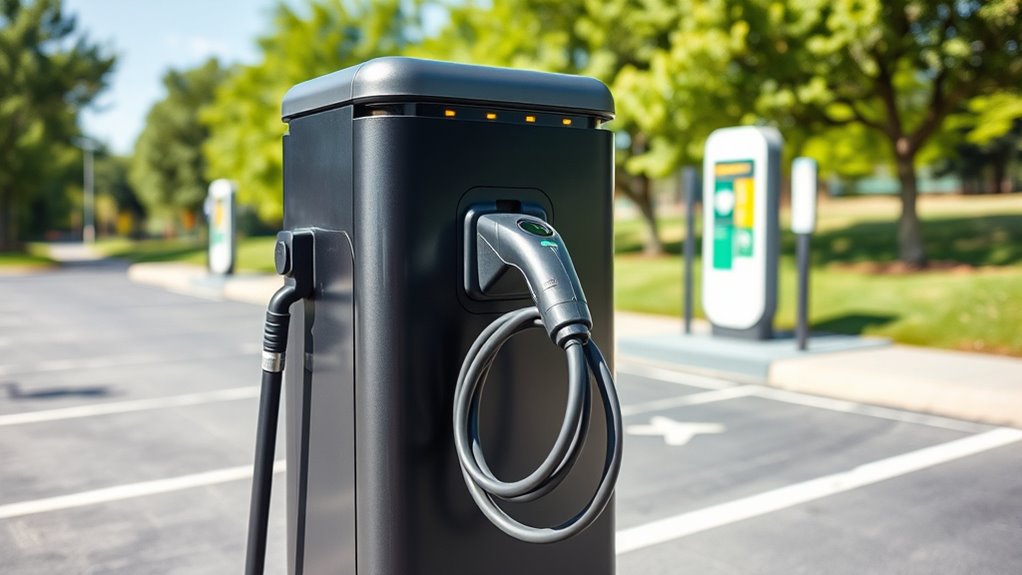

An EVSE, or Electric Vehicle Supply Equipment, is what connects your electric vehicle to a power source to charge safely and efficiently. It controls safety features, manages the flow of electricity, and communicates with your vehicle to optimize charging. Unlike chargers, EVSE acts as a control and safety device. Different types include portable and fast-charging stations. To understand how they all work together and future innovations, keep exploring these key components and standards.
Key Takeaways
- EVSE (Electric Vehicle Supply Equipment) is the hardware that safely connects an electric vehicle to a power source for charging.
- It manages safety features, communication, and power flow between the vehicle and the electrical grid.
- EVSE differs from EV chargers; it acts as a control device, while chargers supply the actual electricity.
- Types include Level 1, Level 2, DC fast chargers, and wireless charging stations, each suited for different needs.
- Standards and safety regulations ensure compatibility, reliable operation, and safe energy transfer during charging.
Defining EVSE: The Basics of Electric Vehicle Supply Equipment
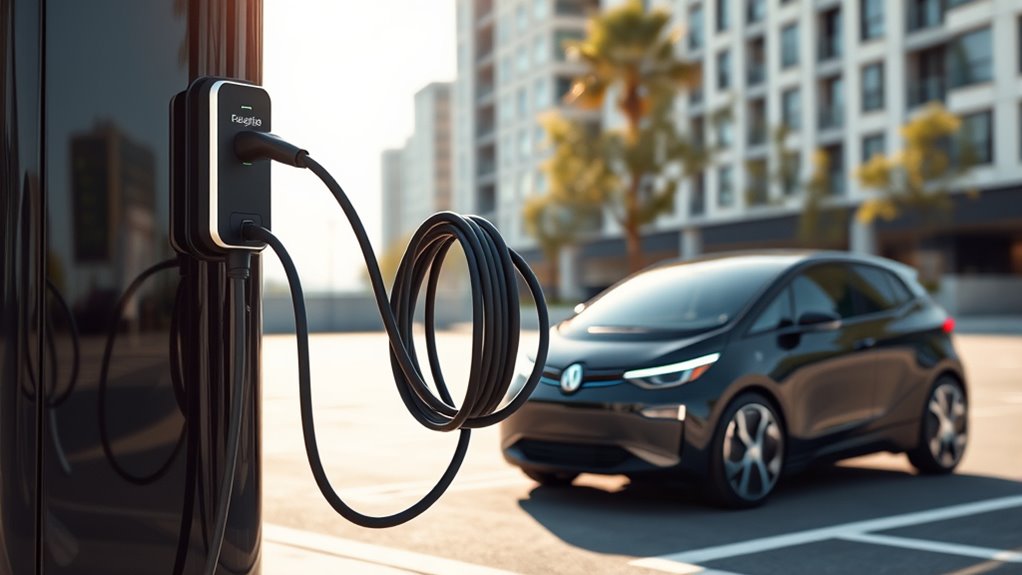
Electric Vehicle Supply Equipment (EVSE) is the hardware that connects your electric vehicle to the power source, enabling safe and efficient charging. It manages battery health through integrated battery management systems, ensuring your battery charges correctly and stays protected. Some advanced EVSE models support wireless charging, allowing you to simply park over a charging pad without plugging in. This technology simplifies the charging process and reduces wear on connectors. EVSE handles the flow of electricity, monitors safety features, and communicates with your vehicle to optimize charging. Unlike traditional chargers, EVSE prioritizes safety, efficiency, and convenience, making it a vital component for your electric vehicle’s charging setup. Understanding EVSE helps you appreciate how your car stays powered safely and effectively, especially as European cloud solutions continue to innovate in secure and sustainable technology. Additionally, the development of smart charging features enhances the overall charging experience by integrating with home energy management systems.
How EVSE Differs From EV Chargers
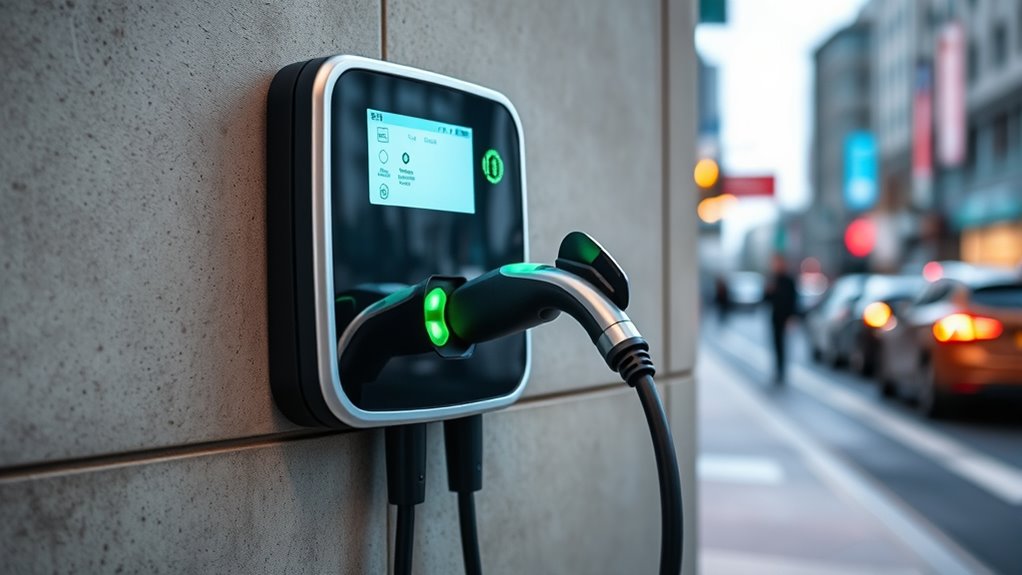
You might assume that EVSE and EV chargers are the same, but they serve different roles in the charging process. The EVSE acts as the control and safety device that manages power flow, while the charger is the component that actually supplies electricity to the vehicle’s battery. Understanding these differences helps you choose the right equipment for safe and efficient charging. Additionally, knowing charger types can assist in selecting the appropriate system for your specific vehicle and usage needs. Recognizing connection standards is also essential to ensure compatibility and optimal performance of your charging setup. Properly understanding electric vehicle infrastructure can further optimize your charging experience and safety. Being familiar with smart-home integrations can enhance your setup by enabling remote monitoring and control of your charging stations. This knowledge also helps in understanding vetted information and trustworthy sources for your EV charging needs.
EVSE vs. Charging Unit
While EVSE and EV chargers are often mentioned together, they serve different functions in the charging process. The EVSE acts as a communication and safety gateway between your vehicle and the power source, while the charging unit delivers the electrical energy. Here are four key differences: 1. Functionality: EVSE manages safety, communication, and control, whereas chargers focus on delivering power. 2. Wireless Charging Compatibility: EVSE doesn’t typically support wireless charging, which some advanced chargers do. 3. Home Installation: EVSE is essential for safe Home Installation, ensuring proper connections. 4. Portability: Chargers are often portable, but EVSE units are usually fixed or installed at designated spots. Incorporating essential safety features, such as grounding and surge protection, is vital for a secure charging setup. Proper electrical safety standards are crucial to prevent hazards when setting up your EVSE. Additionally, understanding the differences between these components can help you optimize your charging infrastructure for safety and efficiency. Being aware of installation requirements can further ensure a safe and reliable charging experience. Understanding these distinctions helps you choose the right setup for your EV charging needs, especially considering proper safety measures that are crucial in this process.
Role in Charging Process
The charging process begins with the EVSE acting as a gatekeeper, controlling the flow of information and guaranteeing safety between your vehicle and the power source. It manages communication with your car’s battery management system, adjusting charging rates as needed. Whether you’re using a wired charger or exploring wireless charging options, the EVSE guarantees safe and efficient power transfer. It detects the vehicle, verifies compatibility, and controls the current flow to prevent overcharging or overheating. The EVSE also communicates with your car to optimize charging speed and battery health. In wireless charging setups, it handles the transfer of energy without physical connectors, relying on precise alignment and safety protocols. Overall, the EVSE plays a crucial role in safeguarding your vehicle and facilitating effective charging. Additionally, modern EVSE units may incorporate smart home integration features, allowing for remote monitoring and control through connected home systems. The integration of smart technology enhances user convenience and safety by providing real-time data and alerts. Moreover, the communication protocols used by EVSE ensure reliable and standardized data exchange between the charger and vehicle, improving compatibility and safety.
Types of EVSE and Their Uses

What are the different types of Electric Vehicle Supply Equipment (EVSE), and how do they serve various charging needs? There are several options tailored for different scenarios:
- Level 1 Chargers: Basic, portable solutions that plug into standard outlets, ideal for home use. They are often the most affordable and require minimal installation, making them accessible for many users.
- Level 2 Chargers: Faster, often installed at homes or public stations, suitable for daily charging. They typically deliver higher power levels to reduce charging time and are compatible with most EVs.
- DC Fast Chargers: High-speed chargers for quick top-ups during travel or commercial use. These chargers can replenish a significant battery charge in 20-30 minutes, supporting long-distance journeys.
- Wireless Charging: Convenience-focused, offering contactless charging without cables, perfect for future use or specific setups. This emerging technology aims to simplify the charging experience and reduce cable clutter. Additionally, understanding power backup options can help ensure your EV charging station remains operational during outages or emergencies. For example, integrating standby generators or whole-home backup power systems can provide reliable energy for charging stations during power disruptions. Incorporating smart charging technology can optimize energy use and reduce costs, especially when combined with renewable energy sources. As technology advances, wireless charging may become more widespread, further enhancing the convenience of EV ownership.
Components That Make Up an EVSE System
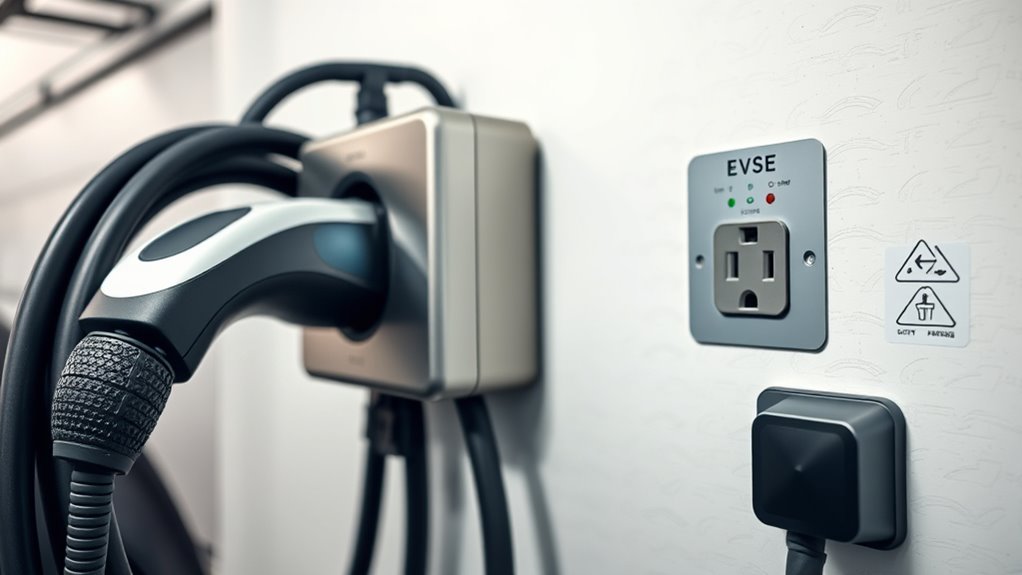
An EVSE system is made up of essential components that work together to charge your vehicle safely and efficiently. You’ll find a power supply unit, a charging cable with a plug, and control and communication features. Understanding how these parts interact helps guarantee you get the most reliable charging experience. Additionally, connectivity standards ensure compatibility and safety across different charging stations and vehicle models. These standards are crucial for seamless operation and are often dictated by industry regulations and technological protocols. Proper adherence to these safety guidelines further enhances the reliability and security of the charging process. Staying informed about common automotive repair issues can also help troubleshoot potential problems with EVSE systems.
Power Supply Unit
Power supply units are the core components that deliver the necessary electrical energy to charge an electric vehicle. They convert incoming power from the electrical infrastructure into usable electricity for your EVSE system. Understanding these units helps you appreciate how your charger functions efficiently. Here are four key aspects:
- Power Capacity – Determines how quickly your EV can charge.
- Voltage Compatibility – Ensures the unit matches the electrical infrastructure’s voltage.
- Efficiency – Affects energy loss during conversion, impacting cost and performance.
- Protection Features – Safeguard against electrical faults, ensuring safety and reliability.
The power supply is essential, as it manages the flow of electricity, making sure your vehicle receives a stable and safe charge. Without a reliable power supply unit, the entire EVSE system wouldn’t work effectively.
Charging Cable & Plug
The charging cable and plug are essential components that connect your electric vehicle to the EVSE system, enabling the transfer of electricity for charging. The cable’s design varies depending on the charging level, with Level 2 and DC fast chargers requiring specialized connectors. Some systems now incorporate wireless charging options, eliminating the need for physical cables while still providing efficient power transfer. The plug ensures a secure connection, supporting safe charging and effective battery management. When choosing a charging cable, consider compatibility with your vehicle and charging station. A reliable cable minimizes energy loss and maximizes safety during charging sessions. While the cable handles the physical connection, battery management systems within your EV optimize charging, ensuring your battery stays healthy and efficiently charged.
Control & Communication
Control and communication components within an EVSE system manage the exchange of information between your vehicle and the charging station. They guarantee safe, efficient charging and enable advanced features like wireless charging and grid integration. Here are key elements:
- Communication Protocols – Facilitate data transfer for charging status and safety checks.
- Control Units – Manage power flow and respond to vehicle requests.
- Wireless Communication Modules – Support wireless charging and remote monitoring.
- Grid Integration Interfaces – Allow EVSE to communicate with the power grid for load balancing and energy management.
These components work together to optimize your charging experience, improve safety, and enable smart energy solutions, making your EV charging smarter and more connected.
The Role of EVSE in Charging Speed and Power Levels
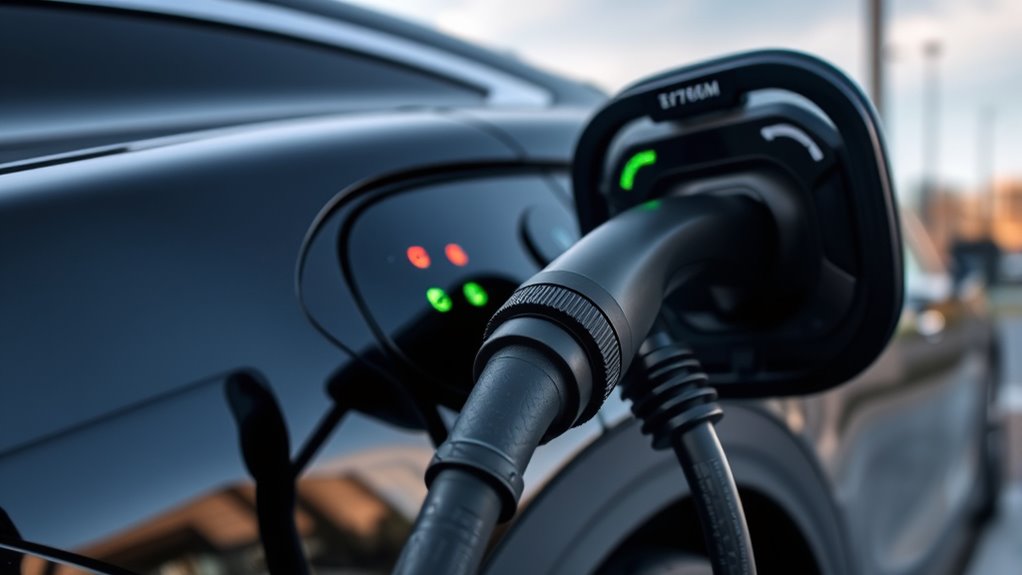
Understanding how EVSE influences charging speed and power levels is essential when choosing the right charging setup. Your EVSE determines how quickly your vehicle charges, with higher power levels offering faster charging times. Level 1 chargers provide slower, household-level power, while Level 2 chargers increase speed by delivering more energy. Advanced EVSE units can support wireless charging, adding convenience and reducing cable clutter. Additionally, smart grid integration allows your EVSE to optimize charging during off-peak hours, improving efficiency and reducing costs. The power level your EVSE supplies depends on your vehicle’s capacity and your household electrical system. By understanding these factors, you can select an EVSE that balances charging speed with power management, ensuring a seamless and efficient charging experience.
Understanding Charging Connectors and Cables
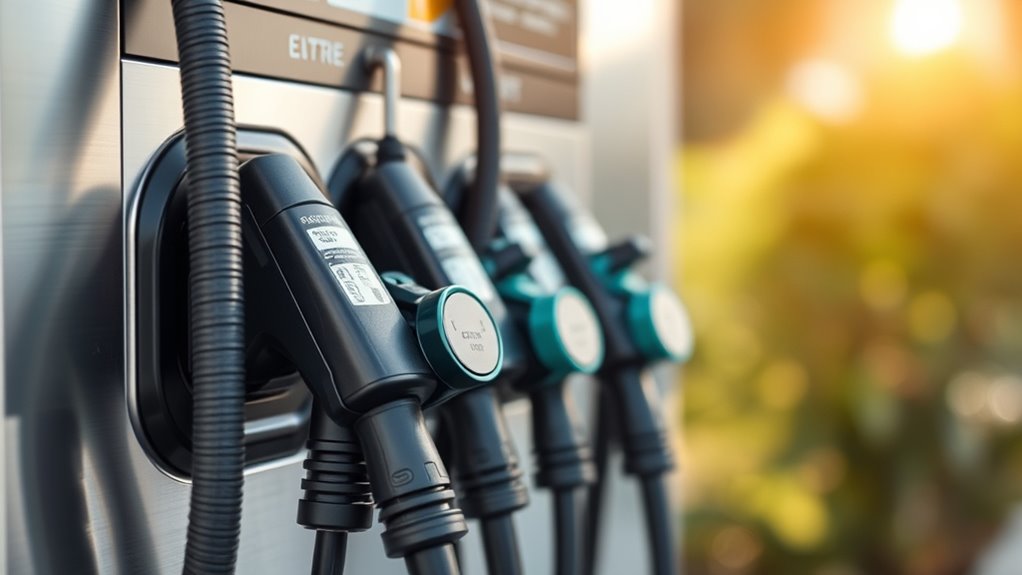
Have you ever wondered how your electric vehicle connects to its power source? Understanding charging connectors and cables is key. Here are four important points:
- Connector Types: Different vehicles use Type 1, Type 2, CHAdeMO, or CCS connectors, affecting compatibility.
- Cable Quality: High-quality cables ensure efficient charging and proper battery management.
- Wireless Charging: Emerging technology allows charging without cables—just align your vehicle with a wireless pad.
- Charging Speed: The connector type influences charging speed, especially with fast chargers that support higher power levels.
While cables are common, wireless charging is gaining ground, emphasizing the importance of compatible connectors. Remember, proper cables and connectors optimize charging efficiency and support your vehicle’s battery health.
Safety Features Embedded in EVSE Devices
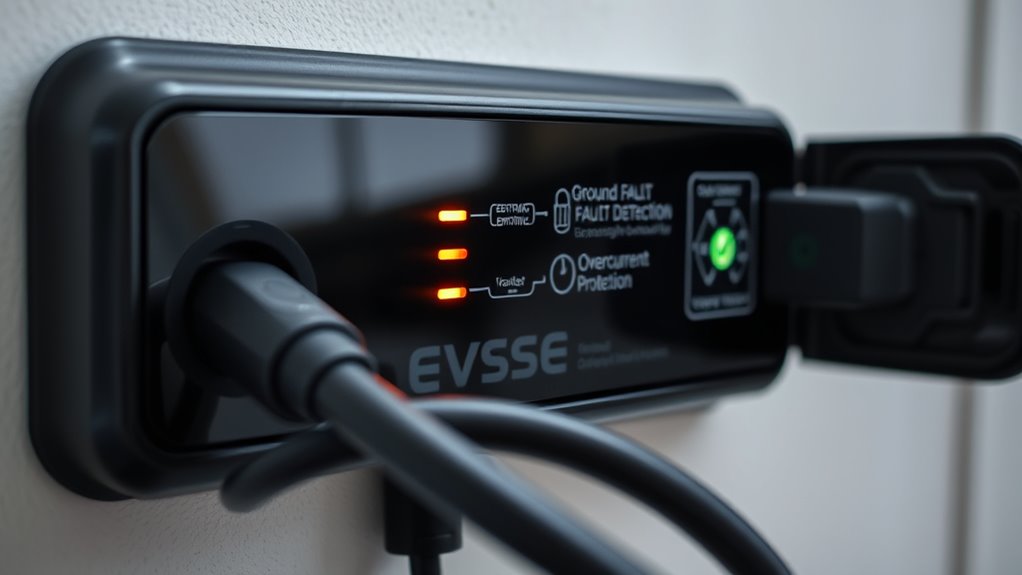
Safety features in EVSE devices are essential to protect both users and vehicles during charging. These features prevent electrical faults, overheating, and short circuits, ensuring safe operation. For wireless charging setups, embedded safety protocols monitor alignment and power transfer, reducing risks of misfire or damage. Portable units often include automatic shutoff, fault detection, and protective grounding to prevent electric shock. Many EVSE devices also incorporate ground fault circuit interrupters (GFCIs) that trip if a leak occurs, enhancing safety in various environments. These safety measures give you peace of mind, whether you’re using a compact portable charger or a more advanced wireless charging system. By integrating reliable safety features, EVSE devices help make charging safer, more convenient, and accessible for everyone.
The Connection Between EVSE and Charging Stations
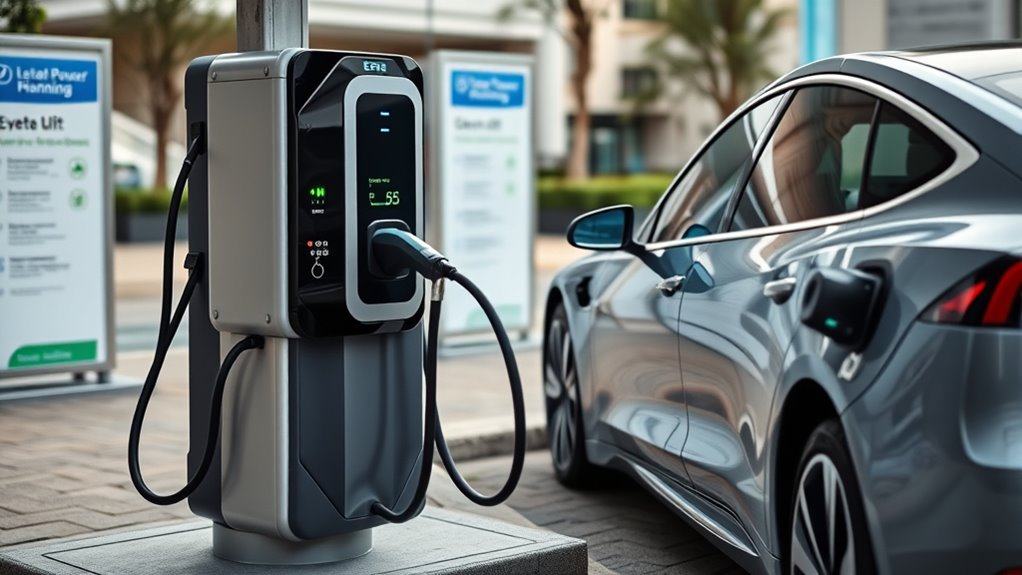
EVSE, or Electric Vehicle Supply Equipment, acts as the essential link between your electric vehicle and the charging station. It manages power flow, guaranteeing safe and efficient charging. Modern EVSE connects to stations via wired or wireless charging options, expanding flexibility. Here are four key points:
EVSE ensures safe, efficient charging and supports wired, wireless, and smart features for seamless vehicle connectivity.
- Wired vs. Wireless Charging: EVSE supports both, enabling seamless connections without physical plugs.
- Vehicle to Grid (V2G): Some EVSE allows energy transfer back to the grid, helping balance energy demands.
- Compatibility: It assures your vehicle communicates properly with charging stations for ideal charging.
- Smart Features: Advanced EVSE can include remote monitoring and control, improving user experience.
This connection enhances convenience, supports innovative features like wireless charging, and paves the way for vehicle-to-grid integration.
Future Trends and Innovations in EVSE Technology
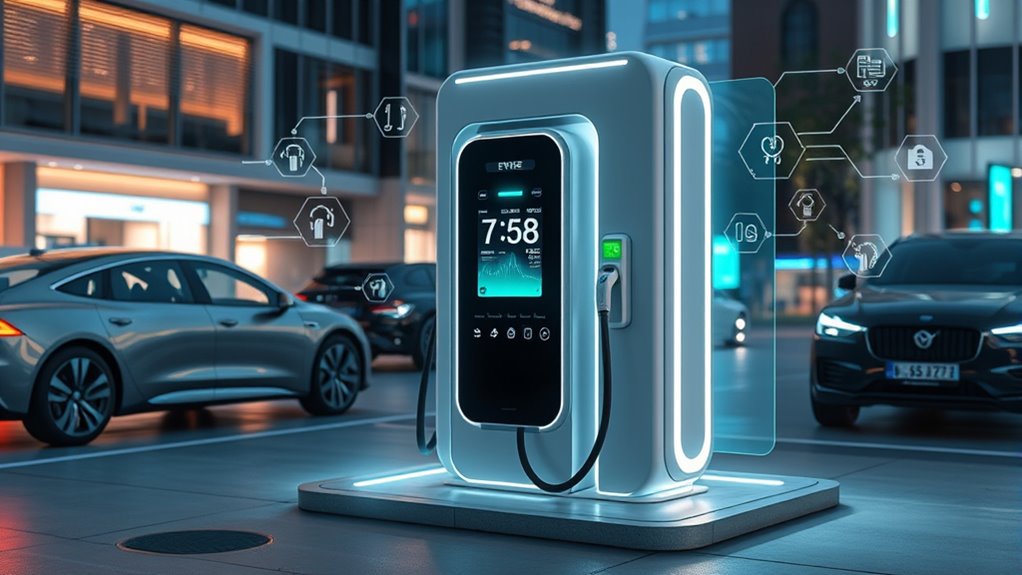
Advancements in EVSE technology are shaping the future of electric vehicle charging, making it faster, more convenient, and smarter. Wireless charging is emerging as a game-changer, allowing you to charge your EV without plugging in, simply by parking over a charging pad. This innovation minimizes hassle and enhances user experience. Additionally, solar powered EVSE systems are gaining popularity, harnessing renewable energy to reduce environmental impact and lower operating costs. These systems can be integrated into charging stations or installed at home, promoting sustainable practices. Future trends also include smart charging networks that optimize energy use and integrate with grid management. As these innovations develop, you’ll enjoy more efficient, eco-friendly, and seamless charging solutions, transforming how you power your electric vehicle.
Frequently Asked Questions
How Does EVSE Compatibility Vary Across Different Electric Vehicle Models?
You’ll find that EVSE compatibility varies across different electric vehicle models mainly due to differing charging standards and vehicle compatibility. Some EVs support standard connectors like CCS or CHAdeMO, while others may only accept specific charging rates or connector types. Always check your vehicle’s specifications to guarantee the EVSE you choose matches its charging standards and compatibility requirements, ensuring safe and efficient charging every time.
Can EVSE Be Installed Indoors and Outdoors Safely?
Yes, EVSE can be installed both indoors and outdoors safely if you choose models designed for each environment. Indoor safety features guard against moisture and dust, while outdoor durability guarantees resistance to weather elements like rain, snow, and UV rays. Make sure to follow manufacturer guidelines and local codes to secure proper installation, and consider protective enclosures for outdoor setups to maintain safety and longevity.
What Are the Maintenance Requirements for EVSE Units?
You probably think EVSE maintenance is a breeze, right? Well, not quite! You should follow regular maintenance schedules to keep it running smoothly. Check for wear and tear, guarantee proper cleaning, and verify compatibility considerations with your vehicle and power supply. Ignoring these tasks can lead to unexpected issues, so stay vigilant and proactive—your EVSE will thank you with reliable charging whenever you need it most!
How Does Wi-Fi or Network Connectivity Influence EVSE Functions?
Wi-Fi or network connectivity lets you remotely monitor your EVSE, giving you real-time data on charging status and energy use. It also allows for firmware updates, ensuring your charger stays secure and performs at its best. With a stable connection, you can troubleshoot issues quickly, schedule charging, and even control your EVSE from afar. This connectivity enhances convenience, efficiency, and safety, making your EV charging experience smarter and more dependable.
Are There Government Incentives for Installing Certain Types of EVSE?
Think of government incentives as your car’s turbo boost—helping you save money. You might qualify for government rebates or tax credits when you install specific EVSE types, especially those with advanced features or higher power levels. These incentives can substantially reduce your upfront costs, making it easier to go electric. Be sure to check local programs, as eligibility varies and some rebates may be time-limited, so act quickly!
Conclusion
Now that you know what an EVSE is, you’re practically a charging superhero ready to conquer the electric vehicle world! With this knowledge, you’ll navigate chargers and connectors like a pro, avoiding confusion and mishaps. Imagine being the expert who knows every component and future trend—your EV experience will be smoother than ever, and you’ll stand out as the ultimate EVSE guru. Get ready to power up with confidence and leave gas stations in the dust!