If you want to keep your EV’s battery healthy and enjoy convenience, frequent top-ups are better. They keep your battery within the ideal 20-80% range and reduce stress on cells, especially if you use fast chargers. Full charges, especially deep 0-100% cycles, can wear out your battery faster and should be reserved for long trips. Continue exploring to discover how to balance these habits and maximize your EV’s lifespan.
Open a free Amazon Business account
Business pricing, bulk buying and tax-exempt orders.
As an affiliate, we earn on qualifying purchases.
Key Takeaways
- Frequent top-ups maintain battery health by avoiding deep discharges and keeping charge levels within an optimal range (20%-80%).
- Full charges are useful before long trips but can accelerate battery wear if performed regularly.
- Fast chargers make full charges more time-efficient but should be used sparingly to preserve battery longevity.
- A balanced approach—mixing frequent top-ups with occasional full charges—best supports battery life and convenience.
- Reliable infrastructure and charging habits tailored to your routine enhance EV performance and extend battery lifespan.
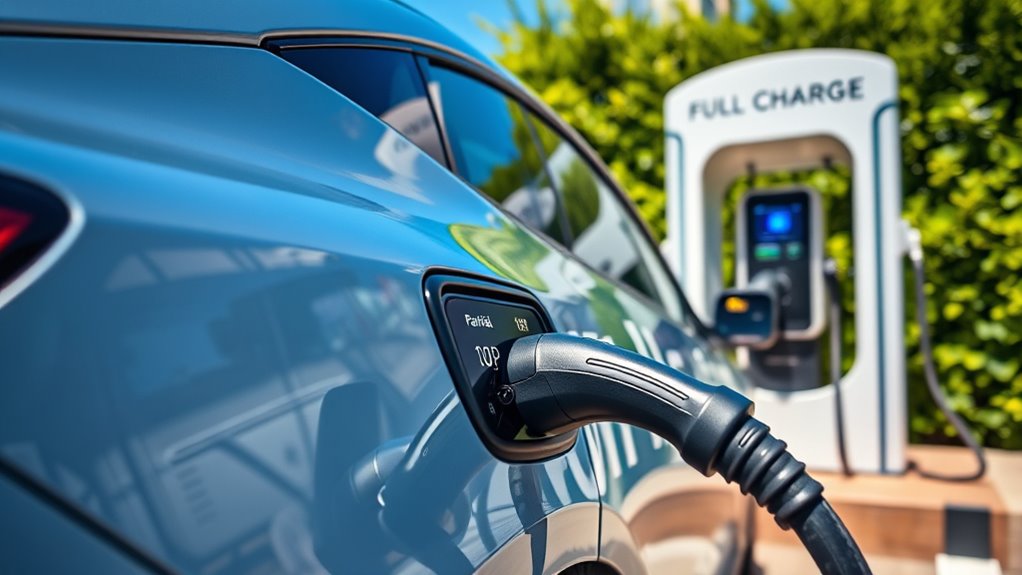
Charging habits are essential to getting the most out of your electric vehicle. How you choose to charge can considerably impact your battery’s longevity and your overall driving experience. When considering whether to perform frequent top-ups or opt for full charges, it’s important to understand how these habits interact with the charging infrastructure available to you. Reliable charging stations and a well-planned routine can make a big difference in maintaining your EV’s health and ensuring you’re never stranded without power.
Frequent top-ups involve plugging in your vehicle for shorter periods, often topping off the battery as needed. This approach mimics traditional refueling and can help keep your battery within an ideal charge window—generally between 20% and 80%. By avoiding deep discharges and full 0-100% charges, you reduce stress on your battery cells, which can prolong battery longevity over time. This method also takes advantage of the existing charging infrastructure, especially if you have access to fast chargers or a convenient network of chargers near your home or workplace. Frequent top-ups tend to be quicker and more convenient, making it easier to fit charging into your daily routine without major disruptions.
On the other hand, some drivers prefer full charges—completing a complete 0-100% cycle once in a while, especially before long trips. While this can be practical and sometimes necessary, it’s not always ideal for battery health if done regularly. Deep discharges and full charges can accelerate battery wear, especially if your EV’s battery management system isn’t designed to handle frequent complete cycles. However, if your charging infrastructure offers fast chargers, you can often perform these full charges more efficiently, reducing the time spent plugged in. Still, it’s best to reserve full charges for occasional use rather than daily routines, to prevent unnecessary stress on your battery.
Additionally, understanding the importance of a high contrast ratio in projectors can help in selecting a device that provides clear and vivid images, enhancing your viewing experience during long movie nights. Ultimately, the best strategy balances convenience, battery health, and your driving needs. If your charging infrastructure is robust and supports fast charging, frequent top-ups are usually the better choice for preserving battery longevity. They allow you to keep your battery in a healthy state and avoid unnecessary wear from deep discharges. Regularly using a mix of top-ups and occasional full charges, when needed, can help you extend your EV’s lifespan while maintaining flexibility. Remember, how you charge impacts not just your battery but also your overall ownership experience, so choose habits that align with your driving patterns and the charging options at your disposal.
As an affiliate, we earn on qualifying purchases.
Frequently Asked Questions
Does Charging Frequency Affect Battery Lifespan?
Charging frequency does impact battery lifespan, as frequent top-ups can increase charging cycles, which contribute to battery degradation over time. If you often charge in small amounts, you may accelerate wear, but it’s generally better than letting the battery deplete fully. To extend your EV’s battery life, try to keep the charge level between 20% and 80%, minimizing deep discharges and frequent full charges that strain the battery.
Is Fast Charging Better or Worse for Battery Health?
Fast charging isn’t ideal for your battery’s health, as it accelerates battery degradation over time. Just like a speedy horse might tire faster, your EV’s battery endures more stress with rapid charging. While convenient, it’s better to reserve fast charging for emergencies. Regular slow charging helps preserve your battery’s lifespan, ensuring your EV stays reliable and efficient longer. Balance speed with care to keep your battery in top shape.
How Does Ambient Temperature Influence Charging Habits?
Ambient temperature critically influences your charging habits by affecting battery performance and longevity. In hot or cold conditions, thermal management becomes essential; high temperatures can accelerate battery degradation, so you might prefer slower, partial charges to reduce heat buildup. Conversely, in cooler environments, full charges or frequent top-ups help maintain battery health. Adjusting your charging routine based on ambient temperature helps optimize battery lifespan and guarantees reliable EV performance.
Can Frequent Top-Ups Improve Overall EV Efficiency?
Think of your EV’s efficiency as a delicate balance, and frequent top-ups act like skilled dancers maintaining it. By topping up regularly at accessible charging stations, you keep the battery’s health optimized, thanks to advanced battery management systems. This approach reduces strain on the battery, prolongs its life, and maximizes range. So, yes, frequent top-ups can improve overall EV efficiency, making your driving smoother and more reliable.
Are There Specific Charging Habits Recommended for Long-Term Battery Maintenance?
For long-term battery health, you should adopt specific charging habits like regular battery calibration, which helps uphold accurate state-of-charge readings. Avoid deep discharges and frequent full charges, as they impact the charging cycle impact on your battery’s longevity. Instead, keep your battery between 20-80%, perform partial top-ups, and calibrate periodically to ensure consistent performance over time.
As an affiliate, we earn on qualifying purchases.
Conclusion
Choosing between frequent top-ups and full charges depends on your driving habits, but did you know that charging your EV to 80% can extend battery life by up to 20%? Regular top-ups keep your battery healthier and ready for daily use, while full charges might be better for longer trips. Ultimately, balancing your charging routine can save you money and prolong your battery’s lifespan, helping you enjoy your EV more confidently.
EV charging station with fast charging
As an affiliate, we earn on qualifying purchases.
As an affiliate, we earn on qualifying purchases.
As an affiliate, we earn on qualifying purchases.
Evergreen bestsellers Picks
bestsellers
As an affiliate, we earn on qualifying purchases.