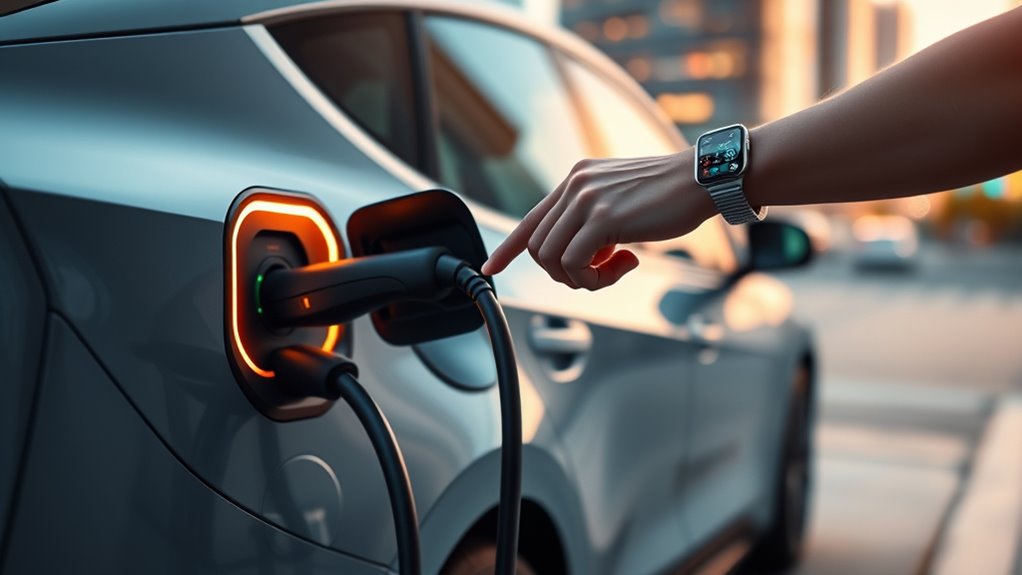

Plug-and-Charge makes EV payments effortless by letting your vehicle communicate directly with charging stations. When you plug in, there’s no need for cards or apps—your car automatically authenticates, and billing happens seamlessly. This technology simplifies the charging process, saving you time and hassle. As it becomes more widespread, you’ll experience more convenience at charging points. Keep exploring to discover how Plug-and-Charge is shaping the future of EV ownership and payment ease.

Get backup power and energy gear delivered free with Prime
- Fast, free delivery on millions of items
- Prime Video, Amazon Music and more included
- Member-only deals all year
Key Takeaways
- Plug-and-Charge enables vehicles to automatically authenticate and pay for charging without manual input or cards.
- It uses smart communication between the vehicle and charging station for seamless transaction processing.
- Eliminates the need for apps or physical payment methods, simplifying the user experience.
- Ensures secure, quick, and contactless billing through standardized protocols like ISO 15118.
- Enhances the overall convenience and adoption of electric vehicles by streamlining the charging process.
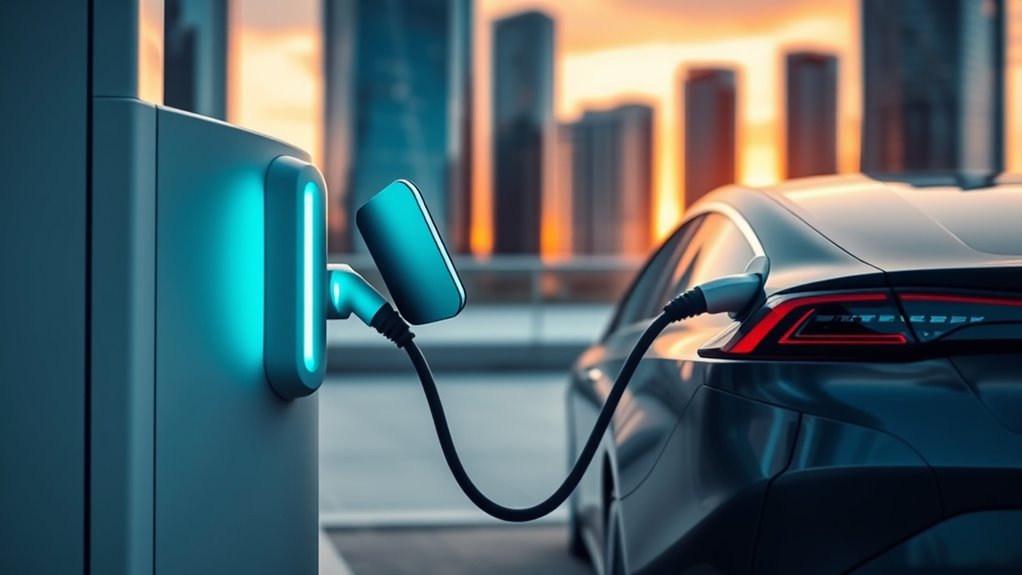
Have you ever wished charging your electric vehicle was as simple as plugging in? With advancements in EV technology, that wish is becoming a reality. Wireless charging is emerging as a game-changer, allowing you to charge your vehicle without fumbling with cords or connectors. Instead, you just park over a charging pad, and energy transfers seamlessly through electromagnetic fields. This innovation is transforming the way charging infrastructure is designed, making it more accessible and user-friendly. Imagine pulling into a parking spot, your car aligning automatically over a charging pad, and being ready to go without ever touching a plug. That’s the convenience wireless charging promises.
Wireless charging makes EVs as simple as parking and powering up effortlessly.
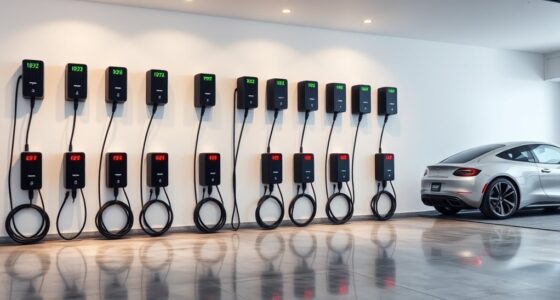
The development of robust charging infrastructure is vital to support this shift. Traditional charging stations involve complex setups and require you to find a specific connector compatible with your vehicle. Wireless charging simplifies this process, reducing the need for extensive physical infrastructure and making charging stations more versatile. As the network of wireless chargers expands, you’ll find it easier to top off your EV at malls, workplaces, or public parking lots. The infrastructure will evolve to include smart systems that communicate with your vehicle, guaranteeing ideal charging speed and safety. Moreover, the integration of European cloud infrastructure is essential for managing these intelligent systems securely and efficiently.
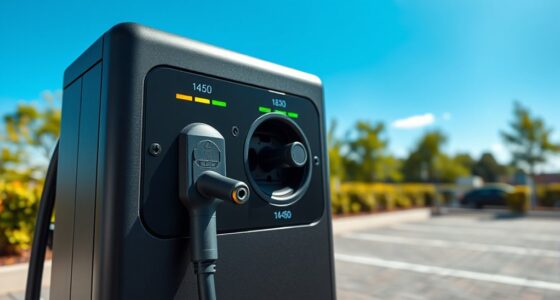
Plug-and-charge technology further enhances this experience by removing the hassle of payment. When you use a compatible charging station, your vehicle communicates directly with the charging network, authenticates your account, and automatically handles billing—no need to swipe cards or use apps. This seamless integration means you can focus on your day instead of managing transactions. As charging infrastructure becomes more sophisticated, the combination of wireless charging and plug-and-charge systems makes EV ownership more practical and appealing.
The future of EV charging is about making it effortless. Wireless charging stations will become more common, integrated into parking garages and street-side setups, blending into the environment without clutter or mess. Meanwhile, the expansion of reliable charging infrastructure guarantees you’ll always have a convenient place to recharge, whether you’re at home, work, or on the go. These innovations are not just about convenience—they’re about encouraging more people to switch to electric vehicles by removing many of the traditional barriers. Soon, plugging in your EV may be a thing of the past, replaced by effortless, wireless, and automated charging experiences that fit seamlessly into your daily routine.
Frequently Asked Questions
Can Plug-And-Charge Be Used Internationally?
Yes, plug-and-charge can be used internationally if the EV and charging stations support international compatibility. This enables seamless cross-border charging, making it easier for you to travel between countries without needing multiple accounts or payment methods. However, you’ll need to guarantee your vehicle and charging network are compatible with international standards. As technology advances, expect more widespread adoption of plug-and-charge for effortless cross-border charging experiences.
What Security Measures Protect My Payment Information?
When you use Plug-and-Charge, your payment info is protected through robust security measures like payment encryption and data privacy protocols. For example, a recent case showed a charging network implementing end-to-end encryption, preventing hackers from accessing your data. These measures guarantee your payment details stay secure during transactions, giving you peace of mind. Always look for systems that prioritize encryption and privacy to keep your information safe.
Is Plug-And-Charge Compatible With All EV Models?
Not all EV models support Plug-and-Charge, as compatibility depends on EV Compatibility and Charging Standards. You’ll find that many newer vehicles from major brands do support it, but older models or those from less common manufacturers might not. To guarantee seamless charging, check your EV’s specifications for Plug-and-Charge capability and verify that the charging station adheres to the necessary Charging Standards, like CCS or CHAdeMO.
How Does Plug-And-Charge Handle Billing Disputes?
When billing errors occur with Plug-and-Charge, you can resolve disputes by contacting customer support directly through the charging network or automaker’s app. They review transaction details, verify charges, and rectify any mistakes. The system is designed to handle billing disputes smoothly, but staying vigilant about your charging sessions helps prevent issues. Customer support ensures your billing is accurate, giving you peace of mind during your EV journey.
What Are the Main Challenges for Widespread Adoption?
You might face challenges with widespread adoption due to gaps in payment infrastructure, which can hinder seamless transactions. Additionally, user adoption depends on familiarity and trust in the technology; if people are hesitant or unaware, they won’t embrace Plug-and-Charge. Overcoming these barriers requires investing in reliable payment systems and educating users about its convenience, making it easier for everyone to adopt and enjoy hassle-free EV charging.
Conclusion
Imagine pulling up to your EV station, plugging in effortlessly, and knowing the payment takes care of itself, like a gentle breeze guiding you forward. Plug-and-Charge transforms charging from a hassle into a smooth, seamless experience, letting you focus on the journey ahead. As technology advances, this effortless connection becomes the new norm, making every charge feel like a natural part of your drive—simple, secure, and stress-free, just like it should be.
Halloween Picks
halloween
As an affiliate, we earn on qualifying purchases.