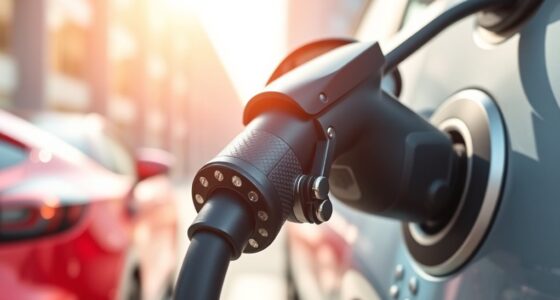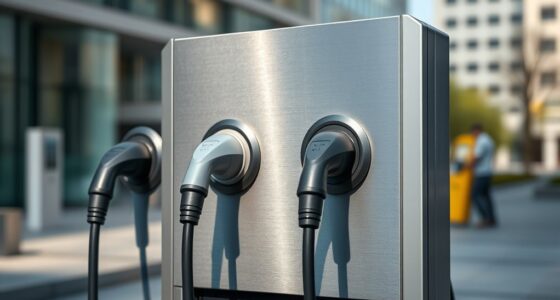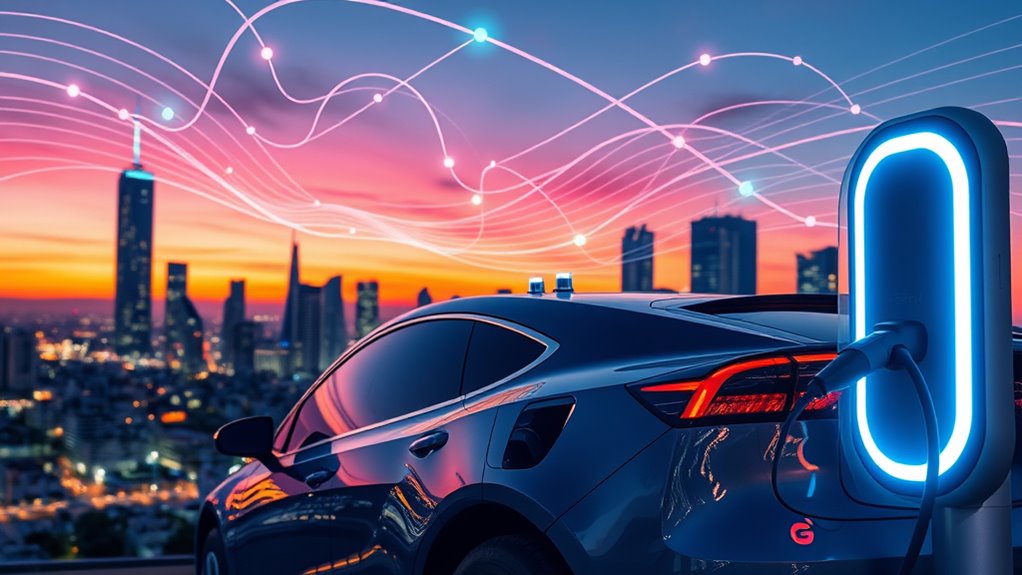

Smart charging lets your EV communicate with the grid, balancing energy flow during peak times. By scheduling charging during off-peak hours and discharging when needed, it helps prevent blackouts and overloads. This technology supports grid stability and guarantees reliable power. As your EV acts as a flexible energy resource, it fortifies the overall system. If you want to discover how this innovative solution works to keep lights on, keep exploring the details behind smart charging.
Open a free Amazon Business account
Business pricing, bulk buying and tax-exempt orders.
As an affiliate, we earn on qualifying purchases.
Key Takeaways
- Smart charging schedules EV charging during off-peak hours to reduce grid overloads.
- Vehicle-to-Grid technology enables EVs to supply power during peak demand, preventing shortages.
- Real-time data exchange allows dynamic load balancing, avoiding blackouts during high consumption periods.
- Coordinated discharging of EVs helps stabilize the grid during emergencies or demand surges.
- Advanced infrastructure supports communication between EVs and utilities, optimizing energy flow and enhancing grid resilience.
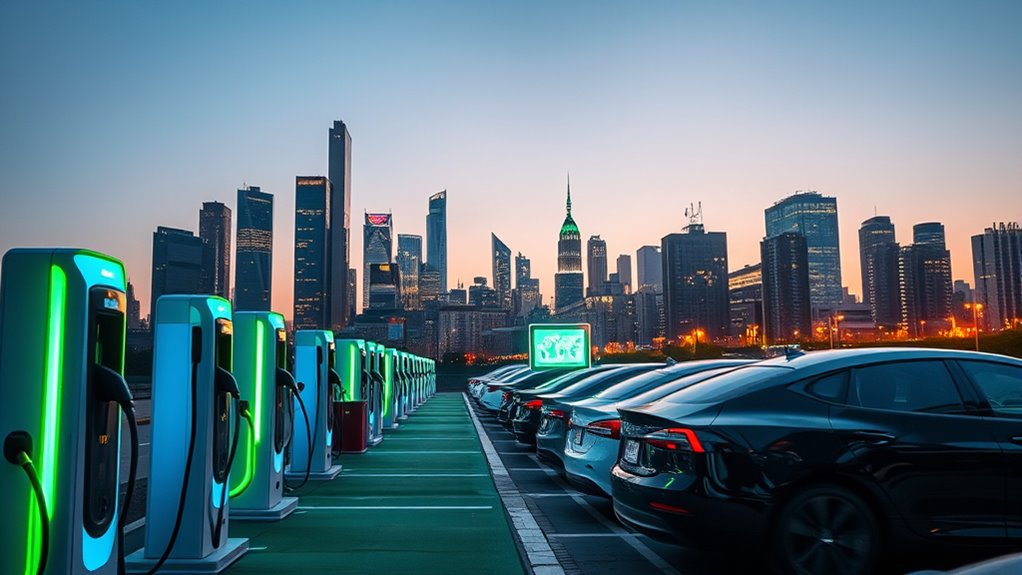
As electric vehicles (EVs) become more popular, they’re changing the way we think about energy and the power grid. One of the key innovations driving this shift is vehicle-to-grid integration, which allows EVs not just to draw power from the grid but also to feed it back when needed. This bidirectional flow of energy can help balance supply and demand, especially during peak usage times. To make this feasible, charging infrastructure development needs to keep pace. Building a robust network of smart chargers that can communicate with the grid is essential for managing when and how your EV charges and discharges.
Vehicle-to-grid integration enables EVs to support grid stability by balancing energy flow through smart, communicative charging infrastructure.
Smart charging technology plays a crucial role here. Instead of plugging in and charging immediately, your EV can be scheduled to charge during off-peak hours or even to supply power back to the grid during shortages. This dynamic approach prevents overloads and reduces the risk of blackouts, especially when many EVs are charging simultaneously in a neighborhood or city. When the grid faces high demand, these smart chargers can coordinate to reduce strain, effectively acting as a buffer that prevents overloads.
Developing this infrastructure requires investment in more than just chargers; it calls for integrating advanced communication systems and energy management platforms. These systems allow your EV to communicate with utility operators, providing real-time data on energy flow and enabling grid operators to send signals for load balancing. As a result, your vehicle becomes part of a larger, interconnected energy ecosystem, contributing to grid stability. Additionally, smart grid technology can enhance overall energy efficiency and resilience.
Vehicle-to-grid integration isn’t just about technology; it’s about creating a smarter, more resilient energy system. As charging infrastructure develops, you’ll notice more convenient, adaptable charging options tailored to peak and off-peak periods. This flexibility benefits consumers by lowering costs and reducing the environmental impact of energy generation. It also benefits the grid by reducing the likelihood of blackouts during periods of high consumption.
In the end, smart charging and infrastructure development are critical to making EVs a positive force for energy management. They allow your vehicle to serve dual purposes: getting you where you need to go and helping maintain a stable, reliable power grid. As these technologies continue to evolve, you’ll find that your EV is not just a mode of transportation but a significant component of a smarter, more sustainable energy future.
smart EV charger with vehicle-to-grid support
As an affiliate, we earn on qualifying purchases.
As an affiliate, we earn on qualifying purchases.
Frequently Asked Questions
How Do Smart Chargers Communicate With the Grid?
Smart chargers communicate with the grid through real-time data exchange, enabling vehicle-to-grid (V2G) technology. They send and receive signals that help with load balancing, adjusting charging rates based on grid demands. You benefit by participating in load balancing, which prevents blackouts and optimizes energy use. This two-way communication guarantees your EV charges efficiently, supports grid stability, and allows for vehicle-to-grid energy transfer when needed.
What Are the Costs of Implementing Smart Charging Systems?
The costs of implementing smart charging systems mainly involve infrastructure investment and ongoing maintenance. You should perform a thorough cost analysis to determine initial expenses and long-term savings, like reduced energy costs and grid stability. While upfront investments can be significant, integrating smart chargers can optimize energy use and prevent outages. Overall, the investment pays off by enhancing efficiency, supporting renewable energy, and ensuring a reliable power supply.
Can Smart Charging Adapt to Sudden Grid Emergencies?
Yes, smart charging can adapt to sudden grid emergencies by leveraging vehicle integration to respond quickly. When the grid faces stress, your smart charger communicates with the system, reducing or delaying charging to support grid stability. This active management helps prevent blackouts, ensuring a balanced energy load. With real-time data, you stay protected, and the grid remains resilient during unexpected demands or emergencies.
How Do EV Owners Benefit Financially From Smart Charging?
You can enjoy significant financial benefits through smart charging by taking advantage of charging incentives and energy savings. By charging your EV during off-peak hours, you avoid higher rates and earn rewards, effectively lowering your overall costs. This smart approach not only saves you money but also contributes to a more balanced grid, creating a win-win situation where your wallet and the environment both benefit in subtle, lasting ways.
Are There Privacy Concerns With Grid-Connected EVS?
You might worry about privacy concerns with grid-connected EVs, but manufacturers prioritize data security by implementing encryption and strict privacy policies. Your personal information is protected, and you have control over what data you share. While some risks exist, staying informed and choosing trusted smart charging systems helps minimize privacy concerns. Ultimately, secure data handling guarantees your privacy remains safeguarded while benefiting from smart charging features.
bi-directional EV charging station
As an affiliate, we earn on qualifying purchases.
As an affiliate, we earn on qualifying purchases.
Conclusion
By embracing smart charging, you can help prevent blackouts and keep the grid stable. When you plug in your EV at the right time, you’re not just charging your car—you’re supporting the entire energy system. Imagine a future where everyone’s mindful charging maintains the lights on for all. Isn’t it worth taking small steps now to ensure a reliable, greener grid for tomorrow? Your choices today shape the energy future we all share.
smart grid compatible EV charger
As an affiliate, we earn on qualifying purchases.
As an affiliate, we earn on qualifying purchases.
EV charging infrastructure with real-time data
As an affiliate, we earn on qualifying purchases.
As an affiliate, we earn on qualifying purchases.
Fall Picks
fall essentials
As an affiliate, we earn on qualifying purchases.