Whether you really need a Level 2 charger depends on your daily driving habits and charging needs. If you often drive long distances or want the flexibility of quick top-ups at home, a Level 2 charger can save you time and reduce reliance on public stations. For shorter commutes, a standard outlet might suffice. To discover if upgrading is right for you and how to make the best choice, keep exploring the options available.
Key Takeaways
- Your daily driving distance determines if Level 1 suffices or if faster charging with Level 2 is necessary.
- Longer commutes or frequent trips benefit from the quicker charging times of a Level 2 charger.
- Home electrical capacity and wiring compatibility influence the feasibility and benefits of installing a Level 2 charger.
- If you rely on public chargers often, a Level 2 at home can reduce dependence and improve convenience.
- Upgrading to a Level 2 charger can save time, support spontaneous trips, and enhance your overall EV ownership experience.
Understanding Charging Levels and Their Differences
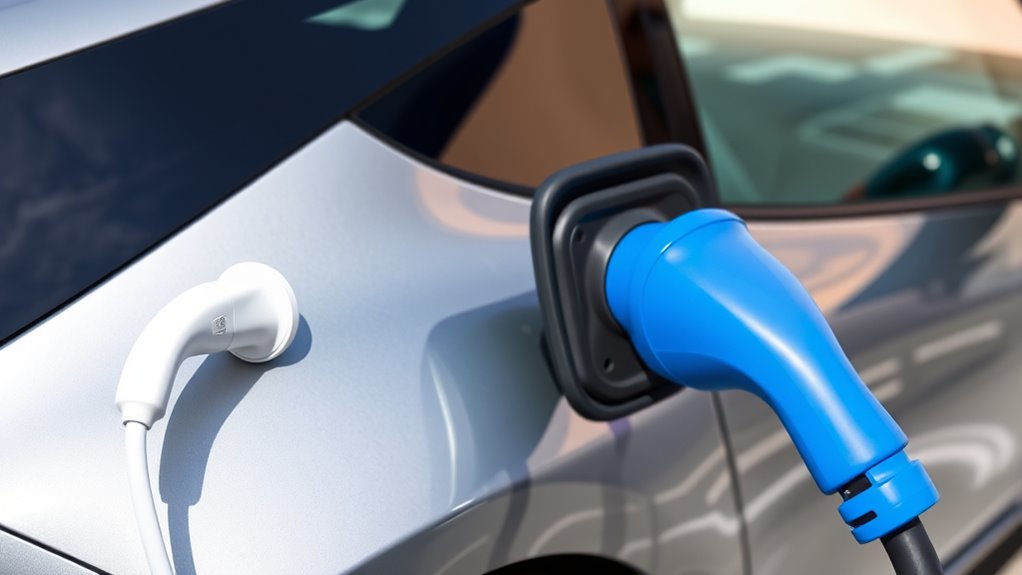
Charging levels determine how quickly your electric vehicle (EV) can recharge, and understanding the differences is essential for choosing the right setup. Level 1 chargers use standard household outlets, providing a slow charge that’s ideal for cars with smaller battery capacities or overnight charging. Level 2 chargers, found at many public charging stations and installed at home, deliver faster power, reducing charging time considerably. The charging station type impacts how quickly you can replenish your battery capacity, especially if you need to charge frequently or have a larger battery. Knowing these differences helps you decide whether a Level 2 charger is worth the investment or if a basic station suffices for your daily driving needs. Understanding charging levels ensures you optimize your EV’s charging efficiency, and can better plan your daily routine. Additionally, considering smart home integration can enhance your charging setup by automating schedules and monitoring energy use to maximize convenience and savings. Incorporating proper wiring and safety measures is also crucial when installing higher-powered chargers to prevent electrical issues and ensure reliable operation. Being aware of charging speed and compatibility with your vehicle can help you make more informed decisions about your charging setup. Moreover, choosing the right charger can influence your overall ownership experience, making daily charging more convenient and stress-free.
How a Level 2 Charger Can Accelerate Your Charging Time
A Level 2 charger can considerably cut down your EV’s charging time compared to a standard Level 1 outlet. By installing a dedicated charging station, you markedly increase the power delivered to your vehicle, enabling faster top-ups. This is especially helpful if your EV has a larger battery capacity, which takes longer to charge using a basic outlet. With a Level 2 charger, you can often recharge up to 25 miles of range per hour, depending on your vehicle and charger specs. This accelerated charging process means less time waiting and more time on the road. Additionally, selecting the right charger technology can optimize your charging efficiency and overall experience. Implementing a Level 2 charger also supports energy-efficient solutions, contributing to a more sustainable charging routine. Investing in advanced charging infrastructure can further enhance your EV ownership experience by providing reliable and rapid charging options. Moreover, a properly installed Level 2 charger can help you maximize your energy savings and reduce your overall carbon footprint by making your charging process more efficient. For those committed to maximizing their home energy management, a Level 2 charger offers a convenient way to integrate your EV charging with your overall energy system.
Evaluating Your Daily Driving Needs and Charging Habits

To decide if a Level 2 charger fits your needs, start by evaluating your daily commute distance and how often you need to charge. Think about how quickly you want your vehicle ready and how your charging habits match your routine. This will help you determine whether faster charging options are worth considering.
Daily Commute Distance
Understanding your daily commute distance is essential when deciding whether a Level 2 charger is necessary. If your daily drive is short, your EV’s battery capacity may easily cover your needs with minimal charging. However, longer commutes demand more frequent charges, making a Level 2 charger more convenient. Think about how solar integration can supplement your charging, reducing reliance on grid power. Check your typical round-trip miles to determine if your current setup suffices or if upgrading makes sense. Also, think about your future plans—will your driving habits change? Incorporating insights about solar energy and its potential to power your charging needs can further optimize your setup. Here are key points to consider:
- Average daily miles driven
- EV battery capacity limits
- Availability of solar energy at home
- Charging time constraints
- Potential for expanding your charging setup
Additionally, understanding charging infrastructure options in your area can help you make a more informed decision.
Charging Frequency and Speed
Evaluating how often you need to charge your EV depends on your daily driving habits and the speed at which you can recharge. If you have a short daily commute, a standard Level 1 charger at home might suffice, requiring only overnight charging. However, if you frequently drive long distances, you’ll benefit from a faster charging station with higher power output. This allows you to replenish your battery quickly, reducing downtime and making spontaneous trips easier. The charging speed directly impacts how often you need to visit a charging station—faster chargers mean fewer stops. Assess your routine and driving patterns to determine whether a Level 2 charger’s increased power output aligns with your needs, or if a slower, more basic setup works for you. Additionally, understanding AI-generated music can help you optimize your vehicle’s entertainment options and overall driving experience. For example, some chargers are equipped with smart technology that can optimize charging schedules, making your charging routine even more efficient. Considering your charging habits and the available infrastructure in your area can help you choose the most suitable charging solution.
Cost Considerations: Upfront Investment vs. Long-Term Benefits
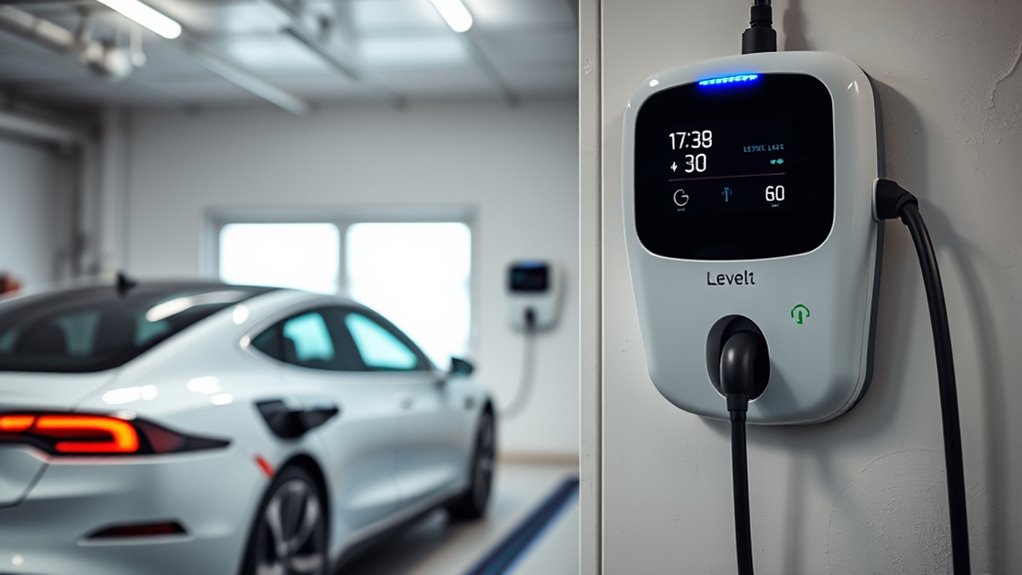
While installing a Level 2 charger requires a significant upfront investment, many consider it worthwhile for the long-term savings and convenience it offers. A proper cost comparison shows that, despite higher initial expenses, you’ll save money over time through faster charging and reduced energy costs. Think about:
- Lower electricity costs per charge
- Fewer trips to public chargers
- Increased home charging efficiency
- Faster charging times saving your time
- Enhanced resale value of your property
- Connected home technology can also optimize your EV charging setup for even greater efficiency. Incorporating energy management systems can further improve your overall charging experience and help monitor energy consumption effectively. Additionally, a well-integrated charging setup can maximize your vehicle’s range and reduce your overall energy footprint. As the EV market continues to grow, having a dedicated charger can also increase the resale value of your home, making it a smart long-term investment.
These benefits contribute to long term savings that can outweigh the initial setup costs. Although the upfront expense may seem steep, the convenience and savings make a Level 2 charger a smart investment for many EV owners seeking efficiency and cost-effectiveness in the long run.
Installation Requirements and Compatibility With Your Home Setup

Before installing a Level 2 charger, you need to check if your electrical panel has enough capacity to handle the added load. Your existing wiring must also be compatible and able to support the new installation without upgrades. Ensuring these factors are in place will help you avoid unexpected costs and delays. Additionally, consider proper maintenance practices to prevent potential issues with your electrical setup, as proper maintenance can extend the lifespan of your infrastructure. Regular inspections and cable management are essential components of maintaining a reliable electrical system. Evaluating your power needs can also assist in selecting the appropriate charger model for your home.
Electrical Panel Capacity
Your home’s electrical panel must have enough capacity to safely handle the additional load of a Level 2 charger. If your panel is already near its limit, adding a charger could cause power surges or circuit overloads, risking damage or outages. Before installation, check your panel’s main breaker size and existing load. If you have a smaller panel or multiple high-demand appliances, upgrading might be necessary.
- Confirm the panel can support the charger’s amperage requirements
- Verify the breaker slots are available for a dedicated circuit
- Avoid overloading circuits to prevent power surges
- Consider future expansion needs
- Consult a professional to evaluate your home’s capacity and avoid circuit overloads
Existing Wiring Compatibility
Ensuring your existing wiring can support a Level 2 charger is essential for a safe and efficient installation. First, check if your garage space has proper wiring capacity; older homes might need upgrades to handle the higher amperage. If you plan to install the charger outdoors, consider the outdoor durability of your wiring and connectors—look for weather-resistant cables designed for outdoor use. Confirm that your current wiring has the correct gauge and is free of damage or corrosion. If your wiring isn’t compatible, upgrading it guarantees safety and maximum performance. Proper wiring compatibility prevents electrical issues and helps your charger operate reliably, whether installed inside your garage or outside. Taking these steps ensures your home setup supports a Level 2 charger safely and effectively.
Making the Decision: Is a Level 2 Charger Right for You?
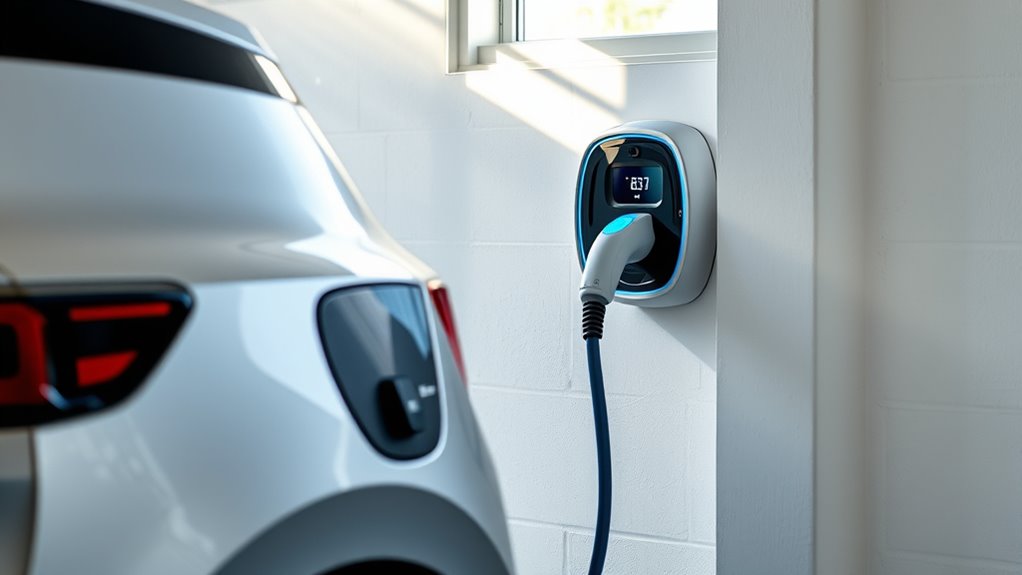
Deciding whether a Level 2 charger is right for you depends on your driving habits and charging needs. If you frequently commute long distances or need quick turnarounds, a Level 2 charger offers faster charging, making it a smart investment. Consider your parking convenience—if you have a dedicated spot at home or work, installing a dedicated charging station becomes easier. Think about how often you’ll use it and whether your current charging setup meets your daily routine. A Level 2 charger can transform your charging experience, providing more flexibility and reducing reliance on public stations. However, if your driving is minimal or you prefer slow, overnight charging, a standard outlet might suffice. Weigh these factors carefully before deciding.
Choosing a Level 2 charger depends on your driving habits and parking convenience.
- Faster charging times
- Improved parking convenience
- Increased home value
- Reduced reliance on public stations
- Better suited for frequent, long-distance driving
Frequently Asked Questions
Can I Install a Level 2 Charger Myself or Need Professional Help?
You can attempt a DIY installation of a Level 2 charger, but it’s not recommended without proper electrical knowledge. You need to follow safety precautions carefully to prevent hazards like shocks or fires. If you’re comfortable with electrical wiring and local codes, you might do it yourself. However, for safety and compliance, hiring a professional electrician guarantees the installation is done correctly and safely.
How Does a Level 2 Charger Affect My Home’s Electrical System?
A level 2 charger increases your home’s electrical load and requires sufficient circuit capacity. You’ll need to verify your electrical system can handle the additional power demand without overloading circuits. If your current wiring isn’t rated for the extra load, you might need an upgrade. Consulting a professional helps assess your electrical load and determine if your home’s circuit capacity can support a level 2 charger safely and efficiently.
Are There Government Incentives or Rebates for Installing a Level 2 Charger?
Think of government incentives and rebate programs as your EV’s fuel boost. You can often get substantial savings when installing a Level 2 charger, making the upgrade more affordable. Many local, state, and federal programs offer rebates or incentives to encourage EV adoption. Check with your utility company or government websites to see what’s available in your area, so you don’t miss out on these valuable financial perks.
What Are the Maintenance Requirements for a Level 2 EV Charger?
You need to regularly check your level 2 EV charger’s durability and electrical safety. Keep the connector clean, inspect for damage, and ensure the cables remain in good condition. Schedule annual professional inspections to verify proper grounding and safety features. Proper maintenance helps prevent electrical hazards and prolongs the charger’s lifespan, so staying attentive to these needs maintains your charging setup safe and reliable for ongoing use.
Will My Ev’s Warranty Be Affected by Using a Level 2 Charger?
Using a level 2 charger generally won’t jeopardize your EV’s warranty coverage, as long as it’s compatible with your vehicle. Modern EVs are designed to handle various charging levels safely. Just make certain the charger is compatible with your car’s specifications, and you’ll enjoy faster charging without risking warranty issues. Always double-check your manufacturer’s guidelines to avoid any unintended surprises and keep your EV running smoothly.
Conclusion
So, is a Level 2 charger worth the investment for you? Consider how often you drive and how quickly you want to charge. If you rely heavily on your EV and want to cut down charging time, it might be the smart choice. But if your trips are short and charging overnight suits your routine, a basic charger could suffice. Ultimately, will your driving habits justify the upfront costs, or are you comfortable with slower charging?