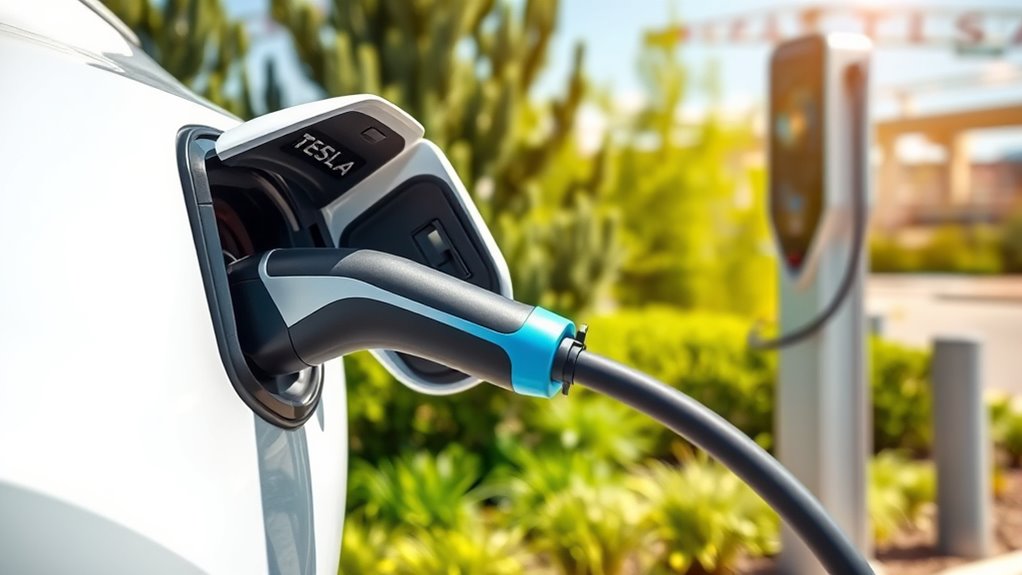

Tesla’s NACS and CCS are the two main charging standards shaping how you access EV stations. NACS, developed by Tesla, offers faster charging and is now adopted by more automakers, while CCS supports a broader network and longer history in North America. Your vehicle’s compatibility, along with adapters, can affect your charging options. If you want to understand how these standards impact your EV experience and future access, keep exploring further.
Key Takeaways
- NACS offers faster charging speeds and is widely adopted by Tesla, enhancing charging efficiency for compatible EVs.
- CCS remains the most common standard globally, supporting a broad network of non-Tesla charging stations.
- Industry shifts toward NACS adoption may simplify charging for Tesla owners but could require adapters for others.
- Compatibility between standards affects access to charging stations, influencing route planning and convenience.
- Future industry trends aim to integrate both standards for seamless, universal EV charging infrastructure.
Understanding the Basics of EV Charging Standards
Have you ever wondered why electric vehicles (EVs) have different charging ports? It all comes down to various charging standards designed to optimize charging efficiency and user convenience. Different standards, like Tesla’s NACS and CCS, ensure that vehicles can connect to compatible charging stations. Charging efficiency refers to how quickly and smoothly your EV charges, which can vary depending on the port and station type. User convenience is also key, with some standards offering faster connections and widespread access. Understanding these basics helps you navigate the charging landscape more confidently. Additionally, the diversity in standards can impact charging infrastructure compatibility, influencing how easily EV owners can find suitable charging options. While standards differ, their goal remains the same: providing safe, reliable, and efficient charging options that fit your needs and make EV ownership more practical. The ongoing development of standardization efforts aims to simplify this landscape and enhance overall user experience. Recognizing the importance of interoperability can help ensure that EV owners have seamless access to charging stations regardless of their vehicle’s standard.
Origins and Development of Tesla’s NACS
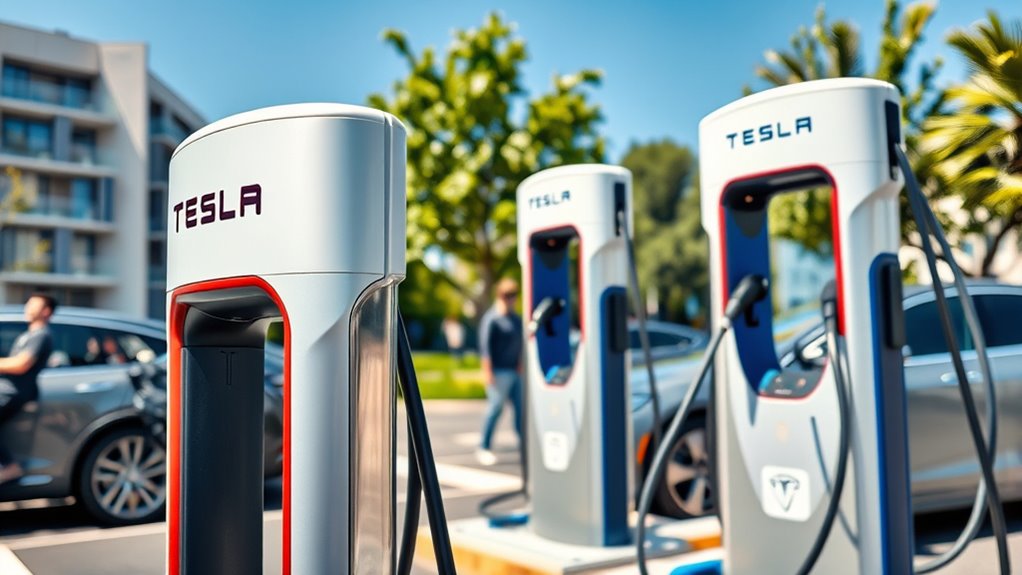
Tesla’s NACS (North American Charging Standard) was developed to create a more streamlined and efficient charging experience specifically for Tesla vehicles. Its origins trace back to Tesla’s desire to optimize battery technology and improve charging speeds, reducing downtime. Early on, Tesla designed NACS as a proprietary standard, prioritizing performance and convenience. Over time, government policies encouraging EV adoption pushed Tesla to open up its standard, fostering broader industry support. This shift aimed to promote interoperability and simplify charging infrastructure. The table below highlights some key milestones in NACS’s development:
| Milestone | Impact |
|---|---|
| Initial proprietary design | Focused on Tesla’s vehicle ecosystem |
| Policy-driven openness | Expanded industry adoption |
| Integration with battery tech | Enhanced charging efficiency |
This evolution reflects Tesla’s strategic balance between innovation and regulatory influences. Standardization efforts continue to shape the future of EV charging infrastructure globally.
The Rise of the CCS Standard in North America
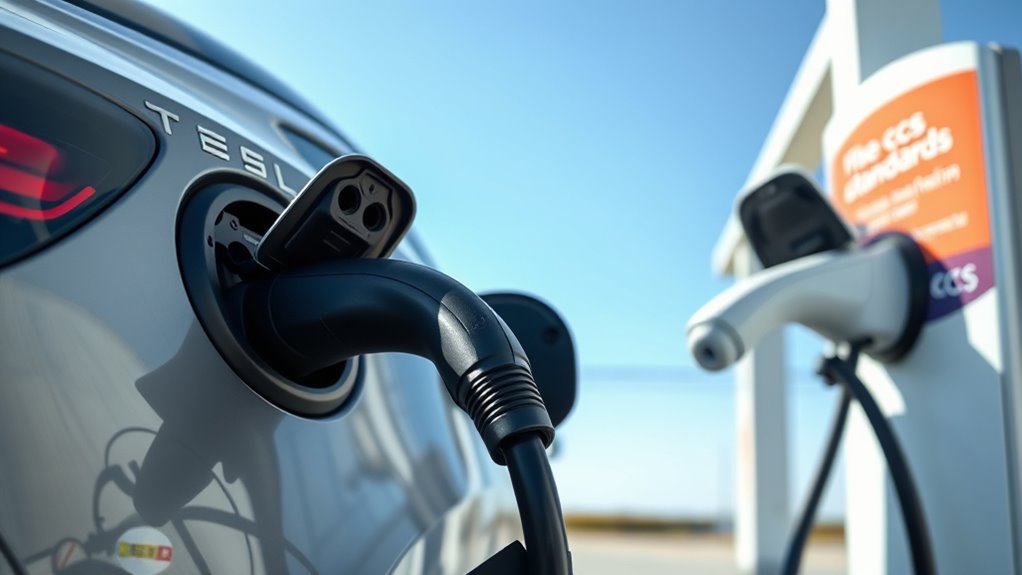
As electric vehicle adoption accelerates across North America, the Combined Charging System (CCS) has emerged as a dominant standard due to its versatility and industry backing. This standard supports advanced battery technology, allowing for faster charging and longer range, which appeals to many EV buyers. With an increasing number of charging station locations adopting CCS, you’ll find more accessible and widespread options for quick charging on your journeys. The widespread industry support from automakers and charging networks has fueled its rise, making CCS a go-to choice for many manufacturers and drivers. As a result, CCS-compatible vehicles can benefit from a more extensive and reliable charging infrastructure, ensuring you have more confidence in charging your EV wherever you go. Additionally, the growth of water-based charging stations highlights a commitment to sustainable and eco-friendly energy solutions in the EV charging ecosystem. This expanding infrastructure is further bolstered by efforts to develop interoperable charging standards, which aim to improve user experience and compatibility across different networks.
Key Technical Differences Between NACS and CCS

The connector design differs markedly between NACS and CCS, affecting compatibility and ease of use. You’ll also notice that their charging speed capabilities vary, impacting how quickly your vehicle can recharge. Understanding these technical differences helps you choose the right standard for your needs. Additionally, the standardization efforts underway may influence future compatibility and infrastructure development, making it important to stay informed about industry trends.
Connector Design Variations
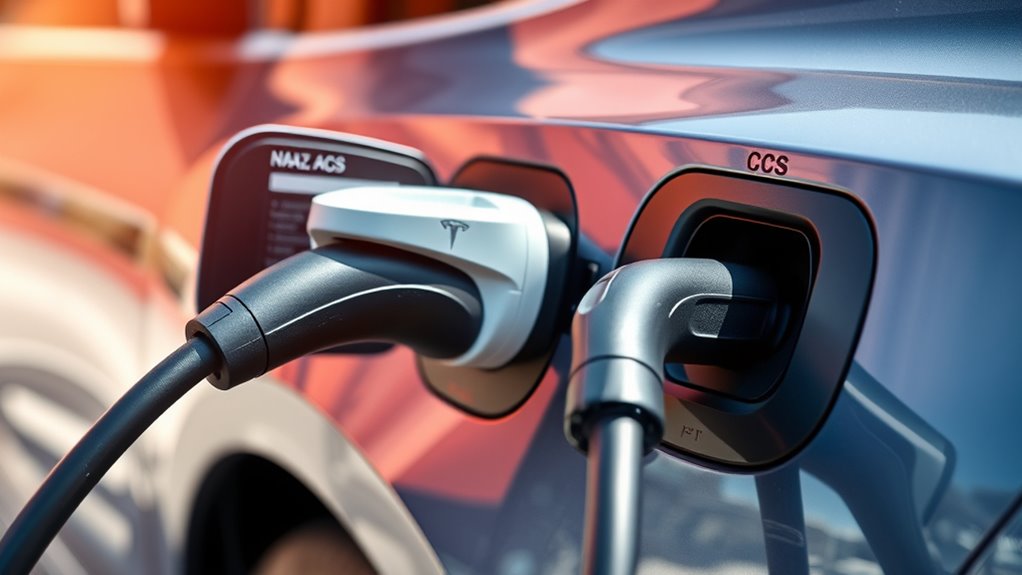
While both NACS and CCS connectors serve the same purpose of charging electric vehicles, their design variations reflect distinct technical approaches. NACS features a compact, sleek profile with a single, elongated shape emphasizing simplicity, which influences charging port aesthetics by offering a cleaner look. In contrast, CCS combines the Type 1 or Type 2 AC connector with an additional DC plug, creating a larger, more complex design. This results in different connector design variations tailored to their functionalities. Here’s a visual comparison:
| Feature | NACS | CCS | Commonality |
|---|---|---|---|
| Shape | Slim, elongated | Larger, dual-port | Both support fast charging |
| Size | Compact | Bulkier | Designed for vehicle integration |
| Aesthetics | Minimalist, sleek | Functional, multi-purpose | Compatible with various EVs |
| Connector Type | Single, streamlined | Combined AC/DC | Both meet safety standards |
| Flexibility | Limited to Tesla vehicles | Broader application | Varies by manufacturer |
Additionally, the ongoing adoption and standardization of these connectors influence industry compatibility and consumer convenience. The industry shift toward universal standards may eventually streamline EV charging infrastructure worldwide.
Charging Speed Capabilities
Charging speed is a key factor that distinguishes NACS from CCS connectors, as it directly impacts how quickly your EV can regain its range. NACS supports higher charging rates, thanks to advances in battery technology and optimized charging infrastructure. These improvements allow Tesla’s standard to deliver faster DC fast charging, often exceeding 250 kW, reducing charging times considerably. In contrast, CCS connectors typically offer slightly lower maximum speeds, around 150-250 kW, depending on the station and vehicle compatibility. The differences in charging speed are driven by the capacity of the charging infrastructure and the battery technology used in each system. As a result, NACS provides a more efficient charging experience, especially for longer trips, with less downtime compared to CCS.
Compatibility and Adapter Options for EV Owners
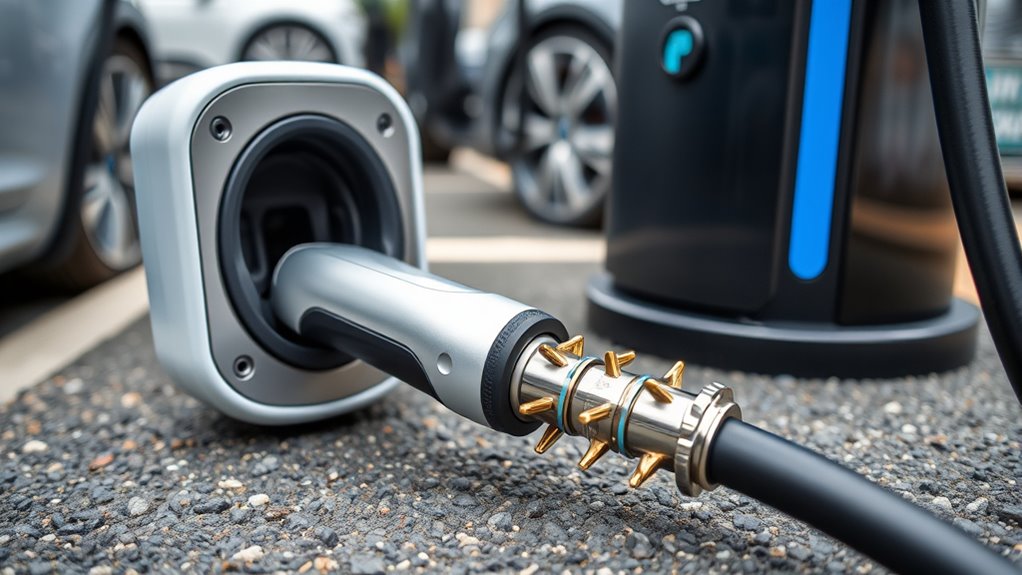
As an EV owner, you’ll want to understand how well your vehicle is compatible with different charging standards. adapters can make a big difference, but their availability and ease of use vary. Knowing your options helps guarantee you can charge conveniently wherever you go. Building reliable connections in your charging setup ensures consistent and safe power delivery across different standards.
Compatibility Across Models
Tesla’s NACS and CCS standards vary in compatibility across different EV models, which can influence your charging options. Some models are built specifically for one standard, limiting direct access without adapters. Even when using adapters, you might encounter differences in charging station maintenance procedures or how the user interface design displays charging info. Compatibility issues can also affect how smoothly you connect and start charging, especially if the station’s interface isn’t optimized for your vehicle. Ensuring your EV is compatible or has the right adapter simplifies charging and reduces frustration. Keep in mind that not all stations may support both standards equally, so understanding your vehicle’s compatibility helps you plan your routes effectively and avoid unexpected delays.
Adapter Availability and Use
Wondering how to guarantee your EV can use different charging stations? Adapter availability and use are key. To ensure smooth charging station access, you’ll want to consider:
- Checking adapter compatibility with your vehicle’s charging port and the station’s connector.
- Investing in universal adapters that work with both NACS and CCS standards.
- Carrying multiple adapters if you frequently visit different networks.
- Staying updated on new adapter models that improve charging speed and reliability.
- Remember that wall decor inspiration ideas can help transform your space into a more inviting environment while you wait for your vehicle to charge. Additionally, understanding charging standards can help you select the most compatible and efficient adapters for your needs. Being aware of charging network interoperability can also facilitate seamless access across various charging stations. Moreover, researching adapter compatibility options can prevent potential connection issues and ensure optimal charging performance.
Having the right adapters expands your charging options and prevents access issues. It’s essential to choose high-quality, compatible adapters to avoid damage and ensure safe, quick charging. Being prepared with the proper gear guarantees you won’t be stranded without charging options.
Impact on Charging Infrastructure and Network Availability

How does the choice between NACS and CCS impact the availability and expansion of charging infrastructure? Your charging station accessibility depends on how quickly networks can grow and adapt to new standards. If automakers adopt NACS widely, existing Tesla supercharger stations and compatible chargers will boost network expansion, making charging more convenient. Conversely, widespread CCS adoption may require significant infrastructure updates or new stations, potentially slowing network growth initially. The standard you choose influences how easily you can access charging stations across regions, especially as networks expand to meet increasing EV demand. Additionally, standardization processes play a crucial role in ensuring compatibility and accelerating infrastructure deployment. As industry collaboration progresses, the deployment of charging stations aligned with these standards will become more streamlined, ultimately providing a more seamless charging experience for EV owners. Furthermore, standard adoption can influence the pace at which new stations are built and upgraded, affecting overall network growth and accessibility. A more unified charging network ultimately benefits you by providing broader access, reducing wait times, and supporting a more robust, accessible charging infrastructure.
Automaker Strategies and Industry Adoption Trends
Automaker strategies are shaping the adoption of charging standards and influencing industry trends. They decide whether to support Tesla’s NACS or CCS, often based on battery technology advancements and market demands. Here are four key trends:
- Many manufacturers are integrating NACS to align with Tesla’s expanding network and capitalize on faster charging.
- Others maintain CCS support to appeal to a broader market and ensure compatibility across different models.
- Government policies increasingly incentivize open standards, encouraging automakers to adopt versatile charging options.
- Battery technology improvements drive the need for compatible fast-charging standards, influencing industry shifts toward NACS or CCS.
- Gold IRA Markets and investment strategies can also influence automakers’ decisions, as financial backing and industry trends often play a role in technological adoption.
These strategies reflect a balancing act between technological innovation, regulatory environments, and consumer preferences shaping the industry’s future.
How the Switch to NACS Could Change the EV Market
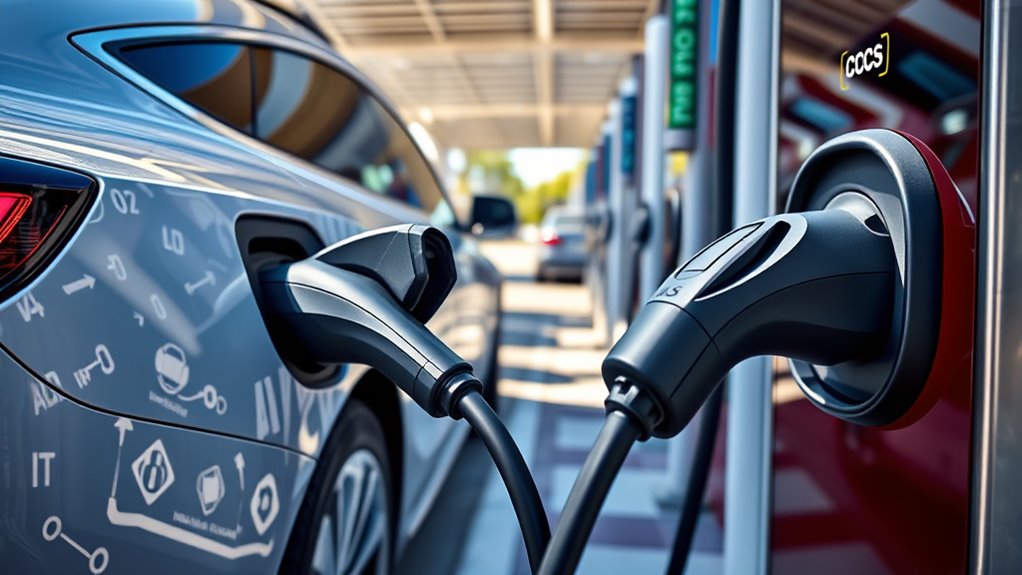
Switching to NACS could make charging more accessible for you, expanding the network and reducing wait times. As more chargers become compatible, you’ll find it easier to charge across different brands without hassle. This shift might also spark new competition among automakers, changing the way the EV market operates. Additionally, the increased adoption of this modern charging standard could accelerate the overall transition to electric vehicles by making charging more seamless and reliable. Embracing this standardization could also lead to more innovations in charging technology, benefiting consumers in the long run.
Market Accessibility Expansion
Adopting Tesla’s NACS charging standard could considerably broaden the accessibility of electric vehicle charging stations. This shift means more charging station locations will become compatible with your EV, reducing range anxiety. As charging networks expand, you’ll find more convenient spots to top off your battery, especially in underserved areas. This growth encourages more widespread EV adoption, making electric driving more practical for everyone. Additionally, increased access to chargers can help you optimize EV battery longevity by enabling regular, shorter charges instead of infrequent, deep discharges.
- More charging stations in rural and urban areas
- Easier access during long trips
- Reduced wait times at popular stations
- Better support for everyday EV use
Charger Compatibility Growth
The move toward NACS compatibility is set to considerably expand the range of charging stations your EV can use. As more chargers adopt the NACS standard, you’ll find it easier to locate compatible stations across different networks. Charger branding will become more consistent, making it straightforward to identify NACS-compatible chargers at a glance. Additionally, the user interface on charging stations is expected to improve, offering clearer instructions and smoother interactions. This growth in charger compatibility means fewer limitations and less need for adapters, streamlining your charging experience. With wider acceptance, you’ll benefit from increased convenience and reliability, making long trips and daily charging more effortless than ever. Overall, this shift signals a more unified and user-friendly charging infrastructure for EV owners.
Industry Competition Shift
As more automakers and charging networks embrace the NACS standard, the EV industry is experiencing a significant shift in competition. You’ll notice fewer proprietary systems, leading to increased interoperability. This change encourages innovation in areas like wireless charging, making charging more seamless. The move also accelerates vehicle-to-grid technology, enabling EVs to supply power back to the grid, creating new revenue streams. Additionally, with more manufacturers adopting NACS, you’ll see a more consolidated market, pressuring legacy CCS systems to evolve or risk obsolescence. This competition shift pushes companies to improve charging speeds, infrastructure, and user experience, ultimately benefiting you as an EV owner with more choices and better services. The landscape is changing quickly, and adaptation is key.
Practical Implications for Daily Charging and Long Trips

Choosing between Tesla’s NACS and CCS impacts how smoothly your daily charging routines and long trips go. With advancements in battery technology, fast charging has become more accessible, making long journeys less stressful. NACS generally offers faster charging speeds at Tesla’s extensive Supercharger network, which helps reduce downtime. Meanwhile, CCS is supported by many non-Tesla chargers, increasing station options but sometimes with slower charging rates. Government policies also influence practical use; recent incentives promote compatible charging stations, affecting your choices. If your EV supports NACS, you might enjoy quicker top-ups on daily drives and trips. Conversely, CCS compatibility offers broader network access if your vehicle supports it. Ultimately, your experience depends on the charging infrastructure and how policies shape station availability and technology standards.
Future Outlook: Standardization and Industry Evolution
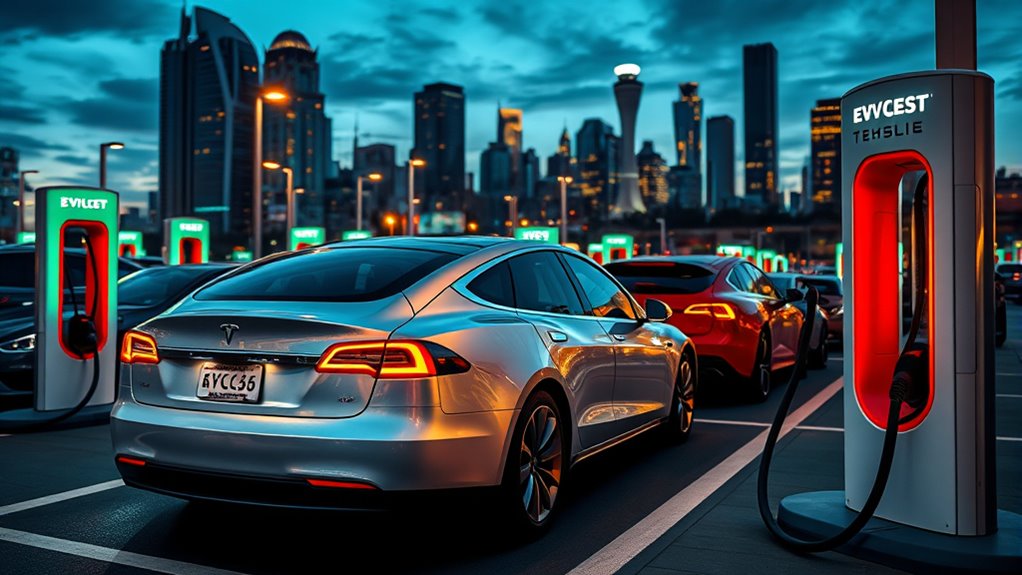
Looking ahead, industry efforts are increasingly focused on standardizing charging infrastructure to guarantee seamless interoperability across different electric vehicle brands and networks. This push aims to accelerate adoption by reducing compatibility issues and streamlining your charging experience. Key developments include:
- Unified standards that integrate both Tesla’s NACS and CCS, making chargers more versatile.
- Advancements in battery technology that enable faster charging and longer range, supporting industry growth.
- Increased renewable integration at charging stations, reducing carbon footprints and promoting sustainability.
- Industry collaborations to create a resilient, future-proof ecosystem that adapts to evolving EV and renewable energy needs.
These initiatives will ensure you have reliable, efficient charging options while supporting broader industry evolution.
Frequently Asked Questions
Will Existing Tesla Chargers Be Compatible With CCS Connectors?
Your existing Tesla chargers won’t be directly compatible with CCS connectors. To guarantee charger compatibility, you’ll need an adapter, but make sure to verify adapter safety first. Using a certified adapter helps prevent damage to your vehicle or charging station. Always check if the adapter is approved for your specific Tesla model and charger type, so you can charge safely and efficiently without risking any issues.
How Will the Switch to NACS Affect Used EV Resale Value?
Switching to NACS could boost your used EV’s resale value by making it more attractive to a broader market. With 60% of new EV sales expected to adopt NACS, market demand for compatible vehicles will rise. This increased demand can lead to higher resale prices, especially for models with NACS ports. So, if you upgrade now, you might see a better return when selling your EV later.
Are There Safety Concerns With Using Adapters Between NACS and CCS?
Using adapters between NACS and CCS can raise safety concerns due to potential compatibility issues. You should prioritize adapter safety by choosing high-quality, certified products, and always follow manufacturer instructions. Compatibility concerns may also affect charging efficiency or cause electrical issues. To stay safe, check for compatibility updates regularly and avoid using damaged or uncertified adapters, ensuring your EV charging remains secure and reliable.
What Role Do Government Policies Play in EV Charging Standard Adoption?
Government policies notably influence EV charging standard adoption by providing regulatory influence and policy incentives. You’ll see that regulations encourage manufacturers to adopt universal standards, making charging more accessible. Policy incentives, such as tax credits and grants, motivate EV owners and companies to invest in compatible charging infrastructure. These efforts help streamline the shift to new standards, ensuring broader compatibility and faster adoption, ultimately benefiting your EV charging experience.
How Might Standardization Influence Future EV Model Designs?
Standardization encourages you to see more design flexibility in future EV models because manufacturers can focus on innovation rather than multiple charging ports. It also promotes manufacturing consistency, making production more efficient and cost-effective. As a result, you might enjoy more uniform charging experiences and potentially lower vehicle prices. Overall, standardization helps streamline the industry, benefiting you with better options and easier access to charging infrastructure.
Conclusion
Switching to NACS could revolutionize your EV experience, making charging faster, easier, and more seamless than ever before. Imagine a world where you never worry about incompatible chargers or long wait times—where every station feels like it was built just for you. This shift isn’t just a minor change; it’s the beginning of an EV revolution that could transform your daily drives into effortless journeys. Get ready—things are about to change forever!